Sterilization is one of those processes in healthcare where accuracy matters every time. Hospitals, laboratories, pharmaceutical companies, and medical device manufacturers need reliable ways to confirm that sterilization cycles have worked as intended.
This is where chemical indicators play an important role. From simple indicator strips and tapes to more advanced monitoring solutions, these products are becoming an essential part of modern sterilization practices.
A Growing Need for Better Sterilization Monitoring
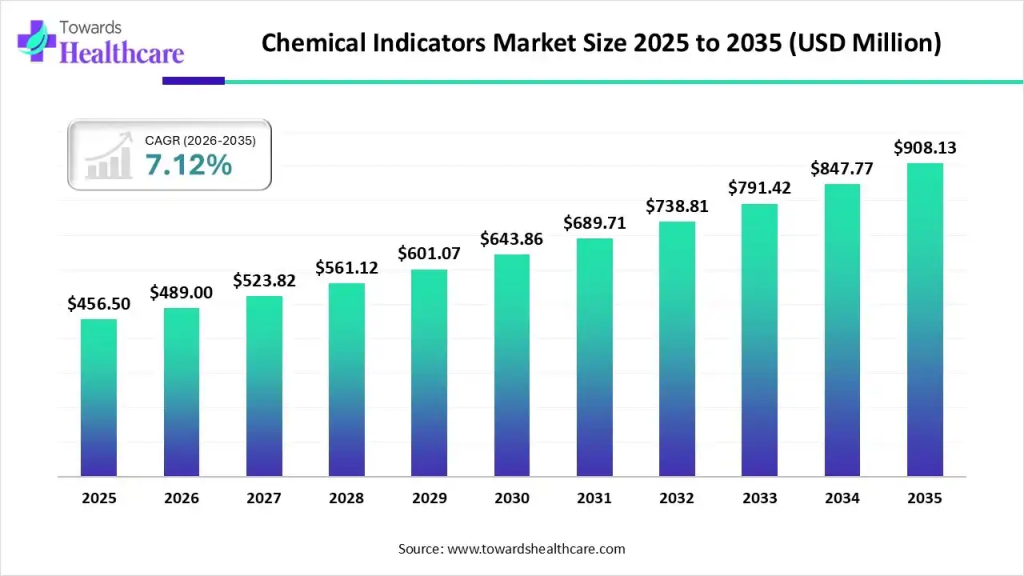
The global chemical indicators industry was valued at around USD 456.5 million in 2025 and is expected to reach approximately USD 908.13 million by 2035, growing at a CAGR of 7.12% between 2026 and 2035.
The growth is closely connected with increasing healthcare activity, stricter sterilization requirements, and greater attention to patient safety. As hospitals perform more procedures and medical device manufacturing expands, the need to verify sterilization cycles is also increasing.
Chemical indicators provide a simple way to check whether key sterilization conditions have been reached. Depending on the sterilization method, they can be used with steam, ethylene oxide, or hydrogen peroxide processes.
Strips Continue to Be Widely Used
Among different product types, indicator strips held the largest share in 2025.
Their popularity comes down to simplicity. A visible color change can quickly help staff distinguish between processed and unprocessed items. This makes strips practical for busy hospitals, laboratories, and sterile processing departments.
There is also growing interest in more sustainable versions, including indicators designed with lower chemical impact and improved materials.
Steam Still Leads, but Hydrogen Peroxide Is Picking Up
Steam sterilization remained the leading method in 2025. Autoclaves are widely used for surgical instruments and other equipment that can tolerate high temperatures.
However, hydrogen peroxide sterilization is becoming increasingly important. It operates at lower temperatures, making it suitable for heat-sensitive equipment and more complex medical devices.
As healthcare facilities adopt newer sterilization technologies, demand for indicators specifically designed for these processes is likely to increase.
AI and IoT Could Change How Sterilization Is Tracked
One of the more interesting developments is the move toward digital monitoring.
AI can potentially help analyze equipment data, identify unusual patterns, and support predictive maintenance. IoT-enabled systems can also collect sterilization information in real time and automatically record process data.
Barcode and digital traceability systems are another area gaining attention. Instead of relying entirely on manual documentation, healthcare facilities can connect sterilization records with broader tracking systems.
This could make audits easier and reduce the chances of human error.
Hospitals Remain the Main Users
Hospitals and clinics accounted for the largest end-use share in 2025. The reason is straightforward: sterilization is a routine and critical part of healthcare operations.
Surgical instruments, laboratory equipment, and other reusable medical devices need to go through reliable sterilization processes before being used again.
At the same time, biopharma and biotech companies are becoming an important growth area. These facilities use sterilization across laboratories, production equipment, bioreactors, and other critical processes.
North America Leads While Asia Pacific Gains Momentum
North America held the leading position in 2025, supported by established healthcare infrastructure, strong infection-control practices, and strict sterilization requirements.
The U.S. continues to be a major contributor, particularly with increasing interest in low-temperature sterilization technologies such as vaporized hydrogen peroxide.
Asia Pacific, however, is expected to record the fastest growth through 2035. Expanding healthcare infrastructure, rising surgical procedures, and growing medical device manufacturing in countries such as India and China are creating more demand for reliable sterilization monitoring.
Sustainability Is Becoming Part of the Conversation
Healthcare organizations are also paying more attention to environmental impact.
Manufacturers are exploring indicators and related solutions that reduce chemical use and improve sustainability without compromising reliability. At the same time, low-temperature sterilization technologies are gaining attention for equipment that cannot withstand traditional high-temperature processes.
This shows that the next stage of development is not only about better performance. It is also about making sterilization monitoring easier, safer, traceable, and more sustainable.
What Comes Next?
The chemical indicators space may look like a small part of the healthcare ecosystem, but its role is becoming increasingly important.
The combination of stricter sterilization requirements, growing healthcare infrastructure, digital traceability, IoT, and newer sterilization technologies is creating a very different environment from a few years ago.
I believe the biggest change will come from the move away from basic visual checks toward connected and digitally documented sterilization monitoring. As healthcare facilities become more technology-driven, even simple monitoring products will need to become smarter and easier to integrate.
Download Customized Sample: https://www.towardshealthcare.com/download-sample/6732
About Us
Healthcare WebWire is a part of Towards Healthcare Research & Consulting is a global healthcare market research and consulting firm dedicated to helping businesses make informed decisions through reliable market intelligence and strategic insights. We serve pharmaceutical, biotechnology, medical device, AI in healthcare, cell and gene therapy, digital health, and life sciences organizations with in-depth market research, custom consulting, competitive analysis, and growth forecasts. Our team combines industry expertise with rigorous research to deliver clear, actionable insights that support market expansion, product strategy, investment decisions, and long-term business growth. From emerging innovations to established healthcare markets, we help organizations understand where the industry is today and where it’s headed tomorrow.
You can place an order or ask any questions, please feel free to contact us at [email protected]
Europe Region – +44 778 256 0738
North America Region – +1 8044 4193 44
APAC Region: +91 9356 9282 04
Visit Our Website: Towards Healthcare Research & Consulting – Expert Consulting Solutions & Research Reports
Find us on social platforms: LinkedIn | Twitter | Instagram | Medium