Insulin Delivery System Market AI Integration and Technological Advancements

Insulin Delivery System Market Growth, Key Players and Trends

The global insulin delivery system market is valued at US$ 17.77 billion in 2024, with growth to US$ 19.18 billion in 2025 and a projected reach of US$ 38.09 billion by 2034, expanding at a CAGR of 7.92%. Technological innovations such as automation, AI, and machine learning are driving this growth.
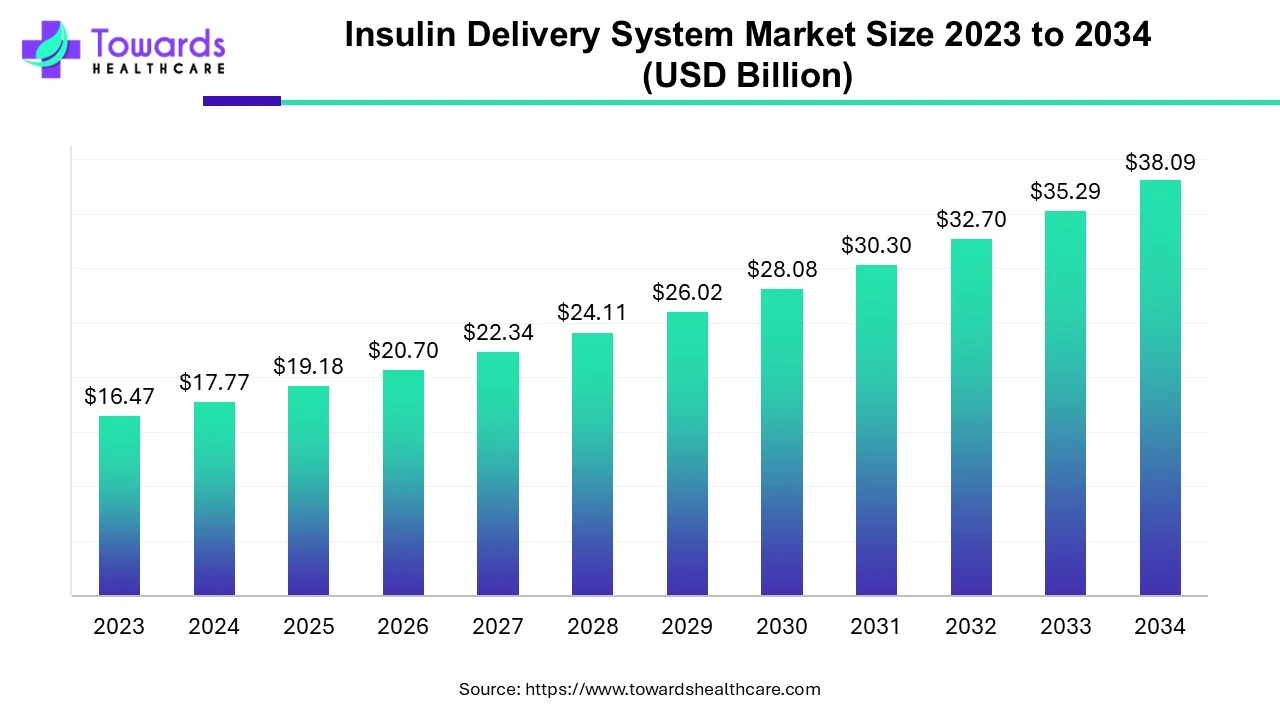
Insulin Delivery System Market Size 2023 - 2034

Download statistics of this report @ https://www.towardshealthcare.com/download-statistics/5346

Insulin Delivery System Market Trends

  1. Technological Advancements: Integration of automation, AI, and machine learning is enhancing insulin delivery systems, making them more efficient and user-friendly.
  2. Wearable Devices: Growing adoption of wearable insulin pumps and smart pens for continuous and personalized insulin delivery is increasing.
  3. Non-invasive Solutions: Development of non-invasive insulin delivery methods, such as oral and inhalable insulin, is gaining traction.
  4. Patient-centric Innovations: Insulin delivery systems are becoming more personalized, with features like real-time data monitoring, remote tracking, and automated adjustments.
  5. Rise in Diabetes Prevalence: Increasing global diabetes cases are driving demand for advanced insulin delivery solutions.
  6. Market Consolidation: Major companies are forming strategic partnerships and acquisitions to expand their product portfolios and reach in emerging markets.
  7. Focus on Affordability: Efforts to reduce the cost of insulin delivery devices and make them more accessible to a broader population are underway.

AI Integration in the Insulin Delivery System Market

Advancements in healthcare technology are opening up new opportunities for better managing diabetes. Recently, the first automated insulin delivery (AID) devices have received regulatory approval, and clinical use of these systems has begun. In the future, AI could play a key role in enhancing these systems, making them more responsive to the individual needs of diabetic users. AI may help customize insulin delivery based on real-time data, offering a more personalized treatment approach.

For example, a project led by Cinar, a professor of chemical engineering at the Illinois Institute of Technology, is receiving $1.2 million from the National Institutes of Health over the next four years. The goal is to develop a machine-learning system that can be integrated into an artificial pancreas to improve its accuracy and performance.

Our Table of Content (TOC) covers key healthcare market segments, materials, technologies and trends—helping you navigate market shifts and make informed decisions: https://www.towardshealthcare.com/table-of-content/insulin-delivery-system-market-sizing

Access exclusive insight now @ https://www.towardshealthcare.com/price/5346

We’ve prepared a service to support you. Please feel free to contact us at  sales@towardshealthcare.com

Web: https://www.towardshealthcare.com

Visit Dental Specifics: https://www.towardsdental.com

Get the latest insights on industry segmentation with our Annual Membership: Get a Subscription

For Latest Update Follow Us: https://www.linkedin.com/company/towards-healthcare

Leave a Comment

Your email address will not be published. Required fields are marked *

Scroll to Top