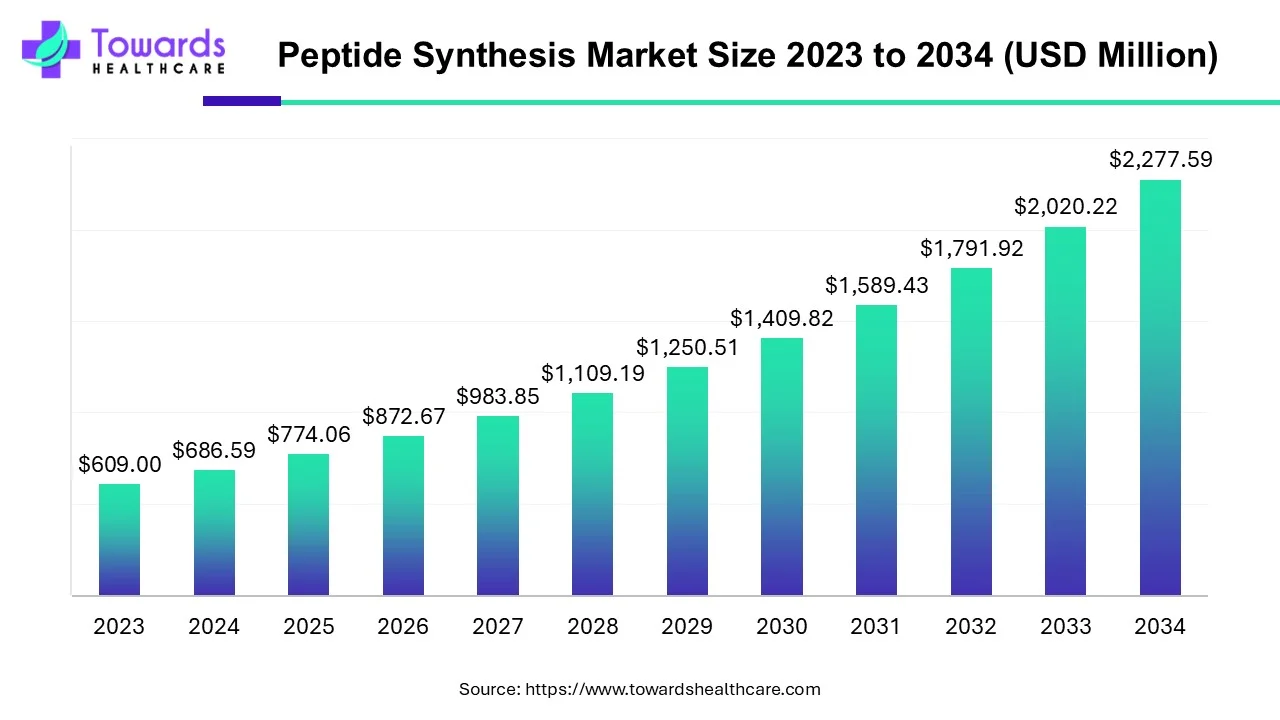
The global peptide synthesis market is valued at USD 774.06 million in 2025 and is projected to reach USD 2,277.59 million by 2034, growing at a CAGR of 12.74%. This growth is driven by rising chronic disease cases, increasing R&D in biotechnology, and the expanding use of peptide-based therapeutics. Advancements in technologies like hybrid synthesis and AI integration are further accelerating market development.
Download the free sample and get the full report for complete insights and forecasts on the peptide synthesis market @ https://www.towardshealthcare.com/download-sample/5393
Market Trends
AI & ML Adoption
• Enables faster drug discovery, peptide design, and toxicity prediction.
• Supports automation and productivity in synthesis processes.
Green & Sustainable Manufacturing
• Partnerships for solvent recovery and eco-friendly peptide production.
• Example: Donaldson and PolyPeptide Group’s solvent recovery system (May 2024).
Investments & Expansions
• Amneal Pharmaceuticals to invest $200M over 5 years for peptide drug development.
• Snapdragon Chemistry developing liquid-phase technology to reduce waste.
FDA Activity
• 31 peptide drugs approved by the FDA between 2016 and 2023.
• 9 TIDES (including peptides) approved in 2023 alone.
Key Market Insights
• North America held the largest share in 2024 due to R&D capabilities and leading market players.
• Asia-Pacific is the fastest-growing region fueled by generic pharma, investments, and government support.
• Reagents & Consumables are the top-selling products due to their necessity and repeat use.
• Hybrid Technology and Equipment segments are the fastest-growing, driven by innovation and automation.
• Therapeutics remains the largest application, especially in oncology and metabolic disorders.
Market Dynamics
Drivers
Growing R&D Activities
• Expanding use in cancer, infectious, metabolic, and CNS disorders.
• Peptides used in therapeutics, vaccines, diagnostics, and bioassays.
Technological Advancements
• Solid-phase, liquid-phase, and hybrid peptide synthesis techniques improving output and purity.
Restraints
Sustainability Challenges
• Use of hazardous solvents, difficult resin recycling.
High Purification Costs
• Longer peptides require expensive processes to remove synthesis byproducts.
Opportunities
Recombinant Peptide Synthesis
• Enables large-scale, high-yield, and purer peptide production.
• Combines synthetic and biological processes to improve cost-efficiency and peptide stability.
Regional Insights
North America
• Dominant in 2024; home to key players like Thermo Fisher, GenScript, and Sigma Aldrich.
• Strong R&D ecosystem with FDA approvals and government funding.
Asia-Pacific
• Fastest-growing due to India’s booming generic industry and China’s $37B in licensing deals in 2023.
• Supportive government initiatives in R&D and pharma exports.
Europe
• Growth driven by biologics demand and strong R&D institutions.
• Hosting European Peptide Synthesis Conference 2025 in Portugal.
Segment Highlights
By Product:
Reagents & Consumables (Dominant)
• Essential for synthesis; includes amino acids, resins, coupling agents, etc.
Equipment (Fastest-Growing)
• Tech innovations like peptide synthesizers and chromatography tools boost growth.
By Technology:
Liquid Phase Peptide Synthesis (LPPS) (Leader)
• Cost-effective and environmentally friendly.
Hybrid Technology (Fastest-Growing)
• Combines chemical and biological synthesis for better scalability and efficiency.
By Application:
Therapeutics (Dominant)
• Peptides used in chronic disease treatments with FDA support.
Diagnosis (Fastest-Growing)
• Peptides help detect biomarkers; used in imaging and non-invasive testing.
By End-Use:
Pharma & Biotech Companies (Leader)
• In-house capabilities, infrastructure, and funding.
CDMO/CROs (Fastest-Growing)
• Outsourcing increases efficiency, reduces time-to-market.
Top Companies
Aapptec Peptides
AnaSpec
Aragen Life Sciences
Aurigene Pharmaceutical Services
Bachem Holding
Biomatik
Bio-Synthesis, Inc.
CPC Scientific
GenScript Biotech
LifeTein LLC
ProteoGenix
Sigma Aldrich
Thermo Fisher Scientific
USV India
Top 5 FAQs
Q: What is driving the growth of the peptide synthesis market?
A: Rising prevalence of chronic diseases, increased R&D in peptide-based therapeutics, AI-driven innovations, and pharma investments.
Q: Which region dominates the global peptide synthesis market?
A: North America, due to strong R&D, FDA approvals, and presence of leading manufacturers.
Q: What technologies are commonly used for peptide synthesis?
A: Solid-phase, liquid-phase, and hybrid technologies. Hybrid is growing the fastest due to scalability and precision.
Q: What are the key challenges in peptide synthesis?
A: Sustainability issues like solvent use and resin recycling, and high purification costs for long-chain peptides.
Q: Which segment is expected to grow fastest by end-use?
A: CDMOs and CROs, as more companies outsource peptide production to reduce costs and speed up development.
• Check below the details
Immediate Delivery Available | Buy This Premium Research
@ https://www.towardshealthcare.com/price/5393
Access our exclusive, data-rich dashboard dedicated to the healthcare market – built specifically for decision-makers, strategists, and industry leaders. The dashboard features comprehensive statistical data, segment-wise market breakdowns, regional performance shares, detailed company profiles, annual updates, and much more. From market sizing to competitive intelligence, this powerful tool is one-stop solution to your gateway.
Access the Dashboard: https://www.towardshealthcare.com/access-dashboard
Become a valued research partner with us – https://www.towardshealthcare.com/schedule-meeting
You can place an order or ask any questions, please feel free to contact us at [email protected]