The Quiet Shift Redefining How Organizations Think About People
For decades, corporate success was measured primarily through revenue growth, market expansion, and operational efficiency. Employee well-being was often treated as a secondary concern, addressed through basic benefits and occasional health initiatives. That mindset has fundamentally changed. Today, corporate wellness has moved from the periphery to the center of organizational strategy, becoming a critical determinant of performance, resilience, and long-term sustainability.
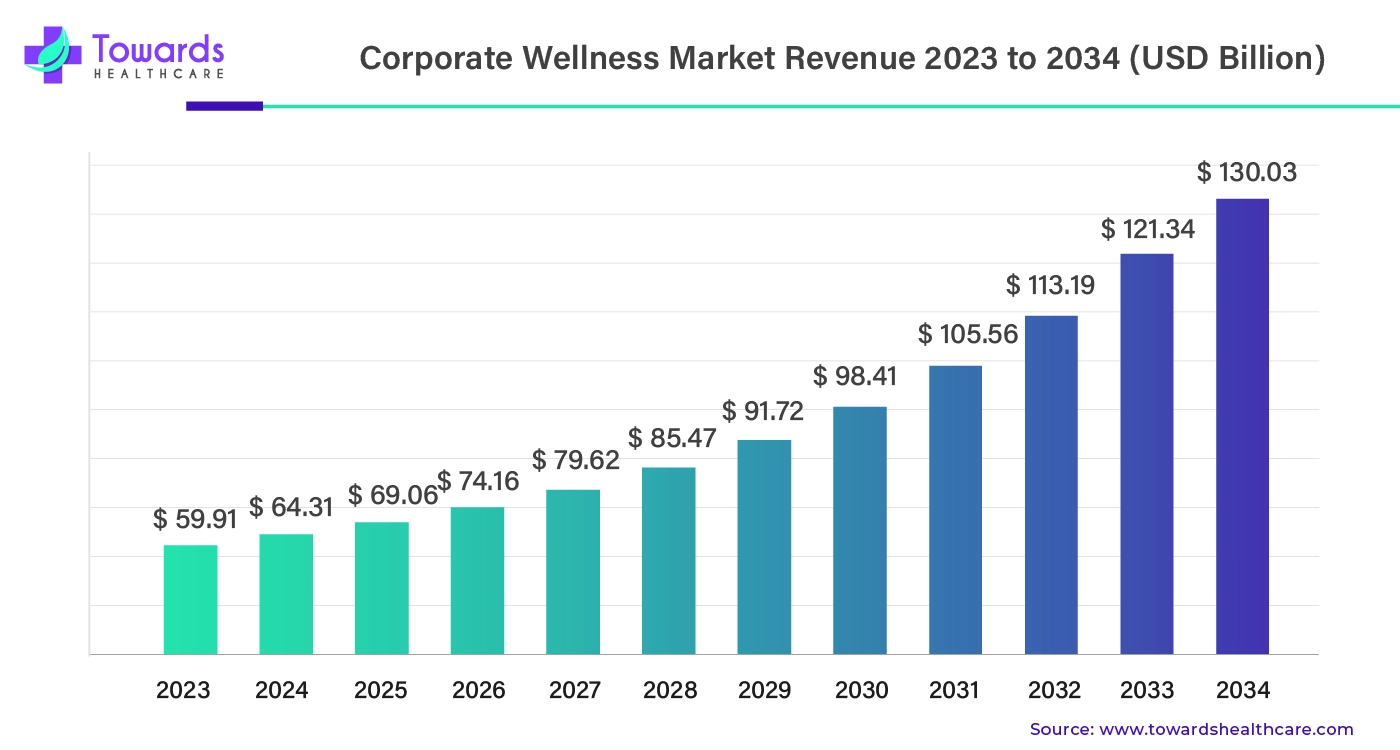
The global corporate wellness market, valued at nearly US$ 60 billion in 2023 and projected to more than double by 2034, reflects a deeper transformation in how organizations view human capital. This growth is not driven by trends or temporary enthusiasm. It is driven by lived realities inside workplaces where burnout, mental fatigue, chronic health issues, and disengagement directly affect productivity and retention. After more than a decade of observing corporate wellness programs across regions and industries, one thing is clear: organizations are no longer asking whether wellness matters. They are asking how deeply it should be embedded into the way work is designed.
Download Free Sample Now and Get the Complete Report Easily at: https://www.towardshealthcare.com/download-sample/5218
When Employee Health Became a Business Imperative
Corporate wellness did not evolve in isolation. It emerged as a response to mounting pressures within modern workplaces. Long working hours, digital overload, sedentary routines, constant connectivity, and blurred work-life boundaries created environments where employees struggled to maintain physical and mental balance. These struggles soon began to reflect in absenteeism, presenteeism, rising healthcare costs, and increasing attrition.
Organizations realized that employee health is not an individual issue but a systemic one. Physical, mental, emotional, and social well-being directly influence how people think, collaborate, and perform. A workforce under chronic stress cannot innovate effectively. Teams operating under exhaustion cannot sustain quality or creativity. Corporate wellness, therefore, became less about offering perks and more about protecting the organization’s ability to function at its best.
Over time, wellness expanded beyond fitness challenges and annual health checkups. It began to include nutrition guidance, stress management, financial wellness, mental health support, health education, and work-life balance initiatives. This broader understanding reflects maturity in the market and a deeper appreciation of the complex realities employees face both inside and outside the workplace.
Why Risk Assessment Sits at the Core of Wellness Strategy
Among all corporate wellness services, health risk assessment has emerged as the dominant segment, and for good reason. Effective wellness programs start with understanding. Risk assessments allow organizations to identify potential health issues before they escalate into serious conditions that affect individuals and the broader workforce.
By collecting biometric data, lifestyle information, and health histories, employers gain insights into common risk patterns across their organizations. These insights enable targeted interventions rather than generic programs. From an experienced perspective, organizations that invest early in assessment tend to achieve better outcomes because they move from reactive healthcare spending to preventive health management.
Risk assessment also supports smarter resource allocation. Instead of investing equally across all wellness initiatives, employers can prioritize areas that deliver measurable impact, whether that involves stress reduction, lifestyle modification, or chronic disease prevention. As wellness strategies become more data-driven, assessment continues to anchor decision-making processes.
Employers as the Primary Architects of Wellness
Organizations and employers remain the largest adopters of corporate wellness solutions, largely because they feel the impact of employee health most directly. Productivity, morale, and retention are closely tied to how supported employees feel in their work environment. Over years of market observation, it has become evident that wellness programs are most effective when leadership treats them as long-term investments rather than short-term initiatives.
Employers today collaborate with healthcare professionals, therapists, nutritionists, and wellness consultants to build ecosystems of care rather than isolated services. They also integrate wellness into workplace culture through policies, leadership behavior, and organizational values. This integration signals to employees that wellness is not an add-on but a core expectation of how work should feel.
Organizations that fail to prioritize wellness increasingly struggle to attract and retain talent, especially as younger generations enter the workforce with higher expectations around mental health support, flexibility, and purpose-driven employment.
Why Onsite Wellness Still Holds Strong
Despite the rise of digital platforms and remote work, onsite wellness programs continue to dominate the market. This dominance reflects practicality rather than resistance to change. Many employees still commute daily, and onsite programs provide convenient access to wellness resources without disrupting work schedules.
Onsite initiatives often include fitness facilities, health screenings, counseling services, healthy food options, and spaces designed for relaxation and social interaction. These programs reduce barriers to participation and reinforce wellness as a shared organizational experience. From a long-term perspective, onsite wellness also strengthens community within organizations, encouraging peer support and collective engagement.
However, the most successful onsite programs evolve continuously. They adapt to changing workforce needs, incorporate employee feedback, and align with broader organizational goals rather than remaining static offerings.
Large Organizations Set the Pace, But the Ripple Effect Is Wider
Large-scale organizations dominate corporate wellness adoption due to their workforce size, resource availability, and operational complexity. With thousands of employees, even small improvements in health outcomes translate into significant cost savings and productivity gains. Large organizations often establish dedicated wellness departments and invest heavily in program design and evaluation.
Yet the influence of these organizations extends beyond their own boundaries. Their practices set benchmarks for smaller companies, industry peers, and emerging markets. Over time, wellness models pioneered by large enterprises often trickle down, becoming more accessible and adaptable for small and medium-sized organizations.
As wellness solutions become more modular and scalable, smaller organizations increasingly recognize that investing in employee health is not a luxury but a necessity for competitiveness and sustainability.
Artificial Intelligence Steps Into the Wellness Conversation
Artificial intelligence has introduced a new dimension to corporate wellness, particularly in personalization and early intervention. By analyzing large volumes of employee data, AI systems can identify patterns that human analysis might miss. These insights support the development of tailored wellness programs that reflect individual needs rather than generalized assumptions.
In mental health, AI-driven tools can detect early signs of stress, anxiety, or burnout by analyzing communication patterns, behavioral indicators, and engagement metrics. This capability allows organizations to act proactively rather than waiting for issues to escalate into crises.
From an experienced market viewpoint, AI’s true value lies not in replacing human care but in enhancing it. When used responsibly, AI supports healthcare professionals, improves accessibility, and empowers employees to seek help discreetly and confidently. At the same time, it raises important questions around data privacy, consent, and ethical use, which organizations must address transparently.
Data Privacy: The Market’s Most Sensitive Fault Line
As corporate wellness becomes increasingly data-driven, concerns around privacy and security have intensified. Wellness programs collect highly sensitive information that extends beyond professional performance into personal health and lifestyle choices. Without trust, even the most advanced wellness initiatives fail to engage employees meaningfully.
Organizations must approach data governance with seriousness and clarity. Employees need assurance that their information will not be misused or exposed. Strong security systems, clear policies, and transparent communication are essential to building this trust. From years of industry observation, programs that prioritize ethical data practices consistently achieve higher participation and long-term success.
Privacy is not merely a compliance requirement. It is a foundational element of effective wellness culture.
Flexibility Redefines What Wellness Looks Like
Flexible work arrangements have emerged as one of the most powerful wellness opportunities of the post-pandemic era. Remote work, flexible hours, and compressed workweeks allow employees to manage personal responsibilities, reduce commuting stress, and regain control over their time.
Flexibility supports mental, emotional, and social well-being by acknowledging that productivity does not follow a single rigid model. Experienced organizations understand that flexibility requires trust, accountability, and thoughtful design. When implemented effectively, it enhances engagement rather than diluting performance.
The future of corporate wellness increasingly depends on how well organizations balance structure with autonomy. Flexibility is no longer an exception. It is becoming a standard expectation across industries and regions.
North America’s Leadership Rooted in Awareness
North America continues to lead the corporate wellness market, driven by strong awareness of mental health, supportive regulatory frameworks, and active employee advocacy. Employees in the region are more likely to voice concerns, demand support, and evaluate employers based on wellness offerings.
The emphasis on psychological well-being reflects a broader cultural shift that recognizes mental health as integral to overall health. Organizations that respond to this awareness benefit from higher trust, stronger engagement, and improved employer branding.
The U.S. and Canada, in particular, demonstrate how wellness initiatives aligned with employee expectations and regulatory standards can drive sustained market leadership.
Asia Pacific’s Momentum Built on Growth and Awareness
Asia Pacific represents the fastest-growing region in the corporate wellness market, fueled by rapid economic expansion, rising employment, and growing health awareness. Countries such as China, India, Japan, and South Korea are witnessing a surge in new businesses, startups, and corporate offices.
As work cultures evolve and awareness around mental and physical health increases, organizations in the region are investing more actively in wellness programs. Government initiatives, demographic shifts, and changing employee expectations all contribute to this momentum.
From a long-term perspective, Asia Pacific’s diversity presents both challenges and opportunities. Wellness solutions must adapt to cultural nuances, regulatory environments, and varying levels of organizational maturity. Those that succeed will shape the next phase of global wellness innovation.
Europe’s Digital Path Toward Wellness Integration
Europe’s corporate wellness market reflects a strong focus on digital health solutions and regulatory alignment. Organizations increasingly use digital platforms to monitor health conditions, deliver wellness content, and support preventive care. Government support and regulatory oversight ensure safety and effectiveness, reinforcing trust in these solutions.
European markets emphasize balance, sustainability, and social responsibility. Wellness initiatives often align with broader societal goals, including work-life balance, mental health advocacy, and equitable access to care. This alignment strengthens adoption and long-term viability.
Looking Ahead: Wellness as Organizational Infrastructure
After years of observing the evolution of corporate wellness, one conclusion stands out clearly. Wellness is no longer a program. It is becoming infrastructure. Just as organizations invest in technology, systems, and processes to support operations, they now invest in wellness to support people.
The organizations that thrive over the next decade will be those that integrate wellness into leadership decisions, workplace design, performance metrics, and organizational values. They will treat employee health as a shared responsibility rather than an individual burden.
Corporate wellness will continue to evolve, shaped by technology, cultural shifts, and economic realities. But its core purpose will remain constant: enabling people to bring their best selves to work, not at the expense of their health, but in harmony with it.
Access our exclusive, data-rich dashboard dedicated to the healthcare industry – built specifically for decision-makers, strategists, and industry leaders. The dashboard features comprehensive statistical data, segment-wise market breakdowns, regional performance shares, detailed company profiles, annual updates, and much more. From market sizing to competitive intelligence, this powerful tool is one-stop solution to your gateway.
Access the Dashboard: https://www.towardshealthcare.com/access-dashboard
Checkout Corporate Wellness Market Report Now at: https://www.towardshealthcare.com/checkout/5218
Become a valued research partner with us – https://www.towardshealthcare.com/schedule-meeting
You can place an order or ask any questions, please feel free to contact us at [email protected]
Powering Healthcare Leaders with Real-Time Insights: https://www.towardshealthcare.com/healthcare-intelligence-platform
Europe Region – +44 778 256 0738
North America Region – +1 8044 4193 44
APAC Region: +91 9356 9282 04
Visit Our Website: https://www.towardshealthcare.com
Find us on social platforms: LinkedIn | Twitter | Instagram | Medium | Pinterest