A Market That Mirrors a Global Awakening
For decades, mental health lived in the shadows of global healthcare conversations. It existed quietly, often misunderstood, underfunded, and stigmatized. Today, that silence has broken. The global mental health market is no longer a peripheral segment of healthcare; it has become a central pillar shaping policy, innovation, investment, and social discourse. As the market advances from a valuation of nearly USD 491 billion in 2025 toward an expected USD 682.51 billion by 2035, the growth reflects more than economic momentum. It signals a fundamental shift in how societies define health, productivity, and human potential.
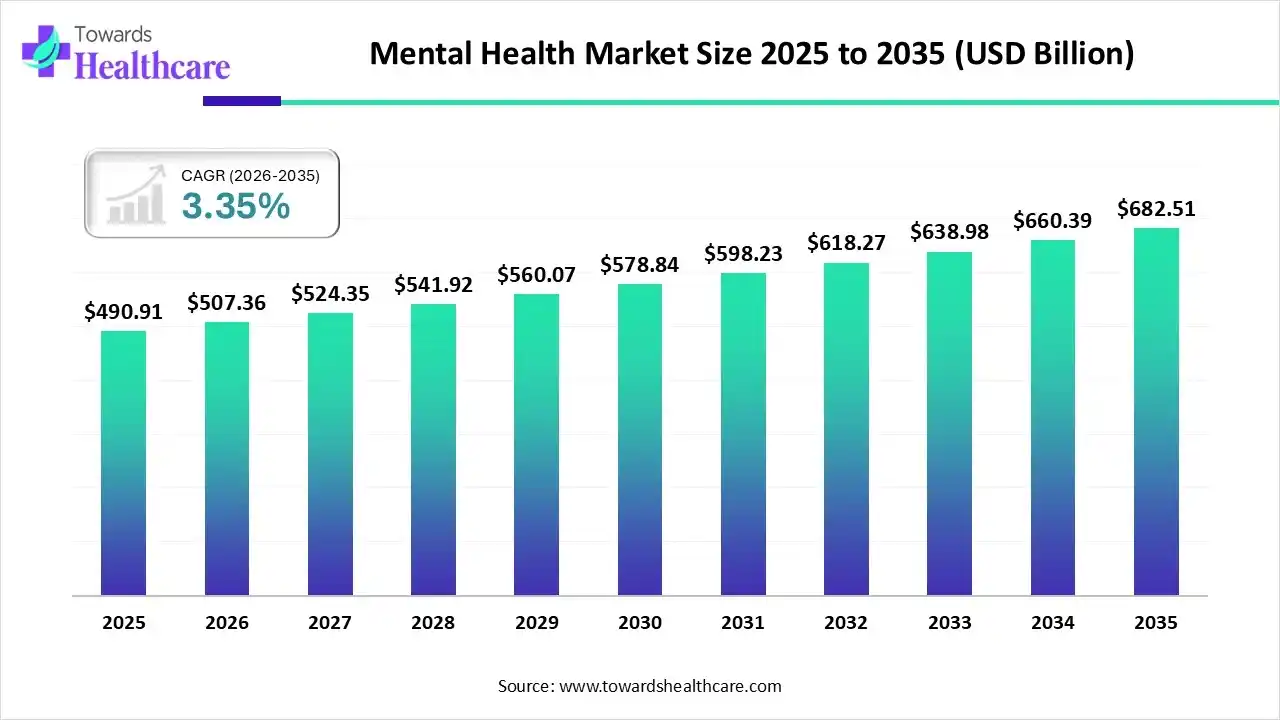
Download Free Sample Market Now and Get the Complete Report Easily at: https://www.towardshealthcare.com/download-sample/6516
Mental health has transitioned from being seen as a personal struggle to a collective responsibility. Governments, employers, clinicians, technologists, and patients now participate in a shared effort to address anxiety, depression, substance use disorders, and severe psychiatric conditions. This transformation has unfolded gradually, driven by lived experiences, data-backed research, and a growing realization that untreated mental illness carries economic, social, and human costs that no system can afford to ignore.
From Silence to Strategy: How Awareness Reshaped Demand
The current expansion of the mental health market rests heavily on awareness. Unlike earlier periods, people now recognize symptoms earlier, speak more openly about emotional distress, and seek care without waiting for crisis moments. This change did not happen overnight. It emerged from years of public health messaging, advocacy, workplace initiatives, and high-profile conversations that normalized mental health as an integral part of overall well-being.
Early diagnosis has become a defining feature of modern mental healthcare. Individuals increasingly approach care providers for mild to moderate symptoms, rather than waiting until disorders escalate. This shift has expanded demand for counseling services, digital platforms, and preventive interventions. It has also redefined the patient journey, turning mental healthcare into a continuous process rather than an episodic response to emergencies.
As awareness spreads across age groups and cultures, emerging economies have begun contributing significantly to global demand. Regions in Asia-Pacific, Europe, and South America now show accelerating adoption of mental health services, reflecting changing social attitudes and improved access to care.
The Economics of Well-Being
The financial trajectory of the mental health market reveals a steady and resilient growth pattern. With a projected compound annual growth rate of 3.35 percent from 2026 to 2035, the market does not rely on speculative spikes or short-term trends. Instead, it grows through structural changes in healthcare delivery, insurance coverage, and population health needs.
Mental health conditions affect productivity, employment, education, and long-term healthcare spending. Policymakers and payers increasingly recognize that investing in mental healthcare reduces downstream costs associated with chronic disease, disability, and social welfare systems. This understanding has strengthened reimbursement frameworks and encouraged integration of mental health services into mainstream healthcare settings.
The market’s expansion also reflects diversification. Services now range from traditional outpatient counseling to emergency interventions, home-based care, digital therapy platforms, and AI-enabled tools. This breadth allows the industry to serve diverse patient needs while maintaining long-term economic stability.
Outpatient Care as the Anchor of Mental Health Services
Outpatient counseling continues to dominate the services segment of the mental health market, and for good reason. It offers a balance between accessibility, personalization, and cost efficiency. Patients receive structured therapeutic support without the disruption or expense of hospitalization. Clinicians can build long-term relationships, observe subtle behavioral changes, and adjust treatment plans over time.
This model aligns well with the modern understanding of mental health as a chronic and manageable condition rather than an acute illness. Outpatient settings support cognitive behavioral therapy, psychotherapy, medication management, and holistic interventions that address emotional, psychological, and social factors simultaneously.
As demand for mental healthcare grows, outpatient counseling remains the foundation upon which more advanced and specialized services build.
Crisis Response in Real Time
While outpatient care anchors the market, emergency mental health services represent its fastest-growing segment. Societies increasingly recognize that timely intervention during mental health crises can save lives and prevent long-term trauma. Emergency services now operate around the clock, providing immediate care for individuals experiencing suicidal ideation, psychosis, or severe emotional distress.
The growth of this segment reflects both rising need and improved system readiness. Healthcare providers have strengthened coordination between emergency departments, psychiatric specialists, and community-based services. This integrated approach ensures continuity of care after the immediate crisis passes, reducing relapse and rehospitalization rates.
Emergency mental health services also highlight a broader truth about the market: mental healthcare must be responsive, flexible, and available when people need it most.
Depression and Anxiety at the Center of the Burden
Among mental health disorders, depression continues to command the largest share of market revenue. Its prevalence across age groups, its association with chronic disease, and its impact on quality of life make it a primary focus for clinicians and researchers alike. Treatment approaches have expanded beyond medication to include therapy, lifestyle interventions, and digital support tools.
Anxiety disorders, however, represent the fastest-growing segment. Modern lifestyles characterized by constant connectivity, economic uncertainty, social isolation, and high performance pressures have amplified anxiety across populations. Countries with advanced healthcare systems report rising diagnosis rates, while emerging markets show growing recognition of anxiety as a treatable condition.
Together, depression and anxiety shape research priorities, clinical protocols, and technology development across the mental health ecosystem.
Digital Platforms Redefine Access
Few developments have reshaped mental healthcare as profoundly as digital platforms. Online therapy services now contribute the largest share of platform-based revenue, reflecting their ability to overcome traditional barriers such as geography, stigma, and time constraints. Patients can connect with licensed professionals from their homes, often at lower cost and with greater flexibility.
The rapid adoption of digital therapy accelerated during periods of restricted mobility, but its sustained growth reflects long-term value rather than temporary necessity. Digital platforms support continuity of care, improve adherence, and enable data-driven personalization of treatment plans.
As comfort with virtual care increases, digital platforms have become a permanent fixture of the mental health market.
Artificial Intelligence Enters the Therapeutic Space
Artificial intelligence represents the fastest-growing platform segment within mental healthcare. AI-powered tools now assist with mood tracking, symptom assessment, behavioral pattern analysis, and early risk detection. These technologies do not replace clinicians; instead, they augment clinical decision-making and extend support beyond traditional care settings.
AI-driven mental health tools offer scalability, consistency, and real-time responsiveness. They help address workforce shortages by supporting large populations with limited human resources. At the same time, ethical considerations around safety, accuracy, and patient privacy continue to shape regulatory and professional standards.
The future of mental healthcare will likely depend on how effectively AI integrates with human expertise, maintaining empathy while enhancing efficiency.
Adults at the Core of Demand
Adults account for the largest share of mental health market revenue, reflecting the intersection of work-related stress, family responsibilities, financial pressures, and social expectations. Mental health challenges during adulthood often coincide with peak productivity years, making timely intervention crucial for both individual well-being and economic stability.
Employers increasingly invest in mental health benefits, recognizing their role in employee engagement, retention, and performance. This trend has expanded demand for workplace mental health programs, digital platforms, and outpatient services tailored to adult populations.
As awareness grows, adults now seek preventive care alongside treatment, further broadening the scope of services.
Hospitals, Clinics, and the Shift Toward Homecare
Hospitals and clinics continue to lead as primary end-users of mental health services, offering structured care, specialized expertise, and crisis management capabilities. These institutions serve as hubs for diagnosis, treatment, and research.
At the same time, homecare settings represent one of the most dynamic growth areas in the market. Advances in telemedicine, remote monitoring, and digital therapy enable patients to receive care in familiar environments. Home-based mental healthcare reduces hospitalization rates, improves comfort, and supports long-term management of chronic conditions.
This shift reflects a broader healthcare trend toward decentralization and patient-centered care.
North America’s Structural Advantage
North America remains the leading region in the global mental health market, supported by strong regulatory frameworks, advanced digital infrastructure, and a high concentration of key industry players. The region’s healthcare systems increasingly prioritize mental health as a public health issue, supported by policy initiatives and funding programs.
The United States, in particular, demonstrates robust investment activity in digital mental health startups, signaling confidence in innovation-driven growth. High prevalence rates of mental illness have also intensified demand for accessible and scalable solutions.
Canada complements this growth with public health initiatives and community-based care models that emphasize prevention and early intervention.
Asia-Pacific’s Accelerating Momentum
Asia-Pacific stands out as the fastest-growing region in the mental health market. Rapid urbanization, changing family structures, academic and professional pressures, and increased awareness contribute to rising demand across countries such as China, India, Japan, and Australia.
Governments in the region increasingly recognize the economic and social impact of untreated mental illness. Policy reforms, workforce development strategies, and public awareness campaigns have begun to close historical gaps in access to care.
Digital platforms play a particularly important role in Asia-Pacific, offering scalable solutions in regions with limited specialist availability.
Europe’s Measured Expansion
Europe continues to demonstrate steady growth in mental healthcare, supported by universal healthcare systems and strong emphasis on community-based services. Countries such as the United Kingdom, Germany, and France invest in integrated care models that combine mental and physical health services.
European markets also prioritize ethical standards, patient rights, and evidence-based practice. This approach supports sustainable growth while maintaining high quality of care.
Policy as a Market Catalyst
Government initiatives remain central to the mental health market’s evolution. Global and national programs focus on leadership, workforce development, prevention, and data-driven decision-making. These initiatives not only improve access to care but also shape long-term market stability by setting standards and priorities.
Public policy increasingly frames mental health as a cornerstone of societal resilience. This perspective encourages cross-sector collaboration, aligning healthcare, education, employment, and social services around shared goals.
Innovation Meets Responsibility
The mental health market’s future depends on balancing innovation with responsibility. Technological advancements, pharmaceutical research, and service delivery models must prioritize patient safety, ethical practice, and inclusivity.
Workforce shortages, insurance gaps, and persistent stigma remain challenges. Addressing these issues requires coordinated efforts across public and private sectors, as well as sustained investment in training and infrastructure.
At the same time, opportunities abound. Integrating mental healthcare into primary care, adopting whole-person care models, and leveraging digital tools responsibly can redefine outcomes for millions worldwide.
A Market That Reflects Humanity
The global mental health market tells a story beyond numbers and forecasts. It reflects evolving attitudes toward vulnerability, resilience, and human connection. It reveals how societies respond when they choose to listen, invest, and act.
As the market approaches its projected valuation of over USD 680 billion by 2035, its true value lies not in revenue alone but in lives improved, crises averted, and potential restored. Mental healthcare has moved from the margins to the mainstream, and in doing so, it has reshaped the future of global health.
The question is no longer whether mental health matters. The question is how effectively we continue to respond.
Access our exclusive, data-rich dashboard dedicated to the life science industry – built specifically for decision-makers, strategists, and industry leaders. The dashboard features comprehensive statistical data, segment-wise market breakdowns, regional performance shares, detailed company profiles, annual updates, and much more. From market sizing to competitive intelligence, this powerful tool is one-stop solution to your gateway.
Access the Dashboard: https://www.towardshealthcare.com/access-dashboard
Checkout Mental Health Market Report Now at: https://www.towardshealthcare.com/checkout/6516
Become a valued research partner with us – https://www.towardshealthcare.com/schedule-meeting
You can place an order or ask any questions, please feel free to contact us at [email protected]
Powering Healthcare Leaders with Real-Time Insights: https://www.towardshealthcare.com/healthcare-intelligence-platform
Europe Region – +44 778 256 0738
North America Region – +1 8044 4193 44
APAC Region: +91 9356 9282 04
Visit Our Website: https://www.towardshealthcare.com
Find us on social platforms: LinkedIn | Twitter | Instagram | Medium | Pinterest