The U.S. Dental Insurance Market at a Turning Point
For decades, dental care in the United States sat awkwardly between necessity and neglect. People understood the importance of a healthy smile, yet dental insurance often felt optional, fragmented, or insufficient. That perception is now changing at a structural level. The U.S. dental insurance market is no longer a quiet sub-segment of healthcare coverage; it has become a fast-growing, strategically important industry shaping how Americans think about prevention, affordability, and long-term health.
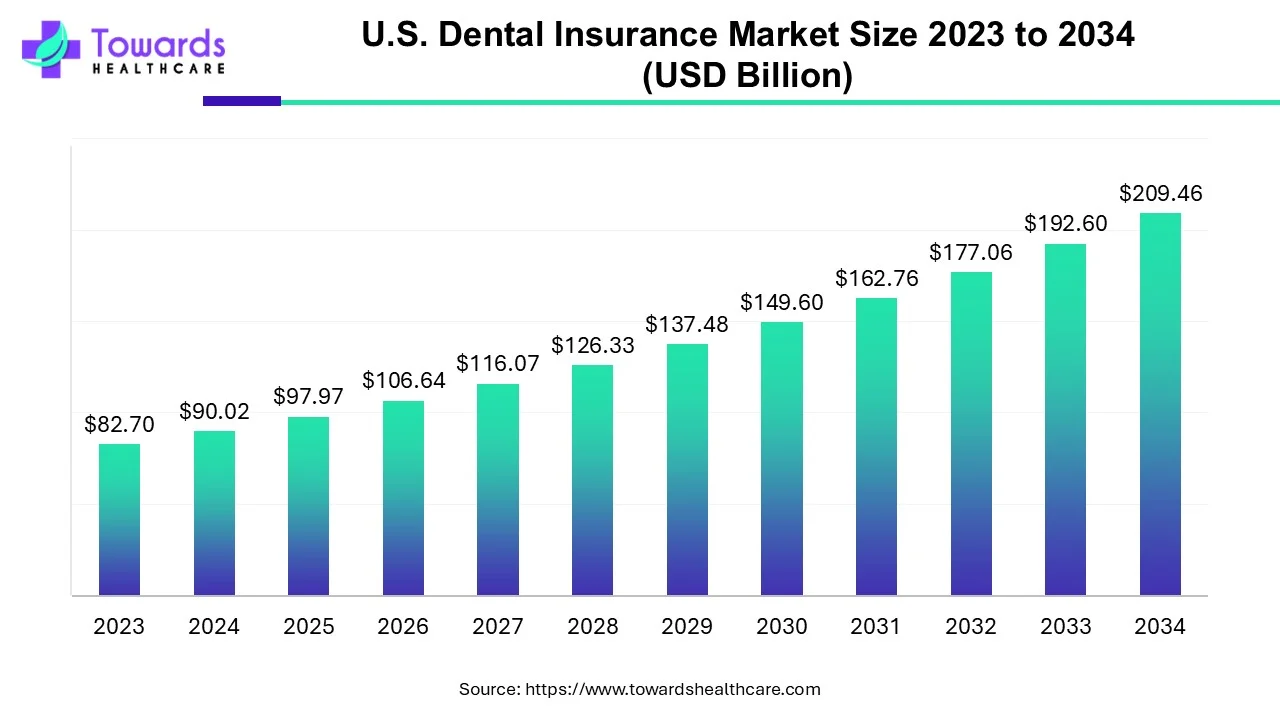
In 2024, the U.S. dental insurance market stood at USD 90.02 billion. By 2025, it reached nearly USD 97.97 billion, and projections suggest it could more than double to approximately USD 209.46 billion by 2034. This growth is not speculative optimism. It reflects deep demographic shifts, rising disease burden, policy evolution, and a fundamental rethink of oral health as an integral component of overall wellness. With a projected CAGR of 8.84% between 2025 and 2034, dental insurance is emerging as one of the most resilient growth stories within U.S. healthcare.
Download Free Sample Now and Get the Complete Report Easily at: https://www.towardshealthcare.com/download-sample/5472
From Neglected Smiles to Strategic Healthcare Priority
Oral health has long been underestimated in healthcare planning. Cavities, gum disease, and tooth loss were treated as isolated problems rather than indicators of broader systemic risks. Today, medical research and clinical practice increasingly link oral health to cardiovascular disease, diabetes, pregnancy outcomes, and even cognitive decline. As this understanding spreads, dental insurance is moving from a discretionary purchase to a practical necessity.
The rising prevalence of dental disorders across age groups has been a key catalyst. A significant portion of U.S. adults live with untreated cavities or periodontal disease, often delaying care until pain or infection forces emergency intervention. These delays increase costs for patients and strain the medical system. Dental insurance changes this pattern by encouraging routine check-ups, early diagnosis, and preventive care. Over time, this shift reduces both personal and societal healthcare expenditure.
A Market Expanding Beyond National Borders
While the U.S. remains one of the most influential dental insurance markets, it is part of a much larger global trend. The global dental insurance market was valued at USD 232.07 billion in 2024 and is expected to approach USD 566.34 billion by 2034, growing at a CAGR of 9.33%. This parallel expansion highlights a shared global challenge: rising dental disease prevalence alongside increasing healthcare expectations.
In the U.S., this global momentum intersects with higher healthcare spending, employer-sponsored coverage expansion, and policy frameworks that increasingly recognize oral health equity. The result is a domestic market that grows not only in size but also in sophistication.
Understanding Dental Insurance Beyond the Fine Print
At its core, dental insurance is about predictability and access. It allows individuals and families to budget for oral healthcare while reducing the financial shock of unexpected procedures. Unlike medical insurance, dental plans typically emphasize cost-sharing structures such as premiums, deductibles, co-payments, and coinsurance. These mechanisms vary widely, giving consumers flexibility but also creating complexity.
Some plans prioritize lower monthly premiums with higher out-of-pocket costs, while others reverse this balance. Dental insurance may be offered as a standalone product or bundled with broader health coverage. This flexibility has enabled insurers to design plans tailored to students, working adults, families, seniors, and employer groups. As consumers become more informed, plan selection increasingly reflects lifestyle, income stability, and long-term health priorities.
Why Demand Is Rising Faster Than Ever
Several forces are converging to accelerate demand for dental insurance in the U.S. Population aging plays a major role. As Americans live longer, they retain their natural teeth for more years, increasing the likelihood of chronic dental conditions that require ongoing care. Seniors, in particular, face higher risks of tooth decay, gum disease, and complications linked to chronic illnesses.
At the same time, awareness among younger adults is growing. Employers now commonly include dental coverage as part of comprehensive benefits packages, especially in competitive labor markets. For working adults, dental insurance is no longer perceived as a luxury but as a standard component of responsible financial planning.
Technological advancements also contribute to rising demand. Modern dental care increasingly relies on digital imaging, advanced diagnostics, robotics, and 3D printing. While these innovations improve outcomes, they also raise treatment costs. Dental insurance acts as a financial bridge, allowing patients to access state-of-the-art care without prohibitive expense.
How AI Is Quietly Reshaping Dental Insurance
Artificial intelligence has begun to transform dental insurance in ways that are both subtle and profound. For consumers, AI-driven tools simplify plan selection by analyzing personal needs, usage patterns, and budget constraints. This reduces confusion and increases satisfaction, particularly for first-time buyers navigating complex policy terms.
For insurers, AI introduces operational efficiency at scale. Automated systems collect, validate, and organize vast amounts of patient and provider data. Claims processing becomes faster and more accurate, reducing administrative overhead and minimizing disputes. AI also plays a critical role in insurance verification, ensuring real-time accuracy that benefits both dental practices and patients.
Fraud detection is another area where AI delivers measurable value. By analyzing patterns across large datasets, AI systems can identify anomalies that indicate fraudulent claims or misuse. Beyond cost control, this enhances trust across the payer-provider ecosystem. AI-driven insights also support better decision-making, enabling insurers to refine pricing models, improve customer service, and strengthen payer-provider communication.
Affordable Plans as the Engine of Market Growth
Affordability remains the single most powerful driver of market expansion. The availability of low-cost dental plans has dramatically broadened access to coverage. Some plans cost as little as a dollar a day, removing one of the biggest psychological barriers to enrollment. These affordable options often provide access to extensive national networks of dental providers, making quality care geographically accessible.
Employers play a pivotal role in this affordability equation. Corporate-sponsored dental insurance covers millions of adults and their families, often at significantly reduced rates due to group purchasing power. These plans typically include preventive, basic, and major care benefits, reinforcing the culture of routine dental maintenance rather than crisis-driven treatment.
Structural Challenges That Refuse to Disappear
Despite strong growth, the U.S. dental insurance market faces persistent structural challenges. Stagnant reimbursement rates remain a major concern. When reimbursement fails to keep pace with inflation, dental practices face financial pressure that can limit service availability or discourage provider participation in insurance networks.
Complex billing processes and administrative burdens further strain providers, particularly smaller practices. Medicaid redetermination processes have also created uncertainty, leaving some populations temporarily without coverage. The consequences are significant. Millions of Americans remain uninsured for dental care, shifting untreated oral health issues into the medical system, where costs are higher and outcomes often worse.
Government Policy as a Catalyst for Change
Government initiatives increasingly recognize the economic and public health cost of neglected oral care. Untreated dental conditions lead to millions of lost school hours each year and tens of billions of dollars in lost productivity. In response, federal and state agencies have launched programs aimed at prevention, access, and education.
National frameworks such as Healthy People 2030 emphasize reducing tooth decay and improving access to oral healthcare services. Programs like the Federal Employees Dental and Vision Insurance Program extend coverage to federal employees, retirees, and veterans. Medicare and Medicaid dental benefits continue to evolve, covering tens of millions of Americans and shaping baseline expectations for access and affordability.
These policies do more than expand coverage. They normalize dental insurance as a core component of healthcare, reinforcing long-term market stability.
Why Coverage Models Matter More Than Ever
Dental Preferred Provider Organizations have dominated the U.S. market by offering flexibility and cost savings through negotiated provider networks. Patients value the ability to choose dentists both within and outside networks, even if out-of-network care comes at a higher cost. This balance of choice and affordability explains the sustained popularity of PPO plans.
At the same time, Dental Health Maintenance Organizations are gaining traction, particularly among cost-sensitive populations. With lower premiums and clearly defined out-of-pocket costs, DHMO plans encourage regular check-ups and preventive care. Their emphasis on in-network primary providers aligns with public health goals of continuity and early intervention.
Prevention Takes Center Stage
Preventive care has emerged as the backbone of dental insurance value. Coverage for routine cleanings, exams, fluoride treatments, and diagnostic imaging encourages early detection of problems before they escalate. Many preventive services receive full coverage, reinforcing positive patient behavior and reducing long-term costs.
This preventive focus reflects a broader shift in healthcare philosophy. As evidence mounts linking oral health to chronic disease, regular dental check-ups are increasingly viewed as a form of systemic disease prevention rather than optional maintenance.
Basic Coverage Finds Its Moment
While preventive care dominates today, basic dental services are poised for rapid growth. Coverage for fillings, emergency treatments, and root canal procedures addresses the reality that preventive care alone cannot eliminate all dental issues. With tens of thousands of root canals performed daily in the U.S., demand for partial coverage plans that balance cost and benefit continues to rise.
Tax advantages and predictable cost-sharing structures further enhance the appeal of basic plans, particularly for middle-income households seeking financial protection without premium-heavy policies.
Demographics Redefine Market Priorities
Senior citizens currently represent the largest demographic segment in the U.S. dental insurance market. Longer life expectancy and higher disease prevalence drive sustained demand for coverage. For seniors, dental insurance is not about aesthetics; it is about nutrition, infection prevention, and quality of life.
Adults, however, represent the fastest-growing segment. Employer-sponsored benefits, rising awareness, and changing attitudes toward preventive healthcare fuel this expansion. As adults prioritize long-term health and financial planning, dental insurance increasingly fits naturally into household budgets.
A Competitive Landscape Built on Scale and Trust
The U.S. dental insurance market is shaped by established insurers with extensive provider networks and decades of operational experience. Competition centers on plan design, network breadth, customer experience, and increasingly, technological capability. Financial performance among leading insurers reflects steady growth, reinforcing investor confidence in the sector’s long-term outlook.
Recent innovations focus less on aggressive expansion and more on operational excellence. Partnerships, AI-driven platforms, and cybersecurity investments signal a maturing market focused on sustainability rather than short-term gains.
Where the Market Is Headed
The future of the U.S. dental insurance market lies at the intersection of prevention, technology, and policy. Growth will continue, but its character will evolve. AI will deepen its role in personalization and efficiency. Government initiatives will further integrate oral health into public healthcare strategy. Consumers will demand transparency, simplicity, and value.
What was once considered a secondary form of insurance is becoming a central pillar of healthcare planning. As awareness grows and access expands, dental insurance is no longer just about protecting smiles. It is about protecting productivity, dignity, and long-term health. The numbers tell a compelling story, but the real transformation lies in how Americans increasingly view oral health not as an afterthought, but as essential care worthy of investment and attention.