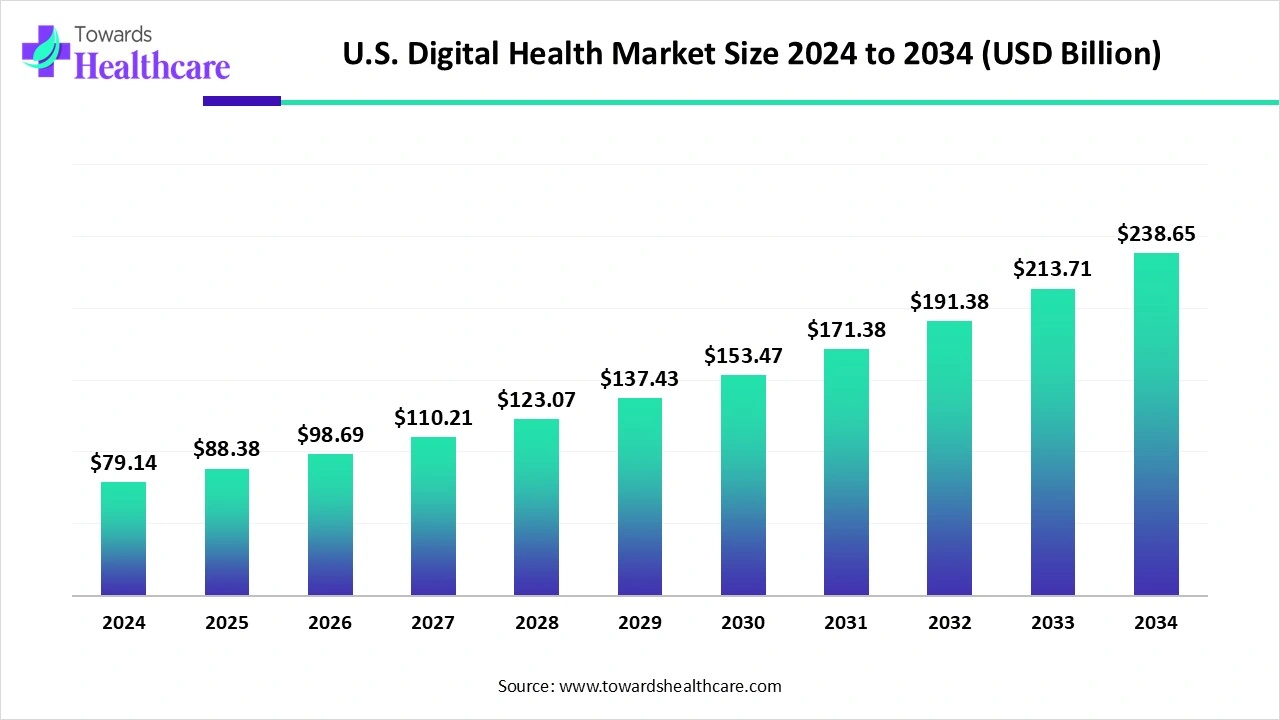
The digital health landscape in the United States is undergoing a transformation unlike anything seen in previous decades. From bustling hospital corridors to quiet suburban homes, technology is redefining the way care is delivered, managed, and experienced. The U.S. digital health market, valued at $79.14 billion in 2024, is set to reach $88.38 billion by 2025 and is projected to surpass $238 billion by 2034. This rapid growth, sustained by a compound annual growth rate of 11.67%, is not merely a reflection of technological adoption, it signals a fundamental shift in how Americans access, understand, and interact with healthcare.
Download Free Sample Now and Get the Complete Report Easily at:
https://www.towardshealthcare.com/download-sample/6211
Digital Health: Beyond the Buzzword
Digital health encompasses more than just telemedicine or wearable fitness trackers; it represents a holistic integration of technology and healthcare services aimed at improving patient outcomes, operational efficiency, and accessibility. From telehealth platforms and mobile health apps to AI-driven analytics and connected wearable devices, the sector is evolving into a dynamic ecosystem that touches every aspect of patient care. This transformation is driven by rising consumer expectations, technological innovations, and the pressing need to manage chronic diseases in a cost-efficient manner.
Telehealth Leads the Way
Among the various technologies shaping digital health, telehealth and virtual care stand out as the pioneers. In 2024, telehealth accounted for the largest segment of the U.S. digital health market, capturing nearly 35% of market share. The adoption of hybrid care models, combining in-person visits with video consultations, has transformed patient engagement. Healthcare providers now utilize telehealth to perform routine checkups, triage emergencies, and manage chronic illnesses remotely. The integration of telehealth with electronic health records and AI-powered decision support tools has elevated care delivery, enabling physicians to provide accurate, timely, and personalized treatment even from a distance.
Telehealth’s appeal extends beyond clinical efficiency. For patients, it represents convenience, reduced travel time, and safer access to care, particularly for high-risk or immunocompromised individuals. Employers and insurers have also embraced virtual care, incorporating it into wellness programs and chronic disease management strategies. This adoption has reinforced telehealth’s dominant position and will continue to drive the market forward as new technologies and regulations emerge.
Digital Therapeutics: Changing How We Treat Disease
While telehealth facilitates access, digital therapeutics are transforming treatment paradigms. Unlike conventional therapies that rely solely on medication or in-person interventions, digital therapeutics leverage evidence-based software, gamification, and behavioral analytics to improve patient adherence and outcomes. For chronic disease management, mental health interventions, and preventive care, these platforms offer scalable, engaging, and measurable solutions.
The sector is projected to achieve the fastest growth rate in the coming decade. Mobile-first approaches, integration with wearables, and AI-driven personalization allow for real-time tracking of patient progress, turning healthcare from reactive to proactive. Digital therapeutics not only improve clinical outcomes but also reduce long-term costs for providers, payers, and patients, positioning themselves as indispensable tools in modern healthcare ecosystems.
Chronic Disease Management Remains a Priority
Chronic diseases, including diabetes, cardiovascular disorders, and respiratory conditions, represent a significant burden on U.S. healthcare systems. Digital health solutions for chronic disease management are therefore critical. AI-powered predictive analytics, mobile apps for medication adherence, and remote monitoring devices have enabled healthcare providers to identify treatment gaps, monitor disease progression, and deliver personalized interventions.
In 2024, chronic disease management dominated the U.S. digital health market, accounting for roughly 30% of revenue share. The integration of these solutions into bundled care models and collaborative initiatives between digital health companies and payers has further strengthened adoption. For patients, continuous monitoring and timely interventions mean better disease control, fewer hospitalizations, and improved quality of life.
Mental Health Technology is Taking Off
Digital health is not only addressing physical ailments; it is rapidly revolutionizing mental health care. Virtual therapy platforms, digital cognitive behavioral therapy apps, and biofeedback devices are now widely accepted, particularly among younger populations. The sector is projected to grow at the fastest rate, driven by increasing awareness of mental health issues, reduced stigma around seeking help, and innovative technology solutions that make mental healthcare more accessible.
Pharmaceutical companies, tech firms, and insurers are collaborating to integrate mental health solutions into broader care ecosystems, expanding reach and ensuring continuity of care. AI-powered chatbots, VR-based therapy, and personalized mental wellness programs are increasingly becoming part of mainstream healthcare, signaling a profound shift in the perception and delivery of mental health services.
AI: The Game Changer
Artificial intelligence is perhaps the most transformative force in digital health today. AI-powered platforms enhance diagnostics, predict disease progression, and enable personalized treatment planning. For providers, AI reduces administrative burdens, optimizes resource allocation, and accelerates clinical workflows. For patients, it ensures timely interventions and more precise monitoring of health metrics.
Recent innovations demonstrate AI’s potential: tools for clinical documentation, predictive analytics, and virtual primary care platforms are streamlining operations across hospitals, clinics, and insurance networks. By integrating AI into digital health platforms, providers can achieve operational efficiency, reduce costs, and deliver outcomes-driven care, establishing the U.S. as a global leader in healthcare innovation.
Remote Patient Monitoring: A Future-Ready Solution
Remote patient monitoring (RPM) is emerging as a major growth opportunity within the U.S. digital health market. With connected devices and wearable sensors, RPM enables continuous tracking of patient vitals, medication adherence, and lifestyle metrics. This approach allows for proactive intervention, reducing hospital readmissions and improving overall care quality.
The expansion of RPM is particularly relevant for chronic disease management and aging populations. By providing patients with tools to manage their conditions from home, RPM enhances engagement and empowers consumers to take control of their health. The integration of RPM with AI and predictive analytics further amplifies its effectiveness, making it a cornerstone of future healthcare delivery models.
B2B vs. B2C: How Business Models Shape Adoption
The business model landscape in U.S. digital health reflects the diverse needs of providers and consumers. In 2024, the B2B model dominated the market, accounting for approximately 55% of revenue. Large healthcare organizations, insurers, and providers invest in enterprise-grade platforms to manage population health, optimize clinical workflows, and ensure regulatory compliance. Recurring service agreements and technical support make these solutions financially attractive and operationally efficient.
Conversely, the B2C segment is projected to grow at the fastest rate. Direct-to-consumer solutions, including teleconsultations, subscription-based digital therapeutics, and wearable devices, are gaining traction as consumers increasingly seek personalized and convenient healthcare options. Rising smartphone penetration, wearable adoption, and awareness of preventive care are driving this shift, highlighting the importance of consumer-centric approaches in digital health strategy.
Regional Insights: West Leads, South Surges
The geographic distribution of digital health adoption in the U.S. reveals interesting trends. The West has historically led the market, driven by early adoption of innovative health technologies, robust state-level support, and a tech-savvy population. Large-scale pilot programs, partnerships between academic institutions and hospitals, and high digital literacy have positioned the region as a hub for healthcare innovation.
The South, however, is emerging as the fastest-growing market. Rapid urbanization, increasing health awareness, and a rising middle class are fueling demand for accessible healthcare solutions. Regional partnerships between hospitals, insurers, and technology providers are facilitating the deployment of scalable digital health programs, positioning the Southern U.S. as a high-growth market with significant untapped potential.
Global Context: U.S. as the Pioneer
While the U.S. market sets the benchmark, global digital health is also experiencing unprecedented growth. From $335.5 billion in 2024 to over $1 trillion by 2034, the global expansion underscores the universal need for accessible, efficient, and patient-centered care. Mobile health apps, AI analytics, connected devices, and cloud-based platforms are the key drivers internationally, with the U.S. serving as a blueprint for technological integration, regulatory frameworks, and patient engagement strategies.
Regulatory Landscape: Navigating Compliance
Regulatory oversight in the U.S. plays a critical role in shaping digital health adoption. The FDA regulates digital health products based on risk classification, ensuring safety and efficacy while providing pathways for rapid approval through programs like the Breakthrough Device Program. These frameworks encourage innovation without compromising patient safety.
Clinical trials increasingly leverage digital health technologies for decentralized data collection, patient engagement, and accurate monitoring. Remote monitoring devices, mobile apps, and electronic sensors are now integral to modern clinical research, allowing for hybrid and decentralized trial models that accelerate innovation while maintaining regulatory compliance.
Conclusion: The Digital Health Era is Here
The U.S. digital health market is not just growing—it is evolving into an ecosystem that empowers providers, engages patients, and reshapes the delivery of healthcare. Telehealth, digital therapeutics, AI, remote monitoring, and consumer-driven solutions collectively point to a future where healthcare is more accessible, personalized, and efficient.
This transformation is not without challenges. Data privacy, cybersecurity threats, and integration complexities require ongoing attention. Yet, the momentum is undeniable. With increasing investment, supportive policies, technological innovation, and rising consumer demand, digital health is poised to redefine healthcare in the U.S. and set a global standard for innovation, accessibility, and patient-centered care.
The question is no longer whether healthcare will go digital, it already has. The challenge now lies in harnessing technology responsibly, inclusively, and effectively to create a healthcare system that works for every American.
Access our exclusive, data-rich dashboard dedicated to the healthcare industry – built specifically for decision-makers, strategists, and industry leaders. The dashboard features comprehensive statistical data, segment-wise market breakdowns, regional performance shares, detailed company profiles, annual updates, and much more. From market sizing to competitive intelligence, this powerful tool is one-stop solution to your gateway.
Access the Dashboard: https://www.towardshealthcare.com/access-dashboard
Checkout U.S. Digital Health Market Report Now at: https://www.towardshealthcare.com/checkout/6211
Become a valued research partner with us - https://www.towardshealthcare.com/schedule-meeting
You can place an order or ask any questions, please feel free to contact us at [email protected]
Powering Healthcare Leaders with Real-Time Insights: https://www.towardshealthcare.com/healthcare-intelligence-platform
Europe Region – +44 778 256 0738
North America Region – +1 8044 4193 44
APAC Region: +91 9356 9282 04
Visit Our Website: https://www.towardshealthcare.com
Find us on social platforms: LinkedIn | Twitter | Instagram | Medium | Pinterest