For decades, oral care lived in the background of healthcare conversations. It rarely commanded headlines, yet it silently influenced overall health, confidence, productivity, and quality of life for billions of people. Today, that quiet presence has transformed into a fast-evolving global industry that reflects deeper shifts in public health awareness, technology adoption, consumer behavior, and government policy. The global oral care market, valued at approximately US$ 38 billion in 2023 and projected to reach nearly US$ 77.87 billion by 2034 at a CAGR of 6.74%, stands as a clear signal that oral health has moved from routine hygiene to a strategic healthcare priority.
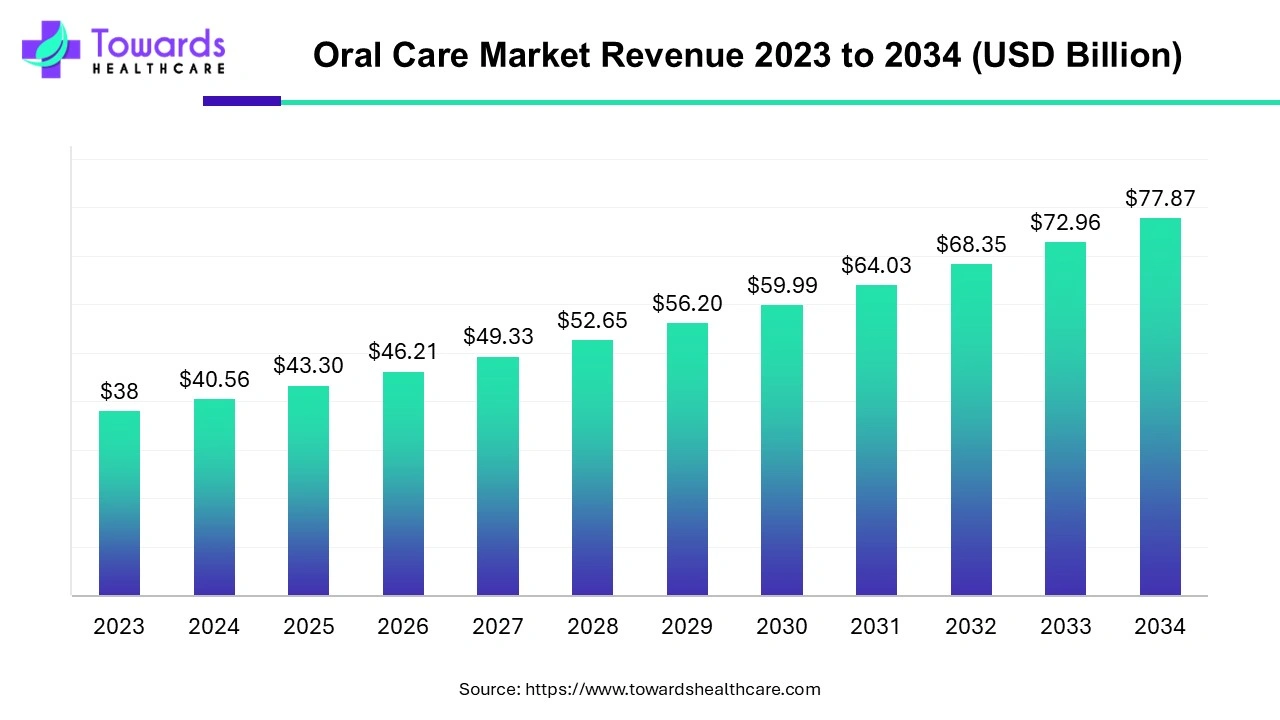
Download Free Sample Now and Get the Complete Report Easily at: https://www.towardshealthcare.com/download-sample/5269
This growth is not accidental. It emerges from a convergence of rising disease burden, lifestyle changes, scientific innovation, and a growing understanding that the mouth is not separate from the body. Oral care now sits at the intersection of preventive healthcare, consumer wellness, and digital health innovation.
From Daily Habit to Global Health Imperative
Oral care fundamentally revolves around prevention. Brushing, flossing, rinsing, and regular dental checkups form the frontline defense against dental caries, periodontal disease, gingivitis, bad breath, and tooth loss. Yet the implications go far beyond cavities. Poor oral health has strong associations with cardiovascular disease, diabetes complications, respiratory infections, and adverse pregnancy outcomes. As research continues to reinforce these connections, oral care increasingly earns its place alongside other chronic disease prevention strategies.
The World Health Organization estimates that oral diseases affect around 3.5 billion people worldwide each year, making them among the most prevalent non-communicable diseases. This staggering figure explains why oral care products are no longer perceived as optional consumer goods. They are essential tools for maintaining long-term health, especially as populations age and lifestyles become more sugar-rich and stress-driven.
Why Demand Keeps Rising Across All Age Groups
The growing demand for oral care products reflects demographic and behavioral realities. Children face high rates of dental caries due to dietary habits and inadequate early oral hygiene education. Adults experience cumulative damage from years of wear, sugar intake, tobacco use, and inconsistent dental visits. Older populations encounter heightened risks of gum disease, tooth loss, dry mouth from medications, and complex prosthetic care needs.
In many countries, people now understand that waiting for pain before visiting a dentist often leads to higher costs and irreversible damage. This awareness shifts consumer behavior toward preventive products such as advanced toothbrushes, medicated mouthwashes, interdental cleaners, and sensitivity-focused toothpaste formulations.
Asia-Pacific Sets the Pace in Market Leadership
Asia-Pacific’s dominance in the global oral care market is neither surprising nor temporary. The region accounted for roughly 41 percent of global market share in 2023, driven by sheer population scale, rising disease prevalence, and increasing government intervention in public health.
India and China illustrate the magnitude of the challenge. In India, an estimated eight out of ten children and nine out of ten adults experience significant oral health issues. In China, over 84 percent of adults show dentition defects, while a smaller yet significant percentage live without natural teeth altogether. Japan faces a different but equally serious issue, with periodontal disease surpassing dental caries as the primary oral health concern among adults.
Governments across Asia-Pacific increasingly recognize that untreated oral disease strains healthcare systems and reduces workforce productivity. Expanded insurance coverage, public oral health campaigns, school-based screenings, and community dental camps are steadily improving access and awareness. These efforts, combined with rapid urbanization and rising disposable incomes, continue to strengthen market growth across the region.
North America Accelerates with Policy and Technology
While Asia-Pacific dominates in size, North America is poised to grow at the fastest pace during the forecast period. This growth stems from a strong foundation of awareness, technological adoption, and supportive policy frameworks.
In the United States, tooth decay affects nearly 90 percent of adults between the ages of 20 and 64, while gum disease impacts roughly half of adults aged 45 to 64. These figures highlight a persistent disease burden despite advanced healthcare infrastructure. Government programs such as the Early and Periodic Screening, Diagnostic, and Treatment initiative focus on early intervention for children from low-income families, reinforcing preventive care as a public responsibility.
Canada’s Dental Care Plan represents another important step. By covering hundreds of thousands of citizens and allocating hundreds of millions of dollars toward dental expenses, the program underscores how oral health increasingly sits within national healthcare priorities. These policy initiatives not only improve access but also stimulate demand for professional dental services and at-home oral care products.
Europe Strengthens Its Focus on Prevention and Sustainability
Europe’s oral care market continues to grow steadily, supported by high awareness levels, aging populations, and a strong emphasis on preventive healthcare. Consumers across the region actively adopt oral hygiene routines, supported by widespread access to dental services and oral care products.
Germany stands out for its innovation in natural and sustainable dental products. As environmental awareness grows, European consumers increasingly prefer biodegradable toothbrushes, reduced plastic packaging, toothpaste tablets, and formulations with plant-based ingredients. This shift reshapes product development strategies and encourages collaboration between manufacturers, research institutions, and governments.
At the same time, rising rates of oral disorders across Europe reinforce the importance of daily oral care. The market benefits from a balanced mix of preventive products, advanced dental accessories, and professional-grade solutions designed for home use.
Toothbrushes Remain the Market’s Backbone
Despite innovation across product categories, the toothbrush remains the most indispensable oral care tool worldwide. Its dominance reflects universal necessity, affordability, and ease of use. Manual toothbrushes continue to account for a large share, especially in developing regions, while electric and battery-powered models gain traction among urban consumers seeking enhanced cleaning performance.
Technological integration now redefines the toothbrush category. Sensors, pressure indicators, and connectivity features help users improve brushing technique and consistency. These innovations shift brushing from a routine habit to a data-informed health behavior, particularly appealing to parents, tech-savvy adults, and preventive healthcare advocates.
Retail Channels Mirror Changing Consumer Behavior
Supermarkets and hypermarkets continue to dominate oral care distribution due to their convenience, wide product assortment, and price accessibility. Consumers value the ability to compare brands, formulations, and price points in one location, often combining oral care purchases with routine grocery shopping.
At the same time, online retail emerges as the fastest-growing distribution channel. Digital platforms offer convenience, subscription models, personalized recommendations, and promotional pricing. Same-day delivery and flexible return policies further reduce barriers to purchase. As digital literacy expands and e-commerce infrastructure improves, online oral care sales increasingly complement traditional retail rather than replace it.
Technology Redefines the Future of Oral Care
The future of oral care increasingly aligns with digital health innovation. Artificial intelligence now supports early diagnosis by analyzing dental images, X-rays, and oral scans with high accuracy. These tools help clinicians detect cavities, gum disease, and structural issues earlier, improving outcomes and reducing long-term costs.
AI-driven analysis of saliva composition and bacterial profiles opens new possibilities for personalized oral care. Consumers can now receive product recommendations based on individual risk factors rather than generic guidelines. This personalization reflects a broader healthcare trend that prioritizes tailored prevention over standardized treatment.
Internet of Things-enabled devices, such as smart toothbrushes, track brushing duration, coverage, and pressure in real time. These insights encourage better habits and improve adherence, particularly among children and individuals with orthodontic or periodontal concerns.
Innovation Meets Sustainability
Sustainability increasingly shapes oral care innovation. Manufacturers now respond to environmental concerns by developing biodegradable materials, refillable packaging, and water-efficient formulations. Toothpaste tablets, bamboo toothbrushes, and minimal-plastic packaging reflect changing consumer expectations rather than niche preferences.
These developments also align with regulatory pressures and corporate responsibility goals. As sustainability transitions from marketing claim to operational necessity, oral care brands must balance performance, affordability, and environmental impact.
The Cost Barrier Still Limits Access
Despite strong growth prospects, high treatment costs remain a significant obstacle. Routine cleanings often receive insurance coverage, but advanced procedures such as deep scaling, root canals, and prosthetic restorations impose financial strain, especially in low- and middle-income countries.
Fear and anxiety around dental procedures further complicate adherence. Many individuals delay treatment until pain becomes unavoidable, increasing both clinical complexity and cost. Addressing these barriers requires not only product innovation but also systemic improvements in education, insurance coverage, and community outreach.
Industry Leadership Reflects Long-Term Commitment
Leading companies in the oral care market increasingly emphasize habit formation, preventive education, and public health engagement. Industry leaders recognize that long-term growth depends not only on product sales but also on sustained improvements in population-level oral health.
Public messaging around nighttime brushing, sensitivity management, and enamel protection reflects a shift toward evidence-based communication rather than purely promotional narratives. This evolution strengthens consumer trust and aligns corporate strategies with public health objectives.
A Market That Reflects Societal Change
The oral care market tells a broader story about how societies approach health. As people live longer, consume more processed foods, and face rising chronic disease risk, preventive habits become essential. Oral care sits at the foundation of these habits, influencing nutrition, self-esteem, and systemic health outcomes.
The market’s projected growth through 2034 reflects more than financial expansion. It signals a cultural shift toward prevention, personalization, and accountability in healthcare. Oral care no longer exists in isolation; it integrates with digital health, sustainability, and public policy in ways that redefine its role.
Looking Ahead with Informed Optimism
The coming decade will likely reshape oral care in profound ways. Advances in diagnostics, regenerative therapies, and personalized prevention will continue to blur the line between professional dental care and at-home routines. Governments, healthcare systems, and consumers increasingly understand that investing in oral health delivers returns far beyond the mouth.
As awareness deepens and access expands, the oral care market will not merely grow in size. It will mature in purpose, positioning itself as a cornerstone of global health rather than a routine consumer category. The question is no longer whether oral health matters, but how effectively societies can act on what they now know.
Access our exclusive, data-rich dashboard dedicated to the dental industry – built specifically for decision-makers, strategists, and industry leaders. The dashboard features comprehensive statistical data, segment-wise market breakdowns, regional performance shares, detailed company profiles, annual updates, and much more. From market sizing to competitive intelligence, this powerful tool is one-stop solution to your gateway.
Quick Links
Access the Dashboard: https://www.towardshealthcare.com/access-dashboard
Checkout Oral Care Market Report Now at: https://www.towardshealthcare.com/checkout/5269
Become a valued research partner with us - https://www.towardshealthcare.com/schedule-meeting
You can place an order or ask any questions, please feel free to contact us at [email protected]
Powering Healthcare Leaders with Real-Time Insights: https://www.towardshealthcare.com/healthcare-intelligence-platform
Europe Region – +44 778 256 0738
North America Region – +1 8044 4193 44
APAC Region: +91 9356 9282 04
Visit Our Website: https://www.towardshealthcare.com
Find us on social platforms: LinkedIn | Twitter | Instagram | Medium | Pinterest