The drug discovery industry is standing at one of its most defining crossroads. For decades, pharmaceutical innovation followed a familiar pattern, long research timelines, high attrition rates, ballooning costs, and an uncomfortable dependence on trial-and-error science. Today, that pattern is breaking. Artificial intelligence is no longer a peripheral experiment inside research labs; it is becoming the engine that reshapes how new medicines are imagined, designed, tested, and delivered.
The global AI in drug discovery market reflects this transformation clearly. Valued at nearly USD 19.9 billion in 2025, the market is on track to exceed USD 24.5 billion by 2026 and surge toward USD 160.5 billion by 2035. These numbers are not driven by hype cycles or speculative technology optimism. They are the outcome of tangible shifts in how science, data, and decision-making now intersect.
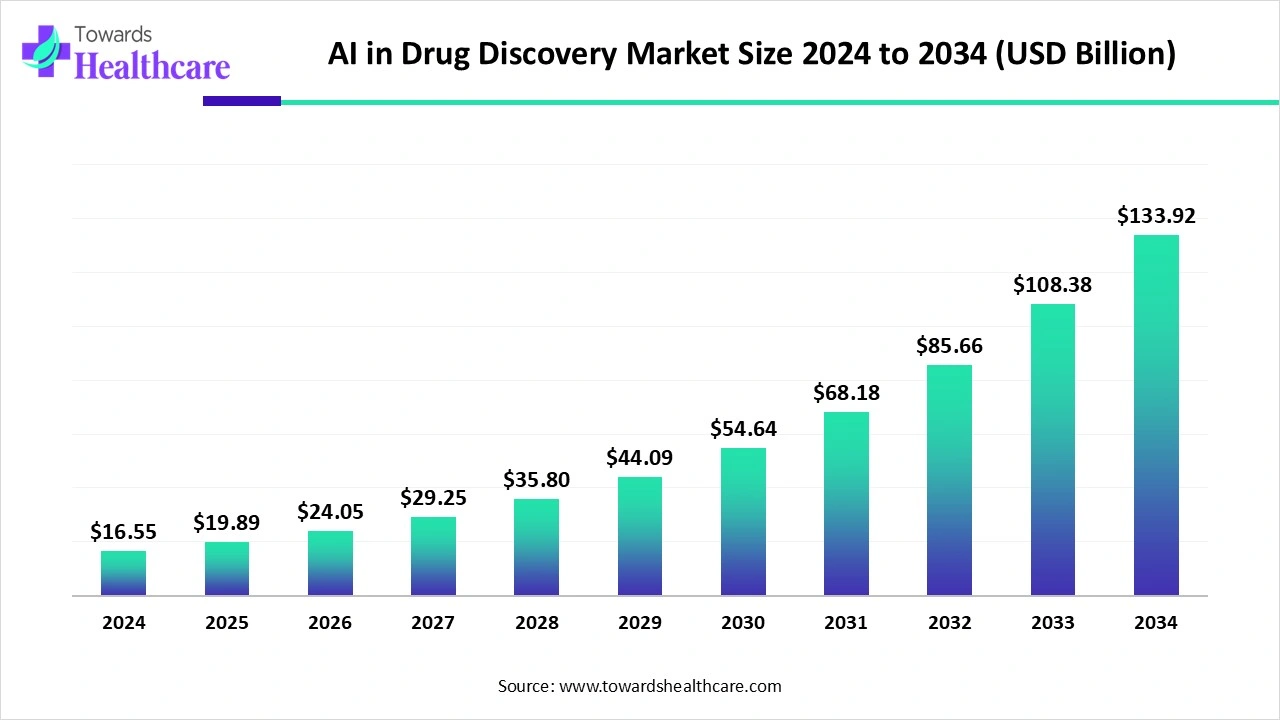
𝐃𝐨𝐰𝐧𝐥𝐨𝐚𝐝 𝐅𝐫𝐞𝐞 𝐒𝐚𝐦𝐩𝐥𝐞: https://www.towardshealthcare.com/download-sample/5010
What makes this moment particularly important is not just the speed of growth, but the structural change underway. AI is not merely accelerating existing workflows. It is redefining what is scientifically possible and economically viable in drug discovery.
Why Drug Discovery Could No Longer Afford to Stay Human-Only
Drug discovery has always been a high-risk endeavor. Developing a single new medicine often takes more than a decade and costs upwards of USD 2.6 billion. Even then, fewer than one in ten drug candidates survive clinical trials to reach the market. This imbalance between effort and outcome has placed unsustainable pressure on pharmaceutical companies, healthcare systems, and patients alike.
At the same time, the global burden of disease has grown heavier. Chronic conditions such as cancer, cardiovascular disease, diabetes, and neurological disorders continue to rise across both developed and emerging economies. Traditional research models simply cannot keep pace with this demand.
AI entered this landscape not as a replacement for scientists, but as a response to scale. Biological systems generate massive volumes of data-genomic sequences, protein structures, chemical libraries, patient histories, imaging scans, and real-world evidence. Human cognition alone cannot process this complexity efficiently. AI can.
By analyzing patterns across millions of variables simultaneously, AI systems uncover relationships that remain invisible to conventional methods. This ability changes the very starting point of drug discovery, allowing researchers to move from blind screening toward informed design.
From Data Overload to Scientific Clarity
One of the most profound contributions of AI lies in its ability to convert overwhelming data into actionable insight. In early drug discovery, researchers traditionally screened vast libraries of molecules in search of a few promising hits. This process consumed years and produced limited success.
AI models now predict which molecules are most likely to bind to a biological target before a single experiment begins. They assess molecular properties, toxicity risks, bioavailability, and efficacy in silico. This shift does not eliminate laboratory work; it ensures that laboratory work starts with better questions.
The impact becomes even clearer in structure-based drug design. Rather than synthesizing hundreds of compounds through trial and error, AI guides chemists toward optimized candidates with a higher probability of success. This refinement reduces waste, shortens timelines, and lowers costs without compromising scientific rigor.
Clinical Trials No Longer Move Blindly
Clinical trials remain one of the most expensive and failure-prone phases of drug development. Poor patient selection, inadequate trial design, and late-stage safety failures account for a significant share of attrition.
AI has begun to change this reality. By analyzing historical trial data, patient genomics, imaging, and real-world outcomes, AI systems help identify patient subgroups most likely to respond to a therapy. They predict adverse effects earlier and refine trial protocols before enrollment begins.
The result is not just faster trials, but smarter ones. AI reduces uncertainty, increases statistical power, and improves decision-making at every stage of clinical development. For an industry accustomed to late-stage surprises, this predictive capability is transformative.
Oncology Emerges as the Natural Starting Point
Cancer research has become the proving ground for AI-driven drug discovery. Oncology generates complex, multi-dimensional data that aligns naturally with AI’s strengths. Tumor heterogeneity, genetic mutations, treatment resistance, and patient variability create a problem space too large for traditional analysis.
AI systems excel in this environment. They detect subtle patterns in imaging scans, identify novel therapeutic targets, and match treatments to individual patient profiles. In some cases, AI has identified early signs of cancer in medical images that trained radiologists missed.
This precision approach has moved oncology toward more personalized and adaptive therapies. AI-driven platforms now support everything from target identification to combination therapy design, making cancer treatment more responsive and effective.
Infectious and Neurological Diseases Gain Momentum
While oncology leads in adoption, infectious disease research is emerging as a fast-growing application area. AI played a visible role during recent global health crises by accelerating vaccine design, modeling disease spread, and identifying potential antiviral compounds.
In neurology, where disease mechanisms remain poorly understood and clinical failure rates are high, AI offers a new analytical lens. By integrating genetic data, imaging, and longitudinal patient records, AI helps unravel complex neurological pathways and supports earlier intervention strategies.
These application areas demonstrate that AI’s value extends beyond speed. It enables research in domains that previously faced scientific stagnation.
Checkout AI in Drug Discovery Market Report Now at: https://www.towardshealthcare.com/checkout/5010
The Rise of De Novo Drug Design
One of the most disruptive capabilities of AI lies in de novo drug design. Instead of optimizing existing molecules, AI systems generate entirely new chemical structures tailored to specific targets. This approach expands the chemical universe beyond what human intuition can explore.
Generative AI models design molecules with predefined properties, reducing the need for iterative synthesis cycles. These systems evaluate millions of possibilities in silico, selecting candidates that balance efficacy, safety, and manufacturability.
As adoption grows, de novo design is expected to become one of the fastest-growing segments within AI-driven drug discovery. It represents a shift from incremental innovation to computational creativity guided by biological constraints.
Who Builds the AI Brain of Drug Discovery
The AI in drug discovery ecosystem functions through collaboration. Technology providers develop algorithms and platforms that process biological data at scale. Pharmaceutical companies integrate these tools into R&D pipelines. Research institutions validate predictions through experimental science.
This interplay has created a new innovation model. AI-first biotechnology companies now emerge with computational platforms at their core, rather than as add-ons. These organizations adopt AI deeply, using it across target discovery, molecule design, and clinical planning.
Traditional pharmaceutical companies, while more cautious, continue to expand their AI capabilities through partnerships, acquisitions, and internal digital transformation programs. Over time, the gap between AI-native firms and legacy organizations has become a defining competitive factor.
North America Sets the Pace, Asia Pacific Gains Speed
Geographically, North America remains the largest market for AI in drug discovery. Early adoption, strong funding ecosystems, mature pharmaceutical infrastructure, and regulatory openness have positioned the region as a global leader.
The United States and Canada continue to attract investment into AI-driven biotech startups while supporting large-scale collaborations between academia and industry. Government initiatives and research funding further reinforce this momentum.
Asia Pacific, however, represents the fastest-growing region. China, India, and Southeast Asian countries are expanding clinical research capabilities, modernizing regulatory frameworks, and supporting AI-driven innovation. The rapid growth of biotech startups and access to large patient datasets accelerate AI integration across the region.
Europe maintains steady growth driven by precision medicine initiatives, strong research institutions, and supportive regulatory structures. The Middle East, Africa, and Latin America, though smaller in market size, show rising adoption supported by government investment and international partnerships.
The Economics Behind the AI Surge
The financial case for AI in drug discovery grows stronger each year. AI reduces R&D timelines, improves success rates, and lowers overall development costs. In an industry where a single late-stage failure can erase billions in investment, predictive intelligence offers measurable risk reduction.
AI also enables drug repurposing strategies, identifying new therapeutic uses for existing molecules. This approach shortens development cycles and improves return on investment, particularly for rare and underserved diseases.
Investors recognize this value. Funding flows into AI-driven drug discovery platforms continue to rise, supporting both early-stage innovation and late-stage clinical development.
Barriers That Still Demand Attention
Despite its promise, AI in drug discovery faces real challenges. High technology costs limit accessibility for smaller organizations and emerging markets. Data quality and availability remain uneven, affecting model performance and transparency.
Ethical concerns around data security, bias, and accountability persist. Researchers also express caution about over-reliance on black-box models without clear interpretability. Addressing these issues requires collaboration between technologists, regulators, and scientific communities.
Importantly, AI does not eliminate failure. It shifts probabilities, improves decision-making, and reduces waste, but uncertainty remains inherent in biological systems. Understanding AI as an augmentative tool rather than a miracle solution is critical for sustainable adoption.
A Maturing Market Moves Beyond Experimentation
The AI in drug discovery market has moved past its exploratory phase. What once began as pilot projects and proof-of-concept studies now shapes core R&D strategies. Pharmaceutical companies increasingly view AI readiness as a measure of future competitiveness.
AI maturity varies across organizations, with some leading in integration and others still building foundational capabilities. This disparity influences pipeline productivity, time-to-market, and long-term valuation.
Over the next decade, AI adoption will no longer be optional. It will define how efficiently companies translate science into medicine.
Looking Ahead: A Different Definition of Discovery
The most important change AI brings to drug discovery is philosophical. It shifts the process from reactive experimentation to proactive design. Instead of asking what might work, researchers increasingly ask what is most likely to work, and why.
As AI systems grow more sophisticated, they will integrate biological insight with real-world patient data, enabling therapies designed for specific populations and disease subtypes. Personalized medicine will move from aspiration to operational reality.
The next generation of medicines will emerge from a partnership between human creativity and machine intelligence. Scientists will continue to ask the right questions. AI will help answer them faster, deeper, and with greater confidence.
In hindsight, this period may be remembered not as the era when AI entered drug discovery, but as the moment when drug discovery finally caught up with the complexity of human biology.
Access our exclusive, data-rich dashboard dedicated to the healthcare IT market – built specifically for decision-makers, strategists, and industry leaders. The dashboard features comprehensive statistical data, segment-wise market breakdowns, regional performance shares, detailed company profiles, annual updates, and much more. From market sizing to competitive intelligence, this powerful tool is one-stop solution to your gateway.
Access the Dashboard: https://www.towardshealthcare.com/access-dashboard
Checkout AI in Drug Discovery Market Report Now at: https://www.towardshealthcare.com/checkout/5010
Become a valued research partner with us – https://www.towardshealthcare.com/schedule-meeting
You can place an order or ask any questions, please feel free to contact us at [email protected]
Powering Healthcare Leaders with Real-Time Insights: https://www.towardshealthcare.com/healthcare-intelligence-platform
Europe Region – +44 778 256 0738
North America Region – +1 8044 4193 44
APAC Region: +91 9356 9282 04
Visit Our Website: https://www.towardshealthcare.com
Find us on social platforms: LinkedIn | Twitter | Instagram | Medium | Pinterest