The world of laboratory research is evolving at a pace never seen before. From the meticulous scribbles in paper notebooks to sophisticated software solutions, the way scientists document, share, and manage their experiments has transformed dramatically. At the center of this transformation is the electronic lab notebook, or ELN, a digital solution designed to simplify, secure, and enhance scientific data management. Over the past decade, ELNs have transitioned from a niche convenience to a core necessity for laboratories across the globe. But what makes them so indispensable, and how will they shape the future of research?
The Evolution from Paper to Digital
For decades, paper lab notebooks were the standard tool for researchers. They were familiar, straightforward, and tangible. However, paper notebooks are inherently limited. They are prone to human error, difficult to share across teams, and often lack the security required to meet stringent regulatory standards. The emergence of electronic lab notebooks revolutionized this paradigm. ELNs provide a centralized, digital platform where data can be recorded, organized, and accessed anytime, anywhere. Researchers can seamlessly collaborate, track progress, and maintain data integrity, all while complying with regulations such as 21 CFR Part 11, which governs electronic records in pharmaceutical research.
The digital shift is not merely a convenience; it is a necessity in an era of complex research. Modern laboratories handle immense volumes of data, from genomics sequences to complex chemical formulations. Managing this data manually is not only inefficient but also introduces a significant risk of errors, lost data, or regulatory noncompliance. ELNs mitigate these risks, offering a secure, searchable, and auditable record of all laboratory activities.
Driving Forces Behind ELN Adoption
The adoption of ELNs is driven by multiple intertwined factors. Chief among them is the surge in research and development activities worldwide. Pharmaceutical and biotechnology companies, in particular, are under immense pressure to innovate and deliver new therapies faster than ever. These organizations invest heavily in advanced research, and ELNs provide a platform to manage the increasing complexity of data efficiently. In addition, academic institutions and contract research organizations (CROs) are embracing ELNs to streamline research, foster collaboration, and meet regulatory standards.
Technology itself plays a transformative role. Cloud computing has made ELNs more accessible than ever. Cloud-based ELNs offer the flexibility to access experimental data from any location, facilitating global collaboration. They eliminate the need for heavy IT infrastructure, making them a cost-effective solution for laboratories of all sizes. Moreover, cloud deployment ensures rapid updates and enhanced security, providing organizations with a scalable solution that grows with their research needs.
Artificial intelligence is another major driver redefining the ELN landscape. AI-enabled ELNs can analyze large datasets, suggest optimal experimental conditions, and even generate compliance reports automatically. Machine learning algorithms can identify patterns in data, reduce repetitive tasks, and accelerate research cycles. For scientists, this means more time spent on innovation and less on administrative or redundant work.
Integration with Laboratory Information Management Systems
One of the most significant trends shaping the ELN market is its integration with laboratory information management systems (LIMS). While ELNs focus on data documentation, LIMS streamlines sample tracking, inventory management, and workflow automation. Combining these systems creates a seamless, end-to-end research management solution. Integrated ELN-LIMS platforms allow real-time updates, ensuring that laboratory managers can monitor research progress, resource allocation, and compliance status effortlessly. This integration minimizes manual errors, improves operational efficiency, and provides a unified view of the laboratory ecosystem.
Global Market Insights and Regional Dynamics
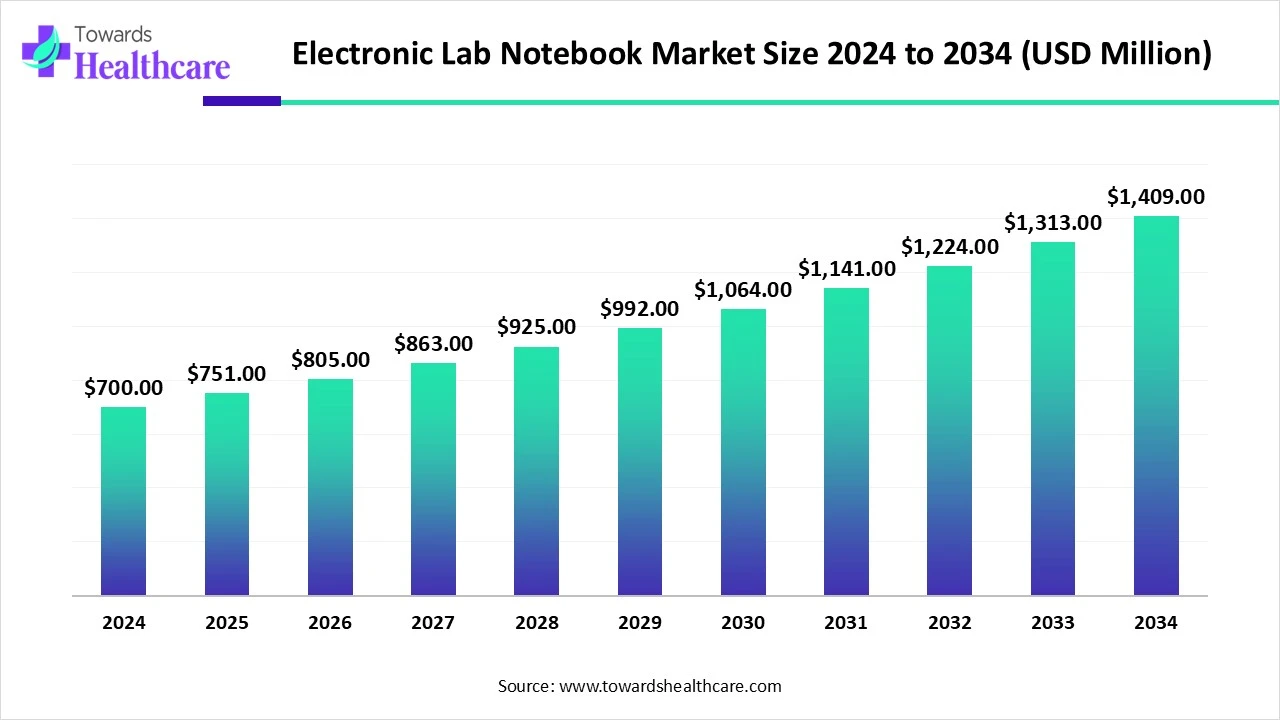
The global ELN market has been witnessing steady growth, with the market size projected to nearly double from USD 805 million in 2026 to over USD 1.5 billion by 2035, reflecting a CAGR of 7.26%. North America leads the market, accounting for approximately 40% of revenue in 2024. This dominance is fueled by advanced research infrastructure, strong government support, and a high concentration of pharmaceutical and biotechnology companies. The United States, in particular, has set a precedent with mandates for electronic documentation in research institutions, encouraging widespread ELN adoption.
Download Free Sample:
https://www.towardshealthcare.com/download-sample/6018
Asia-Pacific is emerging as the fastest-growing region. Countries like China and India are experiencing a surge in life sciences startups and biotech research investments. China’s pharmaceutical sector has attracted billions in venture capital, positioning the country as a global innovation hub. India’s BioEconomy is witnessing remarkable growth, with government initiatives promoting research and digital adoption in the pharma and MedTech sectors. The rising awareness of digital tools, coupled with an expanding pharmaceutical and biotechnology ecosystem, makes the region a hotbed for ELN growth.
Europe, while not growing as fast as Asia-Pacific, maintains a significant market share due to its robust research infrastructure, regulatory frameworks, and government support for digital adoption in laboratories. Countries such as Germany and the UK lead the way with strategic plans to modernize the life sciences sector, streamline research processes, and encourage innovation through substantial funding.
Deployment Modes and User Segmentation
The ELN market is broadly segmented by deployment mode and end-users. Cloud-based ELNs have emerged as the preferred deployment method, capturing the majority of the market share. Their flexibility, remote accessibility, and scalability make them ideal for modern, globally distributed research teams. On-premises solutions continue to be relevant for organizations requiring complete control over their data and customized solutions.
Among end-users, pharmaceutical and biotechnology companies dominate the market, contributing nearly half of global revenue. The sector’s growth is propelled by the need for precise documentation, regulatory compliance, and accelerated drug development cycles. Academic and research institutions, CROs, and chemical and material companies also constitute significant end-user segments. Interestingly, food and beverage companies are expected to witness the fastest adoption rate in the coming years. As product development cycles accelerate, ELNs help streamline laboratory processes, support R&D for new product discovery, and ensure rigorous quality control.
Opportunities and Challenges
While ELNs offer immense advantages, they also present certain challenges. The high cost of installation, licensing, and ongoing maintenance can be a barrier for smaller research organizations or those in developing regions. However, the long-term benefits, time savings, error reduction, compliance assurance, and collaboration, often outweigh these initial expenses.
Looking ahead, the integration of AI, cloud-based platforms, and LIMS presents significant growth opportunities. Laboratories can optimize research workflows, enhance collaboration, and accelerate innovation cycles. ELNs are not just tools for recording experiments; they are becoming strategic assets that influence how organizations conduct research, make data-driven decisions, and bring products to market faster.
Innovations Driving the Market Forward
Recent developments in the market underscore the trend toward consolidation, integration, and user-centric design. Platforms that combine ELN and LIMS functionalities under a single interface are gaining popularity. These unified systems enable researchers to perform data entry, inventory management, protocol documentation, and compliance tracking seamlessly. Companies are also focusing on user experience, ensuring intuitive interfaces that minimize the learning curve for scientists.
AI continues to push boundaries in laboratory informatics. Science-aware AI systems are now capable of suggesting experimental optimizations, predicting material requirements, and even flagging potential compliance issues before they arise. This proactive approach not only saves time but also enhances the quality and reliability of research outcomes.
Why ELNs Are No Longer Optional
The increasing complexity of research projects, the demand for traceable data, and the rise of collaborative, multi-location laboratories mean that ELNs are no longer optional—they are essential. Traditional paper-based systems cannot meet the speed, accuracy, and compliance requirements of modern research. Laboratories that adopt ELNs are better positioned to handle large datasets, collaborate across geographies, and respond swiftly to regulatory demands.
A Glimpse into the Next Decade
The future of the ELN market looks promising. Market projections indicate continued growth, fueled by digital adoption, AI integration, and global research expansion. Cloud-based ELNs will dominate due to their accessibility and cost efficiency, while integration with LIMS will become a standard feature in research-intensive laboratories. Pharmaceutical and biotechnology companies will continue to lead adoption, but sectors such as food and beverage and academic research will increasingly rely on ELNs to streamline their operations.
Regional trends will also play a crucial role. North America will maintain its stronghold due to established infrastructure and regulatory support. Asia-Pacific will emerge as a critical growth engine, driven by a burgeoning startup ecosystem, venture capital investments, and government initiatives supporting digital transformation. Europe will continue to innovate, leveraging robust funding programs and regulatory frameworks to support digital adoption.
Conclusion: The Digital Transformation of Laboratories
Electronic lab notebooks are transforming the research landscape. They enhance efficiency, improve collaboration, and ensure regulatory compliance. The combination of cloud deployment, AI integration, and LIMS compatibility positions ELNs as indispensable tools for modern laboratories. Organizations that embrace these solutions will gain a strategic advantage, accelerating innovation, reducing errors, and making research data more actionable than ever before. As we look ahead, it is clear that the laboratories of the future will be digital, collaborative, and powered by intelligent systems that make science faster, safer, and more precise.
The rise of electronic lab notebooks represents more than just a technological shift—it is a fundamental change in how research is conducted, documented, and leveraged. For scientists and organizations around the world, the question is no longer whether to adopt ELNs, but how quickly they can integrate these transformative tools into their research processes to remain competitive in a rapidly evolving scientific landscape.
Access our exclusive, data-rich dashboard dedicated to the healthcare IT market – built specifically for decision-makers, strategists, and industry leaders. The dashboard features comprehensive statistical data, segment-wise market breakdowns, regional performance shares, detailed company profiles, annual updates, and much more. From market sizing to competitive intelligence, this powerful tool is one-stop solution to your gateway.
Access the Dashboard: https://www.towardshealthcare.com/access-dashboard
Checkout Electronic Lab Notebook Market Report Now at: https://www.towardshealthcare.com/checkout/6018
Become a valued research partner with us – https://www.towardshealthcare.com/schedule-meeting
You can place an order or ask any questions, please feel free to contact us at [email protected]
Powering Healthcare Leaders with Real-Time Insights: https://www.towardshealthcare.com/healthcare-intelligence-platform
Europe Region – +44 778 256 0738
North America Region – +1 8044 4193 44
APAC Region: +91 9356 9282 04
Visit Our Website: https://www.towardshealthcare.com
Find us on social platforms: LinkedIn | Twitter | Instagram | Medium | Pinterest