Artificial Intelligence (AI) is becoming one of the most powerful forces in genomics. What once took scientists months or years to analyze can now be done in days with AI. As genetic data grows rapidly, AI is helping researchers and doctors understand the human genome faster, more accurately, and in ways that were never possible before.
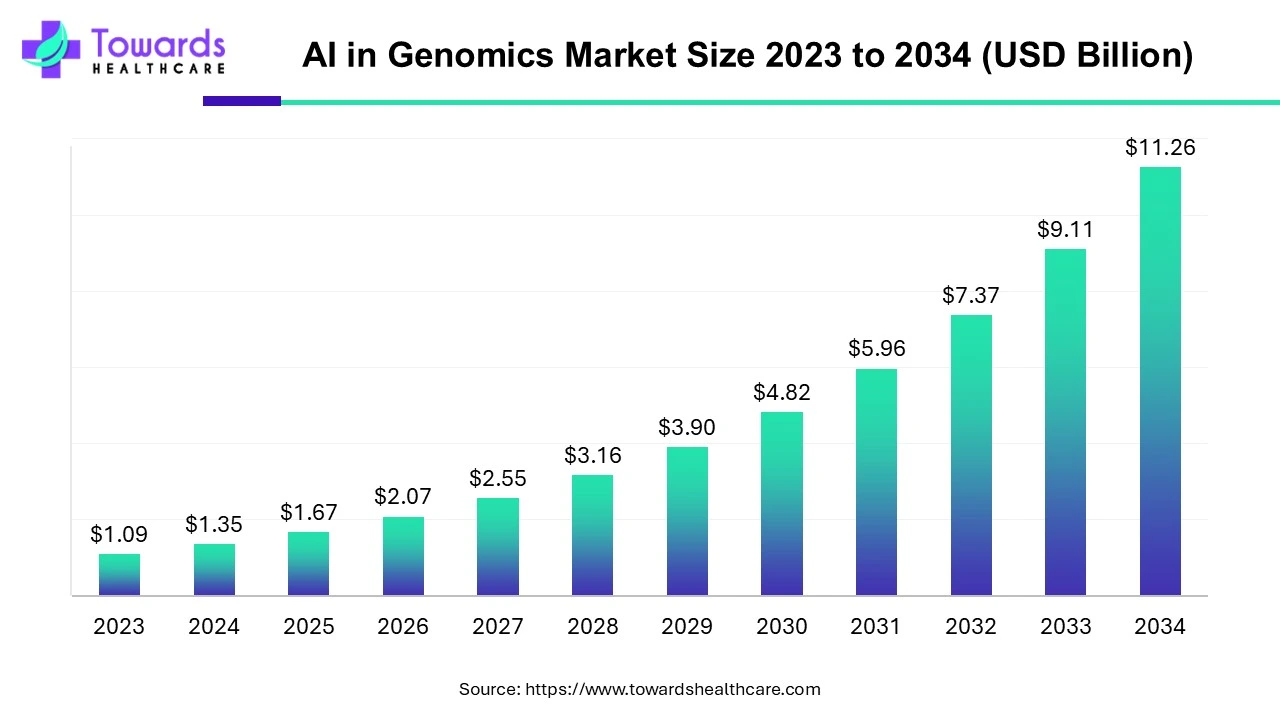
Because of this transformation, the AI in genomics market is growing very quickly. The market is expected to grow at a 23.6% annual growth rate from 2026 to 2035. It is projected to rise from USD 1.67 billion in 2025 to nearly USD 13.88 billion by 2035. By 2026 alone, the market is expected to cross USD 2.06 billion, showing strong demand across healthcare, research, and pharmaceutical industries.
Download Free Sample Report: https://www.towardshealthcare.com/download-sample/5046
What Does AI in Genomics Actually Mean?
Genomics is the study of genes, the instructions inside our DNA that control how our body works. Modern sequencing technologies can read a person’s genetic code, but the real challenge is understanding what that data means.
This is where AI comes in.
AI systems, especially machine learning and deep learning models, can analyze huge volumes of genetic data and find patterns that humans cannot easily detect. These tools help scientists:
-
Identify genes linked to diseases
-
Understand how genetic mutations affect health
-
Predict disease risk
-
Discover new drug targets
-
Suggest personalized treatments
In simple terms, AI turns raw DNA data into useful medical knowledge.
Why the Market Is Growing So Fast
Several major factors are driving the rapid growth of AI in genomics.
First, genomic data is exploding. Sequencing a genome is now much cheaper than before, which means more hospitals, research labs, and biotech companies are generating genetic data. But without AI, this data would be too complex to analyze efficiently.
Second, precision medicine is expanding. Instead of giving the same treatment to every patient, doctors are now trying to tailor treatments based on a person’s genetic makeup. AI helps interpret that genetic information quickly so treatments can be more targeted and effective.
Third, drug discovery is changing. Pharmaceutical companies use AI and genomics to find new drug targets, predict how drugs will work, and reduce failure rates in clinical trials. This saves time, reduces cost, and increases the chance of success.
Which Technologies Are Leading?
Among AI technologies, machine learning currently plays the biggest role. It is widely used for detecting genetic variations, linking genes to diseases, and predicting patient responses to treatment.
Another fast-growing area is computer vision, especially where medical imaging and genomics are combined. For example, AI can connect tumor images with genetic data to better understand cancer behavior.
Most of the market growth comes from software platforms. These platforms allow researchers and clinicians to store, analyze, and interpret genomic data using AI models, often through cloud-based systems.
Key Areas Where AI in Genomics Is Used
One of the biggest uses is in drug discovery and development. AI analyzes genetic data to identify new disease targets and design better medicines. This speeds up research and reduces the cost of developing new drugs.
Another rapidly growing area is precision medicine. AI helps doctors understand a patient’s genetic risk for certain diseases and choose treatments that work best for that individual. This approach can reduce side effects and improve outcomes.
AI is also widely used in genome sequencing analysis. After DNA is sequenced, AI tools interpret the results, identify important genetic variants, and help doctors make diagnostic decisions.
Who Is Using These Technologies?
Right now, pharmaceutical and biotechnology companies are the biggest users of AI in genomics. They use it to strengthen their research pipelines and develop innovative therapies.
However, healthcare providers are becoming one of the fastest-growing user groups. As genetic testing becomes more common in hospitals, AI tools are being used to help doctors understand test results and guide treatment plans.
The Role of Partnerships and Collaborations
Collaboration is a major reason this market is advancing so quickly. Technology companies, genomic testing firms, research institutions, and healthcare organizations are working together to combine AI expertise with genetic science.
For example:
-
Tempus AI acquired Ambry Genetics to strengthen AI-powered genetic testing and precision medicine solutions.
-
Integrate.ai worked with DNAstack to support Canada’s genomics and precision health platform.
-
Accenture invested in Ocean Genomics to improve AI-driven diagnostics and drug discovery.
-
Ultima Genomics partnered with Genome Insight to combine low-cost sequencing with advanced AI analysis.
These partnerships bring together data, technology, and medical knowledge — which is essential for innovation.
Government Support Is Accelerating Progress
Governments are also investing heavily in AI and healthcare research.
Programs like the NHS AI initiatives in the UK and the U.S. National Science Foundation’s AI research institutes are funding AI development for medical applications. These programs help ensure AI is used safely and effectively while supporting new technologies that improve patient care.
Such funding builds infrastructure, supports clinical testing, and encourages responsible AI adoption.
How This Impacts the Future of Healthcare
AI in genomics is moving healthcare away from a “one-size-fits-all” model toward personalized and predictive medicine.
In the future, AI could help:
-
Predict diseases before symptoms appear
-
Detect cancers earlier
-
Design highly targeted therapies
-
Reduce trial-and-error prescribing
-
Improve patient survival and quality of life
As AI becomes more advanced and sequencing becomes even more affordable, genomic data will play a central role in everyday medical decisions.
Conclusion
AI in genomics is not just a growing market, it represents a major shift in how we understand health and disease. By combining artificial intelligence with genetic science, the healthcare industry is becoming faster, smarter, and more personalized.
With strong industry partnerships, government support, and rapid technological progress, AI in genomics is set to shape the future of medicine for the next decade and beyond.
Access our exclusive, data-rich dashboard dedicated to the biotechnology market – built specifically for decision-makers, strategists, and industry leaders. The dashboard features comprehensive statistical data, segment-wise market breakdowns, regional performance shares, detailed company profiles, annual updates, and much more. From market sizing to competitive intelligence, this powerful tool is one-stop solution to your gateway.
Access the Dashboard: https://www.towardshealthcare.com/access-dashboard
Checkout AI in Genomics Market Report Now at: https://www.towardshealthcare.com/checkout/5046
Become a valued research partner with us – https://www.towardshealthcare.com/schedule-meeting
You can place an order or ask any questions, please feel free to contact us at [email protected]
Powering Healthcare Leaders with Real-Time Insights: https://www.towardshealthcare.com/healthcare-intelligence-platform
Europe Region – +44 778 256 0738
North America Region – +1 8044 4193 44
APAC Region: +91 9356 9282 04
Visit Our Website: https://www.towardshealthcare.com
Find us on social platforms: LinkedIn | Twitter | Instagram | Medium | Pinterest