Cold storage has evolved from a basic warehousing function into mission-critical infrastructure that underpins healthcare systems, food security, and international trade. As industries increasingly depend on temperature-controlled logistics, cold storage is now a strategic asset rather than a background operational service. The sector is entering a high-growth phase, driven by pharmaceuticals, biologics, and technology-enabled supply chain modernization.
The global cold storage market is projected to grow from USD 172.9 billion in 2025 to USD 537.25 billion by 2035, expanding at a strong 12% CAGR. By 2026, the market is expected to exceed USD 193 billion, highlighting how quickly demand is scaling.
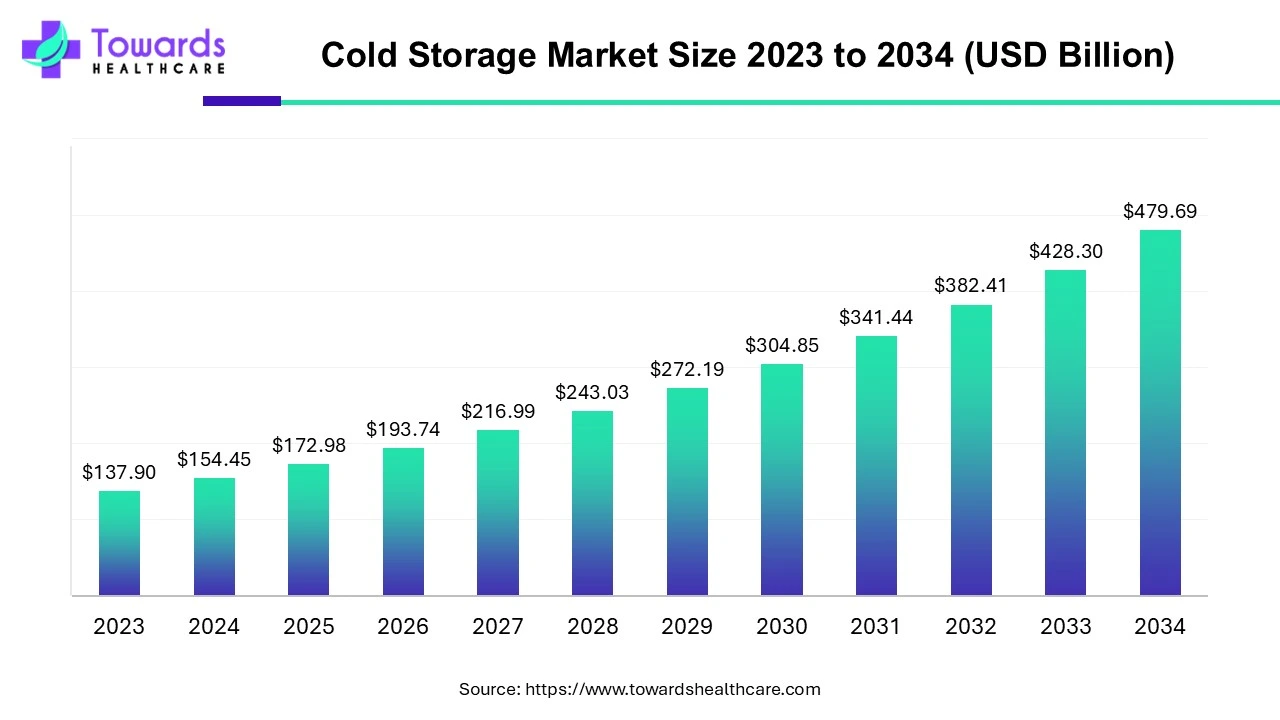
Downlaod Free Sample: https://www.towardshealthcare.com/download-sample/5047
What Cold Storage Really Means Today
Cold storage refers to specialized facilities and logistics systems designed to store products within strictly controlled temperature ranges. These environments prevent chemical degradation, microbial growth, and structural breakdown of sensitive materials. Modern cold storage facilities are engineered systems that integrate:
-
Refrigeration cycles (compressor, condenser, evaporator, expansion valve)
-
Digital temperature and humidity monitoring
-
Airflow and insulation optimization
-
Backup power and redundancy mechanisms
-
Inventory tracking and warehouse automation
Temperature bands vary depending on product category. Pharmaceuticals commonly require 2–8°C conditions, frozen goods are stored at –18°C or below, and ultra-low cryogenic storage can reach –150°C to –196°C for advanced medical products. The complexity of maintaining these conditions consistently across transport and storage stages defines the modern cold chain.
Healthcare: The Strongest Growth Engine
The most powerful driver of cold storage expansion is the pharmaceutical and life sciences sector. Drug development is increasingly focused on biologics, cell therapies, gene therapies, monoclonal antibodies, plasma derivatives, and vaccines — all of which are temperature sensitive. Unlike traditional small-molecule drugs, biologics can lose potency if exposed to minor temperature fluctuations.
Several structural trends amplify demand:
Rising chronic diseases are increasing the use of advanced biologic therapies. Aging populations and improved healthcare access are driving higher drug consumption. Global immunization programs continue expanding, especially in developing regions. Clinical trials are becoming more globalized, requiring temperature-controlled cross-border logistics.
Cold storage is therefore directly linked to patient safety. If temperature deviations occur, entire vaccine batches or therapy shipments may become unusable, resulting in financial losses and treatment delays.
Food Security and E-Commerce Add Additional Pressure
Beyond healthcare, the food industry remains a foundational pillar of cold storage demand. Growth in processed foods, frozen products, dairy, seafood, and fresh produce distribution requires temperature-controlled warehousing. Urbanization and online grocery delivery models are further intensifying this need, as last-mile cold logistics become more important.
In developing economies, lack of cold chain infrastructure historically caused major post-harvest losses. Governments are now investing in cold storage to reduce food wastage, stabilize prices, and improve nutrition access.
Technology Is Transforming Cold Storage Operations
The industry is shifting toward smart, data-driven cold chains. Facilities are adopting IoT sensors that provide real-time temperature tracking, predictive maintenance alerts, and automated compliance reporting. Cloud-based monitoring platforms allow stakeholders to monitor shipments globally.
Automation and robotics are entering warehouses to improve space utilization and reduce manual errors. AI-enabled systems optimize energy consumption, which is critical since refrigeration is energy intensive.
Sustainability is another key innovation area. Governments and companies are focusing on solar-powered cold storage, advanced insulation materials, and low-global-warming-potential refrigerants. For example, India’s renewable energy ministry released guidelines for solar-powered cold storage systems with thermal energy storage backup, aimed at strengthening infrastructure while lowering energy costs.
Infrastructure vs Equipment: Where Growth Is Strongest
Cold storage growth occurs in two main areas: facilities/services and equipment. While large refrigerated warehouses currently dominate market share, equipment is expected to grow faster. This includes refrigeration units, monitoring devices, insulated containers, and portable cold boxes used in pharmaceutical transport.
This shift indicates a move toward modular and flexible cold chain models. Instead of relying only on centralized warehouses, companies are investing in mobile and decentralized solutions to handle last-mile delivery and emergency medical logistics.
Temperature Segment Dynamics
Frozen storage, typically between –18°C and –25°C, currently accounts for about half of the market due to food and vaccine storage needs. However, the chilled segment (0–15°C) is growing faster. Many specialty pharmaceuticals and biologics require refrigerated but not frozen environments, increasing demand for mid-range temperature facilities.
At the extreme end, cryogenic storage is expanding as cell and gene therapies become commercialized. These treatments require ultra-low temperatures to preserve cellular integrity.
Regional Market Patterns
North America leads the market due to strong pharmaceutical manufacturing, advanced logistics infrastructure, and high technology adoption. The region’s regulatory standards also push companies to maintain high-quality cold chains.
Asia Pacific is the fastest-growing region. Rising healthcare spending, vaccine production expansion, and food supply chain modernization are major contributors. Countries like India and China are investing in rural cold storage networks to support both healthcare and agriculture.
Europe remains significant, driven by strict regulatory compliance and cross-border pharmaceutical trade.
Emerging Strategic Shifts
The industry is also seeing structural changes. Logistics companies are forming partnerships with pharmaceutical cold chain specialists to offer end-to-end solutions. Ultra-low-temperature transport capabilities are expanding to support gene therapy commercialization.
At the same time, innovation in room-temperature-stable vaccines could reduce some cold chain pressure in the long term. However, this will not eliminate demand, as most biologics and advanced therapies still require strict storage.
Why Cold Storage Is a Strategic Sector
Cold storage now directly influences healthcare delivery, economic resilience, and sustainability. It reduces food waste, protects high-value pharmaceuticals, and enables global research collaboration. Failures in cold chain systems can disrupt national vaccination programs and pharmaceutical supply.
As more products become temperature sensitive, cold storage infrastructure is transitioning into a critical utility sector similar to power or transportation networks.
Outlook for 2026 and Beyond
The next decade will see cold storage evolve into a high-technology, energy-efficient, and healthcare-driven industry. Growth will be fueled by biologics, global clinical trials, vaccine expansion, food distribution modernization, and digital transformation of logistics.
By 2026, cold storage will not simply be about refrigeration — it will represent the foundation that keeps modern medicine effective, food safe, and global trade reliable.
Access our exclusive, data-rich dashboard dedicated to the healthcare market – built specifically for decision-makers, strategists, and industry leaders. The dashboard features comprehensive statistical data, segment-wise market breakdowns, regional performance shares, detailed company profiles, annual updates, and much more. From market sizing to competitive intelligence, this powerful tool is one-stop solution to your gateway.
Access the Dashboard: https://www.towardshealthcare.com/access-dashboard
Checkout Cold Storage Market Report Now at: https://www.towardshealthcare.com/checkout/5046
Become a valued research partner with us – https://www.towardshealthcare.com/schedule-meeting
You can place an order or ask any questions, please feel free to contact us at [email protected]
Powering Healthcare Leaders with Real-Time Insights: https://www.towardshealthcare.com/healthcare-intelligence-platform
Europe Region – +44 778 256 0738
North America Region – +1 8044 4193 44
APAC Region: +91 9356 9282 04
Visit Our Website: https://www.towardshealthcare.com
Find us on social platforms: LinkedIn | Twitter | Instagram | Medium | Pinterest