When Algorithms Meet DNA: A New Chapter Begins
Artificial intelligence has quietly crossed a threshold in genomics. What once felt experimental has now become foundational. As 2026 approaches, AI is no longer just assisting genetic research; it is actively reshaping how scientists read, interpret, and act on the human genome. The AI in genomics market is entering a decisive growth phase, driven by exploding data volumes, maturing machine learning models, and a global shift toward precision healthcare. With the market expected to cross USD 2.06 billion by 2026 and surge toward USD 13.88 billion by 2035, the conversation has moved beyond “if” AI will transform genomics to “how fast” and “how far” it will go.
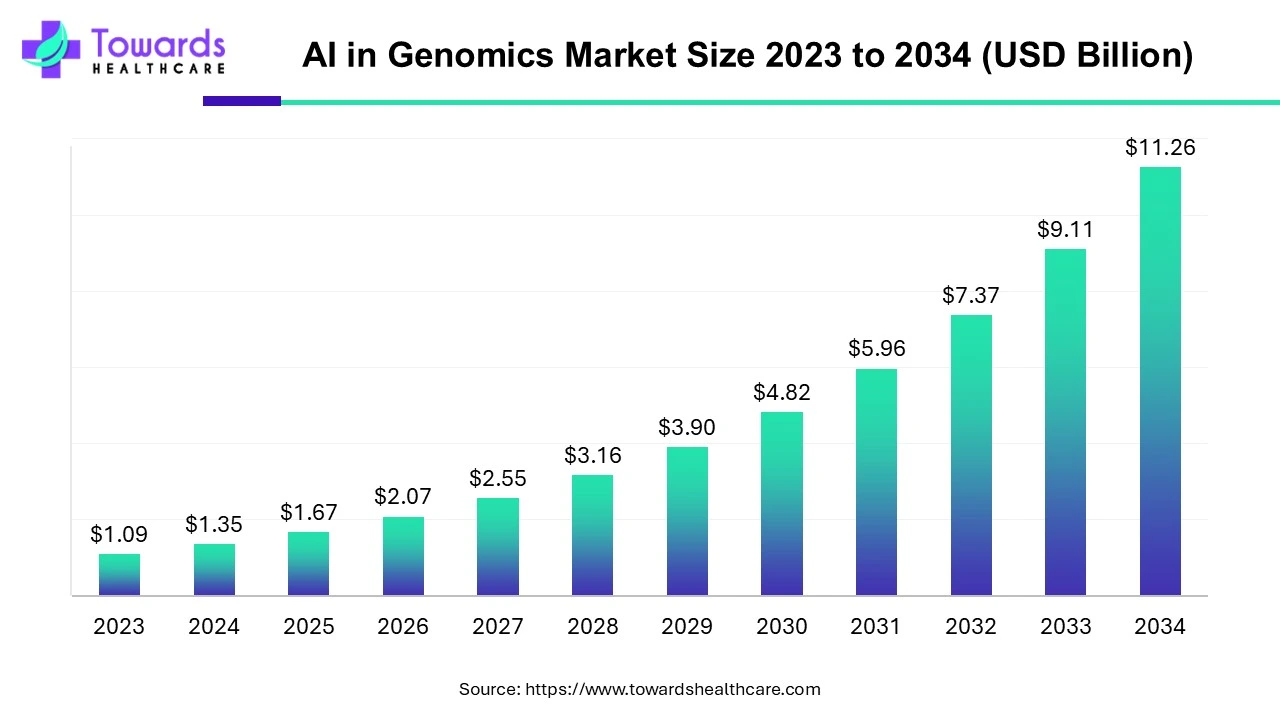
Download the free sample:
https://www.towardshealthcare.com/download-sample/5046
This transformation is not happening in isolation. It reflects a broader change in how healthcare, biotechnology, and data science intersect. Genomics has always been data-heavy, but the rise of next-generation sequencing has pushed data generation beyond human-scale analysis. AI now stands at the center of this complexity, turning raw genetic code into clinically meaningful insights.
Why Genomics Needed AI in the First Place
Genomic science generates massive, intricate datasets that overwhelm traditional analytical methods. Each genome contains billions of base pairs, and sequencing technologies continuously produce terabytes of information. Human-led analysis struggles to keep pace, especially when researchers must identify subtle genetic patterns linked to disease, drug response, or inherited traits. AI steps in precisely at this pressure point.
Machine learning models excel at pattern recognition, anomaly detection, and predictive analysis. In genomics, these strengths translate into faster variant interpretation, improved disease risk prediction, and deeper insight into gene regulation. Instead of years of manual research, AI systems can surface relationships between genes and diseases in days or even hours. This speed has changed expectations across research labs, hospitals, and pharmaceutical pipelines.
From Research Labs to Real-World Medicine
AI’s earliest impact in genomics appeared in research settings, where it helped scientists explore gene-disease relationships and discover novel biomarkers. Today, its influence extends deep into clinical diagnostics and patient care. AI-driven genomic interpretation tools now support physicians in diagnosing rare genetic disorders, assessing cancer risk, and choosing personalized treatment options.
Clinical genomics demands accuracy, and AI has proven its ability to reduce interpretation errors while improving diagnostic confidence. Algorithms can evaluate thousands of genetic variants simultaneously, flagging those most likely to be clinically relevant. This capability matters most in time-sensitive conditions such as oncology, where rapid genomic insights can shape life-saving treatment decisions.
Precision Medicine Takes Center Stage
Precision medicine has emerged as one of the strongest growth drivers in the AI in genomics market. Instead of relying on generalized treatment protocols, healthcare providers increasingly tailor therapies to individual genetic profiles. AI makes this personalization scalable.
By analyzing genomic data alongside clinical records, lifestyle factors, and treatment outcomes, AI systems help clinicians predict how a patient will respond to a specific drug or therapy. This approach reduces trial-and-error prescribing, lowers the risk of adverse reactions, and improves overall patient outcomes. As healthcare systems face rising chronic disease burdens, precision medicine supported by AI-driven genomics offers both clinical and economic value.
Drug Discovery Enters a Faster Lane
Drug discovery has traditionally been slow, expensive, and uncertain. AI in genomics is rewriting that narrative. By identifying genetic targets linked to disease pathways, AI models guide researchers toward more promising therapeutic candidates early in the development process. This reduces late-stage failures, which are among the costliest setbacks in pharmaceutical R&D.
AI-driven genomic analysis also improves patient stratification in clinical trials. By grouping patients based on genetic similarities, researchers can better predict drug efficacy and safety. This not only accelerates development timelines but also supports the creation of more effective, targeted therapies. As chronic and complex diseases rise globally, this capability has become essential rather than optional.
Software Takes the Lead
Within the AI in genomics ecosystem, software has emerged as the dominant component. Advanced genomic software platforms now offer end-to-end solutions, from sequencing data management to interpretation and visualization. These platforms prioritize usability, allowing researchers and clinicians to focus on insights rather than technical complexity.
Graphical interfaces, automated workflows, and scalable cloud-based architectures have made AI-driven genomics more accessible. Smaller research teams and healthcare providers can now leverage capabilities that were once limited to elite institutions. This democratization of genomic analysis fuels market expansion and broadens the impact of AI across regions and sectors.
Machine Learning Sets the Foundation
Machine learning continues to hold the largest share of AI technologies used in genomics. Its ability to learn from labeled and unlabeled data makes it ideal for genomic analysis, where annotated datasets constantly evolve. Supervised learning helps predict disease risk, while unsupervised models uncover previously unknown genetic patterns.
Deep learning has further expanded these capabilities, especially in complex tasks such as variant calling and gene expression analysis. AI-driven improvements in tools like CRISPR gene editing also highlight how machine learning influences not just data interpretation, but experimental design itself.
Seeing the Genome Through Computer Vision
Computer vision represents one of the fastest-growing technologies in AI-driven genomics. By analyzing genetic images and phenotypic data, computer vision models detect abnormalities that might escape human observation. This technology plays a growing role in genome editing, phenotyping, and variant validation.
As imaging techniques improve, computer vision’s importance will only increase. Its ability to reduce human error while enhancing analytical precision positions it as a key growth engine in the coming decade.
Genome Sequencing Remains the Backbone
Genome sequencing continues to anchor the AI in genomics market. Rising rates of genetic and rare disorders, coupled with growing interest in preventive healthcare, drive sustained demand for sequencing technologies. AI enhances sequencing by improving data accuracy, speeding interpretation, and predicting disease outcomes based on genetic profiles.
As sequencing costs fall and accessibility improves, AI-driven analysis becomes essential to manage the resulting data deluge. This synergy between sequencing and AI defines much of the market’s long-term trajectory.
Who Uses AI in Genomics the Most
Pharmaceutical and biotechnology companies currently dominate AI in genomics adoption. Their access to capital, talent, and large datasets enables rapid integration of advanced technologies. Venture capital interest in genomics startups further accelerates innovation in this space.
Healthcare providers represent the fastest-growing end-user segment. As genomics becomes central to diagnostics and treatment planning, hospitals and clinics increasingly rely on AI-powered tools. This shift reflects a broader movement toward data-driven healthcare, where genomic insights inform everyday clinical decisions.
North America Sets the Pace
North America continues to lead the AI in genomics market, supported by strong government funding, regulatory encouragement, and the presence of major technology and biotech players. Public investments in genomics research and AI infrastructure have created fertile ground for innovation.
Regulatory clarity also plays a role. Guidance encouraging the responsible use of AI in drug development and healthcare decision-making has reduced uncertainty and encouraged adoption.
Asia-Pacific Emerges as a Growth Hotspot
Asia-Pacific is poised for rapid expansion, driven by rising healthcare needs, expanding biotech ecosystems, and supportive government policies. Countries like China and India treat genomic data as a strategic resource, investing heavily in research, startups, and AI integration.
India’s growing biotech startup base and focus on personalized disease management highlight the region’s potential. As awareness of early disease detection increases, AI-driven genomics will play a critical role in shaping future healthcare delivery.
Europe Builds Momentum Through Regulation and Research
Europe’s AI in genomics growth reflects a balance between innovation and regulation. Strong research infrastructure, increasing demand for gene therapies, and robust data protection frameworks support sustainable market development. Countries like the UK and Germany actively invest in AI-powered genomic platforms while emphasizing patient privacy and safety.
This regulatory alignment builds trust, encouraging broader adoption across healthcare systems.
Collaboration Fuels the Next Wave
Strategic collaborations and acquisitions continue to shape the market. Partnerships between AI companies, genomics firms, academic institutions, and healthcare providers accelerate innovation by pooling expertise and data. These alliances reduce development timelines and expand the reach of AI-driven solutions.
Such collaborations also address one of the market’s biggest challenges: access to high-quality, diverse genomic datasets. Shared resources improve model performance and generalizability, benefiting the entire ecosystem.
The Data Quality Challenge No One Can Ignore
Despite rapid progress, data quality and standardization remain significant barriers. Genomic data varies widely in format, accuracy, and annotation quality. AI models trained on inconsistent data risk biased or unreliable outcomes.
Efforts to standardize data formats, improve annotation resources, and establish ethical data-sharing frameworks are critical. Addressing privacy concerns while enabling collaboration requires coordinated action from researchers, regulators, and technology providers.
NGS and AI: A Powerful Alliance
Next-generation sequencing has amplified the need for AI. The sheer volume and complexity of NGS data demand automated, intelligent analysis. AI not only processes this data efficiently but also integrates it with other biological and clinical datasets, unlocking deeper insights.
This alliance accelerates everything from diagnostics to drug discovery, reinforcing AI’s central role in modern genomics.
Looking Ahead: A Smarter Genomic Era
As 2026 unfolds, AI in genomics stands at the intersection of technology, biology, and healthcare. Its growth reflects more than market expansion; it signals a shift in how society understands and manages disease. By transforming genomic data into actionable knowledge, AI supports earlier diagnoses, more effective treatments, and truly personalized care.
The journey is not without challenges, but the momentum is undeniable. With continued investment, collaboration, and responsible innovation, AI’s role in genomics will only deepen. The genome may be complex, but with AI, its future is becoming clearer than ever.
Can AI Decode the Genome’s Future?!
When Algorithms Meet DNA, a New Era Takes Shape
Artificial intelligence has quietly moved from the margins to the very center of genomic science. What once looked like an experimental add-on has now become a structural pillar of modern genomics. As the world steps into 2026, AI is no longer assisting genomics from the sidelines. It is actively redefining how genetic data is generated, interpreted, and applied across research, medicine, and drug development. The AI in genomics market reflects this shift clearly, with strong growth momentum driven by expanding research pipelines, cross-industry collaboration, and an urgent global demand for personalized healthcare solutions.
Genomics has always promised answers hidden deep within DNA, but the complexity and scale of genomic data limited how fast those answers could surface. AI has changed that equation. By combining advanced algorithms with high-throughput sequencing technologies, AI allows scientists and clinicians to translate raw genetic code into meaningful insights at unprecedented speed. This convergence is not just advancing science; it is reshaping healthcare systems and business strategies worldwide.
Why Genomics Reached a Breaking Point Without AI
Genomic data is massive, intricate, and constantly expanding. A single human genome contains billions of base pairs, and modern sequencing technologies can generate enormous datasets in a short time. Traditional analytical methods struggle under this weight. Human-driven analysis cannot efficiently track subtle genetic variations, complex interactions, or evolving disease patterns across large populations.
AI stepped in where human capacity reached its limits. Machine learning algorithms thrive in environments where data is abundant and patterns are hidden. In genomics, these capabilities allow AI systems to identify disease-associated genes, predict variant pathogenicity, and uncover biological relationships that might take years to detect manually. This ability transformed genomics from a descriptive science into a predictive one.
From Discovery to Diagnosis, AI Redefines Genomic Research
The earliest applications of AI in genomics focused on research. Scientists used machine learning models to analyze gene expression, identify biomarkers, and explore genetic links to complex diseases. Over time, these research-focused tools matured and moved into clinical settings.
Today, AI-driven genomic interpretation supports disease diagnosis, risk assessment, and treatment planning. In clinical diagnostics, AI algorithms evaluate thousands of genetic variants simultaneously, narrowing down those most likely to influence disease. This capability is especially valuable in rare genetic disorders and oncology, where rapid and accurate interpretation can dramatically alter patient outcomes.
AI does not replace clinicians; it strengthens their decision-making. By filtering noise from signal, AI helps healthcare professionals focus on actionable insights rather than raw data.
Precision Medicine Becomes a Practical Reality
Precision medicine represents one of the most powerful outcomes of AI-genomics integration. Instead of applying generalized treatments, healthcare providers increasingly tailor therapies to individual genetic profiles. AI enables this personalization at scale.
By analyzing genomic data alongside medical history, lifestyle factors, and treatment responses, AI systems predict how patients will respond to specific therapies. This approach reduces adverse drug reactions, improves treatment effectiveness, and supports proactive disease management. As healthcare systems face rising chronic disease burdens, precision medicine supported by AI offers both clinical improvement and cost efficiency.
Drug Discovery Moves Faster and Smarter
Drug discovery has long been a costly and uncertain process. AI in genomics has started to change that reality. By identifying genetic targets linked to disease pathways, AI models help researchers focus on the most promising therapeutic candidates early in development. This reduces failure rates in later stages and shortens overall development timelines.
AI-driven genomics also improves patient selection in clinical trials. By grouping participants based on genetic characteristics, researchers can better evaluate drug efficacy and safety. This targeted approach increases trial success rates and accelerates regulatory approval. As pharmaceutical pipelines grow more complex, AI becomes an essential tool rather than a competitive advantage.
Software Emerges as the Market’s Core Engine
Within the AI in genomics market, software platforms hold a dominant position. These platforms provide integrated environments for sequencing analysis, data management, interpretation, and visualization. Modern genomic software prioritizes usability, enabling researchers and clinicians to work efficiently without deep computational expertise.
Graphical interfaces, automated workflows, and scalable architectures have lowered adoption barriers. Smaller labs and healthcare institutions can now access advanced AI-driven genomic tools, accelerating innovation beyond traditional centers of excellence. This widespread accessibility continues to fuel market expansion.
Machine Learning Sets the Foundation for Growth
Machine learning remains the backbone of AI in genomics. Its ability to learn from complex datasets makes it ideally suited for genetic analysis. Supervised models predict disease risk and treatment response, while unsupervised models uncover previously unknown genetic patterns.
Deep learning techniques have further expanded AI’s role, especially in tasks such as variant calling, gene expression analysis, and functional annotation. These advances also influence experimental design, improving technologies like gene editing and synthetic biology. As genomic datasets grow larger and more diverse, machine learning’s importance will only increase.
Computer Vision Brings a New Dimension to Genomics
Computer vision is emerging as one of the fastest-growing AI technologies in genomics. By analyzing genetic images and phenotypic data, computer vision systems detect abnormalities that may escape traditional analysis. These tools support phenotyping, variant validation, and genome editing workflows.
As imaging technologies evolve, computer vision will play a larger role in linking genetic variation to observable traits. Its ability to reduce human error while increasing analytical precision positions it as a major growth driver over the coming decade.
Genome Sequencing Remains the Market’s Backbone
Genome sequencing continues to anchor the AI in genomics market. Rising incidences of genetic and rare disorders, combined with growing interest in preventive healthcare, sustain demand for sequencing technologies. AI enhances sequencing by improving accuracy, speeding interpretation, and predicting disease outcomes from genetic information.
As sequencing becomes more affordable and accessible, AI-driven analysis becomes indispensable. The partnership between sequencing technologies and AI defines much of the market’s long-term trajectory.
Who Drives Adoption Across the Market
Pharmaceutical and biotechnology companies currently lead adoption of AI in genomics. Their access to capital, expertise, and large datasets allows rapid integration of advanced tools. Growing venture capital investment in genomics startups further accelerates innovation.
Healthcare providers represent the fastest-growing end-user group. As genomics becomes integral to diagnostics and treatment planning, hospitals and clinics increasingly rely on AI-powered platforms. This shift reflects a broader move toward data-driven healthcare models.
North America Sets the Global Benchmark
North America continues to dominate the AI in genomics market. Strong government funding, regulatory encouragement, and the presence of major technology and biotech firms support rapid innovation. Public investments in AI research and genomics infrastructure create a favorable environment for growth.
Clear regulatory guidance also plays a critical role. Policies encouraging responsible AI adoption in healthcare and drug development reduce uncertainty and promote confidence among industry players.
Asia-Pacific Accelerates Toward the Front Line
Asia-Pacific is poised for rapid growth in AI-driven genomics. Rising healthcare demand, expanding biotech ecosystems, and supportive government policies drive adoption. Countries such as China and India treat genomic data as a strategic resource, investing heavily in AI integration and research capacity.
India’s growing biotech startup landscape and focus on personalized disease management highlight the region’s potential. As awareness of early disease detection increases, AI-powered genomics will play a central role in shaping healthcare delivery.
Europe Builds Momentum Through Balance and Regulation
Europe’s growth in AI genomics reflects a balance between innovation and regulation. Strong research infrastructure, increasing demand for gene therapies, and robust data protection frameworks support sustainable expansion. Countries like the UK and Germany invest heavily in AI-driven genomic platforms while emphasizing patient privacy and safety.
This regulatory alignment fosters trust and encourages adoption across healthcare systems, strengthening Europe’s position in the global market.
Collaboration Becomes the Market’s Lifeblood
Strategic collaborations and acquisitions continue to shape the AI in genomics landscape. Partnerships between AI firms, genomics companies, academic institutions, and healthcare providers accelerate innovation by combining expertise and resources.
These collaborations also address one of the market’s greatest challenges: access to high-quality, diverse genomic datasets. Shared data improves AI model accuracy and generalizability, benefiting the entire ecosystem.
Data Quality Remains the Industry’s Toughest Test
Despite remarkable progress, data quality and standardization remain major obstacles. Genomic data varies widely in format, accuracy, and annotation. AI models trained on inconsistent data risk bias and reduced reliability.
Efforts to standardize data formats, improve annotation resources, and establish ethical data-sharing frameworks are essential. Addressing privacy concerns while enabling collaboration requires coordinated action across the industry.
Next-Generation Sequencing and AI Form a Powerful Alliance
Next-generation sequencing has intensified the need for AI. The volume and complexity of NGS data demand intelligent, automated analysis. AI not only processes this data efficiently but also integrates it with other biological and clinical information.
This integration accelerates diagnostics, drug discovery, and personalized medicine, reinforcing AI’s central role in genomics.
Access our exclusive, data-rich dashboard dedicated to the biotechnology sector – built specifically for decision-makers, strategists, and industry leaders. The dashboard features comprehensive statistical data, segment-wise market breakdowns, regional performance shares, detailed company profiles, annual updates, and much more. From market sizing to competitive intelligence, this powerful tool is one-stop solution to your gateway.
Checkout AI in Genomics Market Report Now at: https://www.towardshealthcare.com/checkout/5046
You can place an order or ask any questions, please feel free to contact us at [email protected]
Europe Region – +44 778 256 0738
North America Region – +1 8044 4193 44
APAC Region: +91 9356 9282 04
Visit Our Website: https://www.towardshealthcare.com
Find us on social platforms: LinkedIn | Twitter | Instagram | Medium | Pinterest