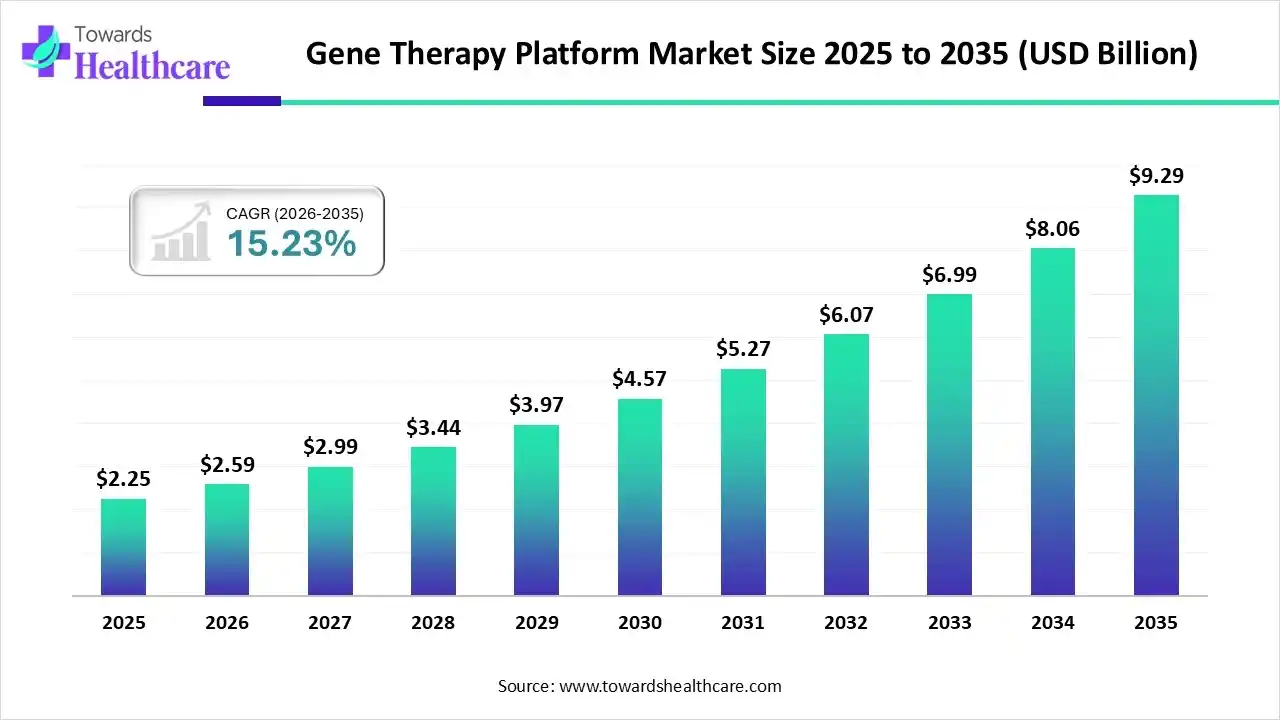
Gene therapy platforms have moved far beyond lab curiosity. What began as a high-risk, high-reward scientific ambition is now shaping real-world treatments with long-term impact. By 2026, the global gene therapy platform market is expected to cross USD 2.59 billion, and by 2035, it is projected to reach USD 9.29 billion, growing at a 15.23% CAGR.
Download Free Customized Sample for Free: https://www.towardshealthcare.com/download-sample/6506
This growth signals a fundamental shift: healthcare is transitioning from lifelong symptom management to durable, potentially one-time genetic interventions.
Why Gene Therapy Platforms Matter Now
Unlike traditional drugs that manage disease progression, gene therapy platforms aim to correct the root cause. These platforms deliver therapeutic genes into cells using viral or non-viral systems, or directly edit DNA using advanced tools such as CRISPR.
What makes platforms essential is their repeatability and scalability. Instead of building a new solution from scratch for every disease, researchers can adapt a core platform across multiple conditions—accelerating development timelines and reducing costs.
Viral Vectors Lead—But the Next Wave Is Non-Viral
Viral vector-based platforms continue to dominate, holding nearly 50% market share in 2025. Their efficiency in gene delivery makes them the backbone of many approved and late-stage therapies.
However, non-viral platforms are emerging as the fastest-growing segment. Their advantages—lower immunogenic risk, easier manufacturing, and improved safety profiles—are attracting strong interest, particularly for repeat-dose and chronic treatments.
This dual-track evolution reflects a maturing market where safety, flexibility, and scalability matter as much as delivery efficiency.
AI Is Quietly Rewriting Gene Therapy Design
Artificial intelligence has become a silent architect behind next-generation gene therapy platforms. AI-driven models now analyze massive genomic datasets to predict gene-editing outcomes, minimize off-target risks, and optimize guide RNA design.
More importantly, AI allows platforms to integrate genetic data with protein expression, clinical history, and even lifestyle factors. This convergence is pushing gene therapy closer to true precision medicine—where treatments adapt not just to diseases, but to individual patients.
Cancer and Rare Diseases Drive Platform Innovation
Cancer remains the largest application area, accounting for 45% of market share in 2025. Gene therapy platforms are increasingly used to reprogram immune cells, silence oncogenes, or restore tumor-suppressor functions.
At the same time, rare and genetic disorders are emerging as the fastest-growing segment. For conditions with no existing cure, gene therapy platforms offer something unprecedented: a realistic path to long-term or permanent correction.
This shift is redefining how healthcare systems think about value—moving from recurring treatment costs to durable clinical outcomes.
Manufacturing Is the Next Competitive Battleground
As clinical success grows, manufacturing capacity has become a critical constraint. The industry is now investing heavily in automation, modular production, and advanced bioprocessing technologies.
The goal is clear: move gene therapy from boutique manufacturing to industrial-scale production without compromising quality. Platforms that solve this challenge will define the next decade of growth.
Regional Momentum Reflects Global Confidence
North America currently leads the market with a 35% share, supported by strong R&D ecosystems and regulatory momentum. Meanwhile, Asia Pacific is poised for the fastest growth, driven by expanding biotech infrastructure, rising healthcare investments, and growing participation in clinical trials.
This geographic diversification signals that gene therapy is no longer limited to a few innovation hubs; it is becoming a global priority.
The Platform Players Shaping the Future
Major biopharma and biotech companies continue to invest aggressively in platform development, including Novartis AG, Gilead Sciences, Inc., BioMarin Pharmaceutical Inc., Sarepta Therapeutics, Inc., Pfizer Inc., Johnson & Johnson, bluebird bio, Inc., uniQure N.V., and Audentes Therapeutics.
Their focus has shifted from single-asset therapies to adaptable platforms that can support multiple indications over time.
Access our exclusive, data-rich dashboard dedicated to the therapeutic area sector – built specifically for decision-makers, strategists, and industry leaders. The dashboard features comprehensive statistical data, segment-wise market breakdowns, regional performance shares, detailed company profiles, annual updates, and much more. From market sizing to competitive intelligence, this powerful tool is one-stop solution to your gateway.
Access the Dashboard: https://www.towardshealthcare.com/access-dashboard
Checkout Gene Therapy Platform Market Report Now at: https://www.towardshealthcare.com/checkout/6506
You can place an order or ask any questions, please feel free to contact us at [email protected]
Europe Region – +44 778 256 0738
North America Region – +1 8044 4193 44
APAC Region: +91 9356 9282 04
Visit Our Website: https://www.towardshealthcare.com
Find us on social platforms: LinkedIn | Twitter | Instagram | Medium | Pinterest