Consumer Healthcare is no longer confined to hospitals, clinics, or prescription pads. It has steadily moved into homes, phones, supermarket aisles, and daily routines. People today are not waiting to get sick before taking action. They monitor, prevent, supplement, and manage health on their own terms. This behavioral shift is not dramatic or loud, but it is powerful; and it is reshaping the global consumer healthcare market.
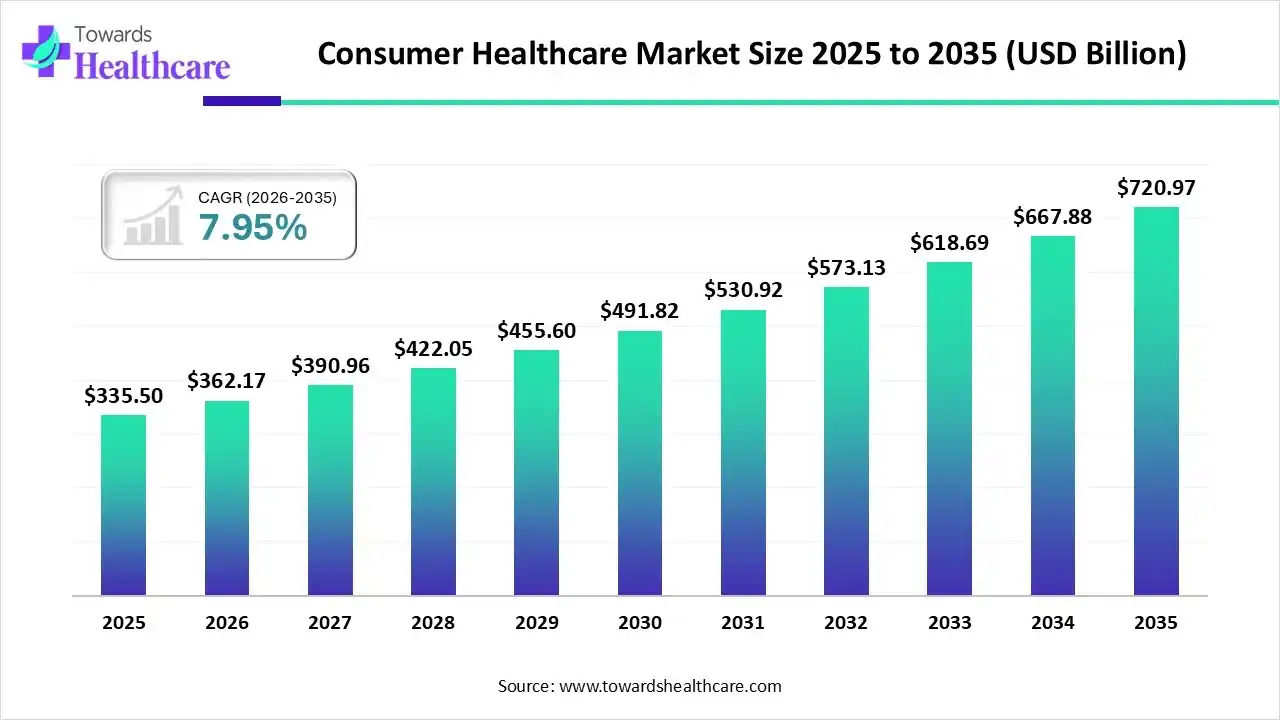
From pain relief tablets and vitamin supplements to personal care products and digital self-care tools, consumer healthcare has become the first line of defense for billions of people worldwide. What once felt optional now feels essential. This change in mindset is why the market, valued at USD 335.50 billion in 2025, is projected to cross USD 720.97 billion by 2035, growing at a steady CAGR of 7.95%.
This is not just a growth story. It is a story of autonomy, access, technology, and trust.
Download Free Sample as per Your Requirement: https://www.towardshealthcare.com/download-sample/6509
Health Decisions Have Moved Into Consumer Hands
People today want answers fast. They want relief without waiting rooms, solutions without long queues, and clarity without complexity. Consumer healthcare meets these expectations by offering products that are accessible, affordable, and easy to use.
Over-the-counter medicines help manage common conditions like headaches, allergies, acidity, and fever. Supplements support immunity, bone health, heart health, and energy levels. Personal care products address hygiene, skin health, and daily wellness. Together, they create a healthcare ecosystem that operates before clinical intervention becomes necessary.
Rising healthcare costs, overloaded medical systems, and busy lifestyles have pushed people to become more proactive. Consumers no longer see self-care as secondary. They see it as smart, responsible, and empowering.
Numbers That Tell a Bigger Story
The projected growth of the consumer healthcare market is not driven by hype. It reflects consistent global demand across age groups, income levels, and regions.
By 2026, the market is expected to reach USD 362.17 billion. By 2035, it nearly doubles to USD 720.97 billion. North America led the market in 2025, backed by strong purchasing power, advanced retail networks, and high awareness of preventive healthcare. At the same time, Asia Pacific is emerging as the fastest-growing region, driven by population size, digital adoption, and rising disposable incomes.
Behind these numbers lies a deeper reality: healthcare has become personal.
Self-Care Is No Longer a Trend—It Is a Habit
The idea of “wait and treat” has given way to “monitor and prevent.” Consumers now actively seek ways to stay healthy rather than only reacting to illness. This shift has fueled demand for immunity boosters, daily supplements, mental wellness products, and lifestyle-based care solutions.
In the United States, nearly three-quarters of adults use dietary supplements. Older adults lead adoption, but younger consumers are quickly catching up, especially those focused on fitness, mental health, and long-term wellness. Even children increasingly consume supplements, reflecting how deeply self-care has integrated into everyday life.
This behavioral change is not limited to one country. It is global, cultural, and accelerating.
OTC Medicines Remain the Backbone of the Market
Among all product categories, over-the-counter pharmaceuticals continue to dominate. Consumers trust them, understand them, and rely on them for quick relief. Painkillers, antipyretics, antihistamines, and combination analgesics remain staples in households worldwide.
The dominance of OTC products is reinforced by availability. Pharmacies, supermarkets, and convenience stores make these medicines easy to access. Digital platforms further extend reach, allowing consumers to reorder familiar products in seconds.
Strong brand recognition, clear labeling, and years of habitual use keep OTC pharmaceuticals at the center of the consumer healthcare ecosystem.
Personal Care Is Emerging as the Fastest-Moving Segment
While OTC medicines dominate today, personal care products are shaping tomorrow. Consumers increasingly link skin health, hygiene, and appearance to overall well-being. This has expanded personal care beyond cosmetics into wellness-driven routines.
Demand for specialized skincare, hygiene solutions, and natural formulations continues to rise. Urbanization, social media influence, and lifestyle awareness play a major role. People now see personal care as preventive healthcare, not vanity.
This mindset shift explains why personal care is expected to grow at the fastest CAGR within the consumer healthcare market.
Offline Still Leads, but Online Is Catching Up Fast
Physical retail remains dominant for consumer healthcare purchases. Pharmacies and supermarkets offer trust, immediacy, and human interaction—factors that still matter when health is involved. Consumers value the reassurance of seeing products in person, especially when buying medicines or supplements.
However, the online channel is transforming how people shop for health products. E-pharmacies, wellness platforms, and e-commerce marketplaces offer convenience, wider choices, price transparency, and subscription models. For many consumers, especially in urban and semi-urban areas, online purchasing has become routine.
As internet access expands and digital literacy improves, online channels will continue to gain momentum without replacing offline trust.
Digital Tools Are Redefining Self-Care
Technology has quietly become a co-pilot in consumer health decisions. Mobile apps, wearable devices, and virtual health platforms help people track symptoms, monitor vitals, and receive personalized guidance.
Artificial intelligence is accelerating this transformation. AI-driven tools now analyze user data to recommend supplements, flag early health risks, and guide OTC product selection. These systems do not replace doctors, but they empower consumers to make informed decisions before problems escalate.
For brands, AI offers deeper insight into consumer behavior, enabling more relevant product development and communication. For consumers, it offers clarity in a crowded market.
Regional Dynamics Reveal Different Growth Stories
North America: Leadership Through Awareness
North America leads the consumer healthcare market because consumers actively invest in preventive care. Strong pharmacy networks, high health literacy, and aggressive brand communication support sustained demand. Aging populations further drive consumption of supplements focused on joint, bone, and heart health.
The U.S. market continues to grow steadily as consumers balance convenience with credibility. Digital health adoption complements traditional retail rather than replacing it.
Asia Pacific: Growth Powered by Scale and Speed
Asia Pacific stands out as the fastest-growing region. Rising incomes, urban expansion, and a massive population base create enormous demand for accessible healthcare solutions. Consumers in countries like India increasingly turn to OTC medicines, supplements, and personal care products to manage health independently.
Government initiatives promoting preventive healthcare, combined with rapid e-commerce growth, amplify this momentum. Digital platforms play a critical role in reaching consumers beyond major cities.
Europe: Stability Meets Innovation
Europe’s consumer healthcare market grows at a notable pace, supported by strong healthcare infrastructure and high adoption of self-care practices. Aging demographics and preventive health awareness sustain demand for OTC medicines and supplements.
Innovation in wellness-oriented personal care and functional nutrition keeps the market dynamic, even in mature economies.
Investment and Innovation Are Reshaping the Landscape
Recent investments highlight how seriously companies take the consumer healthcare opportunity. In India, health education initiatives backed by digital tools aim to improve awareness and access. Portable diagnostic devices and connected health solutions further blur the line between clinical care and consumer health.
Major players continue to innovate, expand portfolios, and explore partnerships to stay relevant in an increasingly competitive market.
Strategic Moves Signal Long-Term Confidence
Recent developments show how global companies are repositioning themselves. In early 2025, Bayer Consumer Health introduced a cognitive wellness supplement designed to support mental performance, reflecting rising demand for brain health solutions.
Meanwhile, Sanofi restructured its consumer healthcare strategy by exploring partial divestment of its consumer health arm, signaling a focus on operational agility and long-term value creation.
These moves underline one truth: consumer healthcare is no longer peripheral. It sits at the center of future healthcare strategy.
Competition Is Intense, but Opportunity Is Larger
The market remains fragmented, with global giants, regional brands, and private labels competing for attention. While this creates pricing pressure and quality challenges, it also drives innovation.
Brands that succeed focus on transparency, education, and trust. Consumers reward companies that simplify choices, communicate clearly, and deliver consistent results.
Strengths, Gaps, and the Road Ahead
The consumer healthcare market benefits from strong demand, digital access, and growing awareness. At the same time, challenges remain. Quality inconsistencies, regulatory differences, and counterfeit products threaten trust. Economic slowdowns can also affect discretionary spending on wellness products.
Yet opportunities outweigh risks. Personalized wellness, plant-based formulations, probiotic solutions, and expansion into emerging markets offer long-term growth potential.
The Future Belongs to Preventive Thinking
Consumer healthcare is not about replacing doctors or hospitals. It is about supporting people before they need clinical care. It empowers individuals to take responsibility for their health, one decision at a time.
As technology, awareness, and access continue to evolve, consumer healthcare will become even more integrated into daily life. The brands that win will be those that respect consumer intelligence, prioritize safety, and adapt to changing expectations.
The next decade will not be defined by who sells the most products; but by who earns the most trust.
Access our exclusive, data-rich dashboard dedicated to the healthcare services market – built specifically for decision-makers, strategists, and industry leaders. The dashboard features comprehensive statistical data, segment-wise market breakdowns, regional performance shares, detailed company profiles, annual updates, and much more. From market sizing to competitive intelligence, this powerful tool is one-stop solution to your gateway.
Access the Dashboard: https://www.towardshealthcare.com/access-dashboard
Checkout Consumer Healthcare Market Report Now at: https://www.towardshealthcare.com/checkout/6509
You can place an order or ask any questions, please feel free to contact us at [email protected]
Europe Region – +44 778 256 0738
North America Region – +1 8044 4193 44
APAC Region: +91 9356 9282 04
Visit Our Website: https://www.towardshealthcare.com
Find us on social platforms: LinkedIn | Twitter | Instagram | Medium | Pinterest