Diabetes management is no longer confined to clinics, paper logs, or occasional lab visits. It has moved into people’s pockets, onto their wrists, and into their daily routines. What once demanded frequent hospital visits and manual record-keeping is now handled through intuitive mobile and web-based applications that work quietly in the background of everyday life.
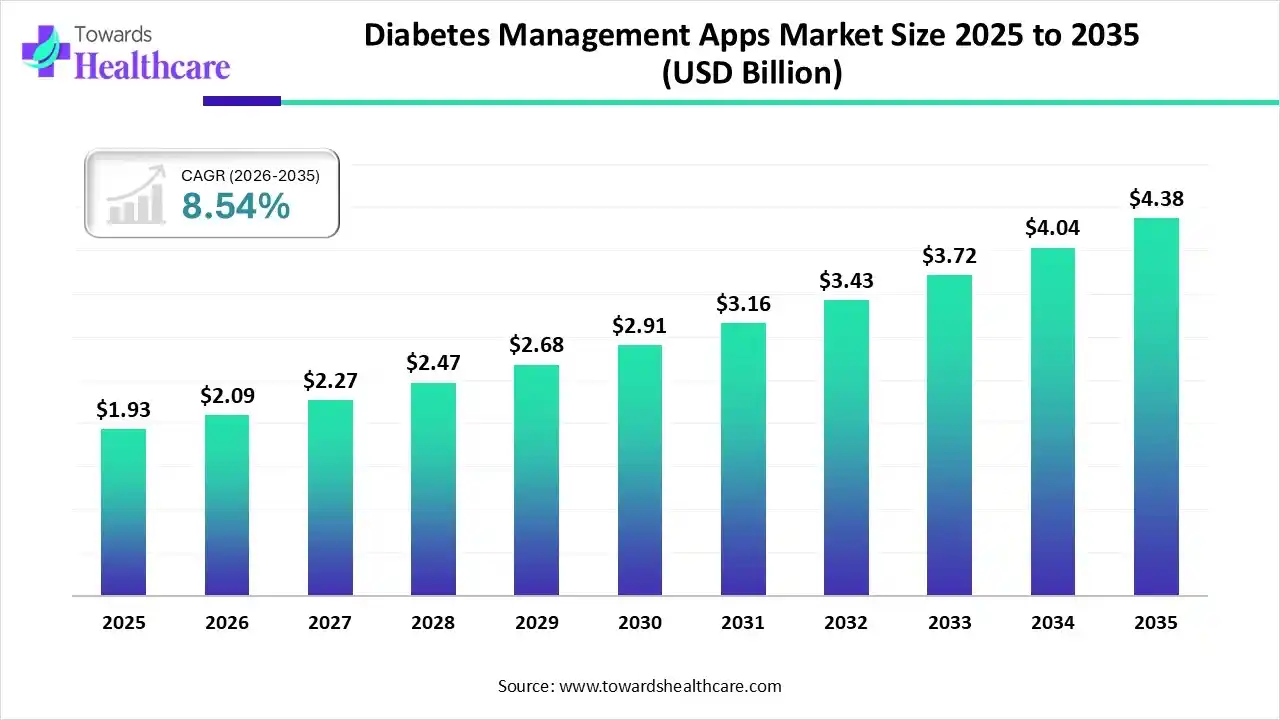
The global diabetes management apps market is a reflection of this transformation. Valued at USD 1.93 billion in 2025, it is expected to grow steadily, reaching USD 2.09 billion in 2026 and nearly doubling to USD 4.38 billion by 2035. Behind these numbers lies a much deeper story; one about human behavior, digital trust, personalized care, and a healthcare system learning to meet patients where they are.
Download Free Sample Report: https://www.towardshealthcare.com/download-sample/6510
This is not a story about technology replacing doctors. It is about technology extending care beyond hospital walls and empowering people to make better decisions every single day.
From Diagnosis to Daily Life: Why Apps Matter More Than Ever
Living with diabetes is not about one critical moment; it is about thousands of small decisions made every day. What to eat. When to move. How much insulin to take. Whether to check blood sugar now or later. Diabetes management apps step into this reality with a simple promise: make daily care easier, clearer, and more consistent.
These apps help users track blood glucose levels, log meals, monitor physical activity, set medication reminders, and even visualize long-term trends. Instead of overwhelming patients with raw data, modern apps translate information into insights that feel relevant and actionable.
This shift explains why adoption is rising steadily across age groups and geographies. People no longer want tools that only record data. They want tools that guide, warn, encourage, and adapt to their lives.
A Market Growing with Purpose, Not Hype
The diabetes management apps market is expanding at a compound annual growth rate of 8.54% from 2026 to 2035. This growth is not driven by novelty alone. It is rooted in three strong realities.
First, diabetes prevalence continues to rise worldwide. Second, smartphone penetration has reached even remote regions, making digital health tools widely accessible. Third, patients and healthcare providers are increasingly aligned in their belief that long-term outcomes improve when care extends beyond clinical settings.
Blood glucose monitoring apps currently dominate the market, accounting for about 40% of total revenue in 2025. These apps form the backbone of digital diabetes care because glucose tracking remains the foundation of disease management. However, growth is shifting toward diet and lifestyle management apps, which are expected to expand at the fastest rate over the coming years.
This change signals a broader understanding of diabetes—not just as a glucose problem, but as a lifestyle-linked condition that requires holistic, everyday support.
Cloud Technology: The Invisible Engine Behind Modern Care
Cloud-based deployment has emerged as the clear leader in this market, holding a 55% revenue share in 2025. This dominance is not accidental. Cloud platforms allow real-time data syncing, seamless integration with devices, remote monitoring, and instant feedback.
For users, this means fewer manual entries and more accurate records. For caregivers and clinicians, it means access to longitudinal data that reveals patterns rather than isolated readings. For developers, it enables scalability and rapid innovation.
Cloud infrastructure also supports advanced analytics, making it easier to incorporate artificial intelligence and machine learning into diabetes care. These systems can process vast datasets, identify trends, and generate personalized insights without burdening users with technical complexity.
Artificial Intelligence Is Redefining Daily Decision-Making
Artificial intelligence is quietly changing how people experience diabetes management. Instead of reacting to problems, AI-powered apps help users anticipate them.
These tools analyze glucose trends, dietary habits, activity levels, and even sleep patterns to predict potential fluctuations in blood sugar. They offer personalized suggestions, alert users to potential risks, and help fine-tune insulin dosing decisions.
What makes AI especially valuable is its ability to learn. As users interact with apps over time, the system adapts, becoming more accurate and more personalized. This adaptive intelligence transforms apps from static trackers into dynamic care companions.
As a result, AI and machine learning-based analytics represent the fastest-growing technology segment in the diabetes management apps market.
Why Patients Lead Adoption—and Why That Matters
Individual patients and consumers accounted for nearly half of the market revenue in 2025. This dominance highlights a critical shift in healthcare dynamics. Patients are no longer passive recipients of care. They are active participants.
Digital apps empower users to understand their condition, track progress, and engage in informed conversations with healthcare providers. This sense of ownership often leads to better adherence, improved outcomes, and greater confidence.
At the same time, pharmaceutical and biotechnology companies are emerging as a fast-growing end-user segment. These organizations increasingly use diabetes management apps to support medication adherence, gather real-world evidence, and accelerate research and development.
This dual demand—from patients and industry—creates a balanced ecosystem where innovation serves both personal care and scientific advancement.
Regional Momentum: Different Paths, Shared Goals
North America led the diabetes management apps market in 2025, capturing 35% of total revenue. Strong digital infrastructure, supportive healthcare policies, and high awareness levels have driven widespread adoption.
However, the most dynamic growth is unfolding in the Asia Pacific region. Countries across this region are experiencing rapid increases in smartphone usage, internet access, and digital health literacy. Governments and private players are collaborating to integrate apps and connected devices into national healthcare frameworks.
India stands out as a high-growth market, supported by a strong startup ecosystem and a growing focus on AI-enabled healthcare solutions. As self-management becomes a priority, diabetes management apps are increasingly viewed as essential tools rather than optional add-ons.
Europe also shows steady momentum, driven by connected devices, remote care models, and structured digital health reimbursement systems. The region’s emphasis on data protection and regulatory clarity has helped build trust among users and providers alike.
Security, Trust, and the Weight of Responsibility
As diabetes management apps collect sensitive health data, security and privacy have become central concerns. Users trust these platforms with intimate details of their daily lives, making robust data protection non-negotiable.
Developers and healthcare organizations are responding by strengthening compliance with global data protection frameworks and investing in secure cloud architectures. This focus on trust is not just a regulatory requirement—it is a growth enabler.
When users feel confident that their data is safe, they are more likely to engage consistently. Consistent engagement, in turn, leads to better outcomes and stronger market adoption.
Beyond Monitoring: The Rise of Lifestyle-First Care
One of the most meaningful shifts in this market is the growing emphasis on diet and lifestyle optimization. These apps go beyond glucose tracking to address nutrition, physical activity, stress management, and behavioral change.
They help users understand how food choices affect glucose levels, encourage regular movement, and offer educational resources that build long-term habits. By addressing root causes rather than symptoms alone, these tools support sustainable health improvements.
This approach aligns with the broader evolution of healthcare toward prevention and personalization. Diabetes management apps are becoming platforms for continuous learning, not just disease control.
Investment Signals Confidence in the Future
Significant investments and product launches in recent years underscore strong confidence in this market’s future. Funding rounds, system integrations, and commercial launches signal that stakeholders see digital diabetes care as a long-term priority rather than a temporary trend.
These investments support innovation in AI, wearable integration, and remote monitoring capabilities. They also enable geographic expansion, bringing advanced tools to underserved regions and diverse populations.
Challenges That Demand Thoughtful Solutions
Despite its promise, the diabetes management apps market faces real challenges. Data accuracy, regulatory complexity, and varying levels of digital literacy can limit effectiveness. Some users struggle with long-term engagement, while others face barriers related to cost or device compatibility.
There is also the risk of overreliance on technology without sufficient clinical oversight. Apps must complement, not replace, professional medical care. Addressing these challenges requires collaboration among developers, healthcare providers, regulators, and patients.
A Future Built on Balance and Humanity
The future of diabetes management apps is not about more features or faster algorithms alone. It is about balance—between technology and empathy, automation and human judgment, innovation and trust.
As these tools continue to evolve, their success will depend on how well they fit into real lives. The most impactful apps will be those that feel supportive rather than intrusive, intelligent rather than overwhelming.
In the years ahead, diabetes management apps will likely become standard components of chronic care, quietly guiding millions of people toward better health decisions every day.
The Bigger Picture
The projected growth of the diabetes management apps market to USD 4.38 billion by 2035 tells only part of the story. The deeper narrative is about empowerment. It is about turning complex medical care into manageable daily routines. It is about giving people the confidence to live fully while managing a lifelong condition.
As smartphones become care partners and data turns into insight, diabetes management is no longer just a medical challenge. It is becoming a shared journey—one shaped by technology, guided by knowledge, and grounded in human experience.
And perhaps the most important question is no longer whether digital tools can manage diabetes—but how thoughtfully they can support the people who live with it every day.
Access our exclusive, data-rich dashboard dedicated to the healthcare IT market – built specifically for decision-makers, strategists, and industry leaders. The dashboard features comprehensive statistical data, segment-wise market breakdowns, regional performance shares, detailed company profiles, annual updates, and much more. From market sizing to competitive intelligence, this powerful tool is one-stop solution to your gateway.
Access the Dashboard: https://www.towardshealthcare.com/access-dashboard
Checkout Diabetes Management Apps Market Report Now at: https://www.towardshealthcare.com/checkout/6510
You can place an order or ask any questions, please feel free to contact us at [email protected]
Europe Region – +44 778 256 0738
North America Region – +1 8044 4193 44
APAC Region: +91 9356 9282 04
Visit Our Website: https://www.towardshealthcare.com
Find us on social platforms: LinkedIn | Twitter | Instagram | Medium | Pinterest