Mental health no longer sits quietly in the background of healthcare conversations. It stands at the center of public discourse, corporate boardrooms, hospital corridors, and living rooms. Anxiety, depression, trauma-related disorders, substance use conditions, and stress-driven behavioral challenges affect millions across every demographic. As demand for accessible and responsive care rises, a new ecosystem is taking shape—behavioral mental health tools.
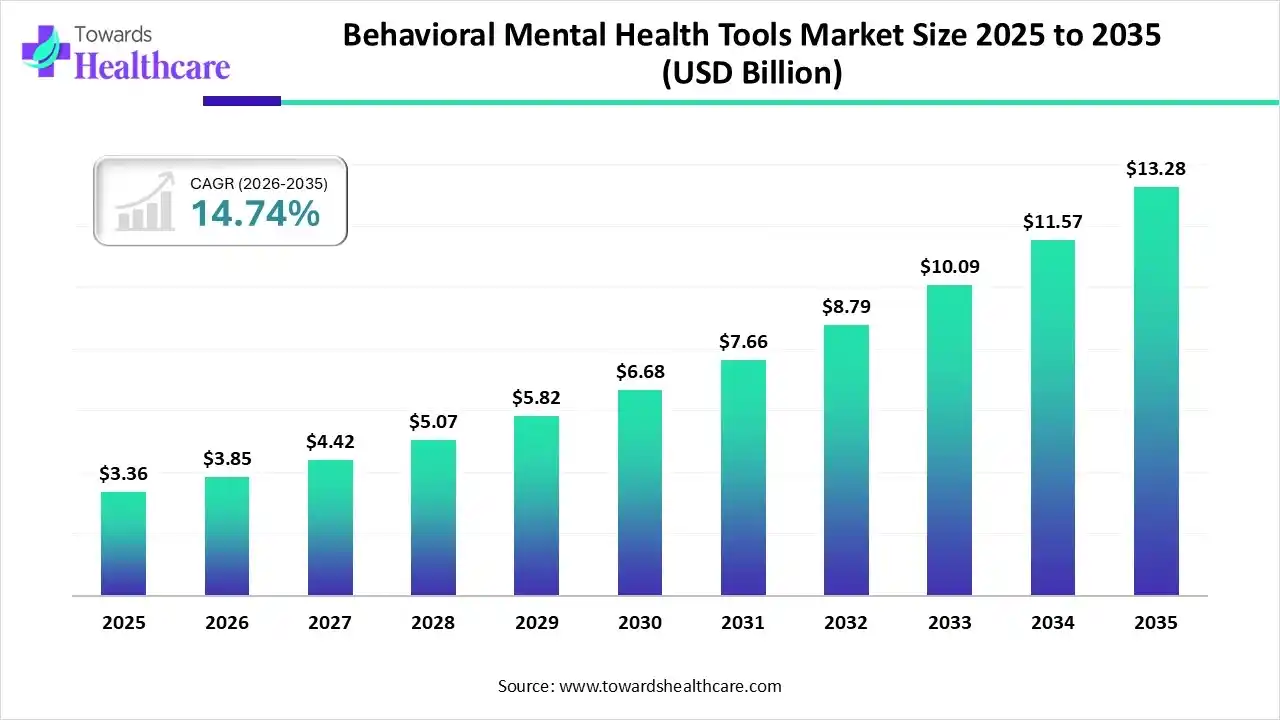
The global behavioural mental health tools market, valued at USD 3.36 billion in 2025, is projected to climb to USD 13.28 billion by 2035, expanding at a CAGR of 14.74% from 2026 onward. But this story is not just about numbers. It is about how technology, data, and human-centered care models are converging to redefine mental healthcare delivery worldwide.
Download Free Sample: https://www.towardshealthcare.com/download-sample/6592
The Quiet Transformation of Mental Health Treatment
Mental health treatment has evolved far beyond traditional therapy rooms and inpatient facilities. Today, behavioral mental health tools include digital platforms, AI-driven therapy modules, electronic health records, telehealth services, mobile applications, wearable integrations, and data analytics systems designed to diagnose, monitor, and manage mental health conditions.
Clinicians now track patient progress through structured assessments, behavioral tracking dashboards, clinical decision-support systems, and teleconsultation platforms. Patients engage in therapy from home, participate in virtual cognitive behavioral therapy (CBT) modules, and use subscription-based mental health programs that bypass insurance complexities.
This transformation addresses a long-standing gap: accessibility. For decades, mental health care faced barriers—stigma, limited specialists, geographic constraints, cost pressures, and long waiting lists. Digital behavioral tools are dismantling these barriers systematically.
Why the Market Is Expanding So Rapidly
Several structural forces are driving this growth:
-
Rising prevalence of anxiety, depression, and stress-related disorders
-
Increased awareness and destigmatization campaigns
-
Government mental health initiatives
-
Rapid smartphone and internet penetration
-
Acceptance of telemedicine post-pandemic
-
Integration of artificial intelligence in clinical workflows
Healthcare systems increasingly recognize that mental health directly influences physical health outcomes, workplace productivity, and long-term healthcare expenditure. Organizations now treat behavioral health as a strategic priority rather than a secondary service.
AI Steps In: From Observation to Intervention
Artificial intelligence has moved beyond experimental pilots. It now supports real-world behavioral mental health applications.
AI-driven cognitive behavioral therapy platforms analyze patient inputs, detect cognitive distortions, and guide structured interventions. These systems provide real-time feedback, behavioral nudges, and adaptive therapy paths tailored to each individual’s emotional patterns and engagement levels.
Instead of offering static programs, AI tools adjust based on patient progress. They identify risk patterns, flag potential relapses, and assist clinicians in prioritizing urgent cases. Predictive analytics models now forecast potential mental health crises before they escalate.
Companies like Hims & Hers Health, Inc. actively integrate artificial intelligence to enhance scalability and personalization in mental health delivery. Similarly, Teladoc Health, Inc. continues to expand digital therapy, diagnosis, and medication support services across remote care platforms.
AI does not replace clinicians. Instead, it augments them—reducing administrative burden and enabling deeper human interaction where it matters most.
The Software Segment Takes the Lead
In 2025, the software segment dominated the behavioral mental health tools market. This dominance makes sense. Software solutions form the backbone of digital transformation in healthcare.
Behavioral and mental health software allows clinicians to:
-
Record clinical notes
-
Conduct standardized assessments
-
Track longitudinal patient outcomes
-
Manage therapy sessions
-
Monitor engagement metrics
-
Integrate electronic health records
-
Support telehealth consultations
These systems improve workflow efficiency and reduce documentation fatigue. They also strengthen compliance and data security, which remain critical in healthcare operations.
Integrated software solutions combine clinical, administrative, and financial functions within a unified platform. Standalone software tools, meanwhile, serve niche requirements such as telepsychiatry, digital CBT, or behavioral analytics.
Support Services Rise as the Fastest Growing Component
While software leads in market share, support services are growing at the fastest pace.
Support services include implementation consulting, IT support, workforce training, financial management systems, and psychosocial support programs. Organizations increasingly recognize that technology adoption requires operational support.
Without structured onboarding, staff training, cybersecurity management, and compliance monitoring, even advanced digital tools cannot deliver results. Therefore, support services now play a central role in ensuring sustainable implementation.
Ownership vs. Subscription: A Shift in Business Models
Delivery models within behavioral mental health tools reveal an interesting evolution.
Ownership Model: Stability and Control
The ownership model dominated in 2025. Hospitals and large institutions prefer direct control over infrastructure, data, and system customization. Ownership provides stability and long-term operational alignment.
Organizations with ownership models often report higher internal engagement, stronger stewardship, and better integration with broader healthcare systems.
Subscription Model: Flexibility and Accessibility
However, the subscription model is expanding at a faster CAGR. Subscription-based behavioral health solutions reduce insurance complexities and create predictable revenue streams.
Private practices and community clinics increasingly adopt subscription models because they:
-
Simplify billing processes
-
Improve cash flow predictability
-
Reduce administrative burden
-
Offer flexible patient engagement
This shift reflects a broader transformation in healthcare economics—moving toward value-based, patient-centric financial structures.
Clinical Functionality Dominates, Administrative Tools Accelerate
Clinical functionality captured the largest market share in 2025. Tools such as electronic health records (EHR), clinical decision support systems, care planning modules, e-prescribing systems, and telehealth services form the foundation of patient-centered care.
These solutions streamline workflows, ensure compliance, and enhance treatment quality.
At the same time, administrative functionality is expanding rapidly. Scheduling systems, case management platforms, document management tools, workforce management systems, and business intelligence dashboards are gaining adoption.
Administrative efficiency directly impacts clinician availability. When systems reduce paperwork and operational friction, clinicians dedicate more time to patient care.
Hospitals Hold the Strongest Position
Hospitals dominated the end-user segment in 2025. They integrate mental health tools into broader healthcare frameworks, enabling early detection and coordinated treatment.
Hospital-based systems facilitate:
-
Early mental health screenings
-
Integrated care plans
-
Crisis intervention support
-
Cross-specialty collaboration
Meanwhile, community clinics are emerging as the fastest-growing segment. Community-based models extend access to underserved populations and rural areas. They leverage mobile apps, telehealth platforms, and digital engagement tools to broaden reach.
This shift toward decentralized care models reflects a growing understanding: mental health interventions must reach people where they live, not only where hospitals operate.
North America Leads—But Asia Pacific Surges
North America registered the largest market share in 2025. The United States continues to lead global healthcare R&D spending and digital innovation. Strong regulatory pathways, advanced reimbursement frameworks, and heavy investment in AI and telemedicine fuel this leadership.
Major players such as Universal Health Services, Inc. and Acadia Healthcare Company, Inc. operate extensive behavioral health networks across the region.
However, Asia Pacific is poised for the fastest growth.
Smartphone penetration is soaring. Governments actively support telemedicine expansion. Data governance standards are strengthening. Demand for remote mental health services continues to rise, especially in rural and aging populations.
India: A Rapidly Expanding Ecosystem
India presents a compelling growth narrative. With approximately 18% of the global population and rising mental health awareness, the country experiences increasing demand for scalable solutions.
India hosts hundreds of mental health startups and stands among the world’s largest startup ecosystems. Digital therapeutics platforms, AI-powered diagnostics, and VR-based therapy tools are gaining traction.
Investment flows support this trend. Emerging companies continue to secure funding to expand hospital partnerships and develop immersive treatment models.
Europe Advances Through Policy and Collaboration
Europe demonstrates strong momentum, driven by policy alignment and research collaboration.
Government-backed initiatives emphasize mental health mainstreaming, stigma reduction, and digital innovation. Programs like Horizon Europe provide funding for AI-driven healthcare advancements.
The United Kingdom integrates mental health priorities into national strategies such as the NHS Long Term Plan. Public-private partnerships accelerate extended reality (XR) therapies and data-driven mental health services.
European systems focus heavily on interoperability, privacy compliance, and cross-border digital health standards—factors essential for scalable behavioral health platforms.
Innovation Highlights: Recent Developments
Recent developments illustrate how dynamic this market has become:
-
AI-based eye-tracking platforms now assess ADHD treatment response objectively.
-
Interactive dashboards project behavioral health workforce supply and demand.
-
Clinically backed AI suites support therapist-client engagement between sessions.
-
Mental health parity mapping tools assess insurance performance and transparency.
Companies like LifeStance Health Group, Inc. continue forming strategic partnerships to connect digital wellness platforms with clinical services. Meanwhile, Magellan Health, Inc. leverages decades of clinical expertise alongside modern technology.
These developments indicate a broader shift from isolated tools toward integrated ecosystems.
Opportunities: Wearables, Digital Phenotyping, and Mobile Apps
The future landscape looks expansive.
Wearable devices now monitor physiological indicators such as heart rate variability and sleep patterns. Behavioral algorithms analyze these signals to detect stress triggers and mood fluctuations.
Digital phenotyping uses passive smartphone data—such as typing speed, movement patterns, and social engagement metrics—to provide early mental health insights.
Mobile mental health applications empower users with self-monitoring dashboards, guided exercises, communication tools, and remote therapy access.
Each innovation expands preventive care capacity rather than waiting for crisis intervention.
Persistent Challenges and Risks
Despite strong growth, the market faces structural challenges.
Data privacy remains a primary concern. Some digital platforms have faced scrutiny for inadequate cybersecurity or opaque data-sharing practices. Without transparent governance frameworks, user trust may erode.
Cognitive behavioral therapy tools, while effective for many conditions, show limitations for severe psychiatric disorders requiring intensive intervention.
E-therapy also cannot fully replace in-person care for high-risk patients. Hybrid models will likely dominate rather than fully digital systems.
The Bigger Picture: Mental Health as Infrastructure
Behavioral mental health tools no longer represent niche digital experiments. They are becoming core healthcare infrastructure.
As healthcare systems integrate behavioral health into primary care, workplace wellness programs, insurance models, and public health strategies, digital tools provide scalability.
The projected rise to USD 13.28 billion by 2035 signals more than economic expansion. It signals systemic change.
Healthcare is shifting from reactive crisis management to proactive behavioral monitoring. From isolated therapy sessions to continuous engagement. From stigma to open dialogue.
A Human-Centered Digital Future
Technology alone does not heal. Human connection, empathy, and trust remain central to mental healthcare.
However, digital behavioral tools extend the reach of those human connections. They help clinicians identify risks earlier. They empower patients with self-awareness tools. They make therapy accessible beyond urban centers. They integrate mental health into everyday life rather than isolating it within hospital walls.
As artificial intelligence, predictive analytics, and digital therapeutics evolve, the behavioral mental health tools market will continue to mature.
The real question is no longer whether digital transformation will reshape mental healthcare. It already has.
The question now is how responsibly, inclusively, and ethically stakeholders will guide this transformation over the next decade.
If the current trajectory continues, behavioral mental health tools may not only support treatment—they may redefine how societies understand and manage mental well-being altogether.
Access our exclusive, data-rich dashboard dedicated to the therapeutic area sector – built specifically for decision-makers, strategists, and industry leaders. The dashboard features comprehensive statistical data, segment-wise market breakdowns, regional performance shares, detailed company profiles, annual updates, and much more. From market sizing to competitive intelligence, this powerful tool is one-stop solution to your gateway.
Access the Dashboard: https://www.towardshealthcare.com/access-dashboard
Checkout this Market Report Now at: https://www.towardshealthcare.com/checkout/6592
You can place an order or ask any questions, please feel free to contact us at [email protected]
Europe Region – +44 778 256 0738
North America Region – +1 8044 4193 44
APAC Region: +91 9356 9282 04
Visit Our Website: https://www.towardshealthcare.com
Find us on social platforms: LinkedIn | Twitter | Instagram | Medium | Pinterest