Sleep has always been one of the most essential pillars of human health. Yet, in today’s fast-paced world, millions of people struggle with insufficient or poor-quality sleep. From insomnia and obstructive sleep apnea to disrupted circadian rhythms, modern lifestyle choices are taking a toll on rest. Enter the sleep trackers; a new wave of technology that promises to transform how we sleep, recover, and live.
The global sleep trackers market is booming. Estimated at USD 28.69 billion in 2025, it is projected to reach USD 30.88 billion in 2026 and nearly double to USD 59.90 billion by 2035, growing at a steady CAGR of 7.64%. But beyond the numbers, the story of sleep trackers is one of innovation, integration, and a growing awareness of sleep’s role in overall health.
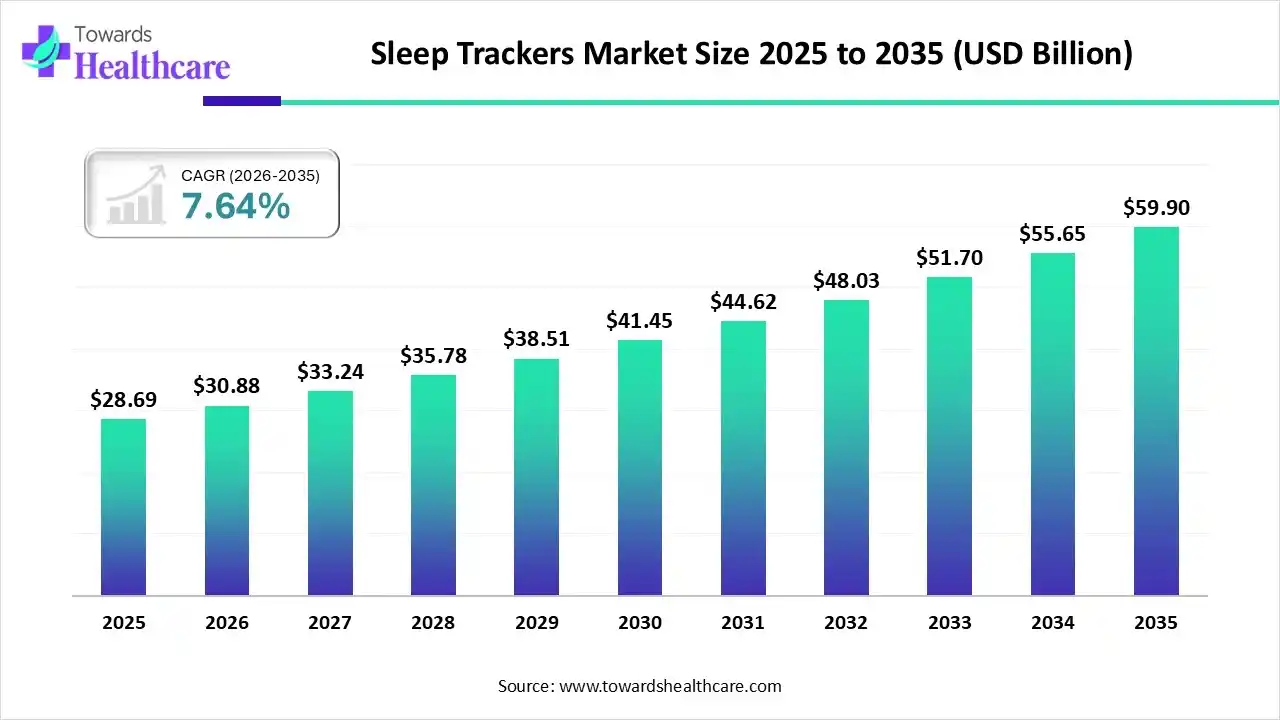
Download free Customized Sample Pages: https://www.towardshealthcare.com/download-sample/6535
Why Sleep Trackers Are More Than Just Gadgets
Sleep trackers are no longer simple pedometers for your sleep. Today’s devices measure sleep duration, sleep stages, heart rate, breathing patterns, oxygen saturation, and even movement during the night. These insights help users understand the quality of their rest and make informed changes to improve it.
Smartwatches, fitness bands, and wearable rings dominate the market, but mobile apps and AI-powered platforms are equally transforming sleep monitoring. Whether it’s a consumer seeking personal wellness or a healthcare provider monitoring patients remotely, sleep trackers bridge the gap between everyday life and scientific sleep insights.
The Technology Behind Better Sleep
Sleep tracking technology falls into several categories, each designed to meet different needs:
Actigraphy-Based Devices: The Everyday Sleep Companion
Actigraphy-based devices dominated the market in 2025. Why? They offer non-invasive, cost-effective monitoring that accurately estimates sleep patterns by tracking movement. For both consumers and clinicians, these devices provide continuous, long-term data without disrupting daily routines.
Polysomnography-Integrated Trackers: Clinical-Grade Accuracy
Polysomnography (PSG) integration is growing at the fastest pace. These devices provide detailed insights into sleep stages, breathing, and other physiological parameters. With rising awareness of sleep disorders and increasing demand for home-based clinical monitoring, PSG-enabled devices are becoming crucial tools for early diagnosis and personalized treatment.
Wearables That Lead the Way
Watches remain the most popular sleep tracking device due to their multifunctionality. Smartwatches combine fitness tracking, notifications, and sleep monitoring in one wearable, offering non-intrusive data collection. Meanwhile, rings are emerging as fast-growing contenders. Their small size, comfort, and advanced sensors allow for continuous, accurate sleep monitoring without intruding on daily life.
How AI is Changing the Sleep Game
Artificial Intelligence (AI) is revolutionizing sleep tracking. Advanced algorithms analyze biometric data to deliver personalized recommendations, predictive sleep scores, and early warnings about sleep disorders. Machine learning can detect subtle patterns in heart rate, breathing, and movement that may escape human observation.
AI doesn’t just provide insights; it empowers action. Users receive real-time suggestions to improve sleep hygiene, adjust bedtime routines, or even seek clinical evaluation. For healthcare providers, AI-driven sleep data allows more precise remote monitoring and patient management.
Sleep Trackers in Daily Life: Who’s Using Them?
The market divides between business-to-business (B2B) and business-to-consumer (B2C) adoption:
-
B2B: Healthcare providers, clinics, and wellness centers use sleep trackers for patient monitoring and clinical assessments. Sleep trackers help in diagnosing conditions like sleep apnea and insomnia and supporting remote care programs.
-
B2C: Everyday consumers increasingly rely on smartwatches, bands, and rings to track personal wellness, optimize sleep schedules, and improve lifestyle habits. Growing awareness of preventive health has fueled this surge.
Regional Snapshots: Where Sleep Technology Thrives
North America: The Innovation Leader
North America leads the sleep tracker market, driven by widespread wearable adoption, high health awareness, and strong infrastructure for digital health. The U.S. plays a pivotal role, fueled by tech-savvy consumers, corporate wellness programs, and early adoption of AI-driven health solutions.
Europe: Rapid Growth on Digital Health Expansion
Europe is expected to grow at the fastest rate. Increasing lifestyle-related sleep disorders, government support for digital health, and telemedicine expansion are propelling adoption. Countries like the UK are investing in public awareness campaigns and integrating wearable monitoring into healthcare systems.
Asia-Pacific: The Emerging Market Powerhouse
Asia-Pacific shows remarkable potential. Rapid urbanization, smartphone penetration, rising disposable incomes, and an emerging middle class are increasing demand for sleep tracking solutions. Countries like India and China are adopting affordable smartwatches and rings, leveraging both consumer interest and digital health infrastructure growth.
Country-Specific Adoption Rate of Smartwatches
| Country | Adoption Rate |
| UAE | 34% |
| Hong Kong | 31% |
| India | 30% |
| Poland | 29.10% |
| U.S. | 27% |
| Canada | 22% |
| Japan | 10% |
Sleep Health by Age: Who Needs It Most?
Sleep challenges affect all age groups, but statistics reveal striking patterns:
-
Ages 18–30: About 17% report insomnia in 2025, often linked to lifestyle stressors and digital habits.
-
Ages 60+: 8% face severe insomnia, 45% have obstructive sleep apnea, and over 40% suffer from poor sleep quality.
% of Global Sleep Issues by Age Group
| Age Group | Year | % of Experiencing Sleep Problems |
| 18-30 | 2025 | 17.10% suffering from insomnia |
| 60+ | 2025 | 8% facing severe insomnia |
| 60+ | 2024 | 45% have obstructive sleep apnea |
| 60+ | 2024 | 40.20% suffer from poor sleep quality |
| 60+ | 2024 | 30% have insomnia |
| 60+ | 2024 | 18% have daytime sleepiness |
These numbers highlight the growing need for personalized, technology-driven sleep solutions that cater to both younger adults seeking wellness optimization and older adults managing medical conditions.
Driving Forces Behind the Market Surge
Several key trends are propelling the sleep tracker market:
-
Rising Awareness of Sleep Disorders: Consumers and healthcare providers increasingly recognize sleep’s critical role in health.
-
Lifestyle-Related Health Challenges: Stress, poor diet, and sedentary habits contribute to sleep disruption, boosting demand for monitoring tools.
-
Smart Device Integration: The rise of AI, smartwatches, rings, and mobile apps allows seamless, personalized insights.
-
Preventive Healthcare Focus: Wearables enable early detection and intervention, reducing long-term health risks.
-
Athlete Endorsements & Lifestyle Marketing: Brands partner with high-profile sports figures to highlight the performance and recovery benefits of quality sleep monitoring.
Transforming Clinical Care with Sleep Trackers
Clinical applications are evolving rapidly. Remote monitoring, telemedicine integration, and AI-assisted diagnostics are turning sleep trackers into powerful medical tools. Devices like smart rings and PSG-integrated trackers support home-based sleep apnea testing, multi-night monitoring, and data sharing with clinicians.
In 2025, healthcare companies revamped their strategies to integrate consumer-grade wearables with clinical systems, highlighting a trend toward connected, patient-centered care. Sleep tracking is no longer just about personal wellness; it’s becoming an essential part of modern healthcare.
Innovations on the Horizon
The next wave of sleep tracker innovations is both exciting and transformative:
-
AI-Driven Personalization: Trackers will provide individualized sleep insights, predictive scores, and tailored recommendations to optimize rest.
-
Smart Ecosystem Integration: Sleep trackers will sync with smart beds, home automation systems, and wellness platforms to create holistic sleep environments.
-
Clinical Expansion: Remote patient monitoring, sleep disorder screening, and clinician-approved data for treatment will become standard.
-
Compact & Non-Intrusive Designs: Rings and other discreet wearables will gain popularity, making continuous sleep monitoring effortless.
Investment and Market Movements
Recent investments reflect the market’s momentum:
-
ResMed (2025): Rebranded to strengthen consumer presence and support global healthcare professionals.
-
BodiMetrics & EnsoData (2024): Collaborated to enhance home-based sleep apnea testing through AI-enabled multi-night monitoring.
-
Samsung (2025): Launched the Galaxy Watch8 with enhanced sleep metrics, personalized guidance, and vascular monitoring.
-
SmartRingX (2025): Introduced wellness programs combining sleep, stress, and recovery tracking for actionable health insights.
These initiatives demonstrate that both consumer and healthcare sectors are recognizing the immense value of accurate sleep data.
Challenges and Market Risks
While the market grows rapidly, challenges remain:
-
Accuracy vs. Clinical Standards: Many devices struggle to match polysomnography accuracy, especially in differentiating sleep stages.
-
Data Privacy Concerns: Continuous monitoring raises questions about how sensitive health data is stored and used.
-
Device Dependence: Wearables require battery life and smartphone connectivity, which can hinder consistent monitoring.
-
Competitive Pressure: Intense rivalry among tech and healthcare brands drives continuous innovation but also risks rapid obsolescence.
Conclusion: Sleep Technology is Here to Stay
The sleep trackers market is far more than a passing trend. With rising awareness, technological innovation, and integration into daily life and healthcare, these devices are redefining how we understand and improve sleep. AI, wearable tech, and smart ecosystems are converging to create a future where personalized, data-driven sleep insights are accessible to everyone; from athletes to aging adults seeking better rest.
As consumers and clinicians increasingly embrace sleep trackers, the market is set to reach unprecedented heights, improving not just sleep but overall health and quality of life. Whether you’re wearing a smartwatch, a ring, or leveraging AI-driven apps, the revolution is clear: sleeping smart isn’t optional anymore; it’s essential.
Access our exclusive, data-rich dashboard dedicated to the medical devices sector – built specifically for decision-makers, strategists, and industry leaders. The dashboard features comprehensive statistical data, segment-wise market breakdowns, regional performance shares, detailed company profiles, annual updates, and much more. From market sizing to competitive intelligence, this powerful tool is one-stop solution to your gateway.
Access the Dashboard: https://www.towardshealthcare.com/access-dashboard
Checkout Sleep Trackers Market Report Now at: https://www.towardshealthcare.com/checkout/6535
You can place an order or ask any questions, please feel free to contact us at [email protected]
Europe Region – +44 778 256 0738
North America Region – +1 8044 4193 44
APAC Region: +91 9356 9282 04
Visit Our Website: https://www.towardshealthcare.com
Find us on social platforms: LinkedIn | Twitter | Instagram | Medium | Pinterest