The global infant formula market is entering a decisive decade. What once served as a substitute when breastfeeding was not possible has now evolved into a highly specialized, science-driven, and tightly regulated nutrition category.
In 2025, the global infant formula market stood at US$ 90.27 billion. By 2026, it is expected to reach US$ 98.89 billion, and projections suggest it could climb to US$ 224.73 billion by 2035, growing at a CAGR of 9.55% between 2026 and 2035.
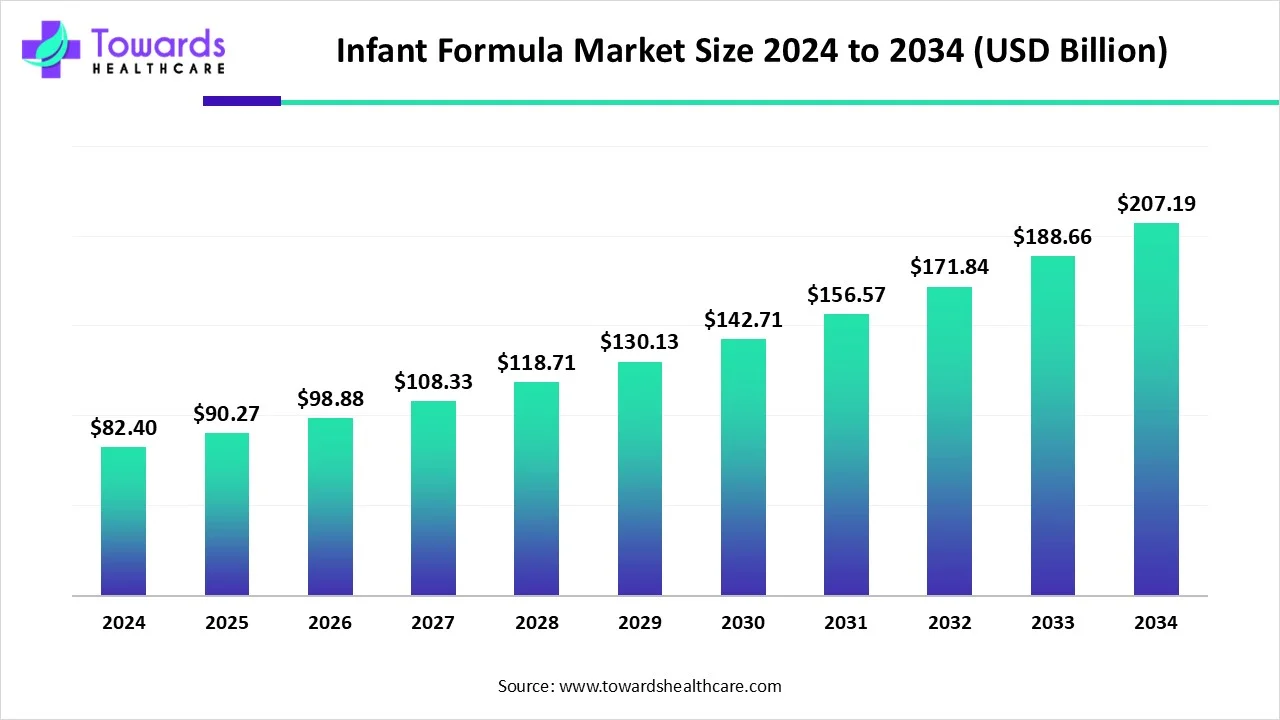
Download Free Sample @ https://www.towardshealthcare.com/download-sample/5564
Behind these numbers lies a deeper story, one shaped by shifting lifestyles, scientific advancements, rising female workforce participation, regulatory reforms, geopolitical dynamics, and evolving parental awareness. The infant formula market is no longer just about feeding babies; it reflects economic shifts, healthcare priorities, and changing family structures worldwide.
This article explores the forces shaping the infant formula market in 2026 and beyond.
A Market Built on Necessity, Evolving Through Innovation
Breast milk remains the gold standard for infant nutrition. However, modern realities often make exclusive breastfeeding challenging. Medical conditions, insufficient milk supply, maternal health concerns, and work-related constraints create demand for scientifically formulated alternatives.
Infant formula today contains advanced bioactive ingredients such as:
-
Human milk oligosaccharides (HMOs)
-
Probiotics and prebiotics
-
Lactoferrin
-
Essential vitamins and minerals
-
Inositol and immune-supporting compounds
Manufacturers now design products to closely mimic the nutritional profile of breast milk while addressing specific infant health needs. Powdered formulas continue to dominate due to shelf stability and affordability, while ready-to-feed liquids offer convenience for urban families.
Nutrition science increasingly recognizes that early-life feeding influences gut microbiota, immune development, metabolic health, and even cognitive outcomes. As a result, formulation strategies now integrate microbiome research and immunological studies into product development.
Market Snapshot: The Numbers That Define 2026
-
Market Size (2026): US$ 98.89 billion
-
Projected Market Size (2035): US$ 224.73 billion
-
CAGR (2026–2035): 9.55%
-
Leading Region (2025): Asia-Pacific
-
Supermarkets & Hypermarkets Share (2025): 50%
-
Infant Milk Formula Share by Type (2025): 45%
-
Infant Formula Share by Product Type (2025): 60%
These figures demonstrate sustained global demand rather than short-term expansion.
Birth Rates, Workforce Shifts, and the Demand Equation
Approximately 132 million babies were born globally in 2024. Birth volumes alone create a foundational demand base for infant nutrition products. However, birth rates tell only part of the story.
Women now represent roughly 42% of the global workforce. Postpartum employment has risen steadily across developed and emerging economies. In North America and parts of Europe, women increasingly return to work within months of childbirth. This shift directly influences formula consumption patterns.
Urbanization also plays a role. In rapidly developing regions such as China and India, changing family structures and dual-income households accelerate demand for convenient nutrition options.
Asia-Pacific Leads the Growth Story
The Asia-Pacific region dominated the infant formula market in 2025. Several structural drivers explain this dominance:
-
Large population base
-
Rising disposable incomes
-
Urban migration
-
Expanding middle class
-
Greater awareness of infant nutrition
China’s Evolving Regulatory Landscape
China significantly reshaped its infant formula ecosystem after earlier safety concerns. The government implemented stringent national standards in 2023 and reinforced its formula registration system. These reforms strengthened consumer trust and reshaped competitive dynamics.
In April 2025, China Feihe Ltd introduced a subsidy program aimed at encouraging birth rates. The company allocated a 1.2 billion yuan fund, offering expectant families subsidies of at least 1,500 yuan. This move reflects how infant nutrition brands now intersect with demographic policy objectives.
India’s Expanding Market
In India, rising birth rates and increased female employment contribute to growing demand. A recent survey revealed:
-
42.7% of children were breastfed
-
21.4% were formula-fed
-
35.9% received mixed feeding
Interestingly, nearly half of formula-feeding decisions were voluntary, while the remainder resulted from insufficient milk supply. These numbers indicate that formula adoption stems from both necessity and preference.
North America: Workforce Participation Drives Demand
North America is expected to witness significant growth during the forecast period. Rising female employment rates after childbirth directly influence formula usage.
The U.S. Food and Drug Administration launched a “Long-Term National Strategy to Increase the Resilience of the U.S. Infant Formula Market.” This initiative aims to strengthen supply chain stability, improve transparency, and protect product integrity following past supply disruptions.
Consumer demand in the U.S. increasingly favors:
-
Organic-certified formulas
-
Non-GMO ingredients
-
Hormone-free milk sourcing
-
Transparent labeling
In Canada, collaboration among manufacturers has expanded product diversity and boosted exports.
Europe: Regulation as a Trust Multiplier
Europe continues to grow steadily, driven by rising awareness of child health and nutrition. The European Union enforces stringent compositional and labeling regulations for infant and follow-on formulas. These standards enhance market monitoring and protect consumer interests.
In the UK, formula prices rose between 2021 and 2023, reflecting increased demand and inflationary pressures. Germany has seen growth in organic infant formula development, supported by strong consumer preference for premium nutrition products.
Segmental Breakdown: Where Growth Concentrates
By Type
-
Infant Milk Formula (45% share in 2025):
Dominates due to use as both supplement and alternative to breastfeeding. -
Follow-On Milk:
Fastest-growing segment. Parents increasingly adopt stage-specific formulas tailored to infants’ evolving nutritional needs.
By Product Type
-
Infant Formula (60% share in 2025):
Remains core product category, widely recognized and regulated. -
Baby Food:
Expected to grow significantly as parents seek complementary nutrition options.
By Distribution Channel
| Channel | Share (2025) |
|---|---|
| Hypermarkets/Supermarkets | 50% |
| Pharmacy/Medical Stores | 25% |
| Specialty Stores | 15% |
| Others | 10% |
Supermarkets dominate due to product variety, pricing transparency, and brand accessibility. Specialty stores are projected to grow fastest because they offer curated, premium, and advisory-driven services.
AI Enters the Feeding Bottle
Artificial intelligence is reshaping manufacturing precision in infant formula production.
Advanced systems now use custom vision technology and dual-arm YuMi cobots to automate powder rehydration analysis. High-resolution imaging combined with computer vision algorithms evaluates dissolution characteristics, agitation consistency, and powder performance.
These AI systems enhance:
-
Measurement accuracy
-
Quality control
-
Batch consistency
-
Safety compliance
Manufacturers increasingly rely on automation to maintain regulatory standards while scaling production.
Safety Concerns: The Market’s Ongoing Restraint
Despite growth, safety concerns remain a key restraint. Ready-to-feed formulas can become unstable depending on packaging and environmental conditions. Plastic contamination risks and isolated reports of toxic substances have raised consumer anxiety in some regions.
Stringent regulatory oversight and transparent labeling practices remain essential to maintaining public trust.
Trade Dynamics and Export Patterns
According to global trade data, approximately $11.2 billion worth of infant cereal, flour, starch, and milk-based foods were traded internationally in 2023.
Leading exporters included:
-
Netherlands: $2.46 billion
-
Ireland: $1.33 billion
-
New Zealand: $1.2 billion
Infant foods ranked 324th among 4,644 globally traded products, accounting for 0.05% of world trade. Although a small share in percentage terms, the category holds high strategic value due to its health implications and premium pricing structure.
Middle East & Africa: Emerging Momentum
The Middle East and Africa are witnessing rising demand driven by population growth and increasing awareness of nutritional products.
In the UAE, a cohort study reported that 96.4% of children consumed solid foods between 6–8 months, indicating early adoption of complementary feeding practices.
In South Africa, 848,337 births were registered in 2023, and approximately 54.9% of women were employed in Q2 2025. Workforce participation supports formula demand as families balance employment and caregiving responsibilities.
Competitive Landscape: Established Leaders Anchor the Market
Major global players include:
-
Abbott Laboratories
-
Nestlé S.A.
-
Yili Group
-
Perrigo Company plc
-
Danone SA
-
Royal FrieslandCampina N.V.
-
Bellamy’s Organic
-
The Kraft Heinz Company
-
Arla Foods amba
-
Reckitt Benckiser Group plc
For example, Nestlé reported group sales of CHF 91.4 billion in 2024, with nutrition and health science contributing CHF 15.1 billion. Perrigo generated $4.37 billion in net sales in 2024, ranking as the third-largest infant nutrition manufacturer in the U.S. and Canada.
These companies invest heavily in R&D, supply chain optimization, and regulatory compliance to maintain global presence.
Organic, Probiotic, and Specialty Formulas: The Opportunity Zone
Manufacturers increasingly focus on:
-
Organic-certified formulas
-
Probiotic-enriched products
-
Plant-based alternatives
-
Hydrolyzed protein formulas
-
Allergy-sensitive variants
Research in April 2025 suggested that probiotic-enriched formulas may help reduce allergic manifestations in children with cow’s milk protein allergies. While breastfeeding remains the primary recommendation for newborns, specialty formulas address specific medical and nutritional needs.
Price Trends and Consumer Behavior
Rising prices in certain markets reflect:
-
Increased raw material costs
-
Supply chain pressures
-
Regulatory compliance investments
-
Growing preference for premium and organic products
However, consumers continue to prioritize safety and quality over cost when selecting infant nutrition products.
Looking Ahead: What Will Shape the Market by 2035?
Several macro forces will determine whether the market reaches its projected US$ 224.73 billion valuation by 2035:
-
Global birth rate trends
-
Female workforce participation
-
Regulatory harmonization
-
Technological integration in manufacturing
-
Consumer preference for clean-label and organic products
-
Supply chain resilience
Governments increasingly view infant formula as a strategic sector due to its public health implications. Regulatory vigilance will likely intensify rather than relax.
A Market Beyond Numbers
The infant formula industry stands at the intersection of healthcare, demographics, economics, and technology. Its growth does not merely reflect rising sales; it mirrors global lifestyle transformations and evolving parental expectations.
As scientific research deepens and regulatory frameworks strengthen, the market will likely continue its steady expansion. The coming decade will test manufacturers’ ability to balance innovation with safety, accessibility with quality, and growth with responsibility.
By 2035, the infant formula market may exceed $224 billion. But its true impact will be measured not in revenue figures alone; rather in how effectively it supports infant health in a rapidly changing world.
Access our exclusive, data-rich dashboard dedicated to the therapeutic area sector – built specifically for decision-makers, strategists, and industry leaders. The dashboard features comprehensive statistical data, segment-wise market breakdowns, regional performance shares, detailed company profiles, annual updates, and much more. From market sizing to competitive intelligence, this powerful tool is one-stop solution to your gateway.
Access the Dashboard: https://www.towardshealthcare.com/access-dashboard
Checkout Infant Formula Market Report Now at: https://www.towardshealthcare.com/checkout/5564
You can place an order or ask any questions, please feel free to contact us at [email protected]
Europe Region – +44 778 256 0738
North America Region – +1 8044 4193 44
APAC Region: +91 9356 9282 04
Visit Our Website: https://www.towardshealthcare.com
Find us on social platforms: LinkedIn | Twitter | Instagram | Medium | Pinterest