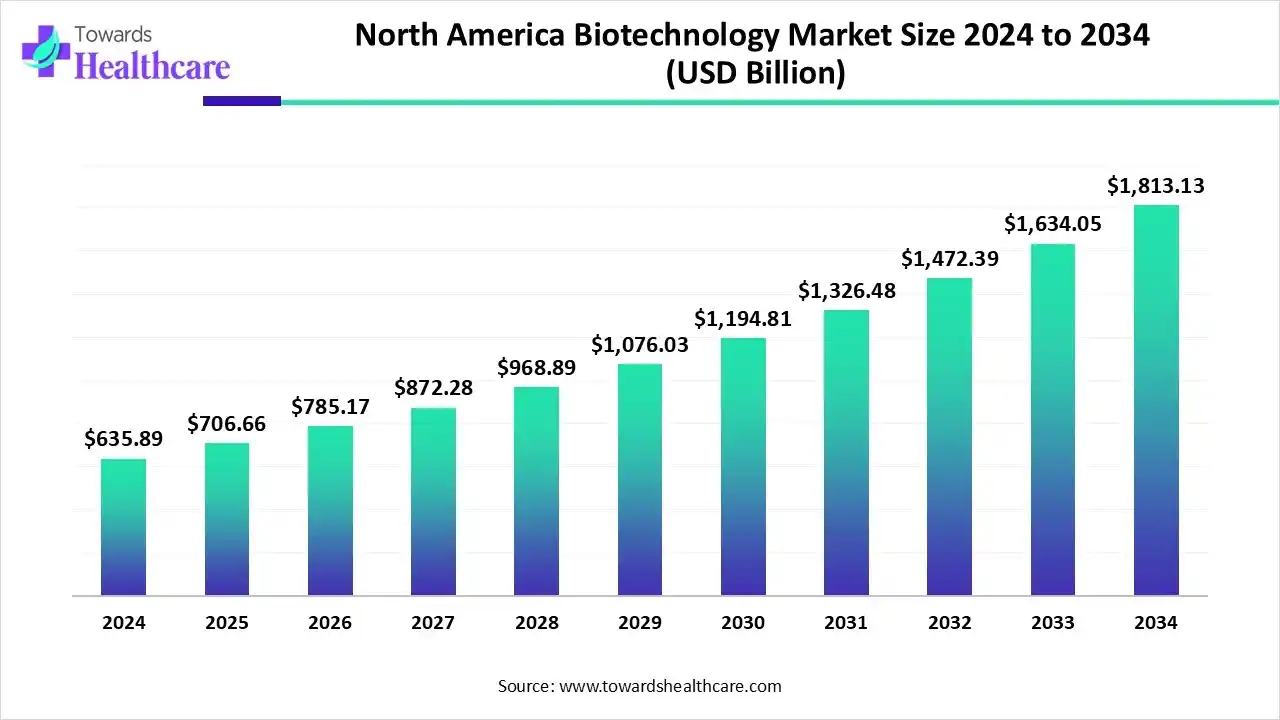
The numbers are staggering: the North America biotechnology market, valued at USD 635.89 billion in 2024, surged to USD 706.66 billion in 2025 and is projected to hit a whopping USD 1,813.13 billion by 2034, growing at a CAGR of 11.8%.
Download Free Customized Sample: https://www.towardshealthcare.com/download-sample/6286
But beyond the impressive statistics lies a story of rapid technological evolution, growing public awareness, and a collaborative ecosystem that blends science, AI, and entrepreneurship. Let’s explore how North America is shaping the future of biotech and what it means for healthcare, research, and society.
Why North America Leads the Biotech Charge
North America, primarily the U.S. and Canada, has long been a leader in biotechnology, and the reasons are clear:
-
Strong Funding and Investment: Venture capitalists and private equity firms are pouring billions into biotech startups and established companies. From Arch Venture Partners to 5AM Ventures, investors are fueling innovation that spans from genomics to regenerative medicine.
-
Robust Infrastructure: Laboratories, research centers, and manufacturing facilities across the region provide a solid foundation for high-quality research and commercial production.
-
Government Support: Initiatives like the U.S. “National Biotechnology Initiative Act of 2025” and Canada’s “Genomics Strategy” are designed to strengthen the sector, promoting research, commercialization, and talent development.
Together, these factors create a thriving biotech ecosystem that supports both established pharmaceutical giants and emerging startups.
Personalized Medicine is Changing the Game
One of the most exciting trends driving the biotechnology market is personalized medicine. Unlike traditional treatments, which often take a “one-size-fits-all” approach, personalized medicine tailors therapies to a patient’s unique genetic makeup, lifestyle, and medical history.
Monoclonal antibodies (mAbs) and biologics are at the forefront of this movement. These treatments offer high specificity, targeting diseases precisely while minimizing side effects. In 2024 alone, the U.S. FDA approved 13 monoclonal antibodies, representing over 25% of all drug approvals.
Gene therapy and gene editing, powered by technologies like CRISPR/Cas9, are also gaining momentum. These therapies tackle diseases at their root cause, offering hope for disorders that were previously untreatable. The segment is expected to experience rapid growth, reflecting both scientific advancement and rising patient demand.
Diagnostics: Early Detection Saves Lives
While therapeutics dominate revenue, diagnostics is the fastest-growing segment in the North American biotech market. Early detection of chronic disorders is critical for effective treatment. Governments and healthcare organizations are actively promoting screening and diagnostic programs, helping healthcare providers intervene before diseases become severe.
Advancements such as digital diagnostics, point-of-care testing, and molecular assays have made it easier, faster, and more accurate to detect diseases. AI-driven diagnostic platforms now analyze vast datasets, spotting patterns that human eyes might miss. These innovations not only save lives but also reduce healthcare costs over the long term.
AI is Rewriting Biotech’s Rulebook
Artificial intelligence (AI) is no longer a futuristic concept in biotech—it’s a core driver of research, development, and production. AI and machine learning accelerate processes, reduce costs, and improve accuracy. From drug discovery to predictive analytics, AI is transforming how companies develop and deliver therapies.
Consider Insilico Medicine, an AI-based biotech company using its Pharma.AI platform for target identification, molecular generation, and predictive modeling. By integrating AI into drug development, researchers can cut timelines, improve precision, and focus on solving complex medical challenges efficiently.
AI also plays a key role in manufacturing and supply chain logistics, ensuring that new therapies reach patients quickly and safely. The impact is visible across all stages of the biotech value chain, making AI a true game-changer.
Pharma & Biotech Companies Drive Market Growth
The pharmaceutical and biotechnology companies segment leads the North American market in revenue. These companies invest heavily in research, develop novel therapies, and maintain strong production capabilities. Their focus on innovation strengthens their market position while providing access to cutting-edge treatments for patients.
Meanwhile, CROs (Contract Research Organizations) and CMOs (Contract Manufacturing Organizations) are growing fast, offering specialized expertise to smaller companies that lack in-house capabilities. By outsourcing R&D and production, these companies accelerate innovation and streamline operations, ultimately benefiting patients and the broader healthcare system.
R&D and Bioinformatics: The Twin Engines of Innovation
Research and development services dominate in terms of revenue, fueling breakthroughs in therapeutics and diagnostics. Companies increasingly rely on external R&D providers to optimize drug development, design assays, and deliver faster results.
Bioinformatics and data analytics are emerging as the fastest-growing service segment. AI-driven analysis of complex datasets helps researchers predict how compounds behave, assess efficacy, and understand pharmacodynamics and pharmacokinetics. This convergence of computational science and biology accelerates discovery and ensures more effective therapies reach the market.
Distribution Channels: From Labs to Homes
Direct sales currently dominate the North American biotech market. Manufacturers sell products directly to healthcare providers, ensuring timely delivery and cost-effectiveness.
However, online and e-commerce platforms are poised for rapid growth. Digital channels allow healthcare professionals and patients to access a wider variety of products, benefit from discounts, and even receive virtual consultations. This trend reflects the broader digital transformation of healthcare and underscores the importance of accessibility in the modern biotech ecosystem.
Regulatory Compliance: Trust Matters
In biotech, safety and effectiveness are non-negotiable. FDA-approved products and services lead the market, ensuring that therapies meet rigorous standards for public safety.
The CLIA/ISO certified labs segment is expected to grow fastest in the coming years. These certifications guarantee high-quality testing and analytical services, building trust with patients and healthcare providers alike. In a field where accuracy can mean the difference between life and death, compliance is key.
U.S. vs. Canada: A Tale of Two Biotech Powerhouses
The U.S. dominates in market size and revenue, thanks to its strong infrastructure, funding ecosystem, and concentration of leading biotech companies. The federal government actively promotes domestic manufacturing, reducing reliance on imports and ensuring access to cutting-edge therapies. Agencies like the National Science Foundation (NSF) are investing billions to accelerate discoveries.
Canada is emerging as the fastest-growing market, fueled by more than 2,000 life science firms and a strong focus on genomics. Nearly half of Canadians have at least one chronic disorder, creating demand for advanced therapeutics and diagnostics. Health Canada’s approval of 67 biosimilars, including insulin, monoclonal antibodies, and growth hormones, highlights the country’s growing biotech capabilities.
Sustainability in Biotechnology
Biotech companies are increasingly prioritizing sustainability. From developing biodegradable materials to producing biofuels and renewable energy, these initiatives reduce pollution, conserve resources, and align with global environmental goals.
Sustainable practices also appeal to investors and consumers, reinforcing the idea that biotechnology can drive both economic growth and social responsibility.
Startups: The Future of Innovation
North America’s biotech landscape isn’t just dominated by large corporations. Startups like Orna Therapeutics, Deep Genomics, and Maze Therapeutics are pushing boundaries in post-genomics research. Access to funding and technological advancements allows these nimble players to explore areas that larger companies may overlook, from rare diseases to novel cellular therapies.
Venture capital remains a driving force. Investments like $115 million by Dimension in Aspect Biosystems for bioprinted tissue therapeutics or $140 million in Canada’s Immuno-Engineering and Biomanufacturing Hub highlight the region’s commitment to fostering innovation at every level.
Challenges Ahead
Despite tremendous growth, the North American biotech market faces challenges:
-
High Development Costs: Developing new therapies remains expensive and time-consuming.
-
Regulatory Complexity: Navigating FDA and CLIA regulations requires expertise and careful planning.
-
Talent Shortages: Advanced biotech relies on specialized skills, from AI analytics to molecular biology.
Overcoming these hurdles will require continued investment, collaboration, and technological innovation.
Access our exclusive, data-rich dashboard dedicated to the biotechnology sector – built specifically for decision-makers, strategists, and industry leaders. The dashboard features comprehensive statistical data, segment-wise market breakdowns, regional performance shares, detailed company profiles, annual updates, and much more. From market sizing to competitive intelligence, this powerful tool is one-stop solution to your gateway.
Access the Dashboard: https://www.towardshealthcare.com/access-dashboard
Checkout North America Biotechnology Market Report Now at:
You can place an order or ask any questions, please feel free to contact us at [email protected]
Europe Region – +44 778 256 0738
North America Region – +1 8044 4193 44
APAC Region: +91 9356 9282 04
Visit Our Website: https://www.towardshealthcare.com
Find us on social platforms: LinkedIn | Twitter | Instagram | Medium | Pinterest