The healthcare industry is undergoing a digital revolution, and business intelligence (BI) tools are leading the charge. Hospitals, payers, and life sciences organizations increasingly rely on advanced analytics and real-time insights to make smarter decisions.
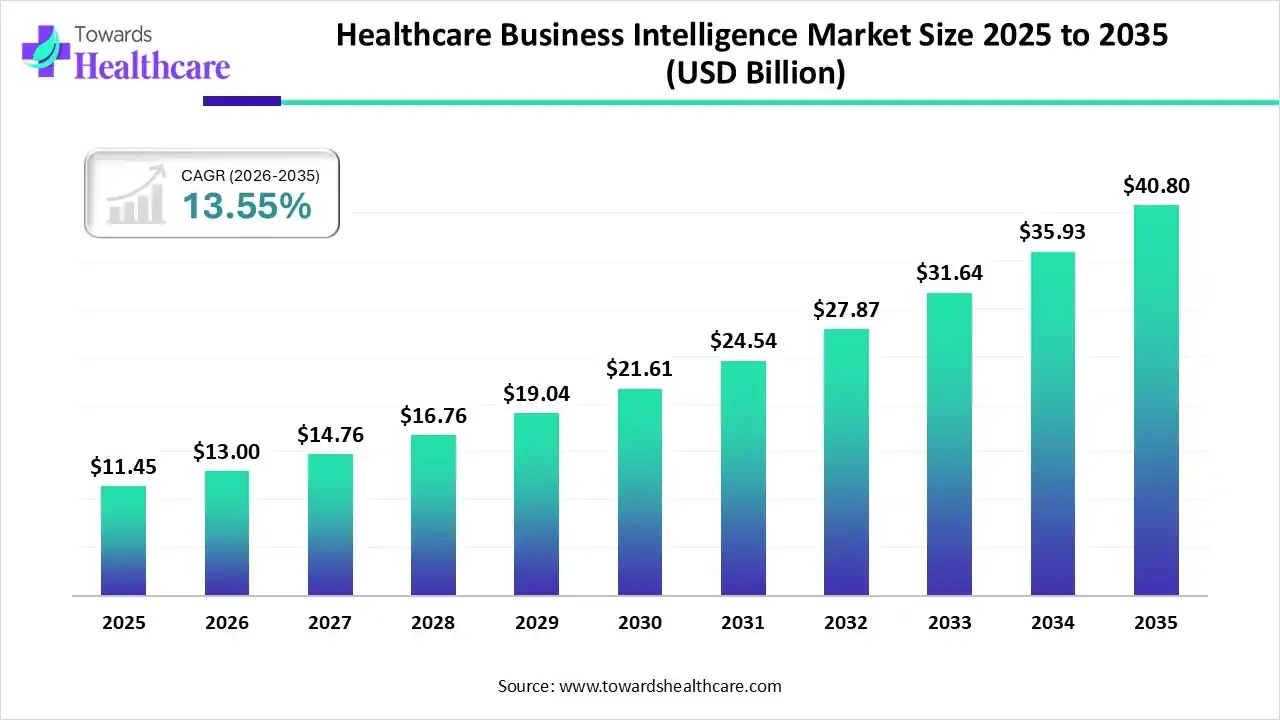
In 2025, the global healthcare business intelligence market was estimated at USD 11.45 billion. Analysts predict it will grow to USD 13 billion in 2026 and skyrocket to nearly USD 40.8 billion by 2035, achieving an impressive CAGR of 13.55%. The numbers reflect a clear trend: data-driven decision-making is no longer optional—it’s essential.
Download the free sample and get the complete insights and forecasts report on this market @ https://www.towardshealthcare.com/download-sample/6498
North America dominates the healthcare BI landscape. Its advanced IT infrastructure, strong regulatory frameworks, and adoption of electronic health records (EHRs) give the region a significant edge. Meanwhile, the Asia-Pacific region is emerging as the fastest-growing market, driven by digital health investments, large patient populations, and government initiatives supporting health IT.
Why Hospitals Can’t Ignore BI Anymore
Healthcare business intelligence is not just software—it’s a strategy. BI platforms turn complex healthcare data into actionable insights. By integrating clinical, financial, and operational data, hospitals can optimize workflows, reduce costs, and improve patient outcomes.
Real-time dashboards and predictive analytics allow clinicians to anticipate patient surges, allocate resources efficiently, and streamline hospital operations. Payers can detect fraud, manage risk, and enhance claims processing. Life sciences companies leverage BI for research, supply-chain management, and operational efficiency.
The shift toward value-based care is another driving force. BI tools help measure patient outcomes, satisfaction, and readmissions, supporting interventions tailored to each patient. Hospitals adopting these tools can deliver personalized care while reducing operational inefficiencies.
AI Meets Healthcare BI: A Game-Changer
Artificial intelligence is transforming healthcare BI by enabling smarter analytics and predictive insights. Modern BI platforms combine AI with massive datasets—EHRs, imaging records, financial reports, and operational metrics—to uncover trends in real time.
For instance, AI-powered dashboards can predict patient admission trends, optimize staffing schedules, and monitor resource utilization. Some platforms even assist with early disease detection and preventive care, giving providers a proactive advantage.
Startups and established players alike are investing heavily in AI-driven BI solutions. In 2025, companies launched AI-enabled ERP and back-office platforms to reduce administrative burdens and improve operational intelligence. These innovations illustrate the potential of combining AI with BI to transform hospital management.
Patient-Centric Analytics: The Heart of BI
Modern healthcare is shifting its focus from volume to value, emphasizing patient-centered care. BI tools play a crucial role in this transformation by tracking treatment outcomes, patient satisfaction, and quality of care.
Predictive analytics allow hospitals to identify high-risk patients, monitor chronic conditions, and reduce readmissions. Data visualization platforms give staff an intuitive view of performance metrics, making decision-making faster and more effective.
By analyzing clinical and operational data together, healthcare organizations can design interventions that improve outcomes while keeping costs in check. This patient-centric approach ensures that BI benefits not just administrators but also the individuals receiving care.
Cloud vs On-Premises: BI Delivery Choices
The mode of delivery plays a pivotal role in healthcare BI adoption. Cloud-based solutions dominate the market due to their scalability, lower maintenance costs, and ability to support real-time analytics across multiple locations.
Hospitals prefer cloud platforms for remote access, faster integration with EHRs, and AI-powered analytics. Security measures are improving, and the flexibility to scale services quickly makes cloud BI highly attractive.
However, on-premises solutions are still growing in demand. Organizations with strict compliance needs or robust internal IT infrastructures prefer hosting BI tools on-site. On-premises solutions allow for tighter data control, customization, and integration with legacy systems, ensuring data security and continuity.
Self-Service BI: Empowering Hospital Teams
Self-service BI platforms are reshaping how healthcare professionals work. These tools allow clinicians, administrators, and decision-makers to access, visualize, and analyze data without relying on IT teams.
User-friendly dashboards, drag-and-drop interfaces, and automated reporting empower staff to generate insights quickly. This reduces bottlenecks, improves workflow efficiency, and supports faster decision-making.
The trend toward self-service BI reflects a broader shift in healthcare: empowering staff with tools that provide insights at the point of need. Hospitals using self-service platforms can respond faster to patient demands and operational challenges.
SWOT of Healthcare BI: Opportunities and Challenges
Strengths: The market benefits from a rising demand for data-driven decision-making, integration of AI and cloud technologies, and strong EHR adoption. These factors allow providers to improve efficiency and patient outcomes.
Weaknesses: High implementation costs, data privacy concerns, and fragmented analytics skills among staff can slow adoption. Interoperability challenges reduce the accuracy of BI insights.
Opportunities: Telehealth, IoT, and remote monitoring generate new data streams. Emerging markets are expanding digital healthcare infrastructure. AI-powered analytics provide opportunities for predictive and precision care.
Threats: Cybersecurity risks, resistance to change, and rapid technology evolution pose challenges. New cloud-native entrants intensify competition.
By 2035, the healthcare BI market is projected to reach USD 40.8 billion. Hospitals, payers, and manufacturers will rely heavily on BI for strategic decision-making, resource allocation, and patient-centric care.
The combination of AI, cloud computing, and self-service analytics will make BI more accessible and powerful than ever. Providers will not just react to patient needs—they will anticipate them.
In emerging markets, BI adoption will enhance telehealth, remote monitoring, and digital healthcare infrastructure, bridging gaps in access and quality. The future of healthcare is data-driven, and BI is at its core.
Access our exclusive, data-rich dashboard dedicated to the healthcare market – built specifically for decision-makers, strategists, and industry leaders. The dashboard features comprehensive statistical data, segment-wise market breakdowns, regional performance shares, detailed company profiles, annual updates, and much more. From market sizing to competitive intelligence, this powerful tool is one-stop solution to your gateway.
Access the Dashboard: https://www.towardshealthcare.com/access-dashboard
Checkout Healthcare Business Intelligence Market Report Now at: https://www.towardshealthcare.com/checkout/6498
You can place an order or ask any questions, please feel free to contact us at [email protected]
Europe Region – +44 778 256 0738
North America Region – +1 8044 4193 44
APAC Region: +91 9356 9282 04
Visit Our Website: https://www.towardshealthcare.com
Find us on social platforms: LinkedIn | Twitter | Instagram | Medium | Pinterest