Mental health care is entering a new digital era. Therapists, psychiatrists, and behavioral health professionals are increasingly relying on specialized software platforms to manage their practices more efficiently. What once required stacks of paperwork, endless scheduling calls, and fragmented patient records can now be handled through a single digital system.
This shift is fueling the rapid expansion of the mental health practice management software market, a sector that blends healthcare expertise with advanced technology. As mental health awareness rises worldwide, professionals are turning to digital tools to improve patient care while also managing the operational demands of modern healthcare.
Industry estimates indicate that the global market, valued at USD 2.42 billion in 2025, is expected to grow significantly over the coming decade. The sector is projected to reach USD 2.72 billion in 2026 and may climb to USD 7.81 billion by 2035, reflecting strong demand for efficient digital solutions in behavioral healthcare.
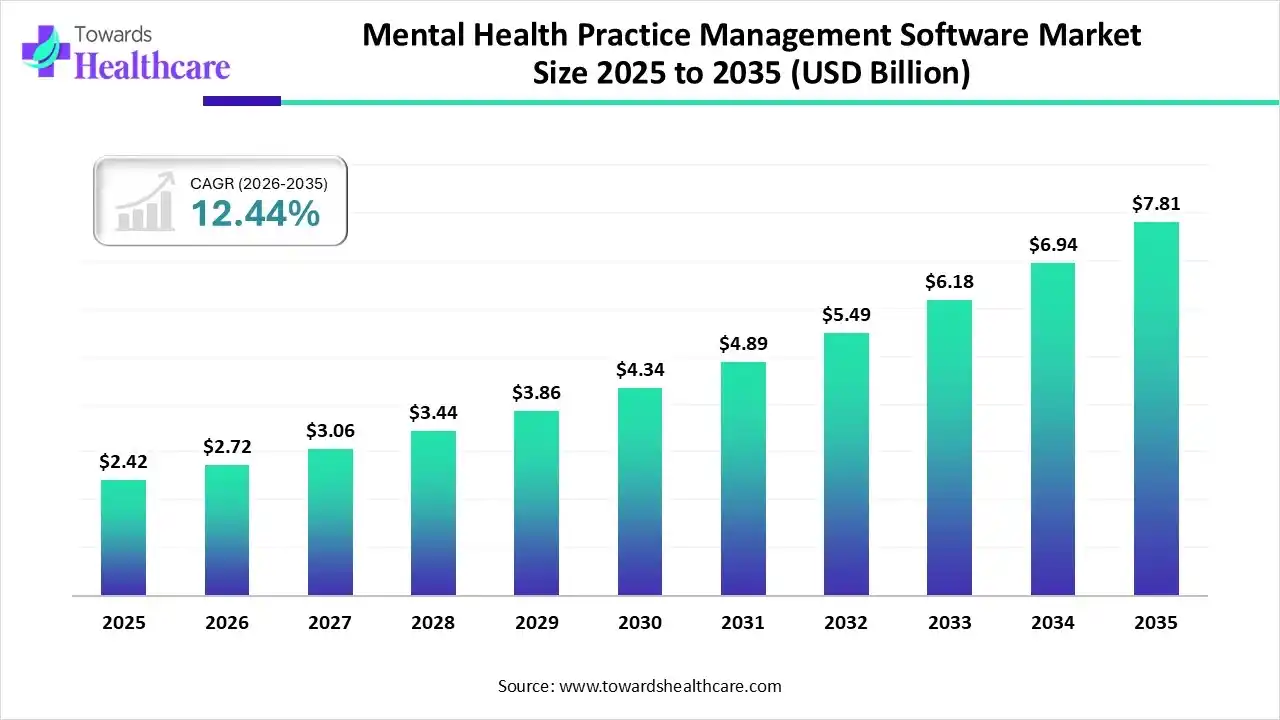
Behind this growth lies a simple reality: mental healthcare providers are facing increasing patient demand, and technology is helping them keep pace.
From Paper Files to Intelligent Platforms
For decades, mental health practices depended on manual documentation and traditional scheduling systems. These processes often created administrative bottlenecks and limited the time clinicians could spend with patients.
Practice management software has changed that landscape.
Modern platforms combine multiple tools into a single system, allowing professionals to manage patient records, appointments, billing processes, and communication channels in one place. Instead of juggling different systems or paperwork, clinicians now operate through integrated dashboards that streamline daily workflows.
Electronic health records, appointment scheduling systems, patient portals, telehealth capabilities, and insurance processing features are becoming standard components of these platforms. By consolidating these functions, software reduces administrative burdens and enables practitioners to focus more on patient care.
The ability to securely store patient histories, treatment plans, and therapy notes also improves coordination among healthcare providers. As a result, mental health professionals gain a clearer view of patient progress and treatment outcomes.
Artificial Intelligence Steps into the Therapy Office
Artificial intelligence is beginning to play a transformative role in practice management software. While clinicians remain at the center of mental healthcare, AI is increasingly assisting with the operational and analytical aspects of care delivery.
AI-powered platforms can automate routine administrative tasks such as appointment reminders, documentation support, and workflow optimization. These tools analyze patient data patterns and assist clinicians in identifying trends, monitoring progress, and improving treatment planning.
Another emerging benefit of AI integration is enhanced patient engagement. Intelligent systems can deliver interactive mental health tools designed for stress management, emotional regulation, and behavioral tracking. Such features help patients stay connected to their treatment journey between therapy sessions.
By automating repetitive administrative processes, AI enables healthcare professionals to spend more time focusing on therapeutic relationships rather than paperwork.
Telehealth Expands Access to Mental Healthcare
One of the most influential trends shaping this market is the expansion of telehealth services. Digital communication technologies have made it possible for patients to connect with therapists from virtually anywhere.
Telehealth platforms now support video consultations, secure messaging, remote monitoring, and mobile-based therapy tools. These capabilities are particularly valuable for individuals living in rural areas or regions where mental health professionals are scarce.
Virtual consultations also reduce travel time and increase scheduling flexibility for both patients and clinicians. As remote healthcare becomes more normalized, telehealth integration is emerging as a key feature within mental health practice management systems.
The combination of telehealth and digital record systems is helping providers deliver more accessible, flexible, and patient-centered care.
Electronic Health Records Take the Lead
Among the various software types available, electronic health records (EHRs) continue to dominate the market. EHR systems allow clinicians to document patient information digitally, replacing traditional paper records.
These systems offer several advantages. They reduce documentation errors, minimize duplicated tests, and ensure that healthcare professionals have quick access to accurate patient histories. Improved information sharing also strengthens communication between providers.
In addition to improving clinical efficiency, EHR platforms can help reduce operational costs. Digital documentation simplifies compliance requirements and helps practices maintain organized records without extensive administrative support.
While EHR adoption in mental health has historically been slower than in other healthcare specialties, the trend is gradually changing as providers recognize the long-term benefits.
Online Scheduling Simplifies the Patient Experience
Another rapidly growing segment within the market is appointment scheduling software. Online scheduling tools allow patients to book therapy sessions directly through digital platforms without needing to call a clinic.
These systems offer significant advantages for both providers and patients. Automated reminders reduce missed appointments, while online booking systems improve convenience and accessibility.
For clinicians, scheduling software provides better calendar visibility and allows practices to manage cancellations and rescheduling more efficiently. These tools ultimately lead to smoother workflows and improved patient satisfaction.
Therapists Remain the Largest User Group
Mental health therapists currently represent the largest user group for practice management software. Therapists often manage complex appointment schedules and long-term treatment relationships with patients, making efficient scheduling and documentation systems essential.
Practice management platforms help therapists track therapy notes, organize patient progress reports, and maintain consistent communication with clients. By automating administrative tasks, these systems help clinicians maintain a better balance between clinical work and operational responsibilities.
Meanwhile, psychiatrists are emerging as one of the fastest-growing user segments. As psychiatric practices increasingly adopt digital tools for patient management, demand for specialized software solutions continues to rise.
North America Leads the Digital Shift
North America currently holds the largest share of the mental health practice management software market. The region benefits from strong digital healthcare infrastructure, high adoption of telemedicine technologies, and growing public awareness of mental health issues.
In the United States, millions of adults experience mental health challenges each year, which increases the need for efficient healthcare delivery systems. Government initiatives, digital health investments, and national AI strategies have also contributed to the expansion of technology-driven healthcare solutions.
These factors collectively support the widespread adoption of practice management platforms among behavioral health providers.
Asia-Pacific Emerges as a High-Growth Region
While North America leads the market, the Asia-Pacific region is expected to experience the fastest growth in the coming years. Rapid digitalization, expanding internet access, and rising smartphone usage are creating favorable conditions for digital healthcare adoption.
Countries across the region are investing in healthcare infrastructure and mental health awareness initiatives. As stigma around mental health gradually declines, more individuals are seeking professional help, which increases demand for efficient clinical systems.
India represents a particularly promising market. With millions of individuals requiring mental health services and growing awareness around psychological well-being, digital platforms are playing an important role in expanding access to care.
Challenges Still Shape the Landscape
Despite its promising growth, the mental health practice management software market faces several challenges.
Strict compliance regulations require providers to follow detailed documentation and auditing procedures. Billing complexities and insurance reimbursement processes also create operational difficulties for many mental health practices.
Another barrier is the slower adoption of electronic health record systems within the mental health sector compared to other healthcare specialties. Sensitive patient data and unique documentation requirements often require specialized software solutions.
However, continuous advancements in interoperability, real-time data analytics, and voice recognition technologies are helping address many of these concerns.
Access our exclusive, data-rich dashboard dedicated to the healthcare IT market – built specifically for decision-makers, strategists, and industry leaders. The dashboard features comprehensive statistical data, segment-wise market breakdowns, regional performance shares, detailed company profiles, annual updates, and much more. From market sizing to competitive intelligence, this powerful tool is one-stop solution to your gateway.
Access the Dashboard: https://www.towardshealthcare.com/access-dashboard
Checkout Mental Health Practice Management Software Market Report Now at: https://www.towardshealthcare.com/checkout/6596
You can place an order or ask any questions, please feel free to contact us at [email protected]
Europe Region – +44 778 256 0738
North America Region – +1 8044 4193 44
APAC Region: +91 9356 9282 04
Visit Our Website: https://www.towardshealthcare.com
Find us on social platforms: LinkedIn | Twitter | Instagram | Medium | Pinterest