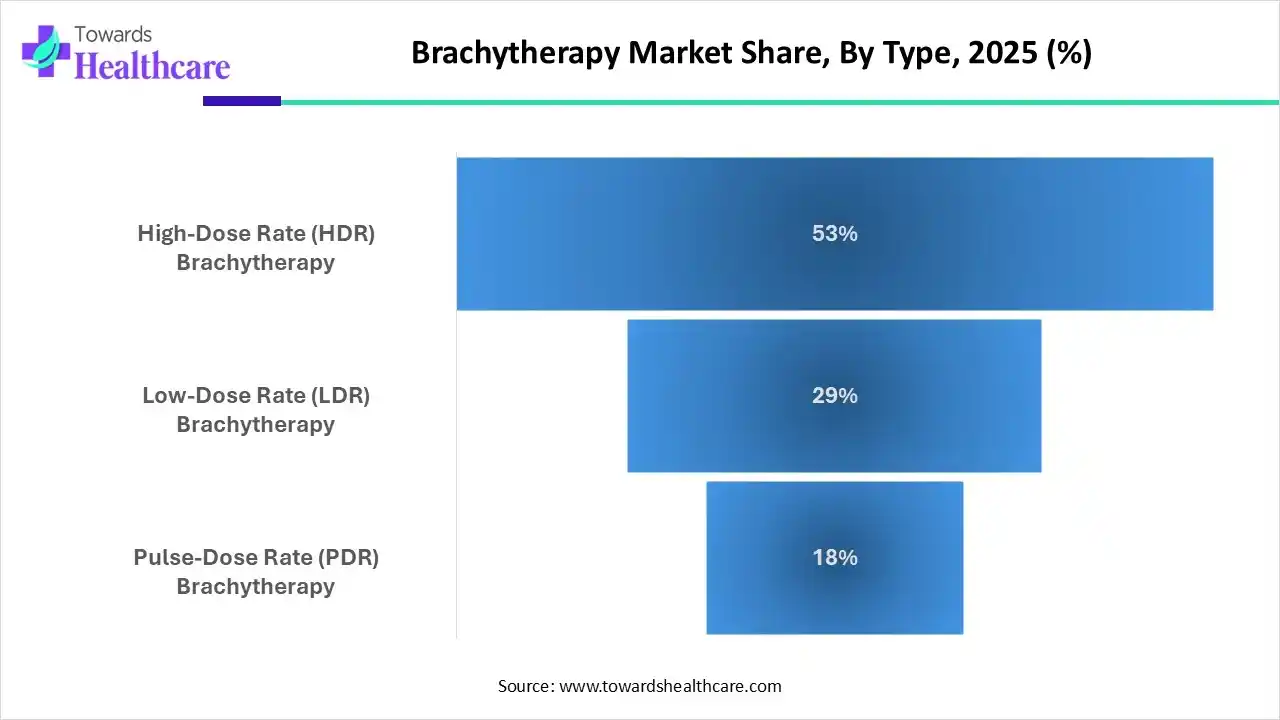
Cancer treatment is evolving fast, and one approach is taking center stage—high-dose rate (HDR) brachytherapy. In 2025, this segment captured 53% of the global brachytherapy market, and it’s easy to see why. HDR brachytherapy combines precision, flexibility, and patient-friendly treatment options, making it the preferred choice for many clinicians worldwide.
Download Free Sample: https://www.towardshealthcare.com/download-sample/6181
Unlike older methods, HDR allows doctors to tailor radiation doses based on tumor size and location. It integrates seamlessly with advanced imaging and planning software, making treatment safer and more precise. Standardization across clinics is easier, which encourages widespread adoption. Growing clinical guidelines recommending HDR for multiple cancer types have further strengthened its position as the dominant brachytherapy approach.
Meanwhile, pulse-dose rate (PDR) brachytherapy is gaining attention for its patient-friendly approach. It reduces prolonged hospital stays and delivers smoother doses, which is particularly useful for sensitive cases. PDR is rapidly finding its place in head, neck, and gynecological cancer treatments.
Prostate Cancer: Why It Commands the Market
Prostate cancer led the market by 41% in 2025, highlighting how brachytherapy is shaping treatment for men. Seed implants and image-guided techniques are evolving rapidly, allowing doctors to deliver precise doses while protecting healthy tissue. Minimally invasive procedures and outpatient care have further boosted adoption.
-
Prostate cancer patients benefit from shorter recovery times.
-
Clinicians increasingly combine brachytherapy with other therapies for better outcomes.
Breast cancer, however, is emerging as the fastest-growing application. Modern delivery systems, like multi-catheter and balloon-based techniques, provide flexibility and comfort. Rising awareness of women’s health, increased screening initiatives, and patient preference for outpatient treatment are fueling this trend.
Hospitals Take the Lead in Delivering Brachytherapy
In 2025, hospitals dominated the brachytherapy market with 46% share. Why? They offer integrated care, combining diagnosis, treatment planning, and follow-up under one roof.
-
Hospitals can invest in advanced brachytherapy equipment.
-
Strict radiation safety protocols make them reliable for patients and clinicians alike.
Collaboration with research institutions and access to a large patient pool further reinforces hospitals’ leadership.
At the same time, cancer treatment and radiotherapy centers are growing faster than ever. Standalone facilities provide high-precision care and can quickly adopt new technologies like AI-assisted planning. Patients increasingly prefer outpatient services over hospital stays, making these centers a vital part of the modern cancer treatment landscape.
Interstitial Brachytherapy: Flexibility Meets Precision
When it comes to techniques, interstitial brachytherapy led the market by 39% in 2025. Its main advantage is the ability to place radioactive sources directly within the tumor, even for irregularly shaped cancers. Coupled with advanced imaging, this approach maximizes precision while minimizing risks to surrounding tissue.
Physicians favor interstitial methods for prostate and gynecological cancers, supported by clinical guidelines. Its consistent adoption underscores why this technique holds the largest market share.
-
Delivers radiation directly into tumors for maximum effect.
-
Compatible with complex tumor structures.
Intravascular brachytherapy, meanwhile, is emerging as the fastest-growing technique. It uses catheter-based delivery and real-time imaging, allowing precise targeting in hard-to-reach areas. Rising demand for outpatient procedures and faster recovery times is accelerating its adoption in specialized cancer centers worldwide.
How Innovation Is Shaping Patient Care
The brachytherapy landscape is no longer just about delivering radiation—it’s about doing it smarter, safer, and more comfortably. Advanced imaging, AI-driven planning, and multi-catheter systems are changing the way treatments are designed and executed.
Patients now enjoy:
-
Shorter hospital stays and outpatient options.
-
Personalized treatments tailored to tumor type, size, and location.
Clinicians benefit too. Flexible fractionation schedules, standardized protocols, and better integration with imaging tools make planning and execution more efficient. Hospitals and specialty centers alike are able to deliver care that is both precise and scalable.
Access our exclusive, data-rich dashboard dedicated to the therapeutics area sector – built specifically for decision-makers, strategists, and industry leaders. The dashboard features comprehensive statistical data, segment-wise market breakdowns, regional performance shares, detailed company profiles, annual updates, and much more. From market sizing to competitive intelligence, this powerful tool is one-stop solution to your gateway.
Access the Dashboard: https://www.towardshealthcare.com/access-dashboard
Checkout the Market Report Now at: https://www.towardshealthcare.com/checkout/6181
You can place an order or ask any questions, please feel free to contact us at [email protected]
Europe Region – +44 778 256 0738
North America Region – +1 8044 4193 44
APAC Region: +91 9356 9282 04
Visit Our Website: https://www.towardshealthcare.com
Find us on social platforms: LinkedIn | Twitter | Instagram | Medium