A biomarker is essentially a measurable biological signal that indicates a normal or abnormal process in the body. In cancer care, biomarkers can show how a tumor forms, grows, spreads, and responds to treatment.
For researchers and clinicians, these signals offer critical insights into disease progression. Instead of treating cancer as a single condition, biomarkers help break it down into distinct biological subtypes.
This shift has major implications. It allows scientists to identify patients who will respond well to specific therapies while avoiding treatments that may not work for them.
Breast Cancer Leads the Way in Biomarker Research
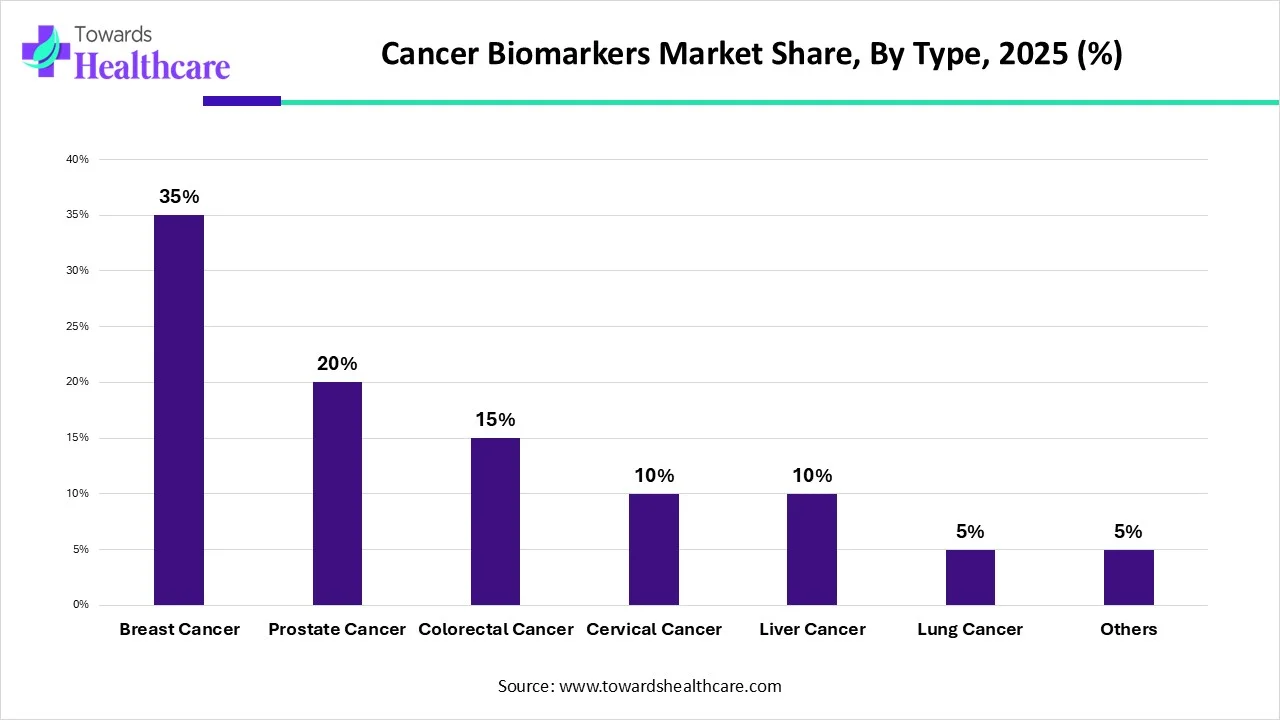
Among different cancer types, breast cancer currently represents the largest share of cancer biomarker research and clinical application. Its strong presence reflects both the global prevalence of the disease and the progress made in molecular diagnostics.
Download the free sample and get the complete insights and forecasts report on this market @ https://www.towardshealthcare.com/download-sample/5335
By type, the market distribution shows how strongly breast cancer research dominates:
-
Breast Cancer – 35%
-
Other Cancer Types – Remaining share across lung, colorectal, prostate, and others
Breast cancer remains one of the most widely diagnosed cancers worldwide. In 2020 alone, more than 2.3 million new cases were reported globally, along with approximately 685,000 deaths.
Population growth and aging are expected to increase these numbers significantly. By 2040, annual new cases and deaths are projected to surpass 3 million.
This growing burden has pushed researchers to accelerate biomarker discovery, especially for early detection and treatment response monitoring.
Genetic Biomarkers Are Shaping Treatment Decisions
| Segment | Share 2025 (%) |
| Diagnostics | 40% |
| Drug Discovery and Development | 25% |
| Personalized Medicine | 25% |
| Others | 10% |
Cancer therapy today increasingly depends on understanding the genetic makeup of tumors. Genetic biomarkers help identify mutations or alterations in DNA that drive cancer development.
These insights allow physicians to choose treatments that directly target the molecular pathways involved in the disease.
By biomolecule type, genetic biomarkers hold the leading position:
-
Genetic Biomarkers – 40%
-
Other biomolecule categories – Remaining share including protein and metabolic markers
Genetic testing now plays a major role in determining therapy options. When doctors detect specific mutations, they can prescribe targeted medicines designed to attack those exact molecular changes.
This approach improves treatment precision while reducing unnecessary side effects.
Epigenetics Emerges as the Next Frontier
While genetic biomarkers focus on DNA changes, epigenetics studies how gene activity can change without altering the DNA sequence itself.
In cancer, the epigenetic landscape often shifts dramatically. These changes influence how genes switch on or off, affecting tumor growth and progression.
One important advantage of epigenetic abnormalities is their reversibility. Unlike permanent genetic mutations, some epigenetic changes can be modified through targeted therapies.
Researchers are exploring this potential aggressively. Several epigenetic drugs have already gained regulatory approval for cancer treatment, signaling that this field is steadily advancing toward broader clinical use.
Diagnostics Remain the Strongest Application Area
Among all applications, diagnostics currently dominates the use of cancer biomarkers. Clinicians rely heavily on biomarker-based tests to identify cancer risk, detect tumors early, and monitor disease progression.
The distribution across applications illustrates this trend:
-
Diagnostics – 40%
-
Drug Discovery and Development – 25%
-
Personalized Medicine – 25%
-
Others – 10%
Diagnostics play a crucial role because early detection significantly improves survival outcomes. Biomarkers allow physicians to identify cancer before symptoms appear or before tumors grow large enough to be visible through traditional imaging.
They also help track how well a patient responds to treatment and whether resistance is developing.
Personalized Medicine Is Changing the Treatment Playbook
Another rapidly expanding area is personalized medicine. Instead of treating cancer with standardized therapies, doctors are increasingly designing treatment plans tailored to each patient’s molecular profile.
Biomarkers make this shift possible.
By analyzing the biological characteristics of a tumor, oncologists can choose drugs that are most likely to work for that specific patient. This approach minimizes trial-and-error treatments and improves therapeutic outcomes.
For patients, personalized medicine represents a turning point. It means therapies are no longer chosen solely based on cancer type but on the unique molecular fingerprint of the disease.
Imaging Technologies Still Dominate the Technology Landscape
When it comes to technology platforms used for biomarker detection and monitoring, imaging technologies continue to hold the largest share.
Imaging biomarkers are widely used in oncology to visualize tumors, monitor treatment response, and evaluate disease progression over time.
The major advantage of imaging biomarkers lies in their accessibility and non-invasive nature. They allow clinicians to study tumor behavior without repeatedly performing invasive procedures.
Doctors also use imaging biomarkers to map variations within tumors. This helps them observe how different parts of a tumor respond to therapy or evolve over time.
Another key benefit is the ability to monitor multiple lesions simultaneously within a single patient, giving physicians a more comprehensive picture of disease activity.
OMICS Technologies Are Accelerating Biomarker Discovery
While imaging technologies dominate current clinical use, omics technologies are emerging as one of the fastest-growing research tools in cancer biomarker discovery.
Omics approaches—such as genomics, proteomics, and metabolomics—allow researchers to analyze thousands of molecular components in a single experiment.
These high-throughput technologies generate massive amounts of biological data. By studying this data, scientists can identify potential biomarkers much faster than traditional methods.
As computational tools and data analysis techniques improve, omics technologies are bringing healthcare closer to the long-promised vision of precision medicine.
Access our exclusive, data-rich dashboard dedicated to the diagnostics sector – built specifically for decision-makers, strategists, and industry leaders. The dashboard features comprehensive statistical data, segment-wise market breakdowns, regional performance shares, detailed company profiles, annual updates, and much more. From market sizing to competitive intelligence, this powerful tool is one-stop solution to your gateway.
Access the Dashboard: https://www.towardshealthcare.com/access-dashboard
Checkout the Market Report Now at: https://www.towardshealthcare.com/checkout/5335
You can place an order or ask any questions, please feel free to contact us at [email protected]
Europe Region – +44 778 256 0738
North America Region – +1 8044 4193 44
APAC Region: +91 9356 9282 04
Visit Our Website: https://www.towardshealthcare.com
Find us on social platforms: LinkedIn | Twitter | Instagram | Medium