The concept of smart hospitals is rapidly transforming healthcare systems across the world. By integrating digital tools, connected devices, and intelligent software, hospitals are becoming more efficient, accurate, and patient-focused.
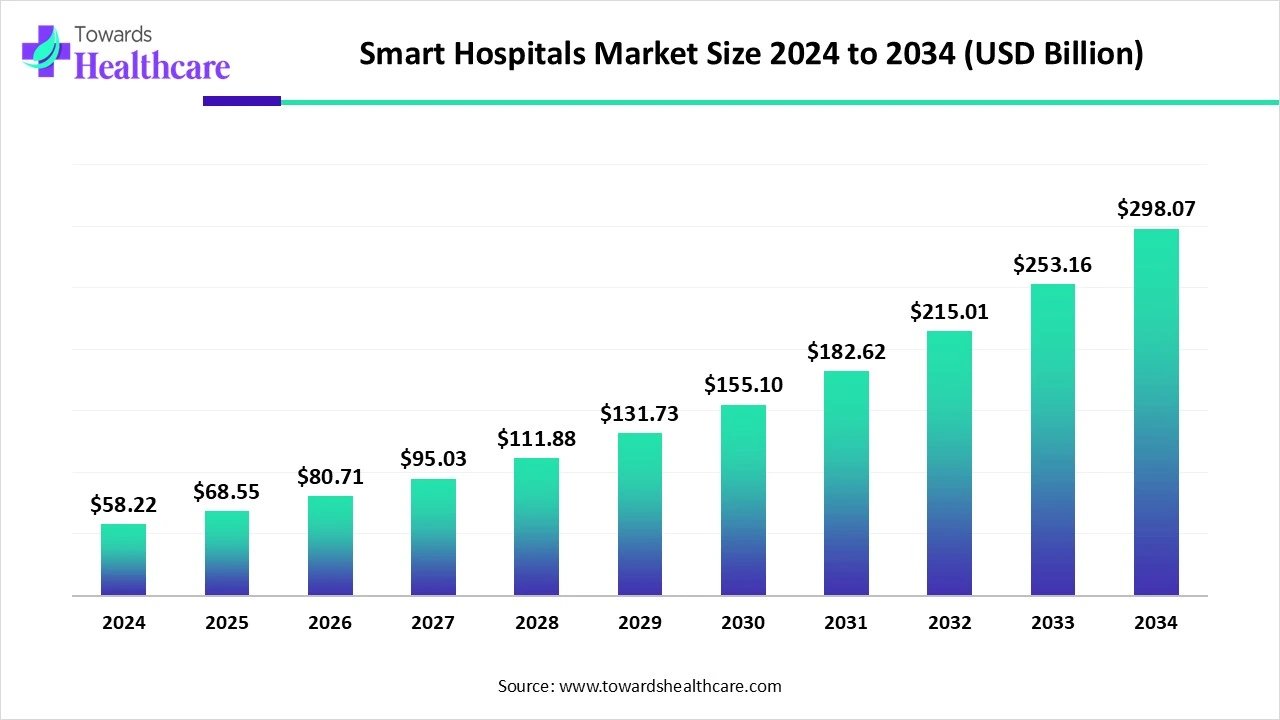
The global smart hospitals market reflects this transformation. Valued at USD 80.71 billion in 2026, the market is projected to surge to USD 350.94 billion by 2035, expanding at a strong CAGR of 17.74%.
Download Free Sample: https://www.towardshealthcare.com/download-sample/5630
This growth signals a major shift in how healthcare institutions operate and how patients experience medical care.
What Exactly Is a Smart Hospital?
A smart hospital combines advanced technologies with redesigned clinical workflows. The goal is simple: improve patient outcomes while making hospital operations more efficient.
Unlike traditional hospitals, smart hospitals rely on connected systems that collect, process, and analyze medical data in real time. This enables healthcare professionals to make faster and more informed decisions.
Smart hospital infrastructure may include:
-
AI-powered diagnostic systems
-
Internet of Things (IoT) connected medical devices
-
Digital patient records
-
Telemedicine platforms
-
Automated hospital management systems
Together, these technologies help healthcare providers deliver personalized and timely treatment.
Why Smart Hospitals Are Growing So Fast
Healthcare systems worldwide are under increasing pressure. Growing populations, aging societies, and rising chronic diseases are pushing hospitals to find smarter solutions.
Smart hospitals respond to these challenges by improving efficiency and reducing operational complexity.
Several factors are accelerating the adoption of this model:
-
Rising demand for faster and more accurate diagnosis
-
Digital transformation across healthcare systems
-
Increasing use of remote patient monitoring
-
Growing focus on patient-centric care
As hospitals adopt intelligent technologies, they gain the ability to monitor patients continuously, reduce medical errors, and optimize staff productivity.
The Rise of Digital Healthcare
Digitalization has become the backbone of modern healthcare. Hospitals are now using advanced IT platforms to manage everything from patient admission to treatment planning.
Electronic health records, automated scheduling systems, and AI-driven analytics are streamlining hospital workflows.
This digital transformation allows doctors to access critical patient data instantly. It also enables hospitals to analyze large volumes of medical information, helping them identify trends and improve treatment strategies.
As a result, healthcare institutions are shifting toward integrated digital ecosystems where data flows seamlessly across departments.
Telemedicine Changes the Healthcare Landscape
Telemedicine has emerged as one of the most influential technologies shaping smart hospitals.
The ability to consult doctors remotely has transformed how healthcare services reach patients, especially in rural and underserved regions.
Telemedicine platforms allow hospitals to extend their services beyond physical walls. Patients can receive consultations, follow-up care, and chronic disease monitoring from their homes.
This shift not only improves accessibility but also reduces hospital congestion and healthcare costs.
The growing acceptance of telehealth services continues to strengthen the smart hospitals ecosystem.
Artificial Intelligence Drives Smart Healthcare
Artificial intelligence has become one of the most powerful forces behind smart hospital development.
AI systems can analyze complex medical datasets and provide insights that support clinical decisions. These systems assist doctors in detecting diseases earlier and predicting potential complications.
In smart hospitals, AI helps in several areas:
-
Predictive analytics for patient outcomes
-
Automated medical imaging analysis
-
Intelligent resource allocation within hospitals
-
Real-time monitoring of patient conditions
By reducing manual workload and improving diagnostic accuracy, AI is helping healthcare professionals focus more on patient care.
Software and Systems Lead the Technology Shift
Among various components used in smart hospitals, software and digital systems play a central role.
In 2025, software and systems accounted for a major share of the smart hospitals market. These platforms manage patient records, monitor medical devices, and connect hospital departments.
Digital systems also enable seamless communication between healthcare providers. Doctors, nurses, and specialists can collaborate through integrated platforms, ensuring coordinated treatment.
Alongside software solutions, service providers are becoming increasingly important. Hospitals rely on them for system maintenance, data management, and cybersecurity support.
Wireless Connectivity Powers Hospital Networks
Connectivity forms the technological backbone of smart hospitals.
Wireless networks dominate this segment because they enable fast and flexible data transfer across hospital systems. From wearable patient monitors to mobile diagnostic devices, wireless technology connects multiple hospital functions.
With wireless connectivity, doctors can access patient data instantly from different locations within the hospital.
This real-time data exchange improves clinical decisions, enhances communication, and ensures continuous monitoring of patients.
Regional Growth Highlights Global Momentum
The adoption of smart hospitals is gaining momentum across different regions of the world.
North America currently leads the global market due to its advanced healthcare infrastructure and strong adoption of digital health technologies. Hospitals in this region continue to invest heavily in AI, automation, and connected medical devices.
Europe is also experiencing significant growth as healthcare institutions increasingly implement digital transformation strategies.
Meanwhile, the Asia Pacific region is emerging as a major growth hub. Rapid expansion of healthcare infrastructure, government initiatives, and rising technology adoption are driving the development of smart hospitals across countries such as India and China.
Challenges That Still Exist
Despite the promising outlook, the transition toward smart hospitals is not without obstacles.
The cost of implementing advanced technologies remains a major challenge. Integrating AI systems, robotics, and IoT infrastructure requires substantial investment.
Hospitals must also invest in staff training to ensure medical professionals can effectively operate these systems.
Cybersecurity is another concern. As hospitals store vast amounts of digital health data, protecting patient information becomes a top priority.
However, ongoing technological innovation and supportive healthcare policies are gradually addressing these challenges.
Access our exclusive, data-rich dashboard dedicated to the healthcare market – built specifically for decision-makers, strategists, and industry leaders. The dashboard features comprehensive statistical data, segment-wise market breakdowns, regional performance shares, detailed company profiles, annual updates, and much more. From market sizing to competitive intelligence, this powerful tool is one-stop solution to your gateway.
Access the Dashboard: https://www.towardshealthcare.com/access-dashboard
Checkout the Market Report Now at: https://www.towardshealthcare.com/checkout/5630
You can place an order or ask any questions, please feel free to contact us at [email protected]
Europe Region – +44 778 256 0738
North America Region – +1 8044 4193 44
APAC Region: +91 9356 9282 04
Visit Our Website: https://www.towardshealthcare.com
Find us on social platforms: LinkedIn | Twitter | Instagram | Medium