Cell and gene therapy manufacturing is no longer a niche scientific effort; it’s becoming the backbone of next-generation healthcare.
What once felt experimental is now moving toward structured, scalable, and commercially viable systems.
The market is expanding rapidly, driven by urgent clinical needs, technological breakthroughs, and a growing push toward personalized medicine.
Why This Market Is Growing Faster Than Expected
The momentum behind cell and gene therapy manufacturing is not accidental.
It reflects a shift in how the healthcare ecosystem approaches complex and chronic diseases.
Instead of managing symptoms, the focus is now on modifying or even reversing disease at a cellular level.
Several forces are driving this acceleration:
-
Rising cases of chronic and degenerative diseases
-
Increasing investment in regenerative medicine
-
Breakthroughs in stem cell and gene-editing technologies
-
Expanding infrastructure for large-scale manufacturing
This shift signals a deeper transformation—from treatment to potential cure.
Allogeneic Cell Therapy Takes the Lead
One of the most defining trends in the market is the dominance of allogeneic cell therapy.
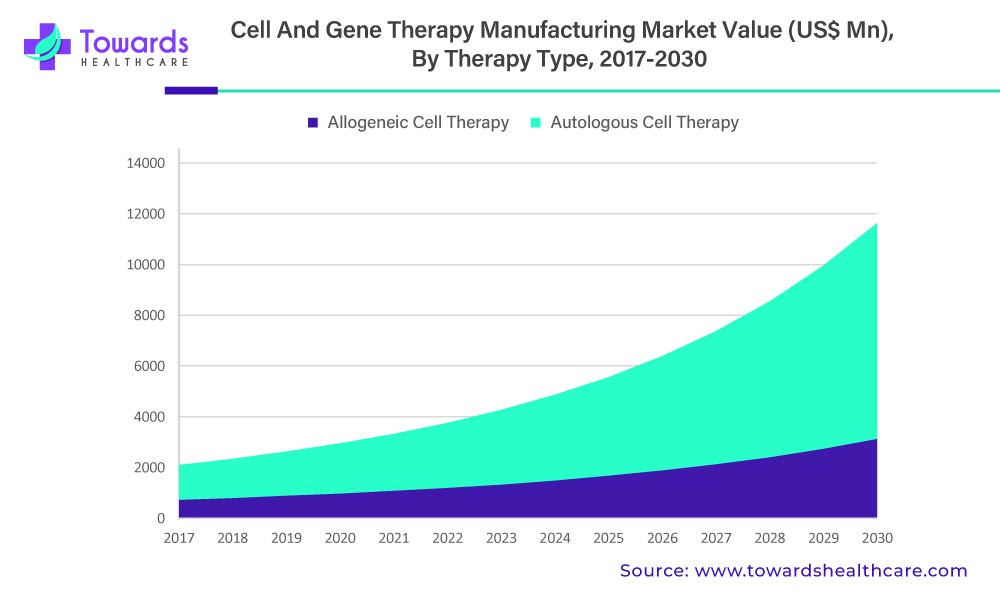
Valued at US$ 1,198.2 Mn in 2022, this segment is projected to reach US$ 3,129.6 Mn by 2030, growing at a CAGR of 12.8%.
Unlike autologous therapies, allogeneic treatments use donor-derived cells.
This allows manufacturers to produce therapies at scale and store them for immediate use.
What makes this segment powerful is its practicality.
Doctors can access ready-to-use therapies during emergencies, reducing waiting time for patients.
More importantly, cells from young and healthy donors help minimize complications linked to disease-affected cells.
From One Patient to Many: The Real Advantage
Allogeneic therapy introduces a fundamental shift in treatment delivery.
Instead of customizing treatment for each patient, a single donor source can serve multiple patients.
This creates:
-
Faster treatment timelines
-
Lower manufacturing complexity
-
Better cost efficiency in the long term
As healthcare systems aim to scale advanced therapies, this segment naturally gains dominance.
Somatic Cell Technology Is Driving the Engine
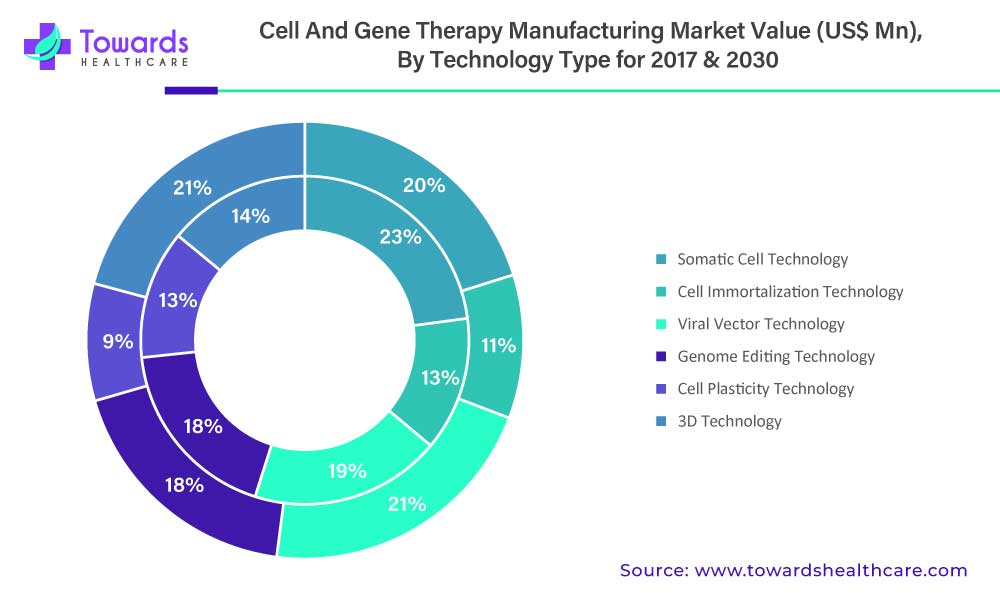
While therapy types define application, technology determines scalability.
In 2023, somatic cell technology emerged as the leading technological backbone of the market.
With a market value of US$ 823.2 Mn in 2022, it is expected to reach US$ 2,345.6 Mn by 2030, growing at a CAGR of 14.0%.
This technology allows scientists to reprogram cells by transferring the nucleus of a differentiated cell into an enucleated oocyte.
In simpler terms, it enables the creation of genetically consistent cells with desirable traits.
Why This Technology Matters Beyond Theory
Somatic cell technology is not just a laboratory concept—it has real-world implications.
It plays a crucial role in developing therapies for degenerative diseases and genetic disorders.
It also supports advancements in cloning and regenerative medicine, opening new pathways for treatment innovation.
As diseases like Parkinson’s, Alzheimer’s, and muscular disorders rise globally, the relevance of this technology continues to grow.
iPSCs: The Most Promising Source Segment
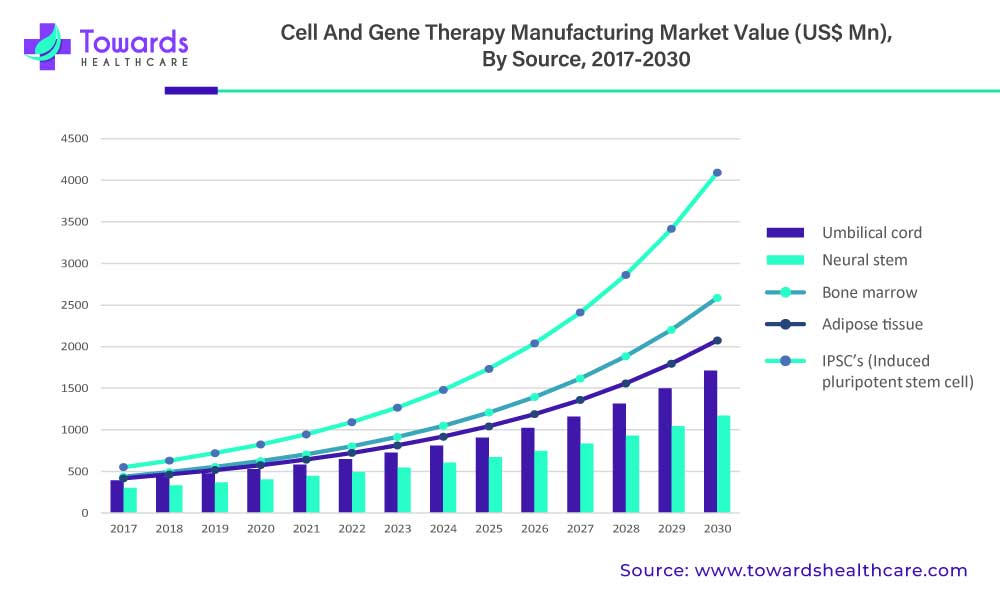
Among all sources, induced pluripotent stem cells (iPSCs) are leading the market with strong growth momentum.
This segment was valued at US$ 1,092.5 Mn in 2022 and is expected to reach US$ 4,092.3 Mn by 2030, growing at an impressive CAGR of 17.9%.
iPSCs are derived from adult cells but behave like embryonic stem cells.
They can transform into any cell type in the body, making them extremely versatile.
Why iPSCs Are Gaining So Much Attention
iPSCs are becoming a preferred choice for researchers and manufacturers due to their flexibility and ethical advantages.
They are widely used for:
-
Disease modeling and understanding human development
-
Drug discovery and high-throughput screening
-
Regenerative therapies across multiple conditions
Their ability to replicate complex disease conditions in a controlled environment makes them invaluable for precision medicine.
Musculoskeletal Applications Dominate Demand
When it comes to real-world applications, the musculoskeletal segment holds the largest share.
Valued at US$ 807.3 Mn in 2022, it is projected to reach US$ 2,740.2 Mn by 2030, growing at a CAGR of 16.5%.
This dominance is driven by the sheer scale of the problem.
Globally, around 1.71 billion people suffer from musculoskeletal disorders.
The Demand Is Real—and Growing
From arthritis to spinal disorders, musculoskeletal conditions impact quality of life significantly.
Traditional treatments often focus on pain management rather than healing.
Cell and gene therapies offer a different approach—repairing damaged tissues and restoring function.
This shift is increasing demand for advanced manufacturing capabilities in this segment.
The Bigger Picture: Manufacturing as a Strategic Asset
As the market evolves, manufacturing is no longer just a backend process.
It has become a strategic differentiator.
Companies that can scale production, maintain quality, and ensure timely delivery will lead the next phase of growth.
The complexity of these therapies demands:
-
Advanced bioprocessing facilities
-
Skilled workforce and technical expertise
-
Strong regulatory compliance systems
This is where innovation in manufacturing will define market leadership.
What Lies Ahead for the Market
The future of the cell and gene therapy manufacturing market looks both promising and challenging.
While growth opportunities are significant, scalability, cost, and regulatory hurdles remain key concerns.
However, the direction is clear.
Healthcare is moving toward precision, personalization, and long-term solutions—and this market sits at the center of that transformation.
A Market Transitioning from Science to Reality
Cell and gene therapy manufacturing is no longer just about innovation—it’s about implementation.
From donor-derived therapies to advanced stem cell technologies, every segment is contributing to a larger shift in medicine.
The real question is no longer if these therapies will become mainstream.
It is how fast the industry can scale to meet global demand.
Access our exclusive, data-rich dashboard dedicated to the healthcare market – built specifically for decision-makers, strategists, and industry leaders. The dashboard features comprehensive statistical data, segment-wise market breakdowns, regional performance shares, detailed company profiles, annual updates, and much more. From market sizing to competitive intelligence, this powerful tool is one-stop solution to your gateway.
Access the Dashboard: https://www.towardshealthcare.com/access-dashboard
Checkout the Market Report Now at: https://www.towardshealthcare.com/checkout/5024
You can place an order or ask any questions, please feel free to contact us at [email protected]
Europe Region – +44 778 256 0738
North America Region – +1 8044 4193 44
APAC Region: +91 9356 9282 04
Visit Our Website: https://www.towardshealthcare.com
Find us on social platforms: LinkedIn | Twitter | Instagram | Medium