The biopharmaceutical industry is quietly undergoing a structural shift. Single-use bioprocessing is no longer a niche concept; it is becoming the backbone of modern biologics manufacturing.
From vaccines to personalized therapies, manufacturers now prefer flexible, faster systems over rigid stainless-steel setups. This transition reflects a deeper change: speed, adaptability, and precision now define success in bioprocessing.
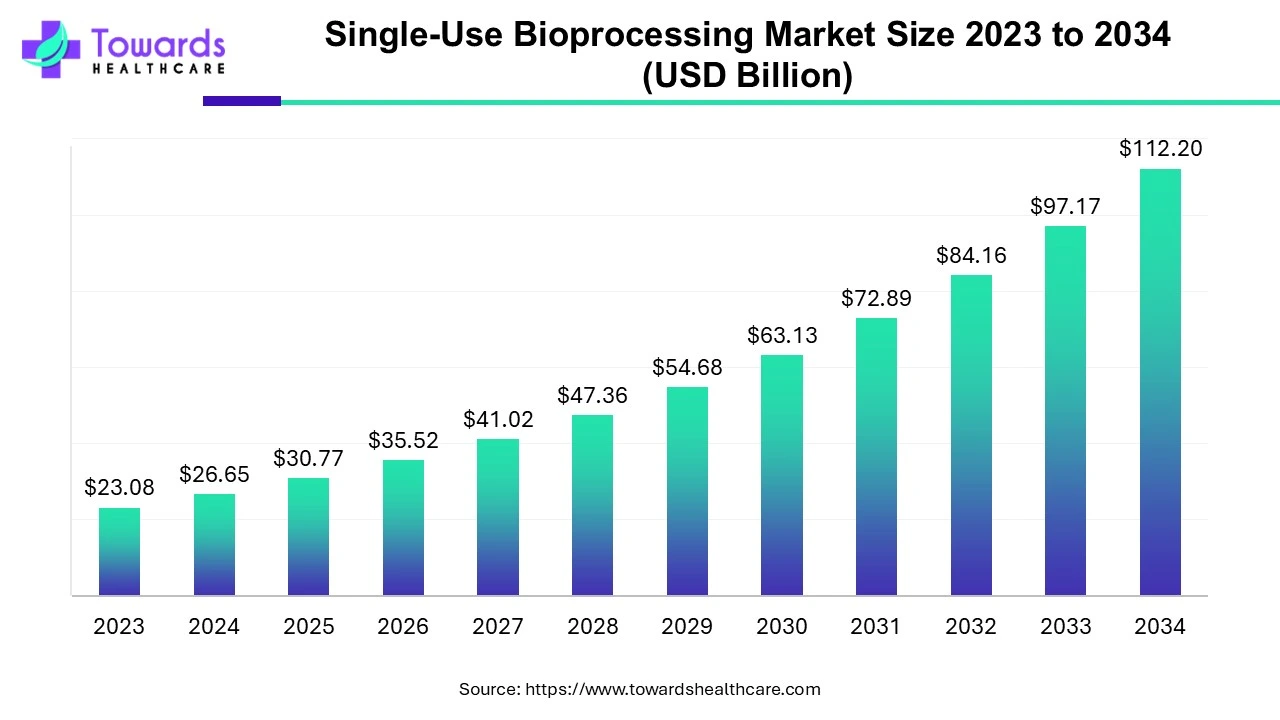
The numbers reinforce this momentum. The Single-use bioprocessing market is projected to grow from USD 30.77 billion in 2025 to USD 112.2 billion by 2034, expanding at a strong CAGR of 15.46%.
Why the Industry Is Moving Away from Steel
Traditional stainless-steel systems built the foundation of biopharma manufacturing. But they come with limitations—high cleaning costs, long setup times, and inflexibility.
Single-use systems (SUS) challenge this model by offering a simpler, more agile alternative.
They reduce cleaning requirements, eliminate cross-contamination risks, and allow faster batch turnovers. In an industry where time-to-market can define success, these advantages matter.
At the same time, the rise of biologics—complex, cell-based therapies—demands manufacturing systems that can adapt quickly. Single-use technologies meet that demand efficiently.
The Growth Engine: Biologics and Personalization
Biologics are transforming healthcare. Unlike traditional drugs, they target diseases at a molecular level and offer more precise treatment outcomes.
This shift has increased the need for flexible production systems.
Single-use bioprocessing supports small-batch, high-value production; exactly what personalized medicine requires. As chronic diseases rise globally, so does the demand for tailored treatments.
This creates a strong link between healthcare trends and manufacturing innovation.
Inside the Workflow: Where Growth Is Happening
Not all segments of this market grow equally. Some areas are expanding faster due to technological and clinical needs.
-
Upstream bioprocessing continues to dominate due to its role in cell culture and initial production stages.
-
Fermentation processes are gaining momentum as companies invest in scalable microbial production.
-
Biopharmaceutical manufacturers remain the largest end-users, while academic and clinical institutes are emerging as innovation hubs.
Each segment reflects a broader industry shift toward experimentation, scale, and speed.
Automation Is Changing the Game
Automation is no longer optional—it is becoming central to modern bioprocessing.
Manufacturers now use automated systems to monitor critical parameters in real time. This improves product consistency and reduces human error.
Automation also reduces dependency on manual labor. Tasks that once required constant supervision now run with minimal intervention.
The result is clear:
-
Faster production cycles
-
Better quality control
-
Lower operational costs
In high-stakes environments like vaccine manufacturing, these improvements can directly impact global health outcomes.
Regional Dynamics: Who Leads the Race?
Geography plays a crucial role in shaping this market.
North America currently leads due to its strong biopharmaceutical ecosystem, advanced infrastructure, and supportive regulations. The presence of major biotech firms accelerates adoption.
However, Asia-Pacific is emerging as the fastest-growing region. Countries like India and China are investing heavily in biologics manufacturing and contract research.
The expansion of facilities—such as new biologics plants in Bangalore—signals a shift toward global manufacturing decentralization.
This regional evolution reflects a broader trend: innovation is no longer confined to one part of the world.
Sustainability: The Hidden Debate
While single-use systems offer efficiency, they also raise environmental concerns.
Disposable components generate significant plastic waste. As adoption increases, so does the pressure to address sustainability challenges.
This creates a paradox. The same systems that improve efficiency may also strain environmental resources.
Industry stakeholders are now exploring solutions such as recycling programs, biodegradable materials, and waste-to-energy models.
The future of single-use bioprocessing will depend not only on performance but also on how responsibly it scales.
Cost vs. Value: A Strategic Trade-Off
At first glance, single-use systems appear expensive due to recurring consumable costs. However, a deeper analysis reveals a different picture.
They eliminate the need for cleaning validation, reduce downtime, and lower infrastructure investment.
For many companies, especially startups and contract manufacturers, this trade-off makes financial sense.
Instead of investing heavily in fixed facilities, they can scale operations based on demand. This flexibility reduces risk and improves capital efficiency.
Innovation Through Collaboration
Partnerships are accelerating innovation in this space.
Companies are collaborating to develop advanced bioreactors, improve fluid transfer systems, and streamline viral vector production.
These collaborations highlight a key trend: no single player can drive this transformation alone.
The industry thrives on shared expertise, whether it is combining cell line development with advanced bioreactor design or improving supply chain efficiency.
The Future: Flexible, Fast, and Smarter
The next phase of single-use bioprocessing will focus on integration.
Digital tools, real-time analytics, and AI-driven monitoring will merge with disposable systems to create smarter manufacturing environments.
Facilities will become more modular. Production lines will adapt quickly to different therapies. And manufacturers will respond faster to global health demands.
But challenges remain. Standardization, cost management, and sustainability will shape the next decade of growth.
What This Means for the Industry
Single-use bioprocessing is not just a technological upgrade—it represents a mindset shift.
The industry is moving from rigid, large-scale production to flexible, demand-driven manufacturing.
This shift aligns with modern healthcare needs, where speed, precision, and adaptability matter more than ever.
Key Takeaways at a Glance
-
The market is set for rapid growth, driven by biologics and personalized medicine
-
Automation is becoming a core driver of efficiency and quality
-
Asia-Pacific is emerging as a major growth hub
-
Sustainability concerns are shaping future innovation strategies
Access our exclusive, data-rich dashboard dedicated to the medical devices sector – built specifically for decision-makers, strategists, and industry leaders. The dashboard features comprehensive statistical data, segment-wise market breakdowns, regional performance shares, detailed company profiles, annual updates, and much more. From market sizing to competitive intelligence, this powerful tool is one-stop solution to your gateway.
Access the Dashboard: https://www.towardshealthcare.com/access-dashboard
Checkout the Market Report Now at: https://www.towardshealthcare.com/checkout/5030
You can place an order or ask any questions, please feel free to contact us at [email protected]
Europe Region – +44 778 256 0738
North America Region – +1 8044 4193 44
APAC Region: +91 9356 9282 04
Visit Our Website: https://www.towardshealthcare.com
Find us on social platforms: LinkedIn | Twitter | Instagram | Medium