The topical veterinary dermatology market is not loud or flashy, yet it is evolving rapidly.
Behind everyday pet care routines, a silent transformation is taking place.
From medicated shampoos to advanced skin therapies, topical treatments are becoming essential.
They are no longer just supportive—they are turning into primary solutions for many skin conditions.
In 2026, the market stands at USD 1.24 billion, and it is steadily moving toward USD 2.15 billion by 2035.
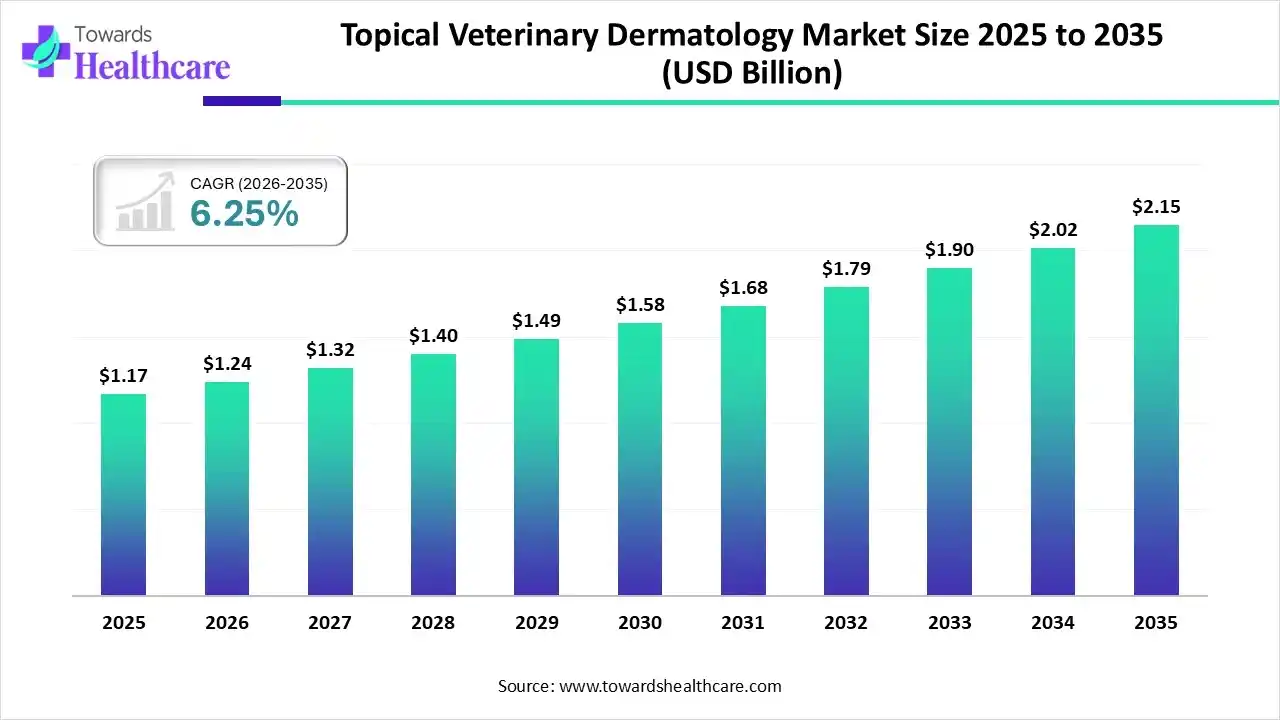
Download Free Sample: https://www.towardshealthcare.com/download-sample/6670
This consistent rise reflects a deeper shift in how veterinarians and pet owners approach treatment.
Why Skin Health Is Becoming a Priority for Pet Owners
Pet owners today are more informed and emotionally invested than ever before.
They don’t just treat symptoms—they look for long-term comfort and prevention.
Skin problems in pets are among the most common health issues.
Conditions like infections, allergies, and parasites affect both quality of life and overall health.
Topical treatments offer a direct and effective solution.
They act exactly where the problem exists, without heavily affecting the rest of the body.
This targeted approach builds trust among pet owners.
It also reduces dependency on oral or systemic medications.
The Science Behind Topical Treatments Is Getting Smarter
Modern topical therapies are no longer basic creams or shampoos.
They now rely on advanced formulation science.
New delivery systems such as hydrogels, nanoparticles, and liposomes are improving performance.
These technologies allow better absorption and controlled release of active ingredients.
Veterinary dermatology now focuses on how deeply and effectively a drug can penetrate the skin.
This precision improves treatment outcomes and reduces recovery time.
At the same time, researchers are studying the skin barrier at a molecular level.
This helps them design treatments that work with the skin instead of against it.
The Rise of Antimicrobial Resistance Is Changing Treatment Choices
One of the biggest challenges in veterinary care today is antimicrobial resistance.
Traditional antibiotics are losing effectiveness in many cases.
Topical treatments are stepping in as a safer alternative.
They allow high concentrations of medication directly on the affected area.
This reduces the need for systemic antibiotics.
It also lowers the risk of resistance developing further.
Veterinarians are increasingly recommending topical therapy for mild to moderate conditions.
In some cases, it even replaces oral treatments completely.
Key Drivers Behind Market Growth
Several factors are pushing the topical veterinary dermatology market forward.
These drivers are both medical and behavioral in nature.
- Rising pet ownership across urban and semi-urban regions
- Growing awareness about pet hygiene and skin health
- Increased spending on premium veterinary care
- Demand for safer and localized treatment options
- Shift toward preventive healthcare instead of reactive treatment
These trends are not temporary.
They reflect a long-term change in how people care for their pets.
Companion Animals Are Leading the Demand Curve
Dogs and cats dominate the market, accounting for the largest share.
Their close interaction with humans makes their health a priority.
Skin issues are more visible and frequent in companion animals.
Owners quickly notice symptoms like itching, redness, or hair loss.
This leads to faster diagnosis and treatment.
As a result, the demand for topical dermatology products continues to rise.
Livestock animals also contribute to the market.
However, their treatment approach is often cost-driven rather than comfort-driven.
Parasitic and Allergic Conditions Are Fueling Demand
Parasitic infections remain the most common reason for topical treatments.
Fleas, mites, and ticks continue to affect pets globally.
Topical antiparasitic solutions are easy to apply and highly effective.
They also offer preventive benefits, which makes them popular among pet owners.
At the same time, allergic skin conditions are growing rapidly.
Environmental factors, diet changes, and urban pollution are key contributors.
This has created a new demand for soothing and anti-inflammatory treatments.
Products that reduce itching and irritation are gaining strong traction.
Digital Intelligence Is Entering Veterinary Dermatology
Artificial intelligence is quietly transforming veterinary care.
It is helping professionals diagnose and manage skin conditions more accurately.
AI tools can analyze images and detect patterns that are not easily visible.
This speeds up diagnosis and improves treatment decisions.
In dermatology, early detection plays a critical role.
AI is helping veterinarians identify issues before they become severe.
This integration of technology is still evolving.
But its impact on efficiency and accuracy is already visible.
How Buying Behavior Is Changing in the Digital Age
The way people buy veterinary products is also changing.
Online platforms are becoming a preferred channel.
Pet owners value convenience and accessibility.
They want products delivered quickly and at competitive prices.
E-commerce platforms offer a wide range of options.
They also provide detailed product information and customer reviews.
- 24/7 availability makes purchasing easier
- Discounts and bundled offers attract cost-conscious buyers
- Access to global brands increases product variety
- Online support helps resolve queries instantly
Despite this shift, veterinary clinics still hold a strong position.
They remain the most trusted source for treatment recommendations.
Regional Growth Patterns Show a Clear Shift
North America currently leads the market.
High pet ownership and advanced veterinary infrastructure support this dominance.
However, Asia Pacific is emerging as the fastest-growing region.
Urbanization and rising income levels are key factors behind this growth.
In countries like India, pet care is evolving rapidly.
People are moving from basic treatment to specialized and preventive care.
Pollution and changing lifestyles are also affecting pet health.
This increases the need for effective dermatology solutions.
Europe is also showing steady growth.
Rising awareness and regulatory support are strengthening the market.
Challenges That Still Need Attention
Despite strong growth, the market faces certain limitations.
Topical treatments require consistency and proper application.
Pet owners may struggle with regular usage.
Some animals resist bathing or topical application.
Incorrect usage can reduce effectiveness.
In some cases, treatments are stopped too early.
There is also a risk of allergic reactions to certain products.
This makes product selection and veterinary guidance crucial.
Access our exclusive, data-rich dashboard dedicated to the healthcare market – built specifically for decision-makers, strategists, and industry leaders. The dashboard features comprehensive statistical data, segment-wise market breakdowns, regional performance shares, detailed company profiles, annual updates, and much more. From market sizing to competitive intelligence, this powerful tool is one-stop solution to your gateway.
Access the Dashboard: https://www.towardshealthcare.com/access-dashboard
Checkout the Market Report Now at: https://www.towardshealthcare.com/checkout/6670
You can place an order or ask any questions, please feel free to contact us at [email protected]
Europe Region – +44 778 256 0738
North America Region – +1 8044 4193 44
APAC Region: +91 9356 9282 04
Visit Our Website: https://www.towardshealthcare.com
Find us on social platforms: LinkedIn | Twitter | Instagram | Medium