The cardiology EHR market is quietly becoming the backbone of modern heart care. From storing complex patient histories to supporting real-time clinical decisions, it is changing how cardiologists work every day.
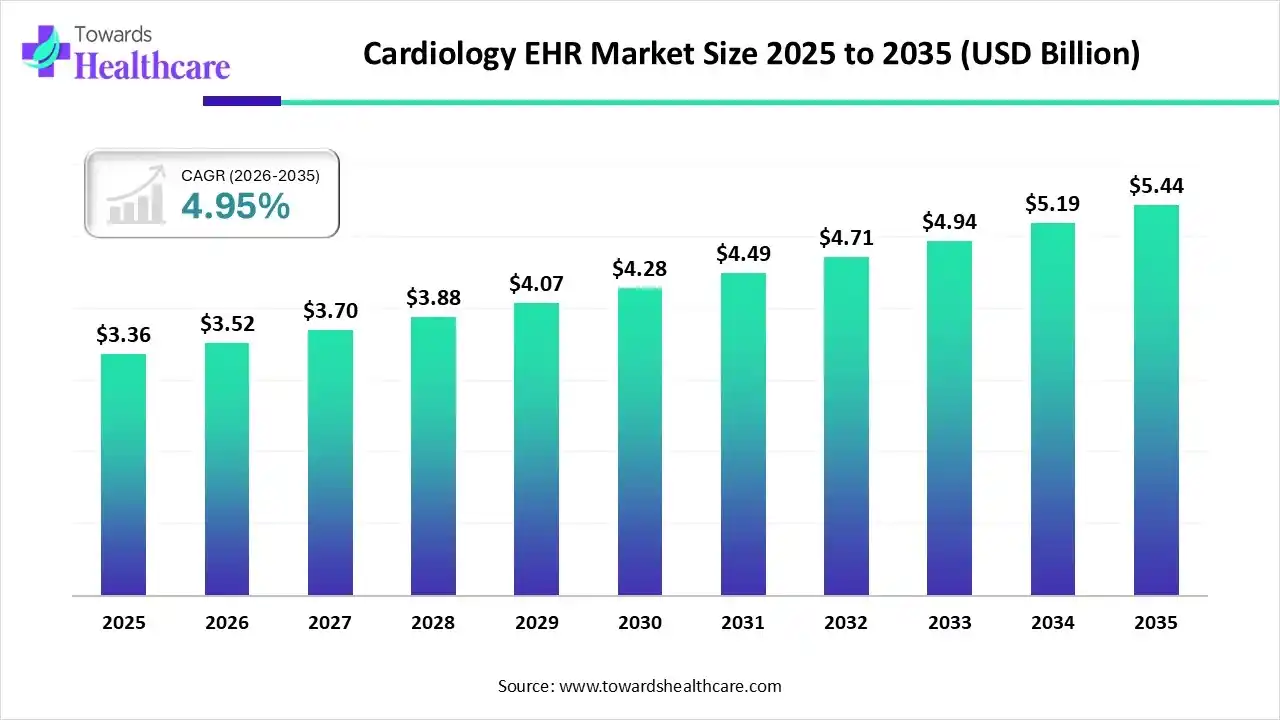
With the market projected to grow from USD 3.52 billion in 2026 to USD 5.44 billion by 2035, this transformation is not just steady; it is deeply structural.
Download Free Sample: https://www.towardshealthcare.com/download-sample/6490
Why Cardiology Needs Its Own Digital Brain
Cardiology is not like general healthcare. It deals with complex diagnostics, continuous monitoring, and life-critical decisions.
That’s why generic systems are no longer enough. Cardiology-specific EHR platforms are built to handle ECG data, imaging reports, and long-term disease tracking in one place.
Doctors now rely on these systems not just to store data, but to think faster and act smarter.
Growth Is Slow but Strong—and That Matters
A CAGR of 4.95% may not look explosive, but it reflects something important—stability.
This market is not driven by hype. It is driven by real needs like rising cardiovascular diseases, digital transformation in hospitals, and demand for better patient outcomes.
In simple terms, this is not a trend. It is a long-term shift.
What’s Fueling This Growth Behind the Scenes
The real story lies in what these systems can do today. Cardiology EHR platforms are evolving beyond record-keeping into intelligent ecosystems.
Here’s what is driving adoption globally:
- Real-time integration with diagnostic devices like ECG and echocardiograms
- Clinical decision support systems that guide doctors instantly
- Seamless data sharing across departments and specialists
- Remote monitoring and telecardiology features
These capabilities reduce manual work and improve clinical accuracy at the same time.
AI Is Quietly Rewriting Cardiology
Artificial Intelligence is not just a buzzword here. It is becoming a practical tool inside EHR systems.
AI helps cardiologists detect patterns that are impossible to see manually. It can predict risks, suggest treatments, and even flag potential complications before they happen.
From identifying arrhythmias early to enabling non-invasive diagnosis, AI is turning EHR systems into proactive healthcare tools rather than passive databases.
Cloud vs On-Premise: A Strategic Shift
The battle between cloud-based and on-premise systems is shaping the future of this market.
Cloud-based EHR systems dominated in recent years because they are easy to deploy and cost-effective. Hospitals do not need heavy infrastructure, and updates happen automatically.
However, on-premise systems are not going away. They offer faster data access and greater control, especially for large hospitals handling sensitive imaging data.
Hospitals Lead, But Smaller Centers Are Catching Up
Hospitals have been the biggest adopters of cardiology EHR systems. They handle large patient volumes and need quick access to critical data.
But something interesting is happening. Ambulatory surgical centers (ASCs) are growing faster.
These centers are becoming more advanced and are adopting EHR systems to improve workflow, reduce costs, and enhance patient experience.
Regional Story: Who Is Leading and Who Is Rising
North America continues to dominate the cardiology EHR market.
This leadership comes from strong healthcare infrastructure, high digital adoption, and supportive regulations. The region also sees higher cardiovascular disease cases, which increases demand for advanced systems.
At the same time, Asia Pacific is emerging as the fastest-growing region. Countries like India are investing in digital health and adopting cloud-based solutions rapidly.
Government initiatives and rising health awareness are pushing this growth further.
Future Trends That Will Redefine the Market
The next phase of growth will not come from basic digitization. It will come from integration and intelligence.
Here are the trends shaping the future:
- Wearable integration: Smartwatches and health devices feeding real-time data into EHR systems
- Imaging connectivity: PACS and radiology systems syncing seamlessly with cardiology records
- Device integration: Direct data flow from ECG, Holter monitors, and cath labs into patient profiles
- Patient engagement tools: Portals where patients can track reports, book appointments, and communicate with doctors
These trends are making healthcare more connected than ever.
The Real Value: Better Decisions, Faster Care
At its core, cardiology EHR is about decision-making.
Doctors no longer need to search through files or wait for reports. Everything is available instantly. Alerts, history, and insights are all in one place.
This speed can make a life-saving difference, especially in cardiac emergencies.
Challenges Still Exist—and They Matter
Despite the growth, the system is not perfect.
Data fragmentation remains a big issue. Many systems still struggle to communicate with each other. Billing integration is also complex, and compliance requirements keep evolving.
There is also a human challenge. Not all healthcare professionals are comfortable adapting to digital systems quickly.
A Market Built on Necessity, Not Noise
What makes the cardiology EHR market unique is its foundation.
It is not driven by trends or marketing. It is driven by necessity. Cardiovascular diseases are increasing globally, and healthcare systems need better tools to manage them.
EHR systems are becoming that tool—reliable, evolving, and essential.
Access our exclusive, data-rich dashboard dedicated to the healthcare market – built specifically for decision-makers, strategists, and industry leaders. The dashboard features comprehensive statistical data, segment-wise market breakdowns, regional performance shares, detailed company profiles, annual updates, and much more. From market sizing to competitive intelligence, this powerful tool is one-stop solution to your gateway.
Access the Dashboard: https://www.towardshealthcare.com/access-dashboard
Checkout the Market Report Now at: https://www.towardshealthcare.com/checkout/6490
You can place an order or ask any questions, please feel free to contact us at [email protected]
Europe Region – +44 778 256 0738
North America Region – +1 8044 4193 44
APAC Region: +91 9356 9282 04
Visit Our Website: https://www.towardshealthcare.com
Find us on social platforms: LinkedIn | Twitter | Instagram | Medium