The circadian rhythm sleep disorder market in 2025 is not just growing; it is revealing how deeply modern life has disrupted natural sleep cycles.
People are no longer sleeping in sync with their biological clocks. Instead, they are adapting to screens, work pressure, and irregular routines.
This shift is quietly reshaping the healthcare landscape, pushing sleep disorders from a lifestyle issue to a clinical priority.
DSPD at 30%; A Silent Leader Emerges
Want to explore before committing? Our sample is personalized to your business needs: Download Now
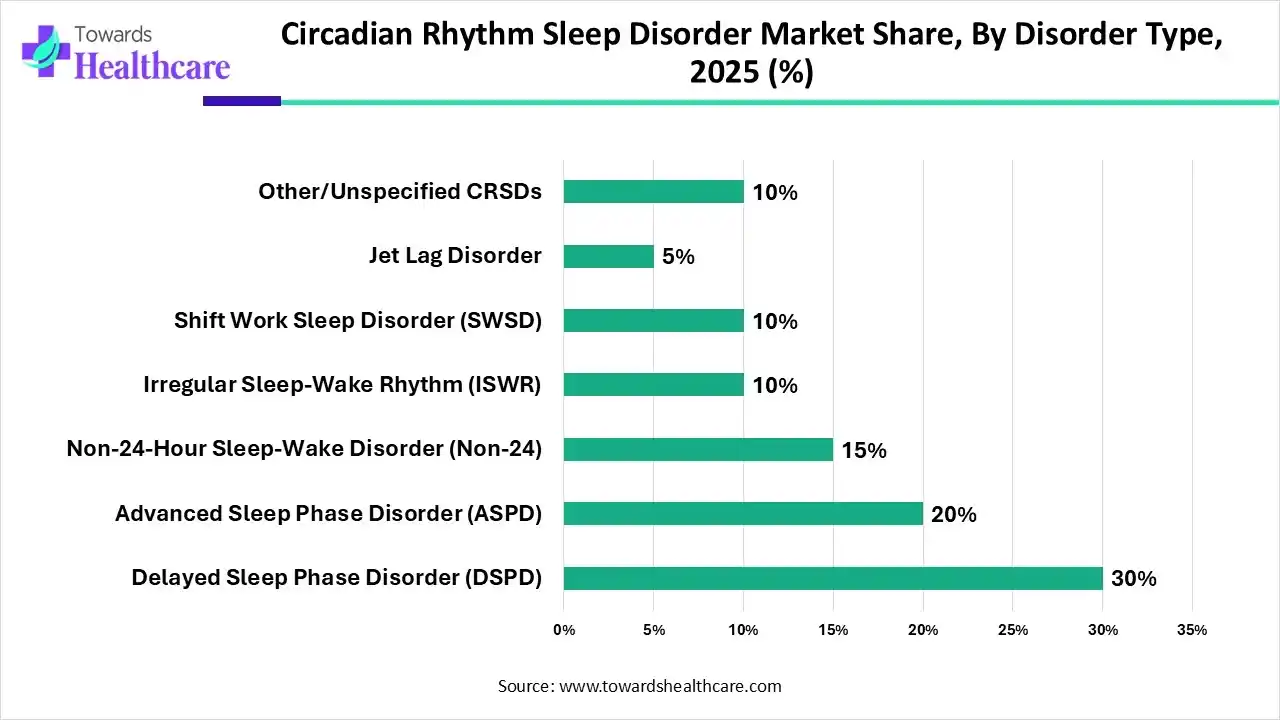
Delayed Sleep Phase Disorder (DSPD) has emerged as the dominant segment, capturing 30% of the market in 2025.
This is not a coincidence. DSPD aligns closely with how younger populations live today; late nights, digital exposure, and irregular sleep timing.
For teenagers and young adults, this condition is especially common. In fact, a noticeable portion of this group struggles to fall asleep until very late at night, impacting daily functioning.
Why DSPD Is Rising Faster Than Expected
DSPD is more than just “sleeping late.” It directly affects mental health, productivity, and overall quality of life.
Students face difficulty waking up for school, while professionals struggle with performance and focus. Over time, this creates a cycle of fatigue and stress.
What makes DSPD significant is that it is treatable, yet often overlooked.
Key contributing factors include:
- Increased screen exposure late at night
- Social and academic pressure leading to irregular schedules
- Reduced exposure to natural daylight
- Poor sleep hygiene habits
Therapies like melatonin supplementation and structured light exposure are proving effective. When combined with behavioral therapy, the results tend to last longer.
The Emerging Disruptor: Non-24-Hour Sleep-Wake Disorder
While DSPD dominates today, another segment is quietly gaining momentum—Non-24-Hour Sleep-Wake Disorder.
This condition affects a large proportion of visually impaired individuals and disrupts the natural 24-hour sleep cycle.
What makes it unique is its complexity. Unlike DSPD, it cannot always be corrected through routine adjustments.
Treatments are becoming more targeted, with melatonin-based therapies and receptor agonists offering structured regulation of sleep cycles.
As awareness increases, this segment is expected to grow rapidly in the coming years.
Medications Lead, But Digital Is Catching Up
Pharmacological therapies continue to dominate, holding 50% of the market share in 2025.
These treatments remain the first line of action, especially for severe cases where immediate intervention is required.
Doctors rely on a range of medications to manage symptoms, regulate sleep cycles, and improve patient outcomes.
Common treatment approaches include:
- Sedatives for sleep initiation and maintenance
- Melatonin-based drugs to regulate circadian rhythm
- Wakefulness-promoting agents for daytime alertness
However, the real shift is happening in digital therapeutics.
Apps, virtual programs, and online platforms are transforming how people approach sleep health. They offer personalized insights, track patterns, and deliver behavioral interventions in real time.
Hospitals Still Lead; But Workplaces Are Entering the Game
Hospitals and sleep clinics captured 35% of the market share, making them the leading end-user segment.
Their strength lies in advanced diagnostics and specialized care. Sleep studies, personalized treatment plans, and expert supervision create better long-term outcomes.
But the landscape is evolving.
Corporate wellness programs are rapidly integrating sleep health into their strategy. Companies are beginning to recognize that sleep directly impacts productivity and employee satisfaction.
From sleep assessments to stress management initiatives, workplaces are stepping into preventive care.
Young Adults at 30%; A Lifestyle-Driven Crisis
Among all age groups, young adults (18–34) dominate with a 30% share.
This reflects a deeper issue—modern lifestyle patterns are disrupting sleep at an early stage of life.
Late-night scrolling, flexible work hours, and social habits are pushing sleep cycles further away from natural rhythms.
Poor sleep is no longer occasional. It is becoming chronic.
Adolescents; The Next High-Growth Segment
While young adults lead today, adolescents are expected to show the fastest growth.
This trend is concerning because sleep issues at an early age often link to mental health challenges.
Early intervention is critical to prevent long-term consequences.
Efforts to improve adolescent sleep include:
- Delaying school start times
- Reducing screen exposure before bedtime
- Encouraging physical activity
- Promoting structured sleep routines
These changes may seem simple, but they carry long-term impact.
A Market Driven by Behavior, Not Just Biology
The circadian rhythm sleep disorder market reflects a larger truth—sleep is no longer just biological, it is behavioral.
Technology, work culture, and social patterns are influencing how and when people sleep.
This makes treatment more complex, requiring a mix of medical, psychological, and lifestyle interventions.
The Bigger Picture; Where Is This Heading?
The market is moving toward a hybrid model of care. Traditional treatments will continue, but digital and preventive approaches will gain traction.
People are becoming more aware of sleep health, and that awareness is translating into demand.
What was once ignored is now measurable, trackable, and treatable.
Final Thought; Sleep Is Becoming the Next Health Frontier
Sleep disorders are no longer in the background. They are stepping into the spotlight as a major health concern.
With DSPD leading at 30%, the market is signaling a clear message—modern lifestyles are rewriting biological rhythms.
The real challenge now is not just treating sleep disorders, but helping people realign with something as basic—and as essential—as sleep.
Access our exclusive, data-rich dashboard dedicated to the healthcare market – built specifically for decision-makers, strategists, and industry leaders. The dashboard features comprehensive statistical data, segment-wise market breakdowns, regional performance shares, detailed company profiles, annual updates, and much more. From market sizing to competitive intelligence, this powerful tool is one-stop solution to your gateway.
Access the Dashboard: https://www.towardshealthcare.com/access-dashboard
About Us
Healthcare Web Wire is a part of Towards Healthcare which is a leading global provider of technological solutions, clinical research services, and advanced analytics, with a strong emphasis on life science research. Dedicated to advancing innovation in the life sciences sector, we build strategic partnerships that generate actionable insights and transformative breakthroughs. As a global strategy consulting firm, we empower life science leaders to gain a competitive edge, drive research excellence, and accelerate sustainable growth.
You can place an order or ask any questions, please feel free to contact us at [email protected]
Europe Region – +44 778 256 0738
North America Region – +1 8044 4193 44
APAC Region: +91 9356 9282 04
Visit Our Website: https://www.towardshealthcare.com
Find us on social platforms: LinkedIn | Twitter | Instagram | Medium