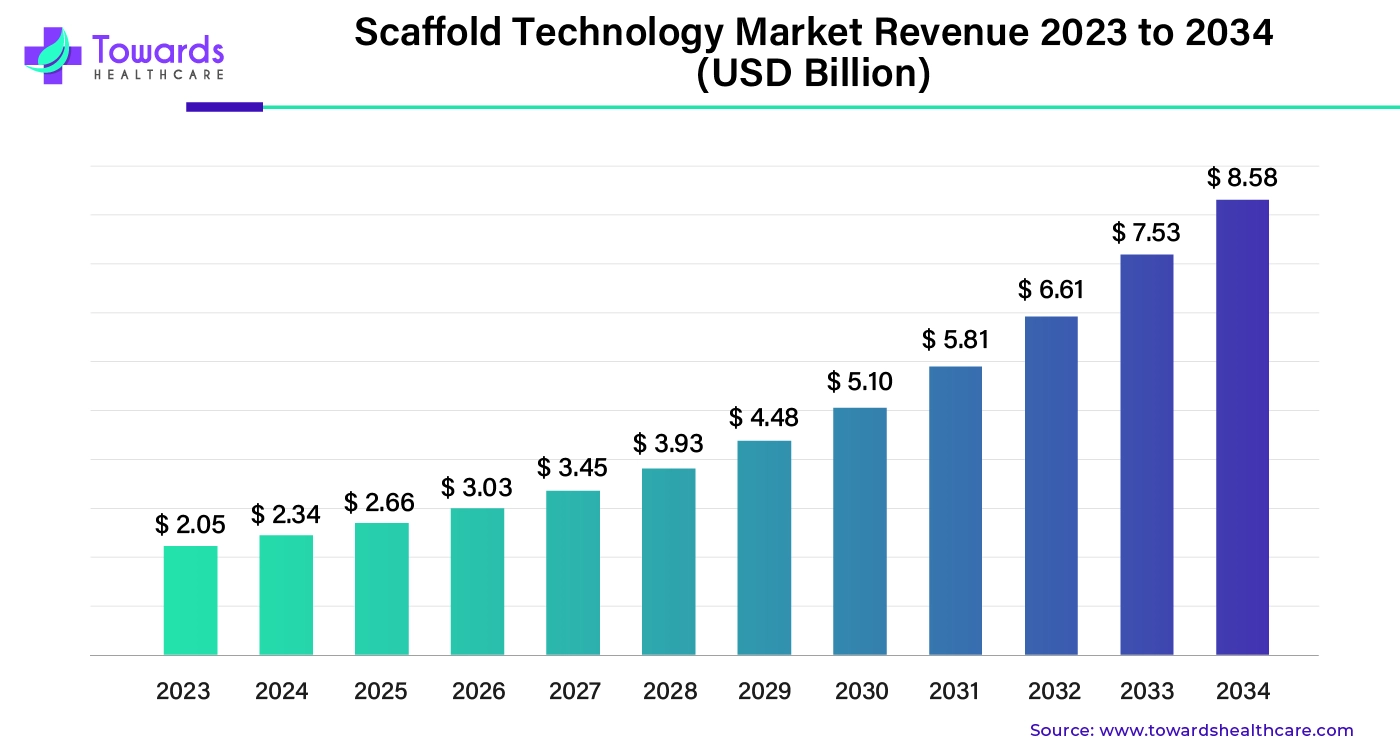
The global scaffold technology market is moving from a niche research tool to a cornerstone of modern healthcare. Valued at $2.05 billion in 2023, the market is projected to reach $8.58 billion by 2034, growing at a strong CAGR of 13.9%.
This rapid rise reflects a deeper shift. Scientists are no longer just studying cells—they are building tissues, testing drugs without animals, and exploring ways to grow entire organs in labs.
From Lab Tool to Lifesaving Backbone
Scaffolds act as the “support system” for growing cells into functional tissues. These structures mimic the natural environment inside the human body, allowing cells to grow, multiply, and organize properly.
Without scaffolds, creating structured tissues or organoids becomes nearly impossible. That’s why they are becoming critical in areas like regenerative medicine, drug discovery, and personalized therapies.
The demand continues to grow as healthcare shifts toward precision medicine and faster drug development cycles.
What’s Fueling This Explosive Growth?
The market expansion is not random—it is driven by real-world healthcare challenges and scientific breakthroughs.
Here’s what is pushing demand forward:
- Rising focus on stem cell therapy and tissue engineering
- Increasing need to reduce animal testing in drug development
- Growing cases of organ failure and transplant shortages
- Surge in chronic diseases and aging population
- Rapid adoption of AI in biomedical research
Each of these factors is accelerating the use of scaffold-based technologies across industries.
Hydrogels Lead, But Nanofibers Are Catching Up Fast
In 2023, hydrogels dominated the market. Their structure closely resembles natural tissue, making them ideal for cell growth and regeneration.
Our experts provide actionable stats, competitor insights, and regional breakdowns to make your strategy smarter.
Chechkout the full report now and lead the market: https://www.towardshealthcare.com/checkout/5235
They also improve cell survival and reduce complications like poor vascularization, which makes them a preferred choice for researchers.
However, the real excitement lies in nanofiber-based scaffolds.
These are expected to grow at the fastest rate due to their ability to replicate human tissue at the nanoscale. Innovations like electrospinning are already enabling breakthroughs in areas such as retinal repair and vision restoration.
Growing Whole Organ is the Future of the Scaffold Technology Market
See what the full report offers before you invest; our sample is customized to your business.
Get it for FREE now: https://www.towardshealthcare.com/download-sample/5235
Orthopedics Dominates, Neurology Emerges as the Next Frontier
Scaffold technology is already widely used in orthopedic applications. With over 1.7 billion people globally suffering from musculoskeletal conditions, the demand for tissue repair solutions is massive.
Bone fractures, osteoporosis, and spinal injuries continue to drive adoption in this segment.
At the same time, neurology is emerging as the fastest-growing application area.
Scientists are exploring scaffold-based solutions to repair nerve damage and treat conditions like:
- Parkinson’s disease
- Dementia
- Motor neuron disorders
With aging populations increasing worldwide, neural tissue engineering is becoming a major focus for future investments.
Biotech and Pharma Companies Drive Market Demand
Pharmaceutical and biotechnology companies remain the largest end-users of scaffold technology.
They use scaffolds to create 3D tissue models, which allow better drug testing and reduce reliance on animal trials.
This shift is not just ethical—it is also more accurate. Drugs tested on human-like tissue models often produce more reliable results, speeding up development timelines.
North America Leads, But Asia-Pacific Is Rising Fast
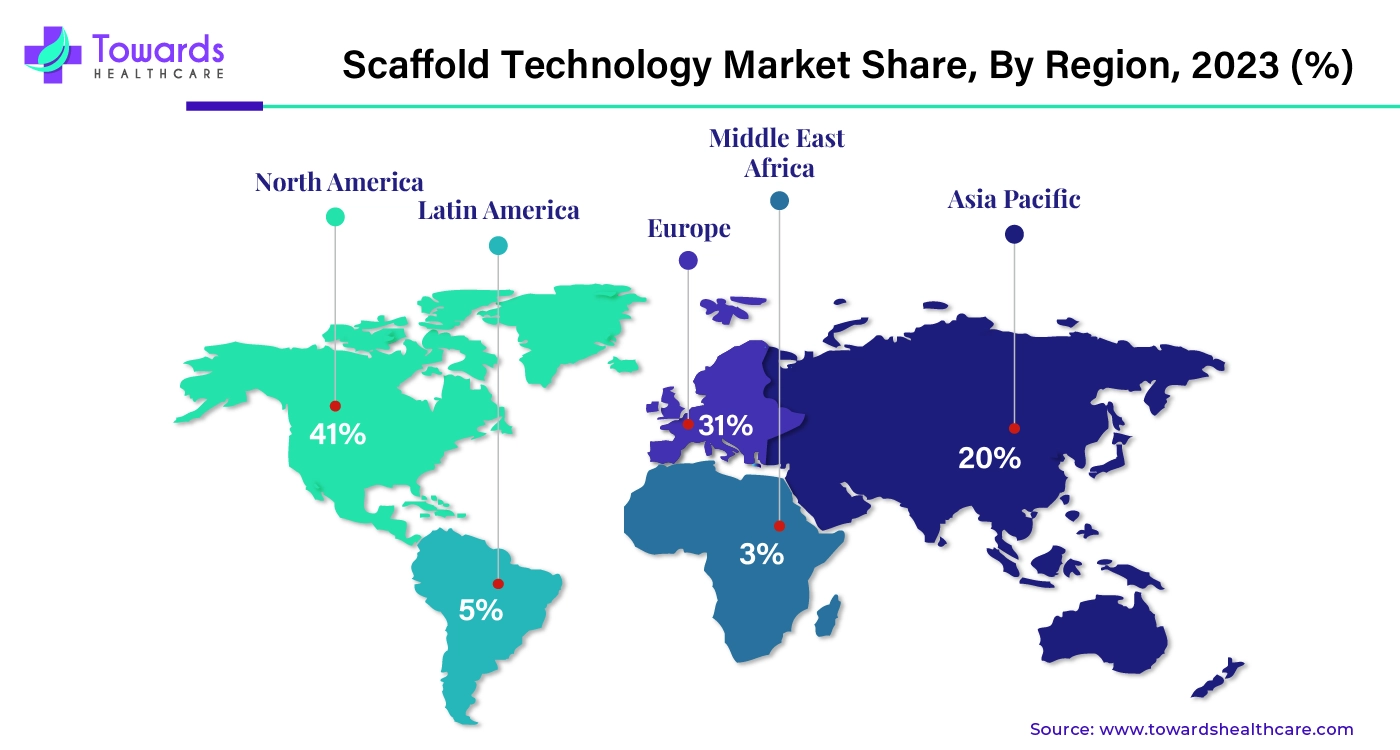
North America dominated the market with over 41% share in 2023, supported by strong R&D funding and advanced healthcare infrastructure.
Government-backed programs and institutional research continue to push innovation in the region.
However, the real growth story lies in Asia-Pacific.
Countries like India, China, Japan, and South Korea are investing heavily in biotechnology and regenerative medicine.
India alone saw over 1,390 biotech startups in 2022, contributing nearly $49.8 billion to its bioeconomy. This surge in innovation is expected to significantly boost scaffold technology adoption.
AI Is Quietly Transforming the Entire Ecosystem
Artificial intelligence is becoming a silent driver behind the market’s growth.
From selecting biomaterials to optimizing scaffold design, AI helps researchers make faster and more accurate decisions.
It is also improving:
- Computational modeling of tissues
- Cell culture optimization
- Predictive analysis for scaffold performance
As organoid development still faces structural and functional challenges, AI is expected to play a key role in overcoming these limitations.
The Big Challenge: Do We Even Need Scaffolds Anymore?
While scaffold technology is growing, it also faces competition.
Scaffold-free cell culture techniques are gaining traction. These methods allow cells to self-organize without external structures, offering simplicity and cost advantages.
This creates a paradox—the technology driving innovation also faces disruption from newer alternatives.
To stay relevant, scaffold-based systems must evolve, becoming more efficient, customizable, and biologically accurate.
Future Outlook: Growing Organs Is No Longer Science Fiction
The ultimate goal of scaffold technology is clear—creating fully functional human organs in laboratories.
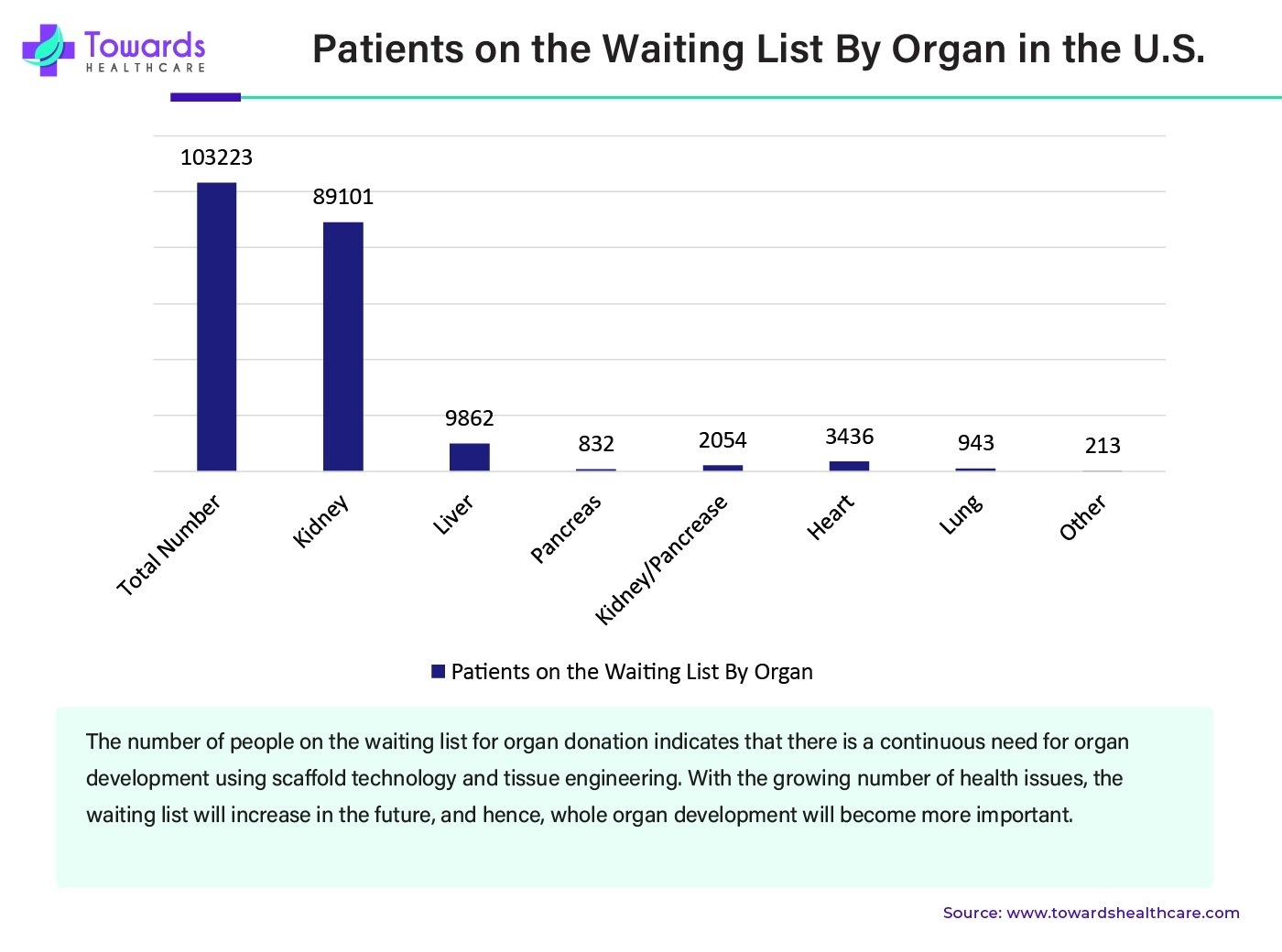
Today, thousands of patients wait for organ transplants, with demand far exceeding supply. Scaffold-based tissue engineering offers a potential solution by enabling the growth of patient-specific organs.
This would eliminate rejection risks and reduce dependency on donors.
Although challenges remain, the combination of advanced biomaterials, nanotechnology, and AI is pushing the boundaries of what’s possible.
Key Players Shaping the Market
Several global companies are driving innovation and commercialization in this space, including:
- Thermo Fisher Scientific
- Merck KGaA
- Sanofi
- Medtronic
- Becton, Dickinson and Company
- Corning Incorporated
These players continue to invest in research, partnerships, and product innovation to strengthen their market position.
A Market Built on Possibility
The scaffold technology market is not just growing—it is evolving into a foundation for the future of medicine.
With strong numbers, rising investments, and breakthrough innovations, the industry stands at the edge of a transformation.
The real question is no longer if lab-grown tissues will become mainstream—but how soon they will redefine healthcare as we know it.
Access our exclusive, data-rich dashboard dedicated to the healthcare market – built specifically for decision-makers, strategists, and industry leaders. The dashboard features comprehensive statistical data, segment-wise market breakdowns, regional performance shares, detailed company profiles, annual updates, and much more. From market sizing to competitive intelligence, this powerful tool is one-stop solution to your gateway.
Access the Dashboard: https://www.towardshealthcare.com/access-dashboard
Become a valued research partner with us – https://www.towardshealthcare.com/schedule-meeting
You can place an order or ask any questions, please feel free to contact us at [email protected]
Powering Healthcare Leaders with Real-Time Insights: https://www.towardshealthcare.com/healthcare-intelligence-platform
Europe Region – +44 778 256 0738
North America Region – +1 8044 4193 44
APAC Region: +91 9356 9282 04
Visit Our Website: https://www.towardshealthcare.com
Find us on social platforms: LinkedIn | Twitter | Instagram | Medium