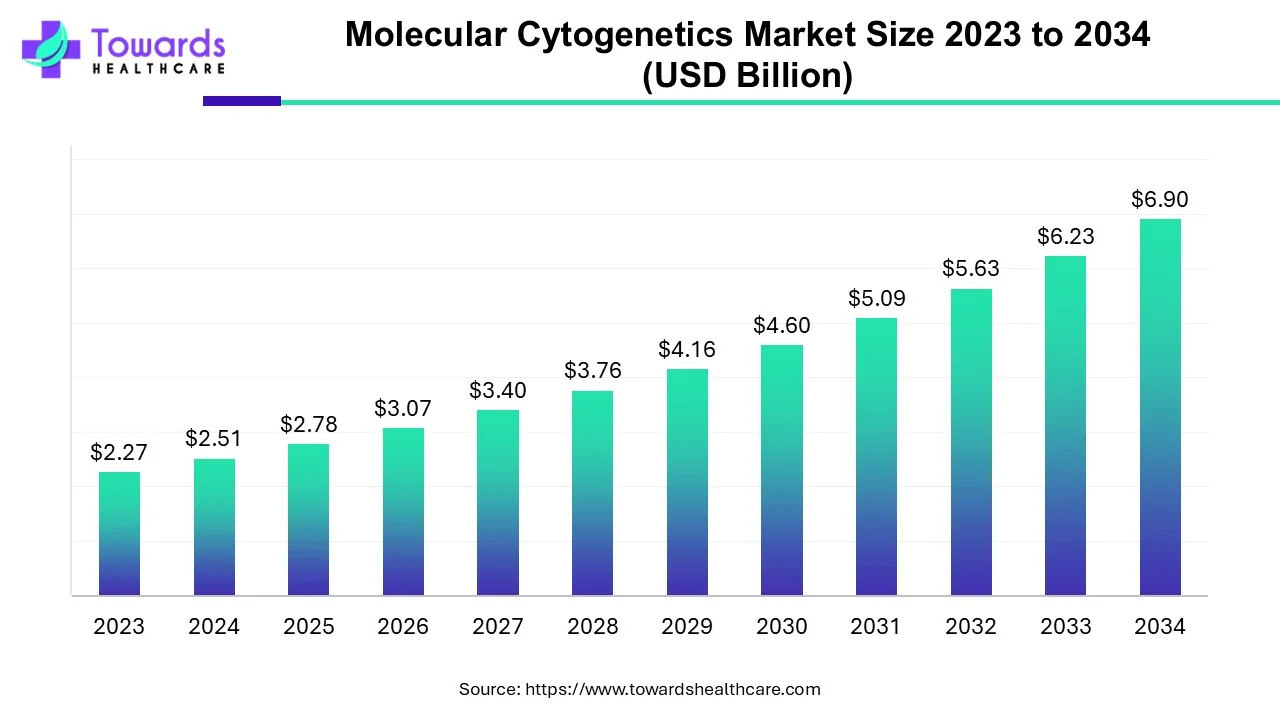
The global molecular cytogenetics market is growing fast. From USD 2.78 billion in 2025, it is expected to hit USD 6.9 billion by 2034, growing at a CAGR of 10.64%. Rising cancer cases, advanced research in genetics, and new technologies are driving this growth.
Molecular cytogenetics helps scientists and doctors study chromosomes. By analyzing cell structures, it can spot cancer cells, congenital disorders, and other genetic problems. Popular techniques include karyotyping, FISH, CGH, and aCGH, which are widely used in labs and research centers.
Cancer Is Pushing the Market Forward
Cancer cases are increasing worldwide. In 2022, there were 20 million new cases and almost 10 million deaths. Early diagnosis is now more important than ever. Molecular cytogenetics allows doctors to detect cancer at a precise stage, helping patients get timely treatment.
Key reasons for growth:
- Aging population and lifestyle changes
- Genetic predispositions
- Government and private funding for cancer research
Personalized Medicine Is Changing How We Treat Patients
Personalized medicine tailors treatment to a person’s genes. Molecular cytogenetics plays a key role here. Doctors can now design treatments based on an individual’s genetic makeup. This means better results, fewer side effects, and more effective care.
How Technology and AI Are Helping
The market benefits from technological advancements. Comparative genomic hybridization (CGH) and its advanced form, aCGH, help detect even tiny DNA changes.
AI is making molecular cytogenetics smarter. It can automate chromosome analysis, improve accuracy, and speed up results. Deep learning tools now help labs identify abnormalities faster, giving doctors the information they need sooner.
Market Segments at a Glance
- Oncology leads the market, helping detect gene changes and cancer types.
- Personalized medicine is growing fastest, letting doctors adapt treatments to patients.
- Consumables like reagents and kits dominate products because labs use them every day.
- Services are growing quickly, saving labs time and money by providing expert testing support.
Regional Insights
- North America leads with 48% market share, thanks to strong healthcare infrastructure and research support.
- Asia-Pacific is growing fastest, with rising cancer cases, more labs, and a growing elderly population. China alone reported 4.8 million new cancer cases in 2022, and India has about 70 million people affected by rare genetic diseases.
End-Users
- Clinical & research labs are the main users, helping detect chronic and genetic disorders.
- Pharma and biotech companies are expanding fast, investing in new research and lab technologies.
Challenges and Opportunities
High testing costs and new molecular biology methods like NGS and RNA-seq are challenges. But the increasing demand for personalized medicine and government support offer huge opportunities.
In short:
- The market will grow to USD 6.9 billion by 2034
- Cancer cases and genetic disorders drive demand
- Personalized medicine and AI are reshaping diagnostics
- Asia-Pacific is emerging as a fast-growing region
Molecular cytogenetics is no longer just a lab technique. It is a life-saving tool helping doctors understand diseases better, provide targeted treatments, and improve patient care worldwide.
Access our exclusive, data-rich dashboard dedicated to the healthcare market – built specifically for decision-makers, strategists, and industry leaders. The dashboard features comprehensive statistical data, segment-wise market breakdowns, regional performance shares, detailed company profiles, annual updates, and much more. From market sizing to competitive intelligence, this powerful tool is one-stop solution to your gateway.
Access the Dashboard: https://www.towardshealthcare.com/access-dashboard
You can place an order or ask any questions, please feel free to contact us at [email protected]
Europe Region – +44 778 256 0738
North America Region – +1 8044 4193 44
APAC Region: +91 9356 9282 04
Visit Our Website: https://www.towardshealthcare.com
Find us on social platforms: LinkedIn | Twitter | Instagram | Medium