The fight against breast cancer is getting a powerful ally in digital breast tomosynthesis (DBT), a revolutionary 3D mammography technology.
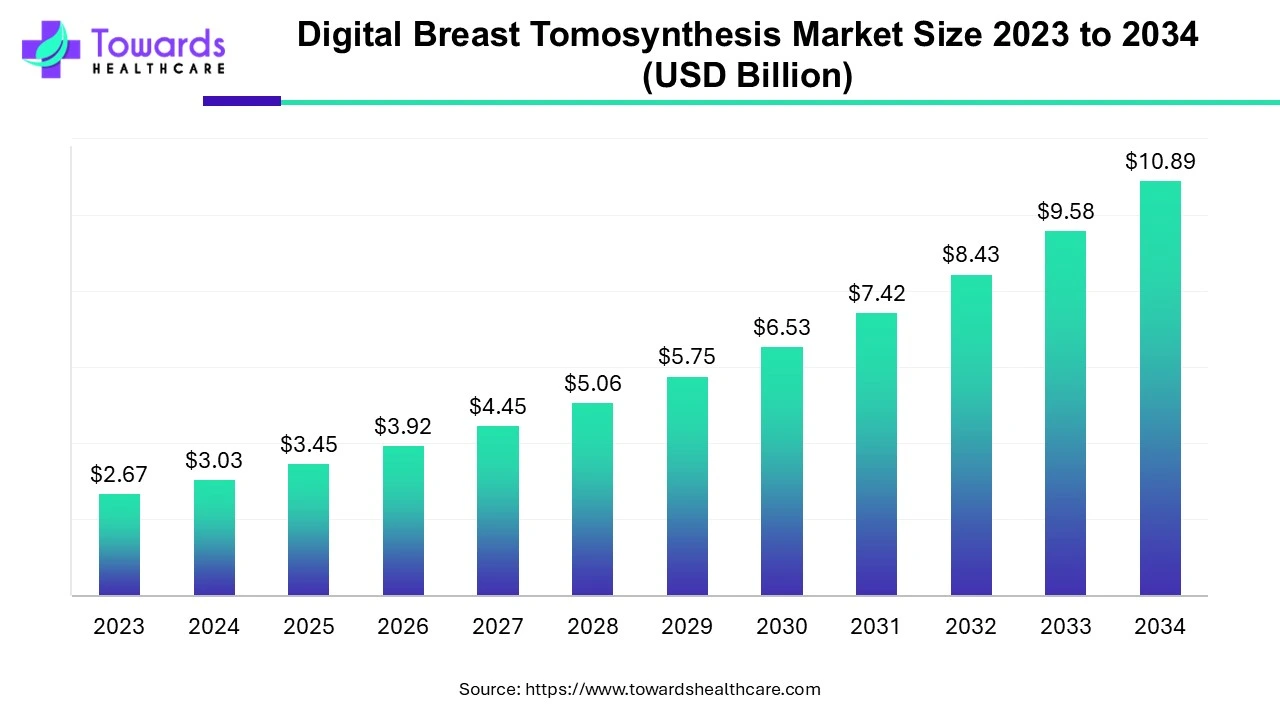
The global Digital Breast Tomosynthesis market, valued at USD 3.45 billion in 2025, is projected to skyrocket to around USD 10.89 billion by 2034, growing at an impressive CAGR of 13.63%. Rising breast cancer cases, technological breakthroughs, and strong government initiatives are driving this surge.
Want to make smarter moves in the market? Grab a free personalized report crafted for your business: https://www.towardshealthcare.com/download-sample/5424
Detecting Cancer Earlier Saves Lives
Digital breast tomosynthesis captures multiple X-ray images from different angles to create detailed 3D pictures of the breast. Unlike traditional 2D mammograms, DBT can detect hidden tumors, especially in dense breast tissue, reducing false positives.
This technology helps clinicians identify early signs of cancer even in women with no symptoms, offering a life-saving edge.
The increasing awareness about breast cancer and early detection is boosting demand. Nearly half of women have dense breast tissue, which makes tumor detection harder with standard mammograms. DBT solves this challenge, giving doctors the tools to diagnose cancer with higher precision.
Key Trends Shaping the Market
- In March 2024, Delta Hospital acquired a 3D mammography system, bringing advanced screening closer to local communities.
- Delphinus Medical Technologies raised $12 million in August 2023 to expand its SoftVue 3D Whole Breast Tomography system, aiming to detect 20% more cancers.
- Siemens Healthineers reported a 5.9% revenue increase in Q1 2025, showing strong adoption of advanced imaging technology globally.
AI is Transforming Breast Cancer Detection
Artificial intelligence (AI) and machine learning (ML) are changing the DBT landscape. AI can analyze images faster and more accurately than ever before, reducing radiologists’ workload.
Advanced algorithms detect even the tiniest abnormalities in breast tissue, cut down recall rates, and enhance diagnostic accuracy. Automation in imaging is helping hospitals and diagnostic centers deliver quicker and more reliable results, giving patients faster peace of mind.
Market Dynamics in Action
Drivers:
- Increasing awareness about breast cancer and early screening initiatives worldwide.
- Rising incidence of breast cancer among women, emphasizing the need for advanced imaging.
Restraints:
- High installation costs, ranging from $150,000 to $300,000, challenge affordability in developing regions.
- Maintenance and screening fees, ranging from $99 to $359, can be prohibitive for low- and middle-income groups.
Opportunities:
- Hospitals and diagnostic centers are increasingly adopting DBT systems to offer advanced care.
- Venture funding and private investments are fueling technological innovations, including AI integration.
Segment Insights: What’s Leading the Charge?
- Standalone 3D Systems: These systems dominated the market in 2024. They produce high-resolution images and detect 20%–65% more invasive cancers than 2D mammograms. Women with dense breasts particularly benefit from these systems.
- 2D/3D Combination Systems: Expected to grow fastest, these systems combine the benefits of 2D and 3D imaging, improving accuracy, patient comfort, and reducing radiation exposure.
End-Use Highlights:
- Hospitals: Led the market in 2024 thanks to professional expertise, infrastructure, and favorable reimbursement policies.
- Diagnostic Centers: Growing rapidly due to increasing investments, specialized equipment, and expanding public awareness campaigns.
Regional Insights: Who’s Driving Growth?
North America:
- Largest market share in 2024.
- Benefits from strong government support, advanced infrastructure, and leading players like Philips Healthcare, GE Healthcare, and Hologic.
- Around 12,442 out of 26,045 mammography systems in the U.S. are DBT systems, showing strong adoption.
Asia-Pacific:
- Fast-growing region due to rising breast cancer cases and expanding healthcare infrastructure.
- India expects 50,000 new cases annually, while China sees around 350,000 new diagnoses per year.
- Government initiatives, public-private partnerships, and advanced training programs are accelerating DBT adoption.
Want more than just surface-level market data?
Get expert-backed stats, segments, and competitor analysis; buy now: https://www.towardshealthcare.com/checkout/5424
Leading Companies Driving Innovation
- Adaptix, Ltd.
- DMS Imaging
- Fujifilm
- GE Healthcare
- Hologic
- Philips Healthcare
- Siemens Healthineers
- Volpara Health Technologies
Recent Breakthroughs
- FDA clearance of iCAD’s ProFound Detection Version 4.0 in December 2024 boosts early and accurate detection.
- A ten-year study from Yale School of Medicine confirms DBT detects more cancers and reduces advanced cancer cases compared to traditional 2D mammograms.
Looking Ahead
The digital breast tomosynthesis market is on a clear upward trajectory. Hospitals, diagnostic centers, and advanced imaging providers are embracing this technology to deliver better patient outcomes. With AI integration, global awareness, and ongoing investments, DBT is not just a technological advancement—it’s a life-saving revolution in breast cancer detection.
Key Market Stats at a Glance:
- 2024 Market Size: USD 3.03 billion
- 2025 Market Size: USD 3.45 billion
- 2034 Projected Market Size: USD 10.89 billion
- CAGR (2025–2034): 13.63%
Access our exclusive, data-rich dashboard dedicated to the healthcare market – built specifically for decision-makers, strategists, and industry leaders. The dashboard features comprehensive statistical data, segment-wise market breakdowns, regional performance shares, detailed company profiles, annual updates, and much more. From market sizing to competitive intelligence, this powerful tool is one-stop solution to your gateway.
Access the Dashboard: https://www.towardshealthcare.com/access-dashboard
You can place an order or ask any questions, please feel free to contact us at [email protected]
Europe Region – +44 778 256 0738
North America Region – +1 8044 4193 44
APAC Region: +91 9356 9282 04
Visit Our Website: https://www.towardshealthcare.com
Find us on social platforms: LinkedIn | Twitter | Instagram | Medium