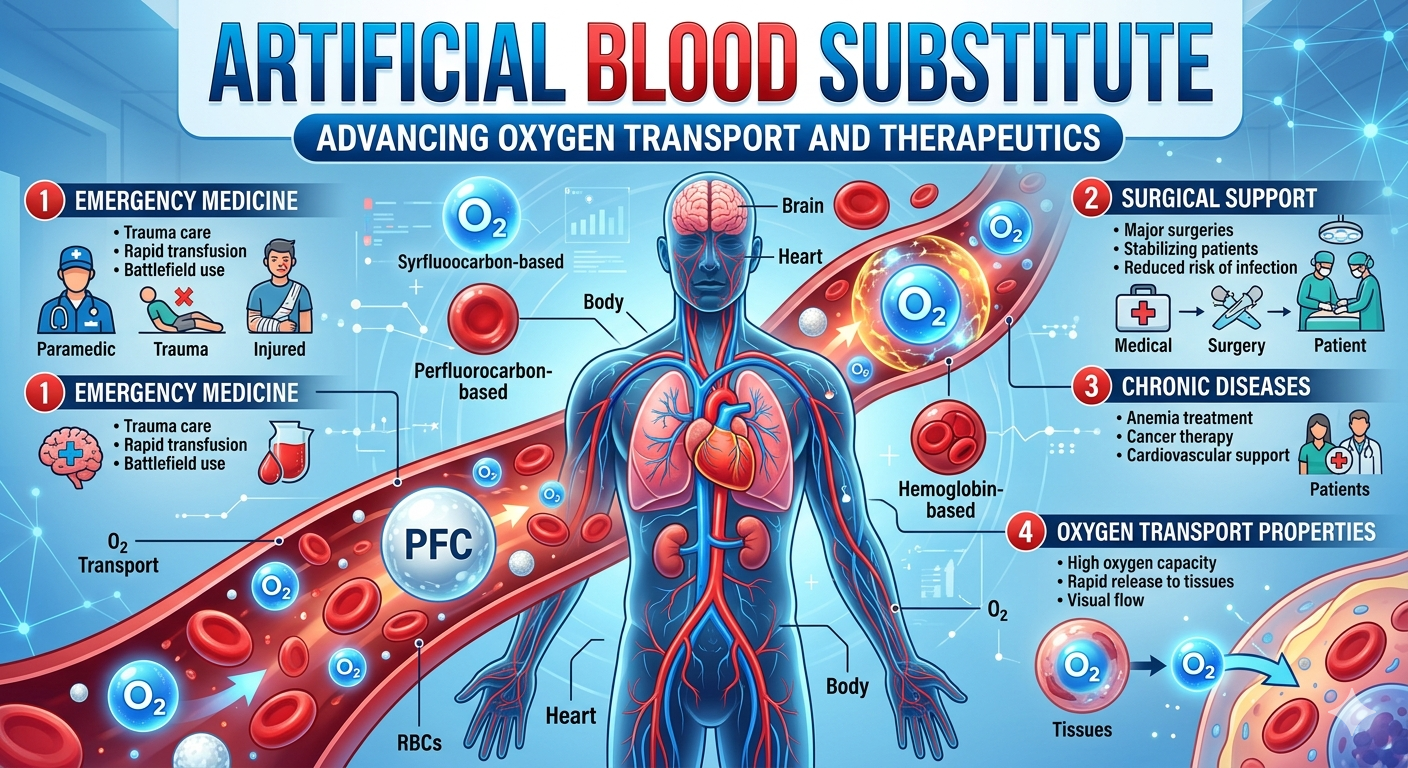
Hospitals around the world rely heavily on donated blood to save lives every day. From trauma care to major surgeries, blood transfusions remain one of the most critical components of modern healthcare.
Yet the global healthcare system faces a growing challenge. Blood supply often struggles to meet demand, especially during emergencies, disasters, and large-scale medical procedures. Scientists and medical innovators now believe artificial blood substitutes could reshape the future of transfusion medicine.
Researchers are exploring ways to create synthetic or engineered blood that can carry oxygen efficiently and remain stable for long periods. If successful, these innovations could transform emergency medicine and reduce dependence on traditional blood donations.
Why the World Needs Artificial Blood
Traditional blood transfusions require matching blood types, strict storage conditions, and continuous donations. These limitations create frequent shortages in many countries.
Artificial blood substitutes aim to solve these challenges by offering products that can work across different blood types and remain stable for longer periods.
Several potential benefits make artificial blood a major focus of research:
-
Longer storage life, making it easier to stock emergency supplies
-
Universal compatibility, reducing the need for blood-type matching
-
Rapid availability in disasters, accidents, and battlefield medicine
-
Improved logistics, especially in remote or underserved regions
Because of these advantages, governments, military organizations, and biotechnology companies are investing heavily in research and development.
North America Leads the Innovation Wave
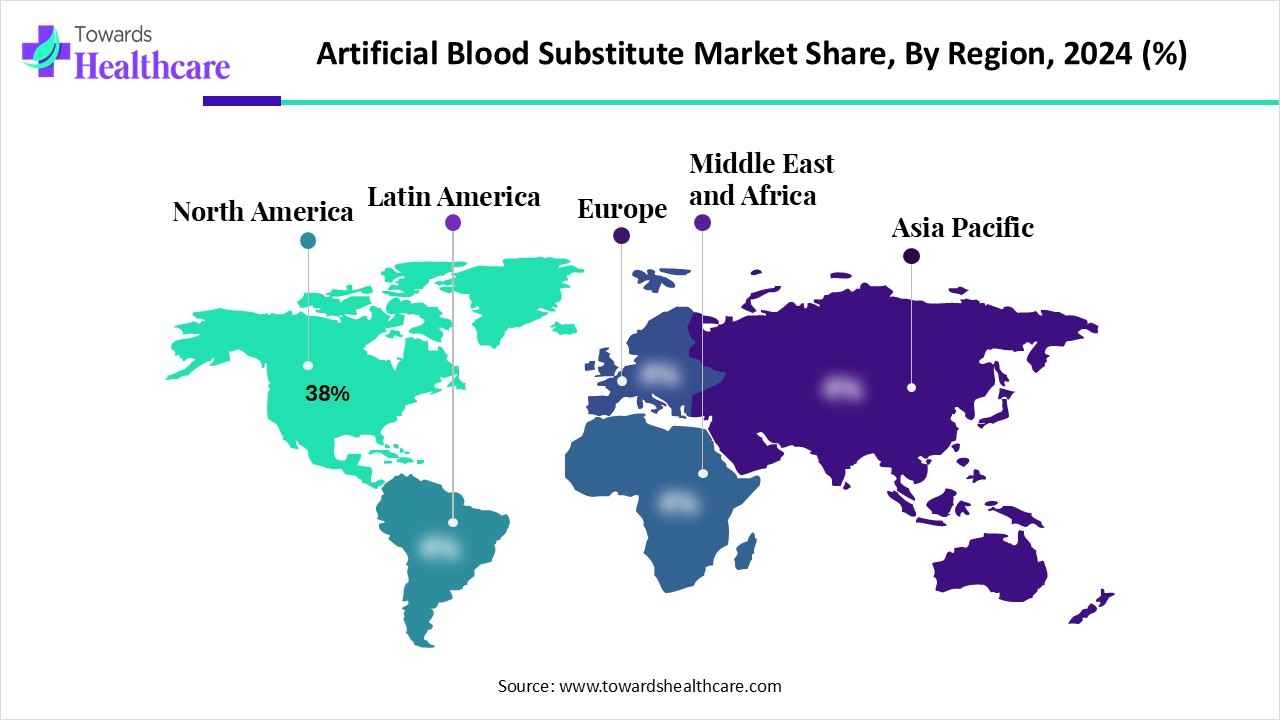
North America dominated the artificial blood substitute market in 2024, accounting for around 38% of the global share. This leadership comes from a combination of strong research ecosystems, advanced healthcare infrastructure, and government-backed innovation programs.
Download the free sample and get the complete insights and forecasts report on this market @ https://www.towardshealthcare.com/download-sample/6310
Scientists across the United States and Canada continue to explore new ways to engineer red blood cells or create oxygen-carrying molecules that can mimic the function of natural blood.
Artificial blood research has expanded beyond laboratory testing into clinical exploration. Healthcare researchers are examining its potential in several medical fields, including:
-
Organ transplantation support
-
Oncology treatments
-
Neonatal care
-
Rare blood disorder management
These applications demonstrate how artificial blood could eventually become a versatile medical tool rather than just an emergency substitute.
Military Medicine Drives Breakthroughs
One of the strongest drivers behind artificial blood research comes from defense and military medicine.
In combat environments, soldiers often suffer severe blood loss far from hospitals or transfusion facilities. Transporting and storing donated blood in battlefield conditions presents significant logistical challenges.
To address this problem, U.S. defense programs have invested millions of dollars in technologies that can deliver portable and durable blood substitutes.
These initiatives focus on solving key medical and logistical issues:
-
Creating oxygen-carrying substitutes that function like red blood cells
-
Extending shelf life so products can be stored in field conditions
-
Developing rapid deployment solutions for trauma care
-
Supporting emergency treatment by military medics and rescue teams
Such innovations could save lives not only in combat zones but also in civilian emergencies such as natural disasters and large-scale accidents.
The Importance of Blood Supply Systems
Despite advances in biotechnology, traditional blood donation systems remain the backbone of healthcare today.
In the United States alone, millions of blood units are collected each year through donation networks. Millions of donors support hospitals and medical centers that rely on these life-saving contributions.
Large organizations coordinate collection, testing, storage, and distribution of blood across hospitals nationwide. Their work ensures that emergency rooms, operating theatres, and trauma centers receive the blood they need.
However, fluctuating donation rates, aging populations, and rising medical procedures continue to challenge the stability of blood supply systems. These pressures increase the urgency of developing reliable artificial alternatives.
Canada Pushes Forward Through Research
Canada has also emerged as an important contributor to artificial blood research. Government agencies, research institutions, and healthcare regulators continue to support innovation in biomedical science.
National health organizations focus on advancing safe medical technologies while strengthening the country’s healthcare system. These institutions oversee research funding, public health initiatives, and regulatory frameworks that support innovation.
Meanwhile, Canada’s healthcare system continues to manage rising medical demand. The country performed millions of surgeries between 2023 and 2024, reflecting a strong recovery in healthcare activity following pandemic disruptions.
However, increasing patient volumes have also highlighted challenges in healthcare access. Longer waiting times for specialist treatment have encouraged policymakers and researchers to explore medical technologies that can improve efficiency and patient outcomes.
Artificial blood research aligns with these goals by offering solutions that could streamline emergency care and surgical procedures.
Asia Pacific Emerges as the Fastest-Growing Region
While North America currently leads the market, the Asia Pacific region is expected to grow at the fastest pace in the coming years.
Countries across the region are investing in advanced medical technologies to address population growth, healthcare demand, and blood shortages.
Governments are supporting research programs that aim to create universal artificial blood capable of working across multiple blood groups.
Japan has taken a particularly strong role in advancing this research. National programs support the development of artificial red blood cells that can deliver oxygen effectively during emergency transfusions.
These efforts focus on creating solutions that could be used in ambulances, disaster response systems, and rural healthcare facilities.
China is also expanding its clinical research programs related to synthetic blood. Scientists are exploring new biomedical techniques to develop long-lasting artificial blood capable of supporting critical care treatment.
Such innovations could play a major role in regions where blood donation systems struggle to meet rising healthcare needs.
The Future of Emergency Medicine
Artificial blood substitutes could dramatically change how doctors respond to life-threatening situations.
Imagine ambulances carrying stable oxygen-carrying blood substitutes that can be used instantly without blood-type testing. Emergency teams could stabilize trauma patients during the critical minutes before they reach a hospital.
Medical helicopters, disaster response units, and military medics could also benefit from portable blood supplies that remain effective for extended periods.
Researchers are also exploring ways to improve storage conditions. Traditional blood has a limited shelf life and requires careful temperature control. Artificial substitutes may eventually remain viable for much longer periods, making global distribution easier.
A Technology Still in Development
Despite the promising potential, artificial blood research remains a complex scientific challenge.
Scientists must ensure that these substitutes can safely transport oxygen, interact with the human body without harmful side effects, and perform consistently in real medical conditions.
Clinical trials and regulatory testing will play a critical role before artificial blood can become widely available.
Researchers continue to refine the chemistry, biology, and engineering behind these solutions. Each breakthrough brings the healthcare industry closer to a future where artificial blood becomes an essential part of medical practice.
A Life-Saving Innovation on the Horizon
The global effort to develop artificial blood substitutes reflects a larger goal: ensuring that no life is lost due to a lack of blood supply.
From advanced laboratories in North America to rapidly expanding research programs in Asia Pacific, scientists and healthcare innovators are working toward the same mission.
If these technologies succeed, artificial blood could become one of the most transformative medical breakthroughs of the next decade.
And in moments when every second matters, that innovation could mean the difference between life and death.
Access our exclusive, data-rich dashboard dedicated to the life sciences industry – built specifically for decision-makers, strategists, and industry leaders. The dashboard features comprehensive statistical data, segment-wise market breakdowns, regional performance shares, detailed company profiles, annual updates, and much more. From market sizing to competitive intelligence, this powerful tool is one-stop solution to your gateway.
Access the Dashboard: https://www.towardshealthcare.com/access-dashboard
Checkout the Market Report Now at: https://www.towardshealthcare.com/checkout/6310
You can place an order or ask any questions, please feel free to contact us at sales@towardshealthcare.com
Europe Region – +44 778 256 0738
North America Region – +1 8044 4193 44
APAC Region: +91 9356 9282 04
Visit Our Website: https://www.towardshealthcare.com
Find us on social platforms: LinkedIn | Twitter | Instagram | Medium
About the Author