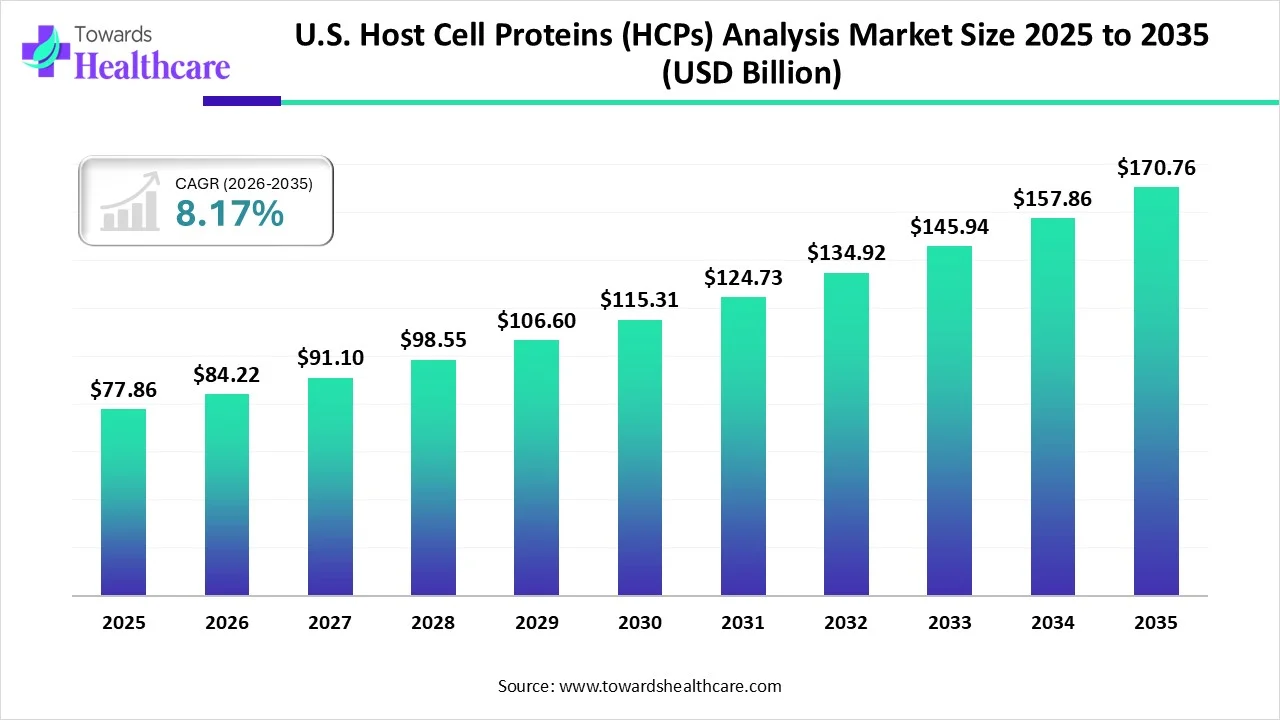
Valued at USD 77.86 million in 2025, the market is projected to reach USD 170.76 million by 2035, expanding at a CAGR of 8.17%.
Our experts provide comprehensive insights, segments, competitor data and many more as per you requirements to simplify complex decisions; Download for FREE
This growth reflects a deeper shift—biopharmaceutical companies are prioritizing purity, precision, and patient safety more than ever before.
Why HCP Analysis Matters More Than Ever
Host cell proteins are impurities that remain during biologic drug production.
Even in small quantities, they can affect drug safety, efficacy, and immune response.
That’s why HCP analysis is not just a regulatory requirement—it’s a critical checkpoint in modern drug development.
Technology Landscape: Where Precision Meets Innovation
Different technologies are shaping how efficiently HCPs are detected and analyzed.
Each method brings its own strengths, depending on the stage of drug development and required sensitivity.
- ELISA-based assays (38%)
Widely used due to their reliability and established protocols. They remain the industry standard for routine testing. - PCR-based assays (32%)
Growing in importance, especially where DNA-level detection complements protein analysis. - Mass Spectrometry (LC-MS/MS) (30%)
Rapidly gaining traction for its ability to provide deep, precise, and detailed protein profiling.
While ELISA still leads, mass spectrometry is steadily reshaping expectations around accuracy and depth.
Applications: Where Demand is Expanding Fast
The application landscape reveals where the real momentum lies.
HCP analysis is no longer limited to traditional manufacturing—it is expanding into advanced therapies.
- Cell & Gene Therapy (40%)
This segment leads the market, driven by the surge in personalized medicine and complex biologics. - Quality Control (QC) (35%)
A core function ensuring every batch meets strict regulatory standards and safety benchmarks. - Biopharmaceutical Manufacturing (25%)
Continues to rely heavily on HCP analysis during production and purification stages.
The rise of cell and gene therapy highlights a shift toward more complex treatments that demand deeper analytical scrutiny.
End-User Dynamics: Who is Driving the Market?
The demand for HCP analysis services is largely concentrated among key industry players.
Their operational needs directly influence market expansion.
- Biopharmaceutical Companies (60%)
They dominate the market due to continuous drug development, clinical trials, and manufacturing needs. - Contract Research Organizations (CROs) (40%)
Growing rapidly as outsourcing becomes a strategic move to reduce costs and improve efficiency.
CROs, in particular, are emerging as growth accelerators, offering specialized expertise and scalable solutions.
The Push from Regulatory Expectations
Regulatory bodies in the U.S. enforce strict guidelines for biologics.
Every product must meet high safety standards before reaching patients.
This creates consistent demand for accurate and reliable HCP analysis methods.
Companies are now investing more in advanced analytical tools to stay compliant and competitive.
Innovation is Changing the Game
Technological advancements are transforming how HCPs are detected.
Mass spectrometry, automation, and data analytics are improving both speed and accuracy.
These innovations reduce testing time while increasing confidence in results.
As biologics become more complex, traditional methods alone are no longer enough.
The Rise of Complex Biologics
The shift from simple drugs to complex biologics is a major growth driver.
Monoclonal antibodies, recombinant proteins, and gene therapies require deeper impurity analysis.
This complexity directly increases the need for advanced HCP detection techniques.
The more complex the therapy, the higher the demand for precise analysis.
Challenges That Still Exist
Despite strong growth, the market faces a few challenges.
High costs of advanced technologies and the need for skilled professionals can slow adoption.
Additionally, standardization across different testing methods remains a concern.
However, ongoing innovation is gradually addressing these barriers.
A Market Moving Toward Precision and Trust
The U.S. HCP analysis market reflects a broader trend in healthcare—moving toward precision, safety, and accountability.
Every percentage of growth represents not just revenue, but improved patient outcomes.
As biologics continue to evolve, HCP analysis will remain a critical pillar supporting innovation.
This market is not just about reaching $170.76 million by 2035.
It’s about ensuring that every biologic therapy is safe, effective, and trusted.
Behind every test lies a patient—and that’s what truly drives this market forward.
Explore our Latest Top Market Insights for FREE:
- Host Cell Proteins (HCPs) Analysis Market
- Pharma Contract Research Organization Services Market
- Pharmaceutical CMO and CDMO Market
Access our exclusive, data-rich dashboard dedicated to the healthcare market – built specifically for decision-makers, strategists, and industry leaders. The dashboard features comprehensive statistical data, segment-wise market breakdowns, regional performance shares, detailed company profiles, annual updates, and much more. From market sizing to competitive intelligence, this powerful tool is one-stop solution to your gateway.
Access the Dashboard: https://www.towardshealthcare.com/access-dashboard
About Us
Healthcare Web Wire is a Part of Towards Healthcare, which is a leading global provider of technological solutions, clinical research services, and advanced analytics, with a strong emphasis on life science research. Dedicated to advancing innovation in the life sciences sector, we build strategic partnerships that generate actionable insights and transformative breakthroughs. As a global strategy consulting firm, we empower life science leaders to gain a competitive edge, drive research excellence, and accelerate sustainable growth.
You can place an order or ask any questions, please feel free to contact us at sales@towardshealthcare.com
Europe Region – +44 778 256 0738
North America Region – +1 8044 4193 44
APAC Region: +91 9356 9282 04
]]>It reached $1.78 billion in 2024 and is projected to grow to $2.68 billion by 2033, at a CAGR of 4.7%.
This is not explosive growth, but it is stable—and that stability is what attracts long-term investment in healthcare, pharma, and biotech.
Why This Market Is Expanding Now
The region is shifting from basic healthcare systems to more research-driven ecosystems.
Countries are investing in labs, diagnostics, and drug development capabilities.
Key demand drivers include:
- Growing pharmaceutical manufacturing in Brazil and Argentina
- Increasing clinical testing and diagnostics demand
- Expansion of biotechnology and agricultural research
- Rising regulatory focus on product quality and safety
Analytical instruments alone contribute over 66% of total market revenue, proving how essential these tools are.
Global Market Growth
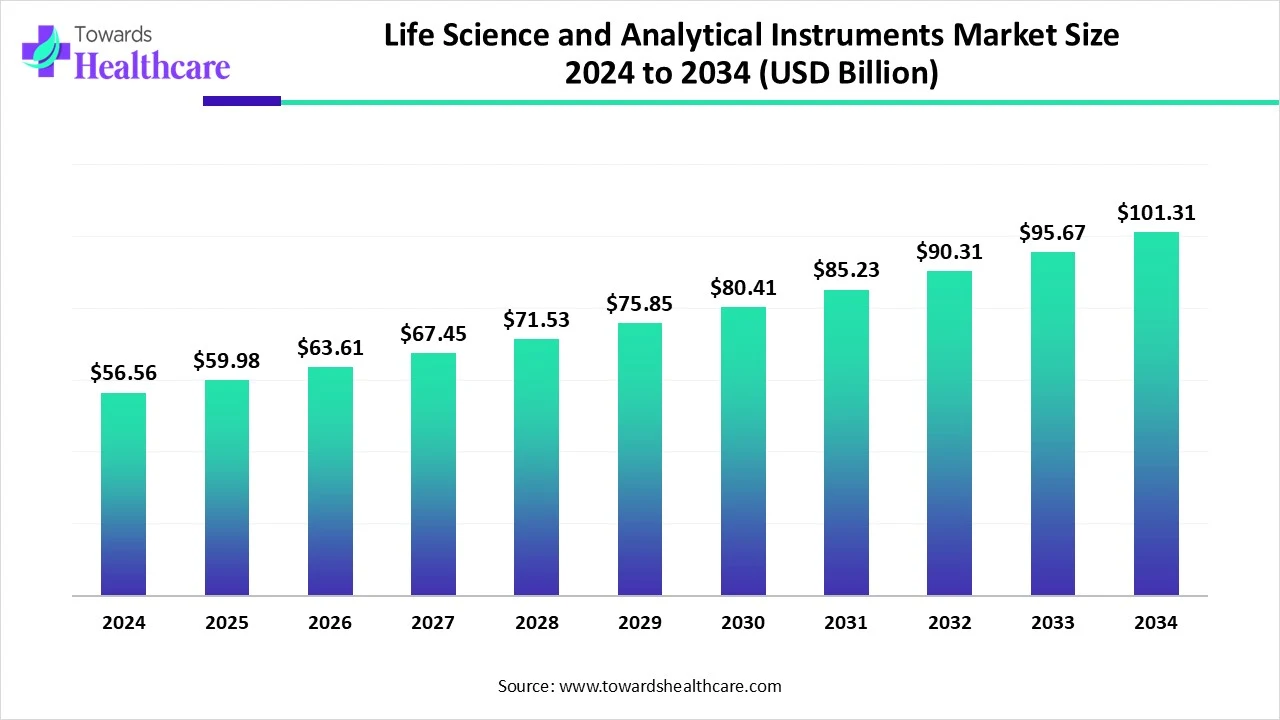
The global life science & analytical instruments market size is calculated at US$ 56.56 billion in 2024, grew to US$ 59.98 billion in 2025, and is projected to reach around US$ 101.31 billion by 2034. The market is expanding at a CAGR of 6.04% between 2025 and 2034.
Brazil Dominates the Market Landscape
Brazil clearly leads the South American market.
It holds the highest demand due to strong healthcare infrastructure and rising R&D investments.
This dominance is supported by:
- Government-backed research programs
- A large pharmaceutical manufacturing base
- Expansion of biotech hubs like São Paulo
Brazil continues to account for the largest share and is expected to remain the growth engine of the region.
Real Companies Powering the Market
The market runs on a mix of global technology providers and regional pharmaceutical players.
While global firms dominate advanced instruments, local companies drive demand and adoption.
Global Leaders with Strong Presence
- Thermo Fisher Scientific – Revenue: $42.8+ billion (2024)
- Danaher Corporation – Strong in diagnostics and life science tools
- Agilent Technologies – Leader in chromatography and spectroscopy
- Bio-Rad Laboratories – Major player in clinical diagnostics
- Merck KGaA – Expanding life science distribution in the region
These companies dominate high-end instruments and large-scale contracts.
Key South American Companies & Revenue
Regional companies are not large instrument manufacturers, but they are key drivers of demand.
- Eurofarma (Brazil)
- Revenue: ~$1.1 billion
- Presence across Latin America and global markets
- Grupo EMS (Brazil)
- Estimated revenue: $1 billion+
- One of the largest pharmaceutical companies in Brazil
- Biomm (Brazil)
- Focused on biotechnology and insulin production
- Growing rapidly due to biologics demand
- Laboratorio Bagó (Argentina)
- Estimated revenue: $700–900 million
- Strong in pharmaceuticals and research collaborations
These companies increase demand for analytical instruments through manufacturing, testing, and R&D activities.
Market Structure: A Balanced Competitive Landscape
The market is moderately consolidated.
- Top global companies control around 45–50% of total revenue
- Regional players dominate distribution and service networks
- High-end instruments are mostly imported
This creates a dual ecosystem where global innovation meets local demand.
Where Is the Revenue Coming From?
Different applications contribute differently to the market.
Major revenue contributors:
- Clinical diagnostics – Largest share
- Pharmaceutical manufacturing – High-value segment
- Research and academia – Fastest-growing segment
Fast-growing segments:
- Bioprocess analyzers
- $133 million (2024) → $232 million (2033)
- CAGR: 6.4%
- Bioanalytical testing services
- $188 million (2024) → $398 million (2033)
- CAGR: 8.7%
This shows a strong shift toward advanced testing and precision medicine.
Emerging Trends Reshaping the Market
The industry is evolving beyond traditional lab setups.
Key trends:
- Automation and AI-integrated instruments
- Growth in genomics and molecular diagnostics
- Portable and easy-to-use devices
- Cloud-connected laboratory systems
These trends are improving efficiency, speed, and accuracy in labs.
Challenges That Still Exist
Despite growth, the market faces several real challenges:
- High cost of advanced instruments
- Limited local manufacturing
- Currency fluctuations affecting imports
- Shortage of skilled professionals
These barriers can slow down adoption, especially in smaller economies.
The Bigger Insight: Demand Is Local, Technology Is Global
South America is still dependent on global companies for advanced technologies.
However, it is building strong capabilities in research, diagnostics, and application.
The region is becoming a key consumer and user of life science technologies, even if it is not yet a major producer.
Final Perspective: Growth Backed by Real Need
This market is not driven by trends—it is driven by necessity.
Healthcare expansion, drug development, and research needs are pushing demand forward.
With steady growth, rising investments, and increasing healthcare awareness,
South America is becoming a reliable and evolving market for life science analytical instruments.
And the real story is simple:
this market may not grow the fastest—but it is growing with purpose and long-term impact.
Access our exclusive, data-rich dashboard dedicated to the healthcare market – built specifically for decision-makers, strategists, and industry leaders. The dashboard features comprehensive statistical data, segment-wise market breakdowns, regional performance shares, detailed company profiles, annual updates, and much more. From market sizing to competitive intelligence, this powerful tool is one-stop solution to your gateway.
Access the Dashboard: https://www.towardshealthcare.com/access-dashboard
About Us
We are Part of Towards Healthcare, which is a leading global provider of technological solutions, clinical research services, and advanced analytics, with a strong emphasis on life science research. Dedicated to advancing innovation in the life sciences sector, we build strategic partnerships that generate actionable insights and transformative breakthroughs. As a global strategy consulting firm, we empower life science leaders to gain a competitive edge, drive research excellence, and accelerate sustainable growth.
You can place an order or ask any questions, please feel free to contact us at sales@towardshealthcare.com
Europe Region – +44 778 256 0738
North America Region – +1 8044 4193 44
APAC Region: +91 9356 9282 04
]]>Valued at US$ 2.12 billion in 2024, the market grew to US$ 2.28 billion in 2025 and is projected to reach US$ 4.41 billion by 2034.
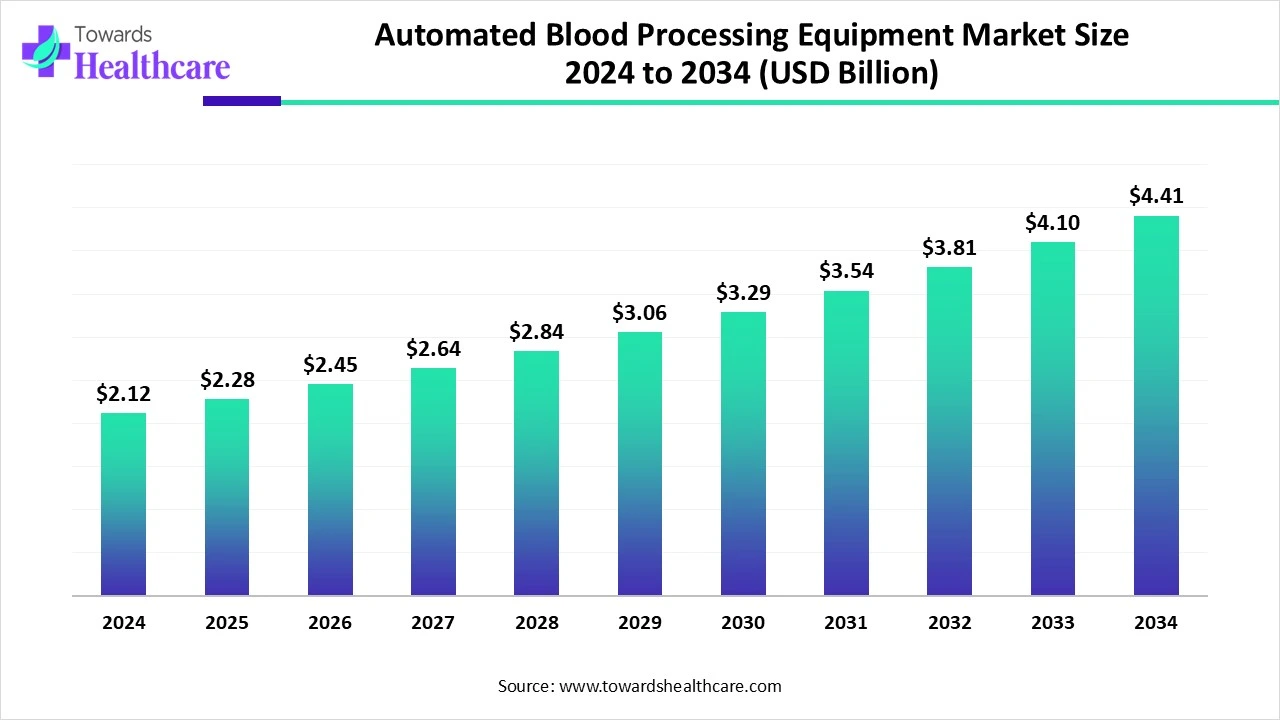
This consistent rise reflects a compound annual growth rate (CAGR) of 7.65% between 2025 and 2034.
Behind these numbers lies a deeper story—one of rising medical needs, technological evolution, and the urgency to save lives faster and more efficiently.
Why Automation Is No Longer Optional
Healthcare systems today are under pressure to handle large volumes of blood collection, testing, and transfusion.
Manual processes often lead to delays, inconsistencies, and higher risks.
Automated blood processing equipment solves these challenges by improving accuracy and reducing human dependency.
Hospitals, blood banks, and diagnostic labs now prefer systems that deliver consistent results in less time.
This shift is not just about convenience—it’s about survival, precision, and efficiency.
Rising Health Challenges Are Fueling Demand
The increasing number of surgeries, trauma cases, and chronic diseases has created a constant demand for safe blood supply.
At the same time, aging populations across regions are contributing to higher transfusion needs.
Blood-related disorders such as anemia, cancer, and hemophilia are also on the rise.
These conditions require frequent monitoring and transfusions, pushing healthcare providers toward automated solutions.
The market growth reflects a simple reality: more patients mean more demand for efficient blood processing systems.
Technology Is Changing the Game
Automation in blood processing is no longer limited to basic functions.
Modern systems now integrate advanced technologies that enhance speed, safety, and reliability.
Some key technological advancements driving the market include:
- Centrifugation automation for faster separation of blood components
- Apheresis systems that selectively extract specific components like plasma or platelets
- Digital tracking systems that ensure traceability and reduce errors
- Closed system processing to minimize contamination risks
These innovations are helping healthcare professionals focus more on patient care rather than manual operations.
Blood Components Segment Leads the Way
The market is segmented based on application, and blood component processing dominates the landscape.
Separating blood into plasma, platelets, and red cells is now a standard practice.
This approach improves treatment efficiency since patients receive only the required component.
As a result, automated systems that specialize in component separation are witnessing higher adoption rates.
Plasma collection, in particular, is gaining traction due to its use in therapies and drug manufacturing.
Hospitals and Blood Banks Drive Adoption
End-users play a critical role in shaping market growth.
Hospitals remain the largest users of automated blood processing equipment due to the high volume of procedures.
Blood banks and diagnostic laboratories are also rapidly adopting automation to handle increasing demand.
These facilities require systems that ensure speed, safety, and compliance with strict standards.
The trend is clear—automation is becoming a necessity across all blood handling environments.
Regional Trends Reveal Growth Opportunities
The market is expanding globally, but growth patterns vary by region.
Developed regions continue to lead due to advanced healthcare infrastructure and early technology adoption.
Meanwhile, emerging economies are showing strong growth potential.
Improving healthcare systems, rising awareness, and increasing investments are driving adoption in these regions.
Governments and private players are focusing on modernizing blood banks and hospitals, creating new opportunities for market expansion.
Key Factors Accelerating Market Growth
Several core factors are pushing the market forward:
- Increasing demand for safe and efficient blood transfusions
- Rising prevalence of chronic and blood-related diseases
- Growing adoption of advanced healthcare technologies
- Need for error-free and standardized processing systems
These factors collectively create a strong foundation for long-term market growth.
Take a look before making a decision; our sample is customized as per your business needs.
Download it for free today: https://www.towardshealthcare.com/download-sample/5772
Challenges Still Exist Beneath the Surface
Despite strong growth, the market faces certain challenges.
High initial costs of automated systems can limit adoption, especially in smaller healthcare facilities.
Additionally, the need for skilled professionals to operate advanced equipment remains a concern.
Maintenance and regulatory compliance also add to operational complexity.
However, as technology evolves and costs gradually reduce, these barriers are expected to weaken over time.
The Future Looks Precision-Driven
The future of the automated blood processing equipment market is closely tied to innovation.
Artificial intelligence, data analytics, and smart monitoring systems are expected to play a bigger role.
Healthcare providers will increasingly rely on predictive systems that optimize blood usage and reduce waste.
Automation will not just support processes—it will redefine how blood is managed and utilized.
As demand continues to rise, the market will move toward smarter, faster, and more reliable solutions.
Access our exclusive, data-rich dashboard dedicated to the healthcare market – built specifically for decision-makers, strategists, and industry leaders. The dashboard features comprehensive statistical data, segment-wise market breakdowns, regional performance shares, detailed company profiles, annual updates, and much more. From market sizing to competitive intelligence, this powerful tool is one-stop solution to your gateway.
Access the Dashboard: https://www.towardshealthcare.com/access-dashboard
About Us
Healthcare Web Wire is a Part of Towards Healthcare, which is a leading global provider of technological solutions, clinical research services, and advanced analytics, with a strong emphasis on life science research. Dedicated to advancing innovation in the life sciences sector, we build strategic partnerships that generate actionable insights and transformative breakthroughs. As a global strategy consulting firm, we empower life science leaders to gain a competitive edge, drive research excellence, and accelerate sustainable growth.
You can place an order or ask any questions, please feel free to contact us at sales@towardshealthcare.com
Europe Region – +44 778 256 0738
North America Region – +1 8044 4193 44
APAC Region: +91 9356 9282 04
]]>It is expected to grow to USD 32.95 billion in 2026 and reach USD 99.3 billion by 2035, expanding at a strong CAGR of 13.04%.
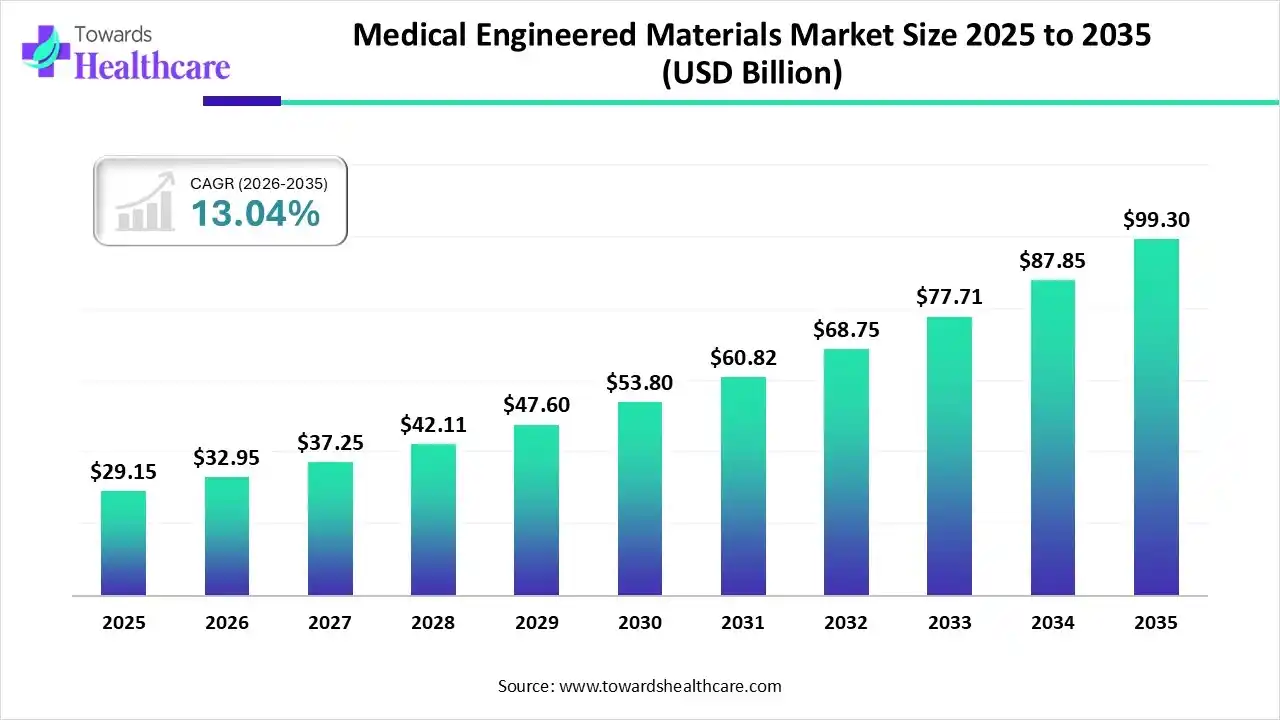
This growth signals a major shift. Materials are now actively shaping how healthcare is delivered, experienced, and improved.
What’s Driving This Rapid Growth?
The demand is not random — it is deeply connected to real-world healthcare needs.
Aging populations, chronic diseases, and rising healthcare investments are pushing innovation forward.
Medical engineered materials are evolving from simple plastics and metals to advanced solutions like nanomaterials, ceramics, and composites. These materials improve safety, precision, and long-term performance.
Key growth drivers include:
- Increasing global elderly population requiring long-term care solutions
- Rising cases of cardiovascular diseases, cancer, and diabetes
- Growing demand for minimally invasive and wearable medical devices
- Expansion of healthcare infrastructure, especially in developing economies
These factors are not just boosting demand — they are redefining the role of materials in medicine.
AI Is Reshaping Material Intelligence
Artificial intelligence is now deeply integrated into engineered materials.
This is not just automation — it’s intelligence embedded into healthcare systems.
AI helps improve diagnostics, optimize treatments, and enhance device performance.
It also enables smart materials that can respond to environmental or biological changes.
For example, AI-powered materials are being used in:
- Smart sensors that monitor body temperature and movement
- Drug delivery systems that release medicine at the right time
- Tissue engineering solutions that support faster healing
This combination of AI and materials is accelerating innovation at an unprecedented pace.
The Rise of Smart and Sustainable Materials
The future of this market is being shaped by three key innovations.
1. Smart Materials
These materials respond to stimuli like heat, light, or pressure.
They are widely used in sensors, implants, and wearable devices.
2. Biocompatible Polymers
These are safer for the human body and environmentally sustainable.
They also reduce dependency on fossil-based materials.
3. Bioinks for 3D Printing
Bioinks are enabling the development of tissues and organs.
They create a supportive environment for cells to grow and function.
Together, these innovations are transforming healthcare from reactive to proactive.
Segment Insights: Where the Growth Is Happening
Different segments within the market are growing at different speeds.
By Type:
- Medical plastics dominated in 2025 due to durability, flexibility, and cost-effectiveness
- Medical adhesives are the fastest-growing segment, replacing traditional sutures and staples
Medical adhesives are especially gaining traction because they reduce infection risk and improve healing outcomes.
By Application:
- Medical disposables led the market in 2025, ensuring safety and hygiene
- Medical devices are growing the fastest, driven by connected healthcare systems
These trends show how convenience and technology are becoming central to healthcare delivery.
Asia Pacific Leads, But North America Accelerates
Geographically, the market shows a clear divide between dominance and growth speed.
Asia Pacific held the largest share in 2025.
The region is expected to see its population aged 60+ reach 1.3 billion by 2050, creating massive demand for healthcare materials.
Countries like India are rapidly adopting technologies like 3D printing, which rely heavily on engineered materials.
Digital transformation and regulatory support are further accelerating growth.
North America, however, is the fastest-growing region.
Its advanced healthcare infrastructure and strong research ecosystem give it a competitive edge.
Meanwhile, Europe continues steady growth with strong government support, research collaborations, and a rising aging population.
Competitive Landscape: Innovation at Full Speed
The market is highly competitive, with leading companies focusing on innovation, sustainability, and partnerships.
Major players include:
- Evonik Industries AG
- Covestro AG
- BASF SE
- Solvay
- SABIC
- Trelleborg AB
- Celanese Corporation
These companies are investing in new materials, expanding manufacturing capabilities, and forming strategic alliances.
Recent developments show a clear trend toward sustainable materials and circular production models.
Challenges Still Exist
Despite strong growth, the market faces several obstacles.
- High research and development costs
- Complex regulatory approvals
- Biocompatibility and safety concerns
- Supply chain disruptions post-pandemic
These challenges require careful planning and continuous innovation.
Opportunities That Could Redefine Healthcare
The future holds immense potential for engineered materials.
Key opportunities include:
- Integration of micro and nanoscale sensors in medical devices
- Growth of regenerative medicine and tissue engineering
- Expansion of wearable healthcare technologies
- Increasing use of 3D printing in personalized treatments
These opportunities highlight how materials are becoming the backbone of modern healthcare.
Access our exclusive, data-rich dashboard dedicated to the healthcare market – built specifically for decision-makers, strategists, and industry leaders. The dashboard features comprehensive statistical data, segment-wise market breakdowns, regional performance shares, detailed company profiles, annual updates, and much more. From market sizing to competitive intelligence, this powerful tool is one-stop solution to your gateway.
Access the Dashboard: https://www.towardshealthcare.com/access-dashboard
About Us
Healthcare Web Wire is a Part of Towards Healthcare, which is a leading global provider of technological solutions, clinical research services, and advanced analytics, with a strong emphasis on life science research. Dedicated to advancing innovation in the life sciences sector, we build strategic partnerships that generate actionable insights and transformative breakthroughs. As a global strategy consulting firm, we empower life science leaders to gain a competitive edge, drive research excellence, and accelerate sustainable growth.
You can place an order or ask any questions, please feel free to contact us at sales@towardshealthcare.com
Europe Region – +44 778 256 0738
North America Region – +1 8044 4193 44
APAC Region: +91 9356 9282 04
]]>Breastfeeding is no longer limited to traditional methods—it is now backed by technology and convenience.
The India breast pumps market was valued at $68.1 million in 2024 and is expected to reach $182.8 million by 2033, growing at a strong 11.7% CAGR.
This means the market will expand nearly 2.6 times within a decade, showing a clear shift in awareness and lifestyle.
India’s Birth Rate and Breastfeeding Reality
India sees around 24–25 million births every year, making it one of the largest maternal care markets in the world.
At the same time, awareness around breastfeeding has improved.
- About 58% of infants are exclusively breastfed for the first six months
- However, continuation rates drop due to work pressure and lifestyle challenges
- Nearly 9 out of 10 working mothers lack proper breastfeeding support at workplaces
This gap between intention and reality is exactly where breast pumps are becoming essential.
Working Women Are Reshaping Demand
The role of women in India’s workforce is evolving rapidly.
More women are choosing to return to work soon after childbirth.
- Female workforce participation has seen a noticeable rise in recent years
- Many urban women resume work within 3–6 months after delivery
- Dual-income households are becoming more common in metro cities
This shift has directly increased demand for breast pumps, as mothers look for flexible solutions.
Global Breast Pump Market
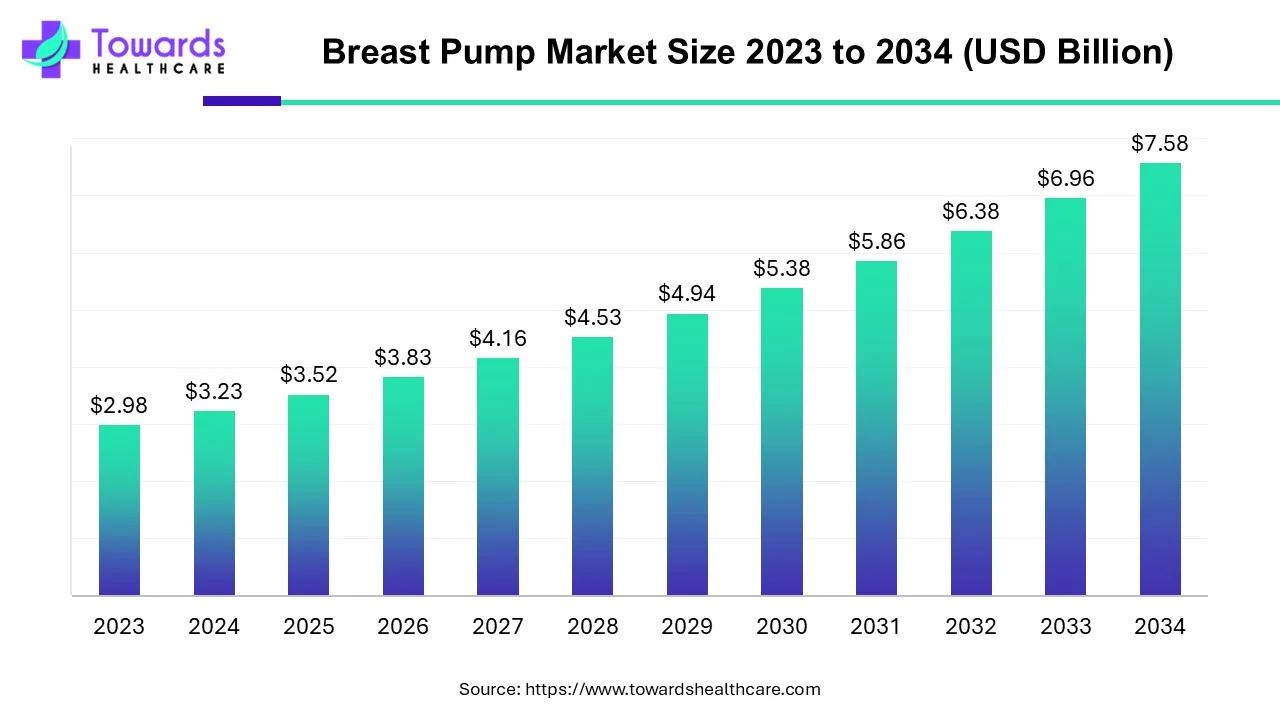
The global breast pump market size is calculated at USD 3.23 billion in 2024, grew to USD 3.52 billion in 2025, and is projected to reach around USD 7.58 billion by 2034. The market is expanding at a CAGR of 8.63% between 2025 and 2034. The growing number of infants and technological advancements drive the market.
Feeling stuck with too many options? Let’s simplify it for you; Contact us [https://www.towardshealthcare.com/contact-us]
Market Segments Are Evolving Fast
The Indian breast pumps market is no longer basic—it is becoming segmented and advanced.
By product type:
- Closed-system pumps are gaining popularity due to better hygiene
- They are becoming the preferred choice among urban consumers
By technology:
- Manual pumps still exist due to lower cost
- Electric pumps are growing rapidly
- Wearable pumps are emerging as a premium category
- The electric breast pump segment is expected to cross $66 million by 2030
- Wearable pumps are projected to nearly double from $12.7 million to $24.4 million by 2030
This clearly shows a shift toward comfort, efficiency, and convenience.
Urban Dominance vs Rural Opportunity
Currently, demand is concentrated in urban India.
Cities like Mumbai, Delhi, Bangalore, and Pune lead adoption.
Urban growth is driven by:
- Better awareness of maternal health
- Higher purchasing power
- Easy access to online platforms
However, India contributes only about 2.2% to the global breast pump market, despite its population size.
This highlights a massive untapped opportunity in rural and semi-urban regions.
Consumer Preferences Are Changing
Indian mothers today are more informed and practical.
They are actively choosing products that balance baby care with personal convenience.
Key preferences include:
- Lightweight and portable designs
- Quiet operation for discreet use
- Easy cleaning and hygienic systems
- Online availability with fast delivery
E-commerce has played a major role in making these products accessible across cities.
Technology Is Driving the Next Phase
Breast pumps are no longer simple tools.
They are becoming smart, efficient, and user-friendly devices.
- Electric pumps already dominate with over 60% share globally
- India is following the same trend with rising adoption
New innovations include:
- Hands-free wearable pumps
- USB rechargeable devices
- Double pumping systems to save time
- Silent motors for comfort and privacy
These advancements are making breastfeeding more manageable for modern mothers.
Healthcare Support Is Strengthening the Market
Hospitals and maternity centers are increasingly recommending breast pumps.
Their role is becoming more clinical and essential.
They are widely used for:
- Supporting premature babies in NICUs
- Managing low milk supply
- Assisting mothers during recovery
At the same time, breastfeeding awareness campaigns are supporting overall market growth.
Challenges Still Exist
Despite strong growth, adoption is still uneven across India.
Several barriers continue to slow down the market.
Major challenges include:
- High cost of electric and wearable pumps
- Limited awareness in Tier 2 and rural areas
- Cultural hesitation around using devices
- Dependence on imported products
In fact, imports of breast pumps in India have been rising at over 30% annually, indicating strong demand but limited domestic production.
Competitive Landscape Is Expanding
The market is becoming increasingly competitive.
Both international and Indian brands are entering the space.
Companies are focusing on:
- Affordable product options
- Better suction and comfort features
- Noise reduction technology
- Strong online distribution
Innovation and pricing are becoming key factors for success.
Future Outlook: A Market Ready to Scale
India’s breast pumps market is still in its early stages compared to developed countries.
But the growth potential is significant.
- The market is expected to grow at over 11% annually
- Asia-Pacific is emerging as the fastest-growing region globally
- Tier 2 and Tier 3 cities will drive the next wave of demand
With increasing awareness and affordability, breast pumps could soon become a common household product.
Access our exclusive, data-rich dashboard dedicated to the healthcare market – built specifically for decision-makers, strategists, and industry leaders. The dashboard features comprehensive statistical data, segment-wise market breakdowns, regional performance shares, detailed company profiles, annual updates, and much more. From market sizing to competitive intelligence, this powerful tool is one-stop solution to your gateway.
Access the Dashboard: https://www.towardshealthcare.com/access-dashboard
About Us
Healthcare Web Wire is a Part of Towards Healthcare, which is a leading global provider of technological solutions, clinical research services, and advanced analytics, with a strong emphasis on life science research. Dedicated to advancing innovation in the life sciences sector, we build strategic partnerships that generate actionable insights and transformative breakthroughs. As a global strategy consulting firm, we empower life science leaders to gain a competitive edge, drive research excellence, and accelerate sustainable growth.
You can place an order or ask any questions, please feel free to contact us at sales@towardshealthcare.com
Europe Region – +44 778 256 0738
North America Region – +1 8044 4193 44
APAC Region: +91 9356 9282 04
]]>This technology focuses on decoding the most important part of human genes, helping doctors make faster and more accurate decisions.
In 2024, the China whole exome sequencing market stood at around $26 million.
Experts expect it to reach nearly $103.9 million by 2030, growing at a strong 27.3% CAGR.
China Is Growing Faster Than the Global Market
China is not just growing, it is growing faster than most countries in genomics.
The global WES market is expanding at around 18.4% CAGR, but China is moving much faster.
This growth comes from real changes happening in the system.
More hospitals are adopting advanced technologies, and the government is pushing precision medicine programs strongly.
Different Reports, Same Direction; Rapid Growth
Market estimates may vary, but the growth direction is clear and strong.
Multiple projections show aggressive expansion across the next decade.
Some estimates show:
- 2024 market size: $26 million
- 2030 projection: $103.9 million
- Growth rate: 27.3% CAGR
Other long-term projections suggest:
- 2024 estimate: ~$151 million
- 2035 projection: $1.14 billion
- CAGR: ~20.2%
Another outlook indicates:
- 2024: ~$350 million
- 2032: ~$1.42 billion
- CAGR: ~19.2%
Even with different numbers, all data points to one thing—fast and steady growth.
Consumables Lead the Market Today
Consumables like kits and reagents dominate the market right now.
They held more than 74% share in 2024.
This happens because every sequencing process needs these materials again and again.
So companies earn repeated revenue instead of one-time sales.
Services Are Growing Even Faster
While consumables lead today, services are becoming the fastest-growing part.
Data analysis and interpretation are now essential in sequencing.
WES produces large and complex data sets.
That is why demand for bioinformatics and expert support is increasing quickly.
Applications Are Expanding Beyond Research
Earlier, WES was mainly used in research labs.
Now, hospitals are using it in daily clinical work.
It is helping in diagnosing diseases faster and more accurately.
Doctors can now identify genetic problems and choose better treatments.
Some key application areas include:
- Clinical diagnostics
- Drug discovery and development (~47% global share)
- Rare disease detection
- Cancer genomics
This shift is making WES more important in real patient care.
Looking for FREE expert guidance in this market? Get in touch; we’re just a message away: [https://www.towardshealthcare.com/contact-us]
Technology Is Making Sequencing Better and Faster
Sequencing by synthesis is the most widely used technology today.
It holds nearly 73% market share.
This method offers better accuracy and faster results.
It also reduces the cost per test, making it more practical for hospitals.
Data Interpretation Is the Real Challenge Now
Sequencing itself is no longer the hardest step.
Understanding the data has become the bigger challenge.
The market is now seeing growth in AI-based tools and cloud platforms.
There is also a rising need for skilled professionals who can interpret genetic data.
Who Is Using Whole Exome Sequencing the Most?
Different sectors are driving demand in different ways.
Research institutes still hold a large share, but hospitals are catching up fast.
Pharma and biotech companies are also using WES for innovation.
They rely on it to develop targeted therapies and new drugs.
Strong Competition Between Global and Local Players
The Chinese market includes both global companies and local leaders.
This mix is increasing competition and innovation.
Companies like BGI Group, Illumina, Thermo Fisher Scientific, Agilent Technologies, and Oxford Nanopore are active in this space.
Local players are focusing on reducing costs and improving access.
Whole Exome vs Whole Genome Sequencing
Whole genome sequencing is growing faster, but WES still holds strong value.
It offers a balance between cost and useful insights.
China’s whole genome sequencing market is projected to grow from $129.3 million in 2024 to $603.2 million by 2030, at a 31.2% CAGR.
Even then, many hospitals prefer WES.
It is faster, more affordable, and easier to use for clinical decisions.
What Is Driving This Growth?
Several key factors are pushing the market forward.
These are long-term drivers, not short-term trends.
- Rising cases of cancer and genetic diseases
- Growing awareness of early diagnosis
- Government support for precision medicine
- Falling sequencing costs
- Increasing adoption in hospitals
All these factors are working together to expand the market quickly.
Challenges Still Exist
Despite strong growth, the market still faces some issues.
These challenges can slow down adoption if not handled properly.
There is a shortage of skilled professionals in bioinformatics.
Data privacy and regulations are also becoming important concerns.
Rural areas still have limited access to advanced technologies.
And data interpretation costs remain high.
The Future Is Personalized Healthcare
China’s WES market is moving toward personalized treatment.
Healthcare is slowly becoming more predictive and precise.
Doctors are starting to use genetic data to guide treatments.
This approach improves outcomes and reduces trial-and-error methods.
Final Thought
The China whole exome sequencing market is not just growing in numbers.
It is changing how healthcare decisions are made.
From $26 million today to over $100 million by 2030, and possibly crossing $1 billion in the coming years, the growth is clear.
But beyond the numbers, the real impact lies in better diagnosis, better treatment, and better patient outcomes.
Access our exclusive, data-rich dashboard dedicated to the healthcare market – built specifically for decision-makers, strategists, and industry leaders. The dashboard features comprehensive statistical data, segment-wise market breakdowns, regional performance shares, detailed company profiles, annual updates, and much more. From market sizing to competitive intelligence, this powerful tool is one-stop solution to your gateway.
Access the Dashboard: https://www.towardshealthcare.com/access-dashboard
About Us
Healthcare Web Wire is a Part of Towards Healthcare, which is a leading global provider of technological solutions, clinical research services, and advanced analytics, with a strong emphasis on life science research. Dedicated to advancing innovation in the life sciences sector, we build strategic partnerships that generate actionable insights and transformative breakthroughs. As a global strategy consulting firm, we empower life science leaders to gain a competitive edge, drive research excellence, and accelerate sustainable growth.
You can place an order or ask any questions, please feel free to contact us at sales@towardshealthcare.com
Europe Region – +44 778 256 0738
North America Region – +1 8044 4193 44
APAC Region: +91 9356 9282 04
]]>What was once dependent on traditional pharmaceuticals is now shifting toward advanced biologic therapies, changing how diseases are treated across the region.
A Market That Is Expanding at Full Speed
The biologics market in South America was valued at US$ 16.5 billion in 2023 and is projected to reach nearly US$ 54.5 billion by 2031, growing at a strong CAGR of 16.1%.
This rapid expansion reflects a structural shift in the healthcare system. Biologics, derived from living cells, are becoming essential in treating complex and chronic diseases.
At the same time, the broader biopharmaceutical sector is also growing steadily, expected to reach around US$ 35 billion by 2028, with a growth rate close to 12% annually.
Even more striking is the growth of biosimilars, which are expanding at over 30% CAGR, making biologics more accessible and cost-effective across different income groups.
The Real Drivers Behind This Growth
The rise of biologics in South America is not just about innovation—it is driven by real healthcare needs.
Chronic diseases such as cancer, autoimmune disorders, and infectious diseases are increasing significantly. Countries like Brazil and Argentina are witnessing a surge in patients who require more targeted and effective therapies.
In Brazil alone, millions of people are affected by rare and chronic conditions, creating strong demand for biologic treatments that offer precision and better outcomes.
Another key factor is awareness. Patients and healthcare providers are increasingly choosing therapies that provide long-term effectiveness rather than short-term relief.
Global Market Growth
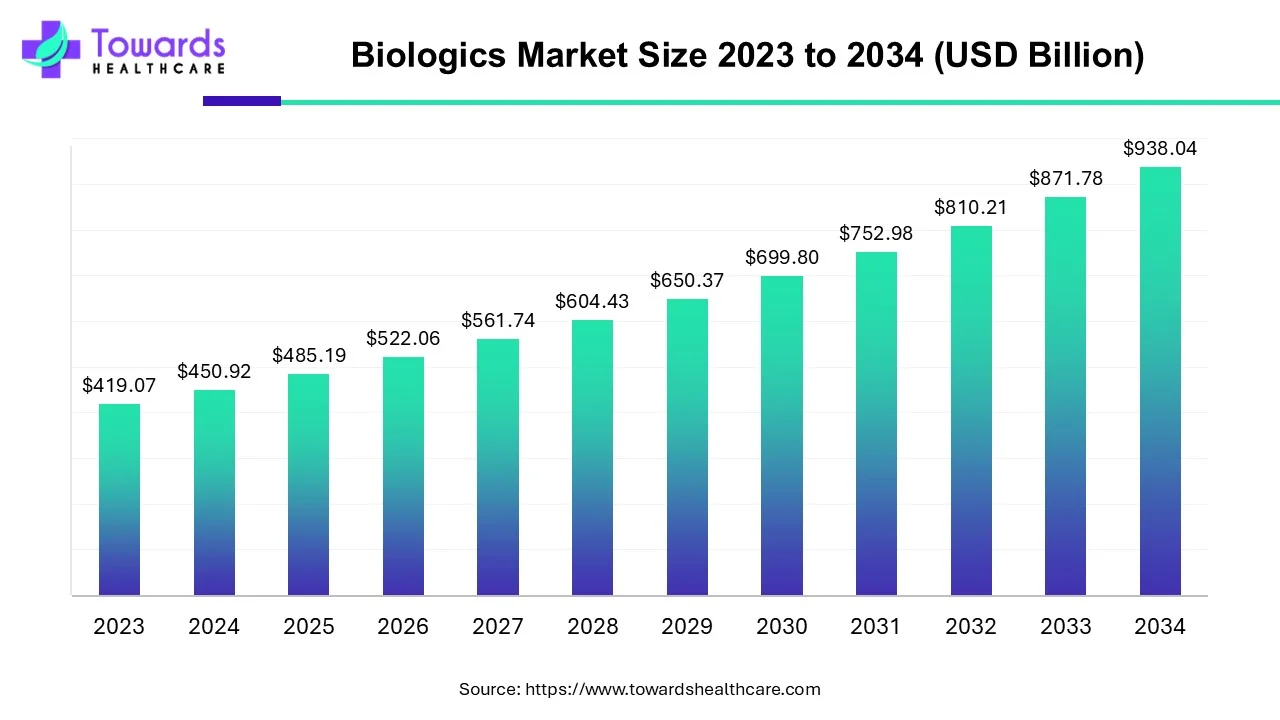
The biologics market size is projected to reach USD 1009.33 billion by 2035, growing from USD 522.06 billion in 2026, at a CAGR of 7.6% during the forecast period from 2026 to 2035.
Segment Insights: Where the Market Is Concentrated
Monoclonal Antibodies Lead the Market
Monoclonal antibodies dominate the product segment, holding around 36% market share.
This segment generated close to US$ 6 billion in 2023 and is expected to cross US$ 20 billion by 2031.
These therapies are widely used in oncology and autoimmune diseases, making them one of the most critical pillars of the biologics industry.
Cancer Remains the Largest Application Area
Cancer accounts for the largest application segment, contributing approximately 42–43% of the total market share.
The segment generated over US$ 7 billion in 2023 and is projected to exceed US$ 24 billion by 2031.
The growing cancer burden and the shift toward targeted therapies are the key reasons behind this dominance.
Mammalian Cell-Based Biologics Dominate Production
Biologics derived from mammalian cells hold nearly 62% of the market share.
These products accounted for more than US$ 10 billion in 2023, driven by their ability to produce complex proteins required for advanced treatments.
If you want more data, insights, competitors analysis and many more, then download our FREE customized sample report: https://www.towardshealthcare.com/download-sample/5108
Their reliability and effectiveness make them the preferred choice for large-scale biologics production.
Outsourcing Is Becoming the New Normal
Outsourced manufacturing is gaining strong traction, capturing close to 75% of the market share.
This segment generated over US$ 12 billion in 2023, as pharmaceutical companies increasingly rely on contract manufacturing organizations to reduce costs and accelerate production.
This shift is helping companies scale faster while maintaining quality and efficiency.
Brazil Leads, Others Follow
Brazil continues to dominate the South American biologics market, accounting for around 65% of the total regional share.
With a market value exceeding US$ 10 billion, the country benefits from a strong pharmaceutical base, increasing research investments, and a large patient population.
Argentina and other South American countries are gradually strengthening their position, but Brazil remains the central hub for biologics growth.
Trends That Are Redefining the Market
The biologics market is not just growing—it is evolving rapidly with new trends shaping its future:
- Increasing shift toward personalized medicine
- Rising adoption of gene and cell therapies
- Expansion of biosimilars for affordability
- Growing reliance on contract manufacturing and partnerships
These trends highlight a transition from volume-driven healthcare to value-driven treatment approaches.
Opportunities Across the Value Chain
The expanding biologics market is opening doors across multiple segments:
- Pharmaceutical companies can scale through oncology and biosimilars
- Contract manufacturers can benefit from rising outsourcing demand
- Healthcare providers can offer advanced treatment solutions
- Investors can tap into a high-growth, innovation-driven sector
This creates a strong ecosystem where every stakeholder finds growth potential.
Challenges That Cannot Be Ignored
Despite strong momentum, the market faces a few critical challenges.
High treatment costs remain a major barrier, limiting access for a large population. Regulatory complexities and uneven healthcare infrastructure also slow down adoption in certain regions.
However, increasing government support and the growth of biosimilars are gradually improving accessibility and affordability.
More Than a Market; A Human Shift in Healthcare
The rise of biologics in South America goes beyond numbers and projections.
It reflects a deeper transformation in how diseases are treated. Patients are no longer relying only on traditional medicines; they are moving toward therapies that are precise, effective, and designed for long-term outcomes.
For many patients dealing with cancer or rare diseases, biologics are not just treatments—they are hope.
The Road Ahead Looks Strong
With the market expected to reach US$ 54.5 billion by 2031, South America is positioning itself as a key player in the global biologics landscape.
Strong growth rates, increasing innovation, and expanding access will continue to drive this market forward.
In the coming years, the region will not just adopt biologics—it will actively shape the future of advanced healthcare.
Access our exclusive, data-rich dashboard dedicated to the healthcare market – built specifically for decision-makers, strategists, and industry leaders. The dashboard features comprehensive statistical data, segment-wise market breakdowns, regional performance shares, detailed company profiles, annual updates, and much more. From market sizing to competitive intelligence, this powerful tool is one-stop solution to your gateway.
Access the Dashboard: https://www.towardshealthcare.com/access-dashboard
About Us
Healthcare Web Wire is Part of Towards Healthcare, which is a leading global provider of technological solutions, clinical research services, and advanced analytics, with a strong emphasis on life science research. Dedicated to advancing innovation in the life sciences sector, we build strategic partnerships that generate actionable insights and transformative breakthroughs. As a global strategy consulting firm, we empower life science leaders to gain a competitive edge, drive research excellence, and accelerate sustainable growth.
Europe Region – +44 778 256 0738
North America Region – +1 8044 4193 44
APAC Region: +91 9356 9282 04
]]>
This growth is not accidental. It reflects a healthcare system responding to rising cancer incidence, demand for precision medicine, and rapid advancements in radiopharmaceutical science.
The Cancer Burden Is Reshaping Treatment Models
Prostate cancer continues to act as a key demand driver for theranostics in the U.S. The number of cases increased from 236,659 in 2021 to 299,010 in 2024, marking a significant rise in disease burden.

This sharp increase is pushing clinicians to move beyond conventional treatments and adopt targeted diagnostic-therapy combinations.
Our experts provide customized stats, segments, competitor intelligence and many more customized for your business needs: Download Now for FREE
Theranostics is stepping in where traditional oncology struggles; offering both detection and treatment through a single molecular approach.
Why the U.S. Leads the Theranostics Race
The dominance of the U.S. market is rooted in structural strengths rather than short-term trends.
The country benefits from:
- A highly developed healthcare infrastructure with advanced imaging and nuclear medicine facilities
- Strong investment in oncology research and radiopharmaceutical innovation
- Favorable regulatory pathways supporting faster approvals and commercialization
- High adoption of personalized medicine among healthcare providers
These factors create an ecosystem where innovation moves quickly from lab to patient.
Market Size and Growth Trajectory
The U.S. theranostics market is witnessing steady expansion, supported by both clinical demand and technological progress.
Key statistical highlights include:
- The U.S. accounts for over 85% of North America’s theranostics revenue
- Oncology dominates with more than 70% market share
- Radiopharmaceuticals represent the largest segment, contributing over 60% of total revenue
- The market is projected to grow at a double-digit CAGR through 2030, driven by increasing cancer cases and targeted therapy adoption
This is not a temporary spike; it is a structural shift in how diseases are diagnosed and treated.
Segment Deep Dive: Where Growth Is Concentrated
By Application: Oncology Takes the Lead
Oncology remains the backbone of theranostics in the U.S., particularly in:
- Prostate cancer
- Neuroendocrine tumors
- Thyroid cancer
Prostate cancer alone is emerging as a high-impact segment due to the growing use of PSMA-targeted therapies.
By Technology: Radiopharmaceuticals Dominate
Radiopharmaceuticals form the core of theranostics, enabling both imaging and treatment.
Alpha-emitting isotopes are gaining traction due to their ability to deliver highly targeted radiation with minimal damage to surrounding tissues.
By End User: Hospitals Drive Adoption
Hospitals and specialized cancer centers account for the majority of usage. Their access to advanced imaging technologies and trained nuclear medicine professionals accelerates adoption.
Global Market Growth
The global theranostics market size is calculated at US$ 2.42 billion in 2024, grew to US$ 2.8 billion in 2025, and is projected to reach around US$ 10.21 billion by 2034. The market is expanding at a CAGR of 15.46% between 2025 and 2034.

Innovation Is Expanding the Market Boundaries
The U.S. theranostics landscape is evolving rapidly through collaborations and technological breakthroughs.
Recent developments highlight how the ecosystem is scaling:
- Strategic partnerships are focusing on next-generation isotope production
- Companies are working on companion diagnostics to improve patient selection
- Expansion of CDMO capabilities is increasing access to radiopharmaceutical manufacturing
These innovations are not just improving outcomes—they are making theranostics more accessible across the country.
Companion Diagnostics: The Silent Growth Engine
One of the most transformative trends in the U.S. market is the rise of companion diagnostics.
These tools help identify which patients will benefit from specific therapies, reducing trial-and-error treatment approaches.
This shift improves:
- Treatment success rates
- Cost efficiency in healthcare delivery
- Patient quality of life
As a result, theranostics is becoming more precise, predictable, and patient-centric.
Regulatory Support Is Accelerating Adoption
The U.S. regulatory environment plays a critical role in market expansion.
Faster approval pathways for breakthrough therapies and increasing reimbursement support are encouraging healthcare providers to adopt theranostics solutions.
This alignment between policy and innovation is reducing barriers to entry and speeding up commercialization.
Challenges Still Exist; But They Are Shrinking
Despite strong growth, the market faces a few constraints:
- Limited availability of certain medical isotopes
- High cost of radiopharmaceutical development
- Need for specialized infrastructure and expertise
However, ongoing investments in isotope production and supply chain optimization are gradually addressing these challenges.
The Road Ahead: Precision Care Becomes Standard
The U.S. theranostics market is moving toward a future where personalized treatment is not optional—it is expected.
With rising cancer cases, especially prostate cancer, and increasing demand for targeted therapies, theranostics is set to redefine oncology care.
What makes this shift powerful is its dual capability: diagnosing disease at the molecular level and delivering therapy with unmatched precision.
Final Insight: A Defining Moment for U.S. Healthcare
The numbers tell a clear story. Rising cancer incidence, rapid technological progress, and strong institutional support are converging to reshape the treatment landscape.
Theranostics is no longer emerging; it is establishing itself as a cornerstone of modern medicine in the United States.
And if current trends continue, this approach will soon move from specialized care to standard clinical practice.
Access our exclusive, data-rich dashboard dedicated to the healthcare market – built specifically for decision-makers, strategists, and industry leaders. The dashboard features comprehensive statistical data, segment-wise market breakdowns, regional performance shares, detailed company profiles, annual updates, and much more. From market sizing to competitive intelligence, this powerful tool is one-stop solution to your gateway.
Access the Dashboard: https://www.towardshealthcare.com/access-dashboard
About Us
Healthcare Web Wire is part of Towards Healthcare, which is a leading global provider of technological solutions, clinical research services, and advanced analytics, with a strong emphasis on life science research. Dedicated to advancing innovation in the life sciences sector, we build strategic partnerships that generate actionable insights and transformative breakthroughs. As a global strategy consulting firm, we empower life science leaders to gain a competitive edge, drive research excellence, and accelerate sustainable growth.
You can place an order or ask any questions, please feel free to contact us at sales@towardshealthcare.com
Europe Region – +44 778 256 0738
North America Region – +1 8044 4193 44
APAC Region: +91 9356 9282 04
]]> , a once-daily oral therapy designed to treat moderate-to-severe plaque psoriasis. The drug stands out as the first and only oral peptide targeting the IL-23 receptor (IL-23R); introducing a new level of precision in immunology treatments.