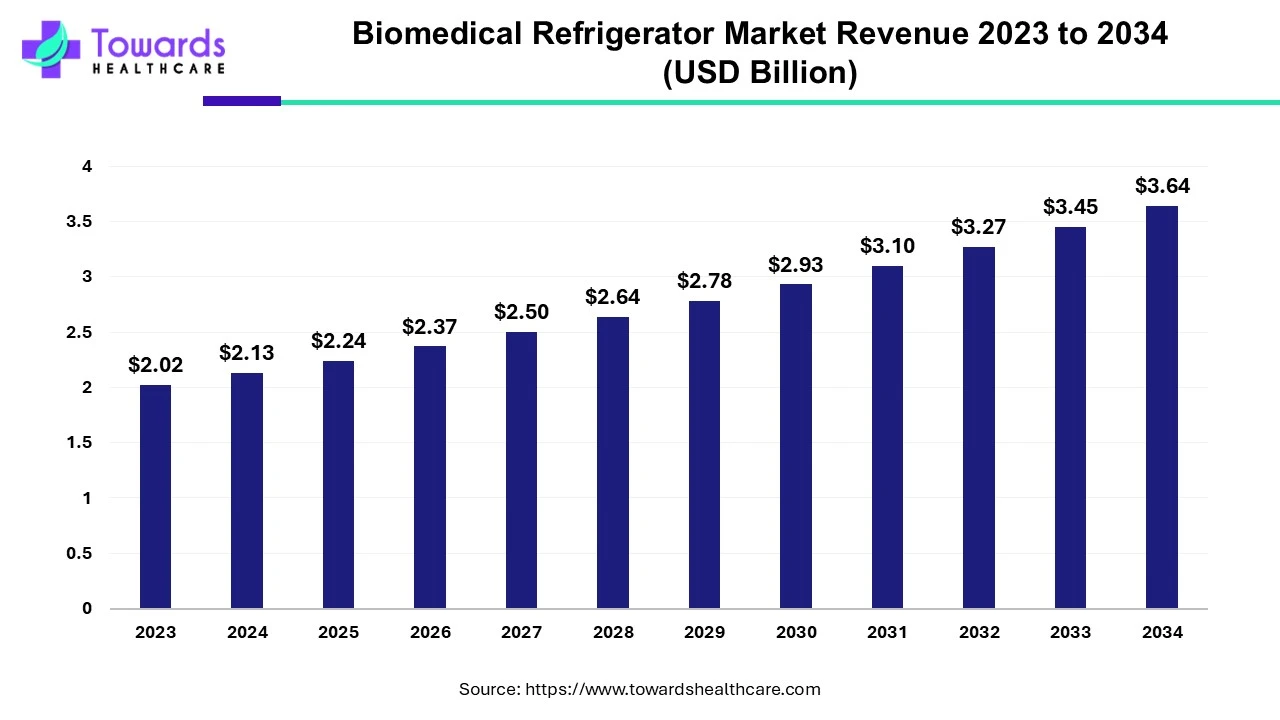
The biomedical refrigerator market is growing steadily, estimated at $2.02 billion in 2023 and projected to reach $3.64 billion by 2034, with a CAGR of 5.5%. Hospitals, research labs, blood banks, and pharmacies are increasingly relying on these specialized refrigerators to store life-saving medicines, vaccines, and biological samples safely.
Take a look before making a decision; our sample is customized as per your business needs.
Download it for free today: https://www.towardshealthcare.com/download-sample/5281
Why Biomedical Refrigerators Are the Heart of Healthcare
Biomedical refrigerators are not just appliances; they are guardians of life. They store temperature-sensitive products like blood, vaccines, DNA, RNA, medicines, and biological reagents. Unlike household refrigerators, they offer precise temperature control, uniform cooling, and digital monitoring to ensure that every sample remains intact and effective.
With the rise of chronic diseases and increased vaccine use, biomedical refrigerators have become essential for every modern healthcare facility. Blood banks, research labs, and pharmacies depend on them to preserve critical materials for life-saving treatments.
Growth Drivers: Science Meets Urgency
The demand for biomedical refrigerators is driven by multiple factors:
- Rising research & innovation: Proteomics, genomics, and gene therapy research requires ultra-low temperature storage. Stem cells, RNA, and DNA need -70°C to -196°C to remain viable.
- Vaccine and biopharmaceutical demand: As vaccines and biologics become crucial, proper storage ensures stability and effectiveness.
- Chronic diseases on the rise: Cancer, autoimmune disorders, and other health conditions are increasing the need for biologics, antibiotics, and specialized storage.
The Cell & Gene Therapy Revolution
Cell and gene therapies are changing the way we fight disease, but they also demand precise cold storage.
- Stem cells require temperatures between -80°C and -196°C
- RNA and DNA need -70°C to -80°C
In 2023, cell and gene therapy developers raised $3.5 billion across 65 deals, reflecting a booming market. These therapies are used to treat cancer, diabetes, cystic fibrosis, and heart disease, boosting the need for reliable biomedical refrigerators in research labs and hospitals.
Our experts provide in-depth market segments, trends, and competitor data so you don’t have to guess.
Get the complete market report today: https://www.towardshealthcare.com/checkout/5281
Market Challenges: The Cost of Life-Saving Technology
While demand is high, cost remains a barrier. A new biomedical refrigerator can range from $2,000 to $15,000, depending on its features and capacity. Advanced models with ultra-low temperature or explosion-proof capabilities add to the price, limiting adoption by smaller healthcare facilities.
Regional Insights: Who Leads the Market?
North America:
- Largest market in 2023 due to advanced research facilities, chronic disease prevalence, and blood bank demand.
- The U.S. alone transfuses 16 million blood components annually and performs over 46,000 organ transplants yearly.
Asia-Pacific:
- Fastest-growing region.
- Countries like India and China produce the majority of vaccines and antibiotics, requiring large-scale storage solutions.
- India supplies 65-70% of WHO vaccines, while China manufactures 248,000 tons of antibiotics annually.
Europe:
- Vaccine demand drives growth.
- Germany and the UK are investing in gene therapy research and biologics, increasing biomedical refrigerator adoption.
Segment Insights: Storage Tailored to Life
- By type: Ultra-low temperatures dominate, particularly under -40°C, necessary for storing stem cells, DNA, RNA, and heart valve allografts.
- By application: Pharmacies lead, storing live vaccines, cancer therapeutics, and medications between 2°C to 15°C.
Bullet Highlights:
- Biomedical refrigerators protect life-saving products in hospitals, labs, and pharmacies.
- Ultra-low temperature units are crucial for advanced research and gene therapy.
Recent Developments Making a Difference
- March 2025: Frimed launched -86°C ultra-low freezers for hospitals and research labs.
- November 2024: India launched a Rs 500 Crore scheme to strengthen medical devices, including biomedical refrigerators.
- August 2023: Arctiko released 22 Flexaline models for pharmaceutical and biomedical use, with digital temperature controllers for precise storage.
The Takeaway: More Than Just Cold Storage
Biomedical refrigerators are silent heroes of modern medicine. They protect vaccines, preserve stem cells, and maintain medicines, enabling breakthroughs in healthcare every day. With rising research, chronic diseases, and gene therapy adoption, their importance will only grow in the next decade.
As the market approaches $3.64 billion by 2034, one thing is clear: biomedical refrigerators are not just appliances—they are a lifeline for humanity.
Access our exclusive, data-rich dashboard dedicated to the healthcare market – built specifically for decision-makers, strategists, and industry leaders. The dashboard features comprehensive statistical data, segment-wise market breakdowns, regional performance shares, detailed company profiles, annual updates, and much more. From market sizing to competitive intelligence, this powerful tool is one-stop solution to your gateway.
Access the Dashboard: https://www.towardshealthcare.com/access-dashboard
You can place an order or ask any questions, please feel free to contact us at sales@towardshealthcare.com
Europe Region – +44 778 256 0738
North America Region – +1 8044 4193 44
APAC Region: +91 9356 9282 04
Visit Our Website: https://www.towardshealthcare.com
Find us on social platforms: LinkedIn | Twitter | Instagram | Medium
About the Author