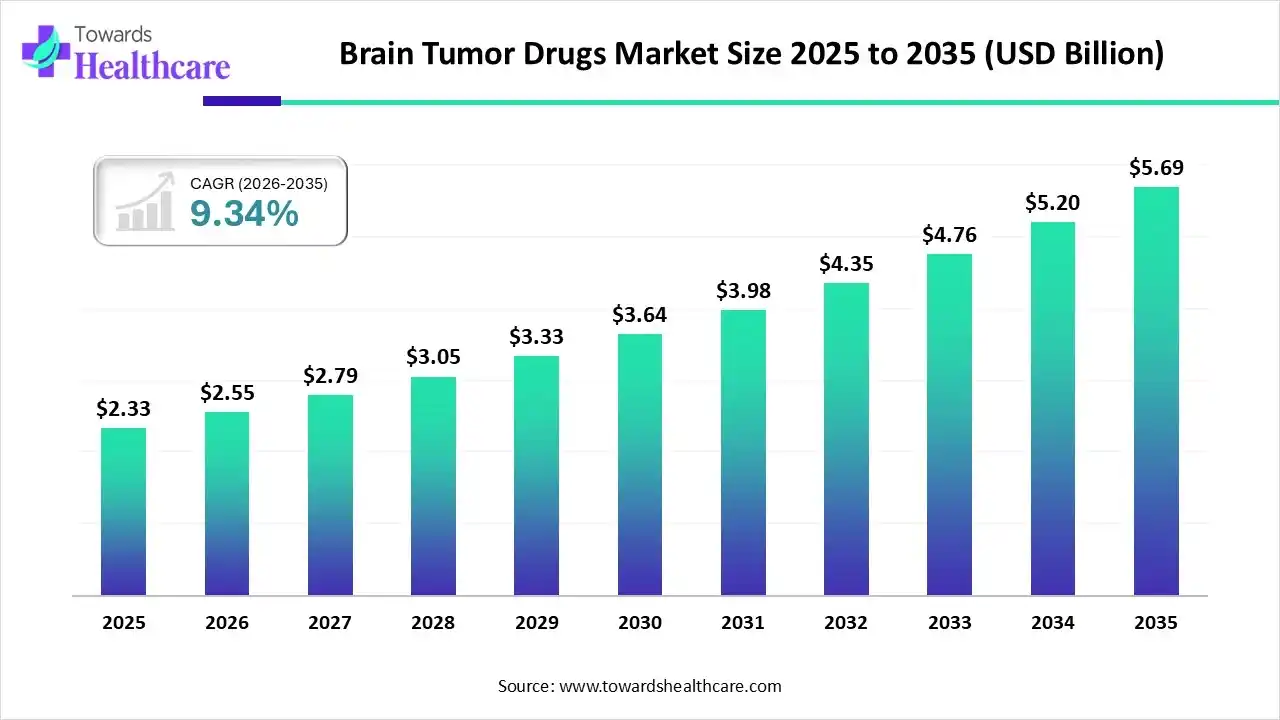
The global brain tumor drugs market is steadily moving from niche to necessity. Valued at USD 2.33 billion in 2025, it is projected to reach USD 2.55 billion in 2026 and climb to USD 5.69 billion by 2035, growing at a CAGR of 9.34%.
Download Free Sample: https://www.towardshealthcare.com/download-sample/6624
This is not just statistical expansion; it reflects a shift in how healthcare systems are prioritizing neurological oncology. With increasing diagnosis rates and better imaging technologies, demand for effective drug therapies is rising faster than before.
Why Growth Is Accelerating Now
Brain tumors, both malignant and benign, are being detected earlier. At the same time, treatment expectations are evolving. Patients and clinicians are no longer satisfied with limited survival benefits—they want targeted, safer, and more effective drugs.
Several factors are pushing this growth:
- Rising global incidence of glioblastoma and metastatic brain tumors
- Strong pipeline of targeted therapies and immunotherapies
- Increasing healthcare spending in emerging economies
Pharmaceutical companies are also investing heavily in precision medicine, which is reshaping drug development strategies.
Shift from Traditional to Targeted Therapies
For years, chemotherapy dominated brain tumor treatment. Today, the focus is shifting toward targeted therapies and biologics. These drugs aim to attack specific molecular pathways rather than affecting the entire body.
This transition is critical because brain tumors are complex and often resistant to conventional treatments. New-generation drugs are designed to cross the blood-brain barrier, which has historically limited drug effectiveness.
The result is a gradual but meaningful improvement in patient outcomes.
Immunotherapy Enters the Scene
Immunotherapy is emerging as a promising segment within the market. Although still in early stages for brain tumors compared to other cancers, clinical trials are showing encouraging results.
Checkpoint inhibitors, vaccines, and CAR-T therapies are being explored. While challenges remain—especially related to the brain’s immune environment—the long-term potential is significant.
This segment is expected to grow at a faster rate than traditional drug categories over the next decade.
Regional Insights: Where Growth Is Happening
North America Leads with Strong Infrastructure
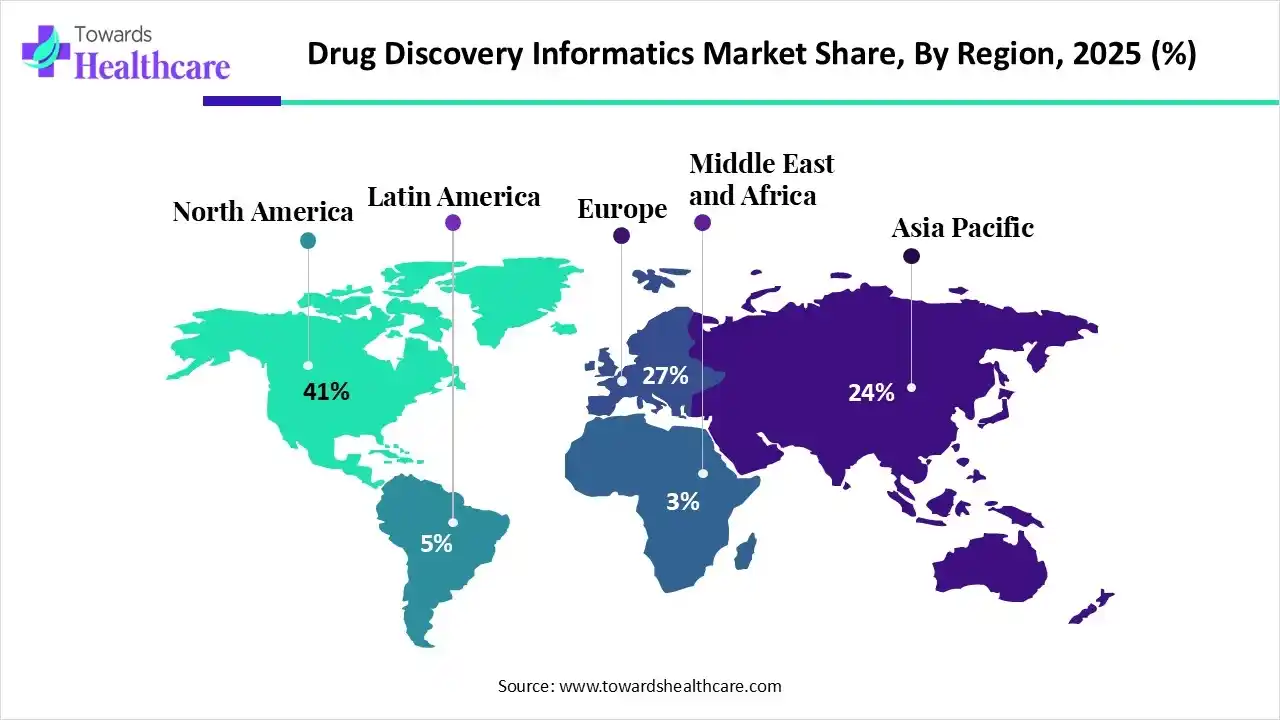
North America holds the largest share of the brain tumor drugs market, accounting for approximately 40% of the global revenue.
The region benefits from advanced healthcare systems, high awareness levels, and strong R&D investment. The presence of major pharmaceutical companies also accelerates drug approvals and commercialization.
Europe Maintains a Stable Position
Europe contributes around 27% of the global market share. Countries like Germany, the UK, and France are leading contributors.
Government support for cancer research and well-established healthcare frameworks are key drivers here. However, pricing regulations sometimes slow down market expansion.
Asia-Pacific Emerges as the Fastest-Growing Region
Asia-Pacific currently holds about 22% of the market but is expected to grow at the fastest pace.
Factors driving this growth include:
- Increasing patient population and rising awareness
- Expanding healthcare infrastructure in countries like India and China
- Growing access to advanced diagnostic tools
This region represents a significant opportunity for both global and local pharmaceutical players.
Rest of the World Shows Gradual Progress
Latin America and the Middle East & Africa together account for roughly 11% of the market.
Growth in these regions remains moderate due to limited healthcare access and lower awareness levels. However, improving medical infrastructure is expected to support gradual expansion.
Market Segmentation: Where Revenue Comes From
The brain tumor drugs market is segmented based on therapy type, tumor type, and distribution channels.
Among these:
- Targeted therapy dominates, contributing over 35% of total revenue
- Chemotherapy still holds around 30%, especially in developing regions
- Immunotherapy is growing rapidly, though its share remains below 20%
Hospitals continue to be the primary distribution channel, accounting for the majority of drug administration and sales.
Challenges That Still Hold the Market Back
Despite strong growth, the market faces several constraints. Brain tumor treatment remains one of the most complex areas in oncology.
Key challenges include:
- Difficulty in drug delivery due to the blood-brain barrier
- High treatment costs limiting accessibility
- Limited success rates in late-stage clinical trials
These factors create uncertainty and slow down the pace of innovation.
Innovation Pipeline Signals Long-Term Growth
The pipeline for brain tumor drugs is expanding, with multiple candidates in Phase II and Phase III trials. Companies are focusing on combination therapies, where drugs are used alongside radiation or surgery.
Artificial intelligence is also playing a role in drug discovery, helping identify potential compounds faster. This could significantly reduce development timelines in the future.
Access our exclusive, data-rich dashboard dedicated to the healthcare market – built specifically for decision-makers, strategists, and industry leaders. The dashboard features comprehensive statistical data, segment-wise market breakdowns, regional performance shares, detailed company profiles, annual updates, and much more. From market sizing to competitive intelligence, this powerful tool is one-stop solution to your gateway.
Access the Dashboard: https://www.towardshealthcare.com/access-dashboard
Checkout the Market Report Now at: https://www.towardshealthcare.com/checkout/6624
You can place an order or ask any questions, please feel free to contact us at sales@towardshealthcare.com
Europe Region – +44 778 256 0738
North America Region – +1 8044 4193 44
APAC Region: +91 9356 9282 04
Visit Our Website: https://www.towardshealthcare.com
Find us on social platforms: LinkedIn | Twitter | Instagram | Medium
About the Author