
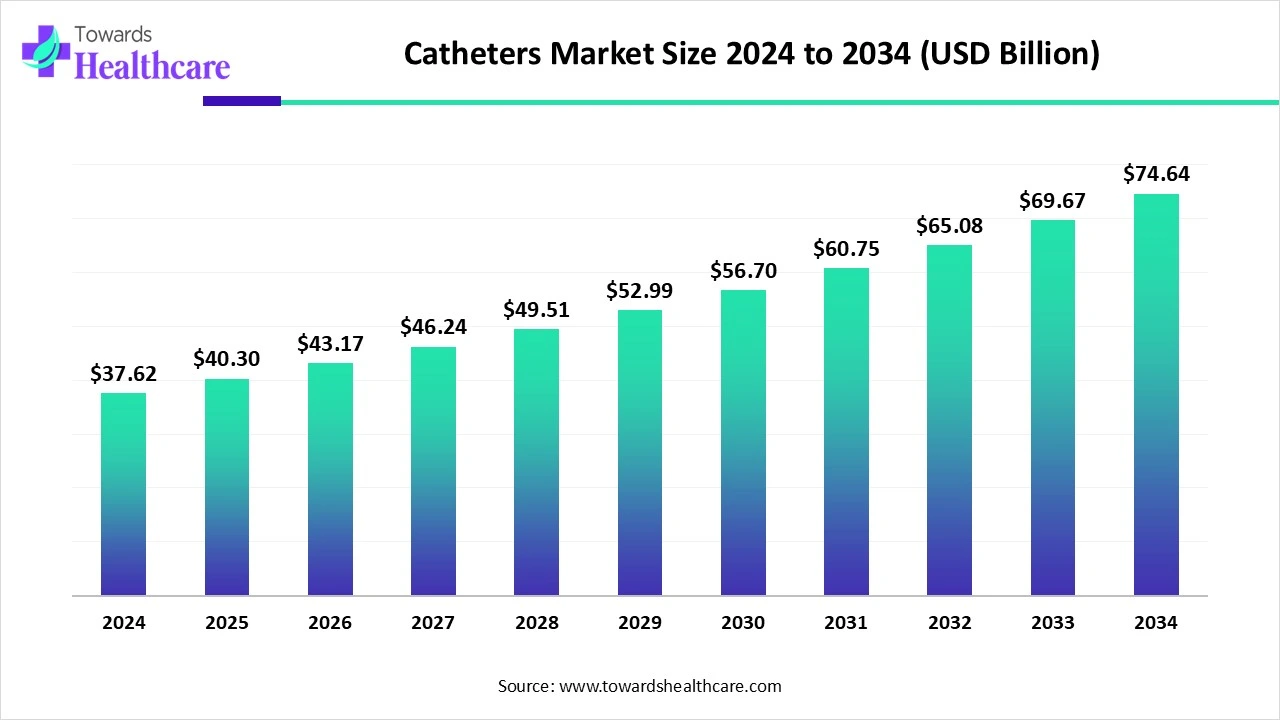
The global catheters market is experiencing remarkable growth, with its value rising from US$ 40.30 billion in 2025 to an estimated US$ 43.17 billion in 2026, and projections indicate it could soar to US$ 80.17 billion by 2035. But what exactly is driving this surge?
The answer lies in the continuous evolution of medical procedures, innovative materials, and growing demand across healthcare facilities worldwide. Let’s dive deeper into the trends, segments, and future outlook of the catheter industry.
Download the free sample and get the complete insights and forecasts report on this market @ https://www.towardshealthcare.com/download-sample/6054
Cardiovascular Catheters: Leading the Charge
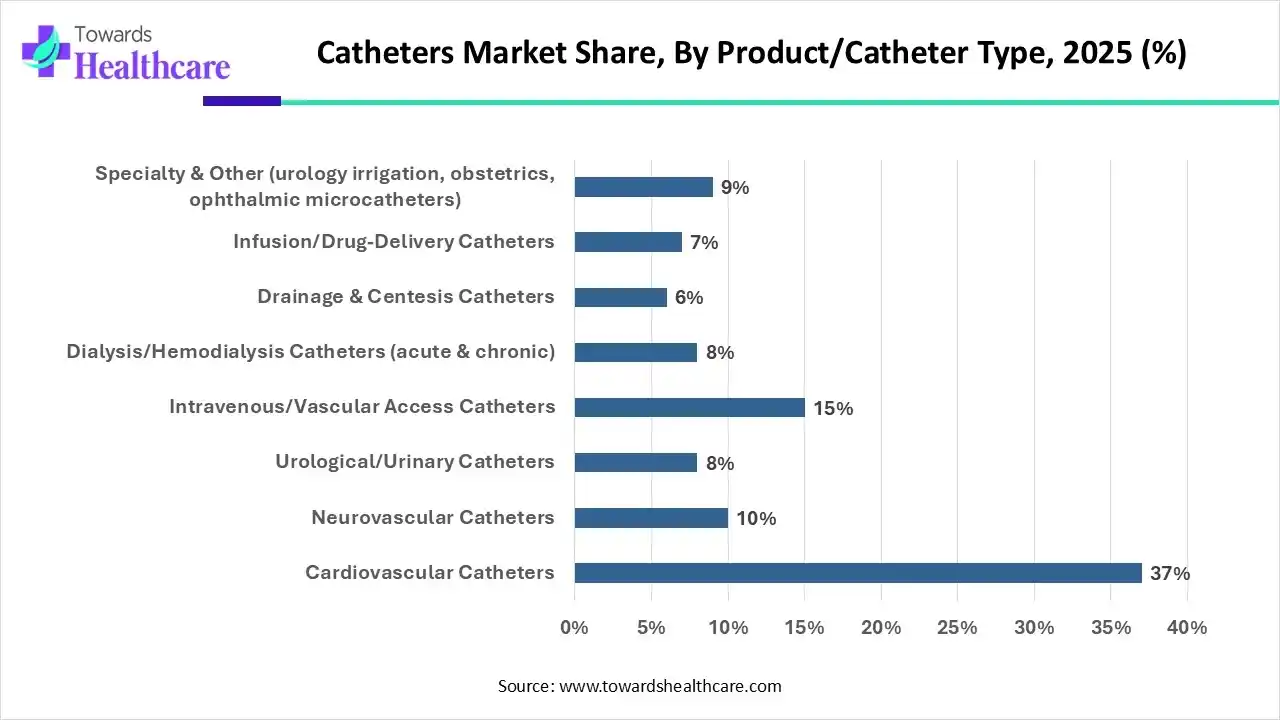
In 2025, cardiovascular catheters dominated the market with a 37% share. These devices have become indispensable in both adult and pediatric cardiac care, thanks to advancements in congenital cardiac catheterization. Complex heart abnormalities, once treated exclusively through risky surgeries, can now be addressed using minimally invasive procedures.
What makes these catheters a game-changer? Modern imaging technologies like 3D printing, holographic imaging, multi-modal image fusion, and 3D rotational angiography allow physicians to visualize intricate heart structures with unmatched accuracy. As a result, high-risk patients who were previously unsuitable for surgery can now undergo effective percutaneous treatments.
But the excitement doesn’t stop there. Neurovascular catheters, designed to navigate the delicate pathways of the brain, are emerging as the fastest-growing segment. These microcatheters enable minimally invasive interventions for conditions such as ischemic stroke and brain aneurysms, revolutionizing patient outcomes.
Coated vs Uncoated: Why Design Matters
When it comes to design and features, coated catheters dominated 45% of the market in 2025. Patients now have multiple options: hydrophilic, pre-lubricated, or traditional uncoated catheters.
-
Hydrophilic catheters self-lubricate when exposed to water, reducing friction and discomfort.
-
Pre-lubricated catheters are ready to use immediately, with a sterile gel coating that enhances convenience.
-
Uncoated catheters, the most conventional type, remain a staple due to their simplicity and reliability.
Looking forward, the real innovation is happening in steerable and sensor-integrated catheters. These devices provide real-time feedback on force, position, and other physiological parameters, enabling doctors to navigate complex anatomical pathways with greater precision. Not only does this improve procedural speed, but it also enhances patient safety by reducing radiation exposure and procedural errors.
Materials Make the Difference
The material used in catheter manufacturing plays a pivotal role in performance and patient safety. Polyurethane (PU) catheters held 50% of the market share in 2025, thanks to their exceptional mechanical strength, flexibility, and biocompatibility. PU is highly resistant to abrasion and can withstand the stresses of blood-contacting applications, making it a reliable choice for intravascular devices.
However, the next decade promises a shift toward composite and hybrid materials. These advanced designs combine flexibility, durability, and functionality in a way single-material catheters cannot. Researchers are leveraging material science breakthroughs to produce catheters that are not only stronger and more resilient but also optimized for patient safety and comfort.
Single-Use Catheters: Dominating Convenience
Among durability models, single-use or disposable catheters accounted for 80% of the market in 2025. This dominance is no accident. Single-use catheters reduce the risk of infections, urethral injuries, and other complications associated with repeated use.
Patients prefer disposable catheters, particularly hydrophilic ones, because they are practical, safe, and hygienic. Moreover, hospitals and surgical centers benefit from a lower infection risk, which translates into better patient outcomes and reduced healthcare costs. Even though reusable catheters are still used in niche cases, the convenience, safety, and ease of single-use devices ensure they continue to dominate the market.
Hospitals & Surgical Centers: The Power Users
The end-user landscape further clarifies the market dynamics. In 2025, hospitals and surgical centers captured 65% of the revenue from catheter sales. The reason is simple: catheters are essential for urine management, surgical interventions, and post-operative care. Their usage ranges from inpatient care to critical operations, making them an indispensable medical device.
Yet, the fastest-growing end-user segment is ambulatory surgery centers (ASCs) and outpatient clinics. These centers offer the convenience of same-day procedures without the need for overnight hospitalization. Equipped with state-of-the-art medical devices and skilled staff, ASCs provide patients with a more personalized, cost-effective, and comfortable experience. With the healthcare industry increasingly shifting toward outpatient care, the demand for catheters in these facilities is expected to surge.
Navigating the Future: Key Drivers
Several factors are fueling the catheters market growth:
-
Technological Innovation – Advancements in 3D imaging, steerable catheters, and integrated sensors are enhancing procedural accuracy.
-
Minimally Invasive Procedures – Patients and physicians prefer techniques that reduce hospital stays and recovery times.
-
Material Advancements – PU catheters remain reliable, but hybrid and composite materials are opening new possibilities for design and functionality.
-
Patient Safety and Comfort – Single-use catheters, hydrophilic coatings, and pre-lubrication are improving patient experiences.
-
Expansion of Outpatient Care – ASCs and clinics are growing rapidly, increasing the need for high-quality catheter devices.
Regional Trends and Market Penetration
While North America and Europe continue to lead the market due to advanced healthcare infrastructure, emerging markets in Asia-Pacific and Latin America are experiencing faster growth. Rising awareness, increased access to modern hospitals, and the adoption of minimally invasive procedures are key contributors.
In addition, local manufacturers are investing in R&D to develop cost-effective yet high-quality catheters. This not only helps meet growing demand but also ensures accessibility for patients in developing regions.
Challenges on the Horizon
Despite the promising outlook, the market faces certain challenges. Catheter-associated infections remain a concern, particularly in regions with limited access to sterile single-use devices. Regulatory hurdles, especially for innovative designs and sensor-integrated devices, can delay product launches. Additionally, the high cost of advanced catheters may restrict adoption in cost-sensitive healthcare systems.
However, continuous innovation and awareness campaigns by healthcare providers are expected to mitigate these challenges over time.
The catheters market is poised for a significant transformation between 2026 and 2035. Some exciting opportunities include:
-
Neurovascular Interventions – Expanding treatments for strokes and aneurysms using microcatheters.
-
Smart Catheter Technologies – Integration with IoT, AI, and real-time monitoring for better diagnostics and treatment.
-
Sustainable Designs – Eco-friendly and biodegradable catheters could gain traction in the coming years.
-
Personalized Patient Solutions – Customizable catheters tailored to patient anatomy and procedure type.
From cardiovascular dominance to the rise of single-use catheters, the 2026 catheters market reflects a healthcare ecosystem driven by innovation, safety, and efficiency. Hospitals, surgical centers, and outpatient facilities are all contributing to a rising demand, while new technologies and materials promise even greater improvements in patient care.
As the industry continues to evolve, one thing is clear: catheters are no longer just medical tools—they are lifelines that combine precision, safety, and convenience, shaping the future of minimally invasive healthcare.
Access our exclusive, data-rich dashboard dedicated to the medical devices sector – built specifically for decision-makers, strategists, and industry leaders. The dashboard features comprehensive statistical data, segment-wise market breakdowns, regional performance shares, detailed company profiles, annual updates, and much more. From market sizing to competitive intelligence, this powerful tool is one-stop solution to your gateway.
Access the Dashboard: https://www.towardshealthcare.com/access-dashboard
Checkout Catheters Market Report Now at: https://www.towardshealthcare.com/checkout/6054
You can place an order or ask any questions, please feel free to contact us at sales@towardshealthcare.com
Europe Region – +44 778 256 0738
North America Region – +1 8044 4193 44
APAC Region: +91 9356 9282 04
Visit Our Website: https://www.towardshealthcare.com
Find us on social platforms: LinkedIn | Twitter | Instagram | Medium | Pinterest
About the Author