Is Chemotherapy Reinventing Itself in the Age of Precision Medicine by 2034?
For decades, chemotherapy has carried a paradoxical identity. It has been one of the most widely used and life-saving cancer treatments in modern medicine, yet it has also been criticized for its toxicity, side effects, and perceived lack of precision when compared to newer targeted and immune-based therapies. Many industry observers once assumed that chemotherapy would gradually fade into the background as biologics, immunotherapies, and gene-driven treatments took center stage. That assumption has proven to be premature.
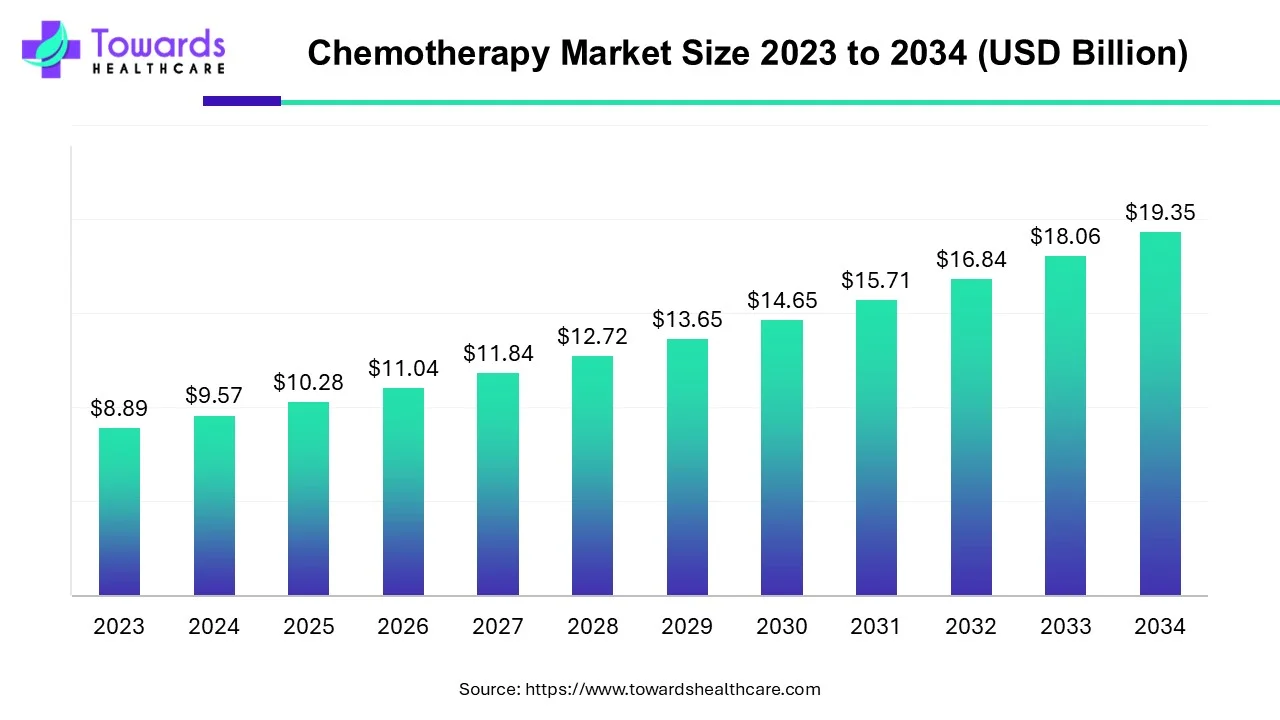
The global chemotherapy market, valued at approximately USD 10.28 billion in 2025 and projected to reach nearly USD 19.35 billion by 2034, tells a very different story. Rather than shrinking, chemotherapy is evolving. It is adapting to scientific advances, integrating with new treatment modalities, and reshaping its role in oncology care pathways. With a steady compound annual growth rate of 7.56%, chemotherapy is no longer simply surviving alongside innovation; it is being redefined by it.
Download Free Sample Now and Get the Complete Report Easily at: https://www.towardshealthcare.com/download-sample/5432
Why Chemotherapy Still Matters More Than Ever
Cancer incidence continues to rise globally, driven by aging populations, lifestyle changes, environmental factors, and improved diagnostic capabilities. As the absolute number of cancer patients increases, so does the demand for effective, scalable, and accessible treatment options. Chemotherapy remains one of the few modalities capable of addressing a wide spectrum of cancers across stages, geographies, and healthcare systems.
Despite advances in precision medicine, most cancers still require combination approaches. Chemotherapy frequently acts as the backbone of these regimens, whether administered before surgery to shrink tumors, after surgery to eliminate residual cancer cells, or alongside radiation and immunotherapy to improve outcomes. Its ability to attack rapidly dividing cells makes it indispensable, particularly in aggressive cancers such as leukemia, lymphoma, lung cancer, and advanced breast cancer.
The market’s resilience reflects this clinical reality. Chemotherapy is not being replaced; it is being refined.
From Blunt Force to Strategic Precision
Historically, chemotherapy was often described as a blunt instrument. It targeted cancer cells, but it also harmed healthy tissue, leading to well-known side effects such as hair loss, bone marrow suppression, gastrointestinal distress, and organ toxicity. Over time, however, scientific understanding of tumor biology has significantly improved.
Modern chemotherapy increasingly relies on combination therapies guided by principles such as fractional cell kill and tumor heterogeneity. These approaches acknowledge that cancer cells differ within the same tumor and adapt quickly to single-agent treatments. By combining multiple drugs with complementary mechanisms of action, clinicians improve efficacy while managing resistance.
Advancements in drug formulation and delivery have also played a crucial role. Liposomal drugs, nanoparticle-based carriers, and controlled-release formulations are reducing systemic toxicity while enhancing drug concentration at tumor sites. Chemotherapy today looks very different from what it was even a decade ago.
Market Growth Anchored in Clinical Reality
The projected growth of the chemotherapy market is not driven by hype, but by necessity. According to global health projections, the number of new cancer cases worldwide is expected to reach nearly 29.4 million by 2040. Alongside this increase, demand for first-course chemotherapy is expected to grow by more than 50% compared to 2018 levels.
Leukemia continues to represent a major indication for chemotherapy, maintaining its leading position in 2024. These cancers often originate in the bone marrow and require systemic treatment, making chemotherapy essential. At the same time, breast cancer is emerging as one of the fastest-growing segments, supported by rising incidence, improved screening, and expanding treatment options.
Chemotherapy’s adaptability across cancer types explains why it remains deeply embedded in oncology protocols worldwide.
Oral Convenience Meets Intravenous Power
Route of administration has become a defining factor in patient experience and market dynamics. Oral chemotherapy dominated the market in 2024, reflecting a broader shift toward patient-centered care. Oral formulations allow patients to receive treatment at home, reduce hospital visits, and improve adherence in certain cancer types.
At the same time, intravenous chemotherapy continues to expand at the fastest rate. Intravenous administration offers rapid bioavailability, precise dosing, and immediate clinical oversight, which remain critical for aggressive cancers and combination regimens. Rather than competing, oral and intravenous routes are complementing each other, providing clinicians with flexible tools tailored to disease severity and patient needs.
This dual growth reflects a mature market responding to real-world clinical demands rather than chasing a single dominant trend.
Hospitals Anchor Care While Digital Channels Gain Momentum
Hospitals remain the primary end users of chemotherapy, supported by advanced infrastructure, skilled oncology teams, and integrated treatment pathways. The complexity of chemotherapy administration, monitoring, and side-effect management continues to anchor care delivery within hospital settings.
However, the fastest growth is occurring in online pharmacy channels. As regulations evolve and digital healthcare adoption accelerates, online pharmacies are increasingly managing prescription fulfillment, especially for oral chemotherapy and supportive medications. This shift is particularly relevant in regions with growing internet penetration and home-based care models.
The coexistence of hospital-based administration and digital distribution reflects a healthcare ecosystem that is becoming more decentralized without compromising clinical rigor.
Regional Markets Reveal Uneven but Accelerating Momentum
North America continues to dominate the global chemotherapy market, holding approximately 45% share in 2024. The region benefits from strong pharmaceutical pipelines, early adoption of combination therapies, and consistent regulatory approvals. The presence of global oncology leaders and extensive clinical trial activity reinforces its leadership position.
Asia Pacific, however, represents the most dynamic growth story. Rapid urbanization, expanding healthcare infrastructure, rising awareness, and government-supported cancer programs are accelerating adoption. China holds the largest share within the region, while India stands out as the fastest-growing market, driven by policy initiatives, increasing access to treatment, and a growing domestic pharmaceutical industry.
Europe maintains steady growth, supported by innovation in drug development and public healthcare funding. Countries such as Germany and the UK are investing in new drug combinations, collaborative research models, and improved patient access, ensuring chemotherapy remains central to cancer care strategies.
Government Policy Is Quietly Reshaping Access
One of the most underestimated drivers of chemotherapy market growth is public policy. Governments are increasingly recognizing cancer as a national health priority, translating into funding schemes, insurance coverage expansions, and infrastructure development.
Initiatives such as the launch of day care chemotherapy centers and expanded treatment coverage under public health schemes are reducing barriers to access, particularly in emerging markets. These programs not only increase patient volumes but also normalize chemotherapy as an accessible, structured treatment rather than an exceptional intervention.
As governments continue to invest in oncology care, chemotherapy benefits from its established clinical role and scalability.
Innovation Does Not Exclude Chemotherapy; It Enhances It
Contrary to popular belief, the rise of immunotherapy and targeted treatments has not marginalized chemotherapy. Instead, it has redefined its purpose. Chemotherapy increasingly acts as a synergistic partner, enhancing immune response, sensitizing tumors, and improving the effectiveness of novel therapies.
Strategic alliances between pharmaceutical companies are accelerating this convergence. Collaborations that combine traditional chemotherapy platforms with mRNA technology, immune modulation, and precision targeting represent a new chapter in cancer treatment. These partnerships reflect a broader industry realization that progress lies in integration rather than replacement.
Chemotherapy’s future is not isolated; it is interconnected.
Artificial Intelligence Begins to Influence the Treatment Paradigm
Artificial intelligence is emerging as a transformative force in oncology, and chemotherapy is no exception. Advanced analytics now help clinicians design personalized regimens based on tumor genetics, patient response history, and real-time health data. AI-driven imaging enhances early detection and treatment planning, while predictive models help manage toxicity and optimize dosing.
These tools do not eliminate chemotherapy; they make it smarter. By reducing unnecessary exposure and improving outcomes, technology is addressing many of the criticisms historically associated with chemotherapy.
As digital health solutions mature, chemotherapy stands to benefit from improved precision, efficiency, and patient acceptance.
The Cost Challenge Remains a Defining Constraint
Despite progress, the chemotherapy market continues to face significant challenges. High treatment costs, adverse effects, and variable success rates remain concerns for patients, providers, and payers. Patent expirations, regulatory scrutiny, and reimbursement pressures add complexity to market expansion.
Side effects continue to impact quality of life and treatment adherence, underscoring the need for safer formulations and supportive care innovations. These constraints do not diminish chemotherapy’s relevance, but they do define the boundaries within which the market must evolve.
Addressing these challenges requires sustained investment in research, policy alignment, and patient education.
A Market Driven by Experience, Not Illusion
After more than a decade of observing oncology markets, one conclusion is clear. Chemotherapy has endured not because it resisted change, but because it embraced it. It has adapted to scientific advances, responded to patient needs, and integrated into increasingly complex treatment ecosystems.
The chemotherapy market today is not a legacy segment clinging to relevance. It is a mature, evolving industry grounded in clinical evidence and practical necessity. Its growth trajectory reflects a balance between innovation and accessibility, precision and scalability.
Access our exclusive, data-rich dashboard dedicated to the therapeutic area sector – built specifically for decision-makers, strategists, and industry leaders. The dashboard features comprehensive statistical data, segment-wise market breakdowns, regional performance shares, detailed company profiles, annual updates, and much more. From market sizing to competitive intelligence, this powerful tool is one-stop solution to your gateway.
Access the Dashboard: https://www.towardshealthcare.com/access-dashboard
Checkout Chemotherapy Market Report Now at: https://www.towardshealthcare.com/checkout/5432
Become a valued research partner with us - https://www.towardshealthcare.com/schedule-meeting
You can place an order or ask any questions, please feel free to contact us at sales@towardshealthcare.com
Powering Healthcare Leaders with Real-Time Insights: https://www.towardshealthcare.com/healthcare-intelligence-platform
Europe Region – +44 778 256 0738
North America Region – +1 8044 4193 44
APAC Region: +91 9356 9282 04
Visit Our Website: https://www.towardshealthcare.com
Find us on social platforms: LinkedIn | Twitter | Instagram | Medium | Pinterest
Table of Contents
ToggleAbout the Author