
Sleep is supposed to heal us, refresh us, and prepare us for the next day.
But what happens when your internal clock seems to have a mind of its own?
For millions of people worldwide, disrupted sleep is more than a nuisance; it’s a daily battle.
Circadian Rhythm Sleep Disorder (CRSD) is one of the most misunderstood sleep issues, yet it silently affects health, mood, and productivity.
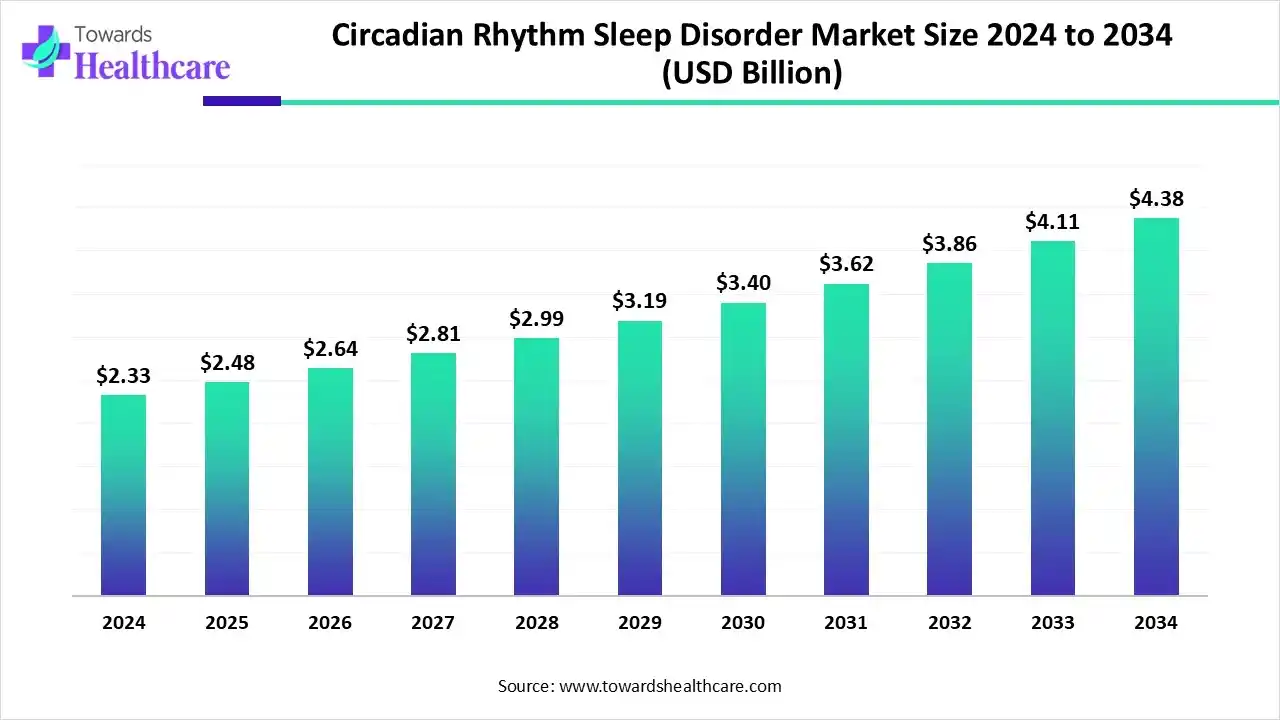
The global circadian rhythm sleep disorder market size is calculated at US$ 2.48 billion in 2025, grew to US$ 2.65 billion in 2026, and is projected to reach around US$ 4.69 billion by 2035. The market is expanding at a CAGR of 6.56% between 2026 and 2035.
Download the free sample and get the complete insights and forecasts report on this market @ https://www.towardshealthcare.com/download-sample/6350
“Your Body Clock is Rebellion: What Is CRSD?”
Circadian Rhythm Sleep Disorder is a condition where your internal biological clock falls out of sync with the world around you.
Normally, your body is tuned to a 24-hour rhythm that signals when to sleep, wake, eat, and be active.
With CRSD, this clock gets misaligned.
You might fall asleep at 3 a.m., wake at noon, or feel wide awake when the world sleeps.
This isn’t just “staying up too late” it’s a deep biological disruption.
“Different Faces of Circadian Chaos”
CRSD is not one-size-fits-all.
It comes in multiple forms, each affecting sleep in unique ways.
1. Delayed Sleep Phase Disorder (DSPD):
People with DSPD cannot fall asleep at conventional times.
They might struggle to sleep before 2–3 a.m. and wake up late, often clashing with work or school schedules.
2. Advanced Sleep Phase Disorder (ASPD):
The opposite of DSPD.
Individuals fall asleep very early in the evening, like 6–7 p.m., and wake up before dawn.
While it may seem harmless, it disrupts social life and can affect mental health.
3. Irregular Sleep-Wake Rhythm:
Sleep occurs in fragmented bursts throughout the 24 hours.
No consistent pattern emerges, leaving the person fatigued and disoriented.
4. Non-24-Hour Sleep-Wake Disorder:
Most common in blind individuals, this disorder makes the sleep-wake cycle longer than 24 hours.
Sleep time keeps drifting, making regular schedules almost impossible.
“The Domino Effect: How CRSD Affects Your Life”
CRSD isn’t just a night-time problem—it touches every part of daily life.
Physical Health:
Lack of sleep affects metabolism, immunity, and cardiovascular health.
Chronic misalignment increases risks of obesity, diabetes, and heart disease.
Mental Health:
Mood swings, anxiety, and depression are common companions.
Your mind struggles to keep pace with social obligations and work demands.
Cognitive Performance:
Attention, memory, and decision-making suffer when sleep is irregular.
Even simple tasks feel more exhausting, and productivity drops sharply.
“Breaking the Cycle: How to Reset Your Clock”
Treatment isn’t about sleeping pills or forcing the body into unnatural schedules.
It’s about gently realigning your circadian rhythm with cues your body naturally understands.
1. Light Therapy:
Exposure to bright light in the morning or controlled light in the evening can reset the internal clock.
Timing matters—a lot. Morning sunlight works best for night owls.
2. Sleep Hygiene:
Regular bedtime routines, avoiding caffeine late in the day, and keeping your bedroom dark and quiet help.
Electronic devices emitting blue light can delay sleep onset, so limit screen time at night.
3. Behavioral Therapy:
Cognitive Behavioral Therapy for Insomnia (CBT-I) helps train the mind and body to sleep at the right times.
It addresses negative thoughts about sleep and encourages positive routines.
4. Melatonin Supplements:
Taken at specific times, melatonin can signal the body to prepare for sleep.
But timing and dosage are crucial—incorrect use can worsen the misalignment.
5. Gradual Schedule Adjustments:
Shift your sleep and wake times in small increments.
Even 15–30 minutes per day can help your body adapt without stress.
“When CRSD Meets Mental Health”
Sleep and mental health share a tight connection.
Anxiety, depression, and bipolar disorder are closely linked to circadian misalignment.
Poor sleep can exacerbate symptoms, creating a vicious cycle.
Restoring sleep patterns can improve mood, cognition, and emotional stability.
Even in therapy, attention to circadian health is becoming central.
Doctors and therapists now recognize that treating CRSD can significantly enhance mental well-being.
“Nutrition, Exercise, and Your Body Clock”
Lifestyle habits influence your sleep rhythm more than you realize.
Eating heavy meals late at night can delay sleep, while exercising at the wrong time may energize instead of tire you.
Morning workouts often help night owls shift their schedules earlier.
Balanced nutrition, light exposure, and consistent routines reinforce natural rhythms.
Small changes make a big difference over time.
Consistency is the secret weapon against CRSD.
Access our exclusive, data-rich dashboard dedicated to the therapeutic area sector – built specifically for decision-makers, strategists, and industry leaders. The dashboard features comprehensive statistical data, segment-wise market breakdowns, regional performance shares, detailed company profiles, annual updates, and much more. From market sizing to competitive intelligence, this powerful tool is one-stop solution to your gateway.
Access the Dashboard: https://www.towardshealthcare.com/access-dashboard
Checkout Circadian Rhythm Sleep Disorder Market Report Now at: https://www.towardshealthcare.com/checkout/6350
You can place an order or ask any questions, please feel free to contact us at sales@towardshealthcare.com
Europe Region – +44 778 256 0738
North America Region – +1 8044 4193 44
APAC Region: +91 9356 9282 04
Visit Our Website: https://www.towardshealthcare.com
Find us on social platforms: LinkedIn | Twitter | Instagram | Medium | Pinterest
About the Author