Can Food Become the Next Medicine? The Clinical Nutrition Market Is Racing Toward $170 Billion!
For decades, nutrition was mainly associated with healthy eating and lifestyle choices. Today, it has moved far beyond the kitchen and into hospitals, research labs, and advanced healthcare systems. Clinical nutrition is becoming a powerful tool in modern medicine.
Hospitals, healthcare providers, and researchers are increasingly using specialized nutritional solutions to support patients suffering from chronic diseases, malnutrition, and post-surgical complications. As healthcare systems recognize the therapeutic value of targeted nutrition, the global clinical nutrition market is expanding rapidly.
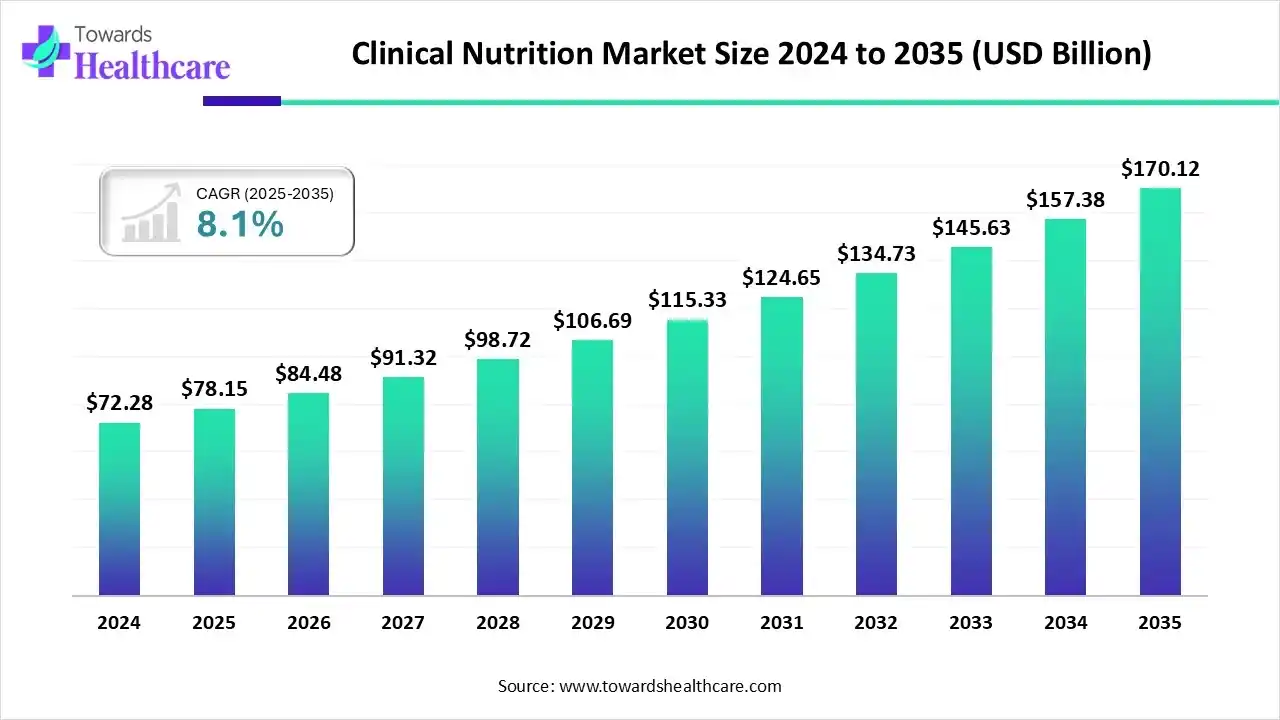
The Clinical Nutrition Market, valued at around $78.15 billion in 2025, is expected to grow to $84.48 billion in 2026. By 2035, it could reach nearly $170.12 billion, growing at a steady 8.1% CAGR. This growth reflects a major shift in healthcare: nutrition is no longer supportive care; it is becoming a core treatment strategy.
Download Free Sample: https://www.towardshealthcare.com/download-sample/6432
Table of Contents
ToggleWhy Clinical Nutrition Is Becoming a Healthcare Priority
Healthcare professionals now recognize that medical treatments alone cannot deliver optimal outcomes without proper nutritional support. Malnutrition can weaken immunity, delay recovery, and increase hospital stays.
Clinical nutrition helps address these challenges by providing patients with scientifically designed nutritional formulas tailored to their medical conditions.
Several forces are accelerating this shift:
-
Rising prevalence of chronic diseases such as diabetes, cancer, and cardiovascular conditions
-
Growing elderly population requiring long-term nutritional care
-
Increased awareness about preventive healthcare
-
Advances in personalized nutrition and biotechnology
Together, these factors are pushing healthcare systems to integrate nutrition directly into treatment pathways.
A New Era of Personalized Medical Nutrition
One of the most transformative trends in the market is the rise of personalized nutrition. Instead of offering standardized dietary solutions, healthcare providers are designing nutrition plans based on individual health conditions, metabolism, and genetic profiles.
Modern clinical nutrition products are increasingly developed for specific disease categories. Oncology patients, diabetic individuals, and people with gastrointestinal disorders often require specialized nutrient formulations.
These customized approaches are helping improve patient outcomes. Patients recover faster, tolerate medical treatments better, and maintain better overall health during intensive therapies.
At the same time, innovation in plant-based nutrition, alternative proteins, and clean-label ingredients is reshaping the industry. Patients today expect nutritional products that are not only effective but also sustainable and easy to consume.
The Quiet Dominance of Oral Clinical Nutrition
Among all product categories, oral clinical nutrition products have emerged as the most widely used solutions.
These supplements are designed for easy consumption and deliver essential nutrients needed for recovery and disease management. Their popularity is growing because they combine convenience with strong therapeutic value.
Oral nutritional supplements are now widely used for:
-
Supporting cancer patients during chemotherapy and radiotherapy
-
Managing diabetes and metabolic disorders
-
Improving muscle strength and recovery after surgery
-
Treating malnutrition in elderly populations
Their ready-to-consume format and wide patient applicability have helped them capture nearly half of the global market share.
However, another segment—parenteral nutrition—is rapidly gaining attention. This method delivers nutrients directly into the bloodstream and is essential for critically ill patients who cannot consume food normally.
Advancements in portable infusion systems and remote monitoring technologies are also enabling patients to receive these treatments at home, reducing hospital dependency.
Cancer Care Drives a Major Share of Demand
Among medical applications, cancer care represents one of the largest and most important segments in the clinical nutrition market.
Cancer treatments such as chemotherapy and radiation often lead to severe nutritional deficiencies. Patients frequently experience weight loss, reduced appetite, and digestive complications.
Specialized nutrition plays a critical role in helping patients maintain strength during treatment. Nutritional support can improve treatment tolerance, reduce complications, and enhance recovery outcomes.
As cancer cases continue to rise globally, demand for disease-specific nutritional formulations is expected to increase significantly.
At the same time, other areas such as gastrointestinal disorders, malabsorption conditions, and diabetes management are also driving strong demand for clinical nutrition products.
The Rise of Digital Health and Smart Nutrition
Technology is reshaping nearly every aspect of healthcare, and clinical nutrition is no exception.
Artificial intelligence and digital health platforms are beginning to play a crucial role in designing personalized nutrition strategies. Advanced algorithms can analyze patient health data, biomarkers, and lifestyle patterns to recommend optimized diet plans.
Healthcare providers are now using digital tools to monitor patients remotely and adjust nutritional therapies in real time.
Some emerging innovations include:
-
AI-driven nutritional assessment platforms
-
Remote monitoring systems for critically ill patients
-
Tele-nutrition consultations for chronic disease management
-
Integration of wearable health devices with dietary programs
These technologies are helping transform clinical nutrition from a static treatment into a dynamic and continuously monitored healthcare solution.
Home-Based Nutrition Care Is Changing the System
Another powerful trend reshaping the market is the rapid growth of home-based nutritional care.
Patients increasingly prefer receiving medical nutrition therapy at home rather than in hospitals. This approach not only improves comfort but also reduces healthcare costs and hospital burden.
Online pharmacies and telehealth platforms are making it easier for patients to access specialized nutritional products and professional guidance.
E-commerce channels are playing an important role in this transition. Patients and caregivers can now order clinical nutrition products online and receive them directly at home.
This shift is transforming the traditional distribution model and creating new growth opportunities for healthcare providers and nutrition companies.
Emerging Markets Unlock New Opportunities
While North America currently leads the global clinical nutrition market, emerging regions are rapidly gaining momentum.
Asia-Pacific is expected to witness the fastest growth over the coming decade. Rising healthcare awareness, expanding healthcare infrastructure, and a growing middle class are driving demand for advanced nutritional solutions.
Countries across South Asia are also launching large-scale public health programs focused on nutrition improvement. Governments are investing in maternal nutrition, child health, and disease prevention initiatives.
In India, the increasing prevalence of lifestyle diseases such as diabetes and heart disease is creating strong demand for medical nutrition therapies. Updated dietary guidelines and national nutrition initiatives are further strengthening the country’s healthcare ecosystem.
Latin America, the Middle East, and parts of Africa are also emerging as promising markets. Expanding healthcare systems and growing awareness of preventive nutrition are driving adoption across these regions.
Sustainability Becomes a Core Industry Focus
Beyond healthcare innovation, sustainability is emerging as a major priority for the clinical nutrition sector.
Companies are exploring new ways to produce nutrient-dense foods while reducing environmental impact. Sustainable sourcing, regenerative agriculture, and waste reduction initiatives are becoming central to industry strategies.
Packaging innovation is also gaining attention as manufacturers work to minimize environmental footprints while maintaining product safety.
This shift reflects a broader global realization: healthcare solutions must support both human health and planetary health.
The Future: Where Medicine Meets Nutrition
The next decade could redefine how the world views food, health, and medicine. Clinical nutrition is evolving from a supportive therapy into a central pillar of modern healthcare.
Advances in biotechnology, personalized medicine, and digital health are opening entirely new possibilities for targeted nutritional treatments.
As chronic diseases rise and healthcare systems search for more effective and preventive solutions, nutrition will likely play an increasingly vital role.
The clinical nutrition market’s projected journey toward $170 billion by 2035 is not just about industry growth. It represents a deeper transformation in healthcare philosophy—one where nutrition is recognized as a powerful form of medicine.
Access our exclusive, data-rich dashboard dedicated to the therapeutics area sector – built specifically for decision-makers, strategists, and industry leaders. The dashboard features comprehensive statistical data, segment-wise market breakdowns, regional performance shares, detailed company profiles, annual updates, and much more. From market sizing to competitive intelligence, this powerful tool is one-stop solution to your gateway.
Access the Dashboard: https://www.towardshealthcare.com/access-dashboard
Checkout the Market Report Now at: https://www.towardshealthcare.com/checkout/6432
You can place an order or ask any questions, please feel free to contact us at sales@towardshealthcare.com
Europe Region – +44 778 256 0738
North America Region – +1 8044 4193 44
APAC Region: +91 9356 9282 04
Visit Our Website: https://www.towardshealthcare.com
Find us on social platforms: LinkedIn | Twitter | Instagram | Medium
About the Author