

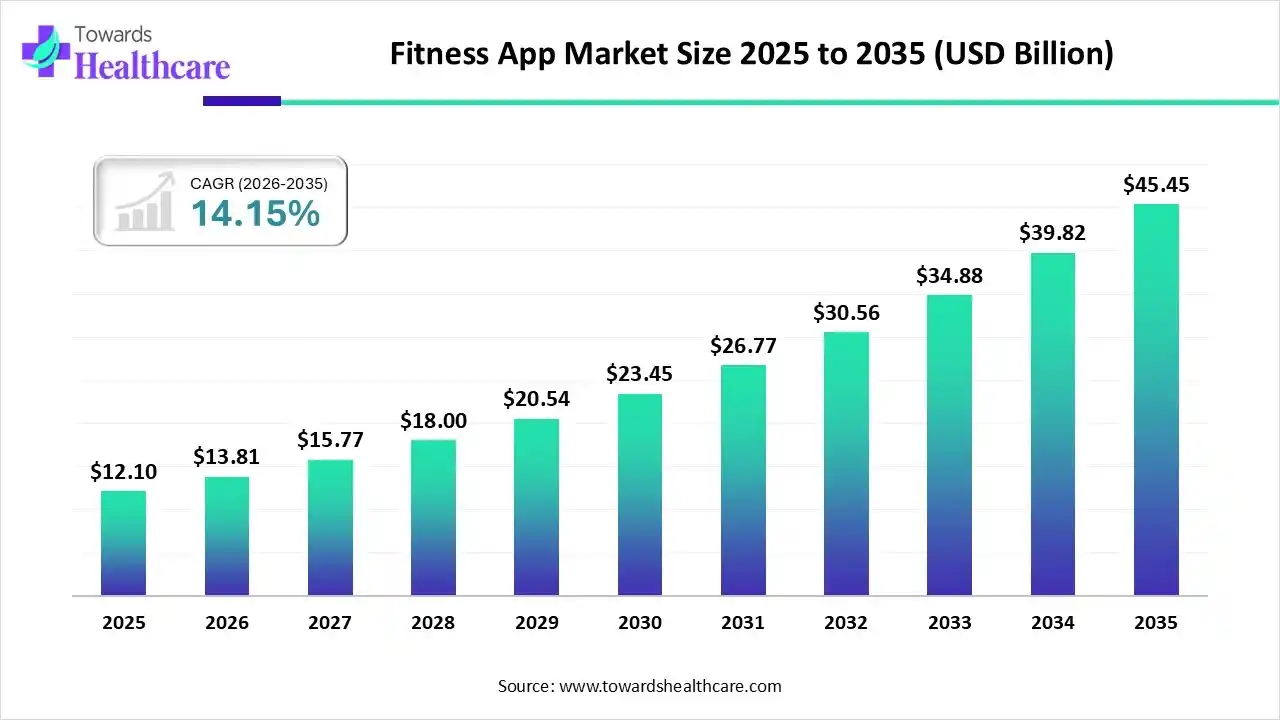
The global fitness apps market is no longer a niche segment reserved for tech-savvy enthusiasts; it has become an integral part of the modern wellness ecosystem. In 2025, the market was valued at US$ 12.1 billion, and it is projected to grow to US$ 13.81 billion in 2026, with forecasts estimating an astounding US$ 45.45 billion by 2035. This growth represents a compound annual growth rate (CAGR) of 14.15% between 2026 and 2035, highlighting a sustained global appetite for digital fitness solutions. The market is dynamic, continuously evolving with technological advancements, changing consumer behaviors, and rising health awareness worldwide.
Download Free Sample:
https://www.towardshealthcare.com/download-sample/6469
Why Are Fitness Apps Becoming Essential?
At the heart of this growth lies the increasing consumer awareness of health and wellness. People today are not just chasing aesthetic goals; they are actively seeking preventive healthcare solutions. Obesity, diabetes, cardiovascular diseases, and lifestyle-related health risks are motivating individuals to integrate fitness routines into their daily lives. Smartphones, tablets, and wearable devices serve as the primary catalysts, providing real-time tracking, personalized insights, and gamified experiences that make fitness engaging, measurable, and sustainable.
Moreover, the pandemic accelerated the adoption of digital health tools. With gyms temporarily closed and in-person fitness classes limited, consumers turned to apps for guidance, community engagement, and accountability. As a result, the fitness app industry has expanded its reach, now spanning every region from North America and Europe to Asia-Pacific and the Middle East.
How Are AI and Personalization Redefining Fitness Apps?
Artificial intelligence is revolutionizing the fitness app industry, offering unprecedented personalization. Traditional fitness routines often fail because they do not adapt to an individual’s unique physiology, goals, or constraints. AI changes that by analyzing user data, identifying patterns, and predicting health risks. Today’s fitness apps can suggest tailored exercise regimens, track nutrition with intelligent algorithms, and provide predictive insights on potential injuries or health complications.
Virtual coaching, once limited to elite athletes, is now accessible to everyday users. AI-driven features create immersive experiences, combining real-time feedback, progress tracking, and motivational nudges that keep users committed. The integration of AI is particularly valuable for preventive healthcare, as it enables early intervention by alerting users to potential health risks before they escalate.
Segment Spotlight: Which Fitness App Categories Lead the Market?
Exercise & Weight Loss:
The exercise and weight loss category dominates market revenue. This is unsurprising, considering the rising rates of obesity and diabetes worldwide. Mobile apps in this segment offer diverse strategies, including social support, educational content, and self-monitoring of weight, diet, and exercise. According to the World Obesity Federation’s World Obesity Atlas 2024, by 2035, approximately 1.53 billion people are expected to suffer from obesity, and over 1.77 billion will be overweight. Obesity-related diabetes cases are also on the rise, emphasizing the need for proactive fitness management. Apps that guide users through weight loss routines, monitor caloric intake, and foster community accountability play a vital role in addressing these health crises.
Activity Tracking:
The activity tracking segment is expected to grow at the fastest CAGR during the forecast period. These apps track steps, cycling distances, swimming laps, calories burned, and even sleep patterns. Integration with wearables allows users to maintain continuous data streams, providing insights into overall activity levels. Gamification elements, such as challenges, streaks, and leaderboards, keep users motivated and committed to their fitness goals. These tracking apps are not only personal wellness tools but also serve as public health interventions, encouraging healthier behaviors across populations.
Diet & Nutrition:
Diet and nutrition apps are increasingly popular for individuals who wish to monitor their dietary habits. These apps track calorie intake, macro and micronutrient levels, and provide recommendations for healthier food choices. They empower users to make informed dietary decisions, often in privacy, which appeals to those who may avoid face-to-face consultations. By giving users autonomy over their nutrition, these apps complement exercise-focused routines, creating a holistic approach to health.
Platform and Device Dynamics: Who’s Leading?
By platform, iOS currently dominates the market, thanks to its extensive user base in high-income regions and its seamless integration with wearables like the Apple Watch. Android, however, is expected to see the fastest growth due to its massive penetration in emerging economies, where affordability and accessibility drive adoption.
Smartphones remain the primary device for fitness app usage due to their portability and ubiquitous presence. However, wearable devices are rapidly catching up. Smartwatches, fitness bands, and even connected clothing provide continuous monitoring and convenience, creating more precise health data for users and app developers alike.
Geographic Growth: Where Is the Market Expanding?
North America leads the global fitness app market, benefiting from a sophisticated digital ecosystem, high health awareness, and widespread adoption of smart devices and wearables. The U.S., in particular, shows strong demand due to chronic health conditions like obesity and diabetes. Approximately 37% of adults in the U.S. were obese in 2024–2025, and 11.6% of the population had diabetes, including a large number of undiagnosed cases. High disposable incomes, early technology adoption, and a culture of fitness reinforce the market’s strength in this region.
Asia-Pacific is the fastest-growing market. The increasing availability of smartphones, rising health consciousness, and growing middle-class population drive app adoption. Countries like India, China, and Japan are witnessing a surge in digital fitness engagement, supported by both international and local startups. Europe, South America, and the Middle East are also demonstrating strong growth, fueled by lifestyle changes, urbanization, and a shift toward digital health solutions.
Top Players Shaping the Industry
The fitness app market comprises established tech giants, sports brands, and innovative startups. Companies like MyFitnessPal, Google, Nike, Under Armour, Adidas, Fitbit, Peloton, Noom, Calm, Headspace, Garmin, and Sworkit dominate the space, each offering unique propositions.
-
MyFitnessPal focuses on nutrition tracking with a vast food database and AI-powered meal recommendations.
-
Google Fit leverages Android integration and wearable interoperability to provide holistic activity tracking.
-
Nike Training Club delivers athlete-driven programs and maintains a strong global community.
-
Peloton has pioneered subscription-based, connected fitness, combining hardware with live and on-demand content.
Startups are equally influential. Strava, Zing Coach, and ApClub are examples of companies securing significant venture capital funding, highlighting investor confidence in AI-driven and personalized fitness solutions.
Peloton: A Case Study in Market Leadership
Peloton’s growth trajectory is particularly illustrative of the modern fitness ecosystem. Founded in 2012, the company combined high-end hardware with a connected tablet for live and on-demand classes. During the pandemic, Peloton experienced explosive growth, increasing both hardware sales and subscriptions. Today, the company emphasizes software-only membership, AI personalization, and global expansion, with a focus on at-home digital fitness solutions.
Peloton integrates technology, content, and community, creating a premium experience that is difficult to replicate. Its AI-driven Peloton IQ platform provides personalized training, while subscription tiers make the service accessible to a broader demographic. The company also actively collaborates with fitness brands and healthcare institutions, expanding its impact beyond the individual consumer to commercial and institutional wellness markets.
Investments and Innovation Fueling Growth
Investment in the fitness app market is robust. Tech giants and venture capitalists are backing startups and innovation, driving features such as AI coaching, wearable integration, gamification, and holistic wellness programs. Notable examples include Zing Coach raising $10 million to enhance its AI-powered fitness platform, and Strava’s valuation increase to $2.2 billion, highlighting investor confidence in digital fitness solutions.
Innovation is not just technological; it also involves user engagement strategies. Gamified challenges, community-driven motivation, and personalized progress tracking are transforming apps from tools into lifestyle companions. Additionally, companies are increasingly focusing on preventive health, leveraging data insights to guide users toward healthier behaviors before medical intervention is required.
How Fitness Apps Are Transforming Healthcare
Fitness apps are no longer just about exercise, they are increasingly influencing healthcare outcomes. By collecting data on physical activity, diet, sleep, and vital signs, apps enable users and healthcare providers to identify patterns that may indicate potential health issues. AI algorithms can provide early warnings for risks such as cardiovascular disease, obesity, and diabetes, allowing interventions before complications arise.
Furthermore, fitness apps are bridging the gap between personal wellness and clinical care. Telehealth integrations, data sharing with healthcare professionals, and personalized fitness prescriptions are gradually turning apps into preventive healthcare tools. This convergence of digital health and fitness represents a new frontier where technology directly contributes to public health outcomes.
Challenges Facing the Market
Despite remarkable growth, the fitness app market faces challenges. High hardware costs can create barriers to entry for premium solutions. User retention remains a concern, particularly with free apps where engagement may wane over time. Data privacy and security are also critical issues, as apps handle sensitive health and lifestyle information. Moreover, market fragmentation and intense competition from global tech giants and emerging startups pressure companies to continuously innovate.
Looking Ahead: Trends That Will Shape the Next Decade
-
Wearable Integration: More devices beyond smartphones, including smart clothing, heart-rate monitors, and advanced trackers, will provide seamless health insights.
-
AI and Machine Learning: Personalized workouts, nutrition plans, and predictive health alerts will become standard features.
-
Global Expansion: Emerging markets in Asia-Pacific, Latin America, and Africa will see rapid adoption as smartphone penetration grows.
-
Preventive Healthcare Focus: Apps will increasingly target early intervention, chronic disease management, and long-term wellness.
-
Community and Gamification: Social features, competitions, and virtual group classes will continue to boost engagement.
-
Hybrid Models: Combination of hardware and subscription services, like Peloton, will inspire new business models.
Conclusion: A Lifestyle, Not Just an App
The fitness app industry is evolving into a cornerstone of modern wellness, merging technology, health science, and lifestyle. From AI-driven personalization to activity tracking and diet management, these apps are becoming indispensable tools for millions worldwide. As health awareness rises and technology advances, the market will continue to expand, redefine personal wellness, and transform preventive healthcare. For industry stakeholders, this is not merely a market to watch—it is a global movement shaping how people live, exercise, and engage with their health.
The growth trajectory of fitness apps is clear: they are no longer optional tools but essential companions in a world where health and convenience intersect. Whether through wearable integration, AI-powered coaching, or global accessibility, fitness apps are setting new standards for personal health, community engagement, and preventive healthcare.
Access our exclusive, data-rich dashboard dedicated to the healthcare IT industry – built specifically for decision-makers, strategists, and industry leaders. The dashboard features comprehensive statistical data, segment-wise market breakdowns, regional performance shares, detailed company profiles, annual updates, and much more. From market sizing to competitive intelligence, this powerful tool is one-stop solution to your gateway.
Access the Dashboard: https://www.towardshealthcare.com/access-dashboard
Checkout Fitness App Market Report Now at: https://www.towardshealthcare.com/checkout/6469
Become a valued research partner with us – https://www.towardshealthcare.com/schedule-meeting
You can place an order or ask any questions, please feel free to contact us at sales@towardshealthcare.com
Powering Healthcare Leaders with Real-Time Insights: https://www.towardshealthcare.com/healthcare-intelligence-platform
Europe Region – +44 778 256 0738
North America Region – +1 8044 4193 44
APAC Region: +91 9356 9282 04
Visit Our Website: https://www.towardshealthcare.com
Find us on social platforms: LinkedIn | Twitter | Instagram | Medium | Pinterest
About the Author