The heart rate monitor market is quietly becoming one of the most important pillars of modern health and fitness. What started as a niche tool for athletes has now evolved into a daily companion for millions.
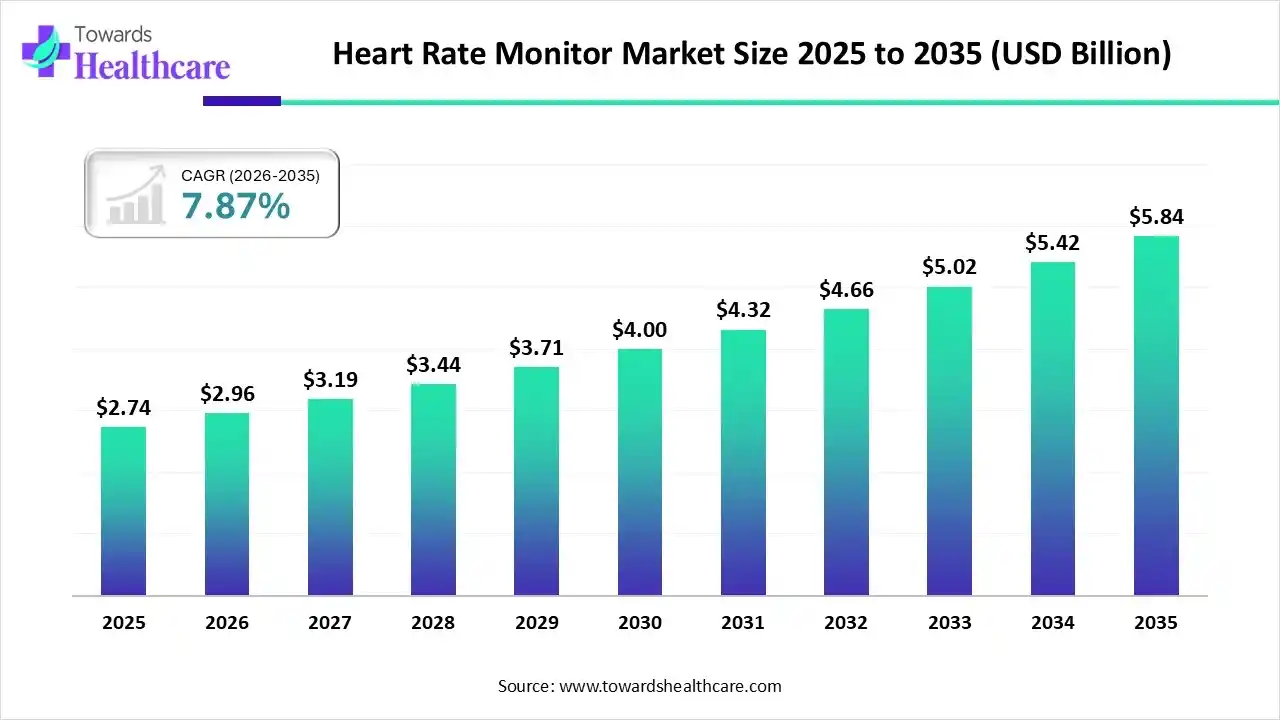
From a market value of $2.96 billion in 2026 to a projected $5.84 billion by 2035, this growth isn’t just about numbers. It reflects a shift in how people think about health; more proactive, more data-driven, and more personal.
Download Free Sample: https://www.towardshealthcare.com/download-sample/6555
From Fitness Gadget to Daily Health Companion
A few years ago, heart rate monitors were mostly seen in gyms or on professional athletes.
Today, they sit on wrists, sync with phones, and quietly track every beat—even while you sleep.
This transition happened because people no longer want to react to health problems. They want to prevent them.
And heart rate monitoring offers exactly that—a simple, real-time insight into how your body is functioning.
Why Everyone Is Suddenly Watching Their Heart
The surge in demand is not random. It’s driven by a mix of lifestyle changes and awareness.
People are working longer hours, sitting more, and facing higher stress levels. At the same time, awareness about heart health has increased significantly.
Here’s what’s pushing adoption forward:
- Rising focus on preventive healthcare instead of reactive treatment
- Increasing popularity of fitness routines and wearable tech
- Growing concern around cardiovascular diseases globally
- Easy access to affordable smart devices and apps
This combination has turned heart rate monitoring into a daily habit rather than a medical necessity.
Wearables Are Winning—And It’s Not Even Close
Walk into any gym or park, and you’ll see smartwatches everywhere.
That’s because wearable heart rate monitors dominate the market—and for good reason.
They are simple, non-invasive, and always accessible. You don’t need training to use them. Just wear and go.
But the real strength lies in integration. These devices connect with apps, track long-term data, and even suggest improvements.
At the same time, chest strap monitors are gaining attention among serious fitness users. They offer higher accuracy, especially during intense workouts.
So while wearables dominate, precision-focused devices are quietly growing in parallel.
Technology Is Getting Smarter Than Ever
This market isn’t just growing—it’s evolving fast.
At the center of this evolution is smarter technology.
Most modern devices rely on optical sensors (PPG), which measure blood flow through the skin. These are convenient and widely used.
However, ECG-based monitoring is emerging as a powerful alternative. It offers deeper insights into heart rhythm and can detect irregularities more accurately.
And then comes the real game-changer—AI.
Artificial intelligence is transforming these devices into intelligent health assistants. Instead of just showing numbers, they now:
- Detect unusual heart patterns in real time
- Filter out noise caused by movement
- Provide personalized health insights
- Predict potential risks before they escalate
This shift from tracking to predicting is where the future lies.
More Than Just Heart Rate: The Rise of Complete Health Tracking
Today’s users don’t want isolated data. They want a complete health picture.
That’s why heart rate monitors are now part of larger ecosystems. Devices combine multiple features into one seamless experience.
You’ll often find:
- Sleep tracking to analyze recovery
- SpO₂ monitoring to measure oxygen levels
- Stress detection based on heart rate variability
- Activity tracking for calories and movement
This multi-parameter approach transforms a simple device into a personal health dashboard.
Healthcare Is Catching Up Fast
The impact of heart rate monitors is no longer limited to fitness.
Healthcare systems are now adopting them for serious use cases.
Remote patient monitoring is becoming more common. Doctors can track patients without requiring frequent hospital visits.
Clinical trials and research studies also rely heavily on continuous heart rate data. It provides more accurate and real-world insights compared to traditional methods.
This shift is especially important for managing chronic diseases and monitoring aging populations.
Digital Ecosystems Are Driving the Next Wave
Devices alone don’t create value—ecosystems do.
That’s why integration with mobile apps and cloud platforms is growing rapidly.
Users can now:
- Access real-time and historical data anytime
- Share reports with healthcare professionals instantly
- Receive personalized recommendations based on trends
- Stay engaged with their health journey daily
This seamless connection between device, app, and user is accelerating adoption across all age groups.
Regional Growth Tells an Interesting Story
North America currently leads the market, thanks to advanced healthcare systems and high adoption of wearable technology.
Consumers in this region are early adopters, and spending on health tech is significantly higher.
However, the real growth story lies in Asia-Pacific.
Countries in this region are witnessing rapid adoption due to:
- Increasing middle-class population
- Growing fitness awareness
- Affordable device availability
- Expanding smartphone penetration
This combination makes Asia-Pacific the fastest-growing market in the coming years.
Challenges That Still Need Attention
Despite strong growth, the market isn’t without its challenges.
Accuracy remains a concern, especially during intense physical activities.
Battery life is another limitation, as users expect longer usage without frequent charging.
Data privacy also raises serious questions. With so much personal health data being collected, ensuring security is critical.
Companies that solve these issues will likely lead the next phase of growth.
Access our exclusive, data-rich dashboard dedicated to the medical devices sector – built specifically for decision-makers, strategists, and industry leaders. The dashboard features comprehensive statistical data, segment-wise market breakdowns, regional performance shares, detailed company profiles, annual updates, and much more. From market sizing to competitive intelligence, this powerful tool is one-stop solution to your gateway.
Access the Dashboard: https://www.towardshealthcare.com/access-dashboard
Checkout the Market Report Now at: https://www.towardshealthcare.com/checkout/6555
You can place an order or ask any questions, please feel free to contact us at sales@towardshealthcare.com
Europe Region – +44 778 256 0738
North America Region – +1 8044 4193 44
APAC Region: +91 9356 9282 04
Visit Our Website: https://www.towardshealthcare.com
Find us on social platforms: LinkedIn | Twitter | Instagram | Medium
About the Author