The heart rate monitor market has quietly transformed from a niche fitness accessory space into a foundational pillar of modern preventive healthcare and digital wellness. What once existed as a simple chest strap for athletes has evolved into an intelligent, connected ecosystem spanning consumer wearables, clinical diagnostics, remote patient monitoring, and large-scale health research. With more than a decade of observing this market’s evolution, one thing is clear: heart rate monitoring is no longer about counting beats. It is about interpreting the body’s signals in real time and turning them into actionable health intelligence.
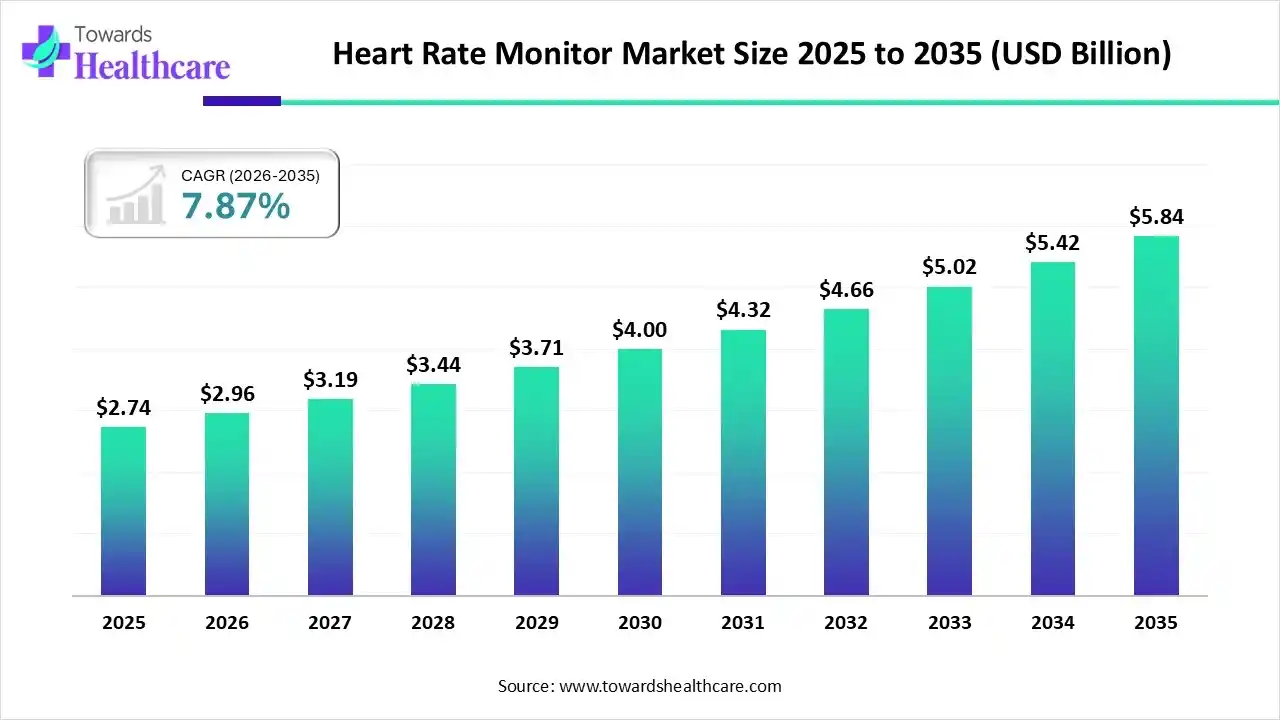
As of 2025, the global heart rate monitor market stood at approximately USD 2.74 billion. By 2026, it reached USD 2.96 billion, and current projections indicate that it could touch USD 5.84 billion by 2035. This steady climb, backed by a strong CAGR trajectory, reflects not hype but structural demand driven by lifestyle changes, rising cardiovascular disease prevalence, digital health adoption, and continuous sensor innovation.
Download Free Sample Now and Get the Complete Report Easily at: https://www.towardshealthcare.com/download-sample/6555
When Awareness Turned Into Action
The most powerful driver behind this market is not technology alone but a behavioral shift. Health awareness has moved from periodic checkups to daily self-monitoring. People no longer want delayed insights; they want continuous feedback. Heart rate, being one of the most immediate indicators of physical and emotional stress, sits at the center of this transformation.
Fitness culture played a catalytic role. As gyms, running clubs, home workouts, and digital fitness programs expanded globally, individuals sought tools that could validate effort and optimize performance. Heart rate monitors offered measurable proof of intensity, recovery, and progress. Over time, what began as a performance tool gradually became a health habit.
Simultaneously, healthcare systems began to see heart rate data not as supplementary information but as clinically relevant input. Continuous monitoring proved useful in detecting arrhythmias, tracking recovery, managing chronic conditions, and enabling remote care models. This dual adoption across consumer and clinical domains is what gives the heart rate monitor market its resilience.
Why North America Set the Early Pace
North America emerged as the dominant region in 2025, accounting for roughly 35 percent of global revenue. This leadership was not accidental. The region benefits from a mature healthcare infrastructure, high consumer spending on wellness technologies, and early acceptance of wearable health devices. The United States, in particular, played a defining role by normalizing smartwatches and fitness trackers as everyday health companions rather than luxury gadgets.
Remote patient monitoring programs, digital health reimbursements, and strong collaboration between technology companies and healthcare providers further accelerated adoption. Heart rate monitors became integral to chronic disease management, post-operative care, and preventive health strategies. In many cases, these devices helped shift care delivery from hospitals to homes, reducing system burden while improving patient engagement.
Asia-Pacific: Where Scale Meets Momentum
While North America leads today, Asia-Pacific represents the future growth engine of the heart rate monitor market. The region is expected to witness the fastest expansion during the forecast period, driven by rising disposable incomes, increasing smartphone penetration, and a growing middle-class population that is more health-conscious than ever before.
China’s dominance within the region stems from its manufacturing strength, rapid digital adoption, and strong government support for health technology innovation. India, Japan, South Korea, and Southeast Asian nations are also seeing accelerated adoption as affordable wearable devices flood the market and fitness culture expands beyond urban centers.
What makes Asia-Pacific particularly important is volume. Even modest increases in per-capita adoption translate into massive market expansion due to population scale. This region will likely shape pricing strategies, feature prioritization, and future product innovation across the industry.
Wearables Took the Lead for a Reason
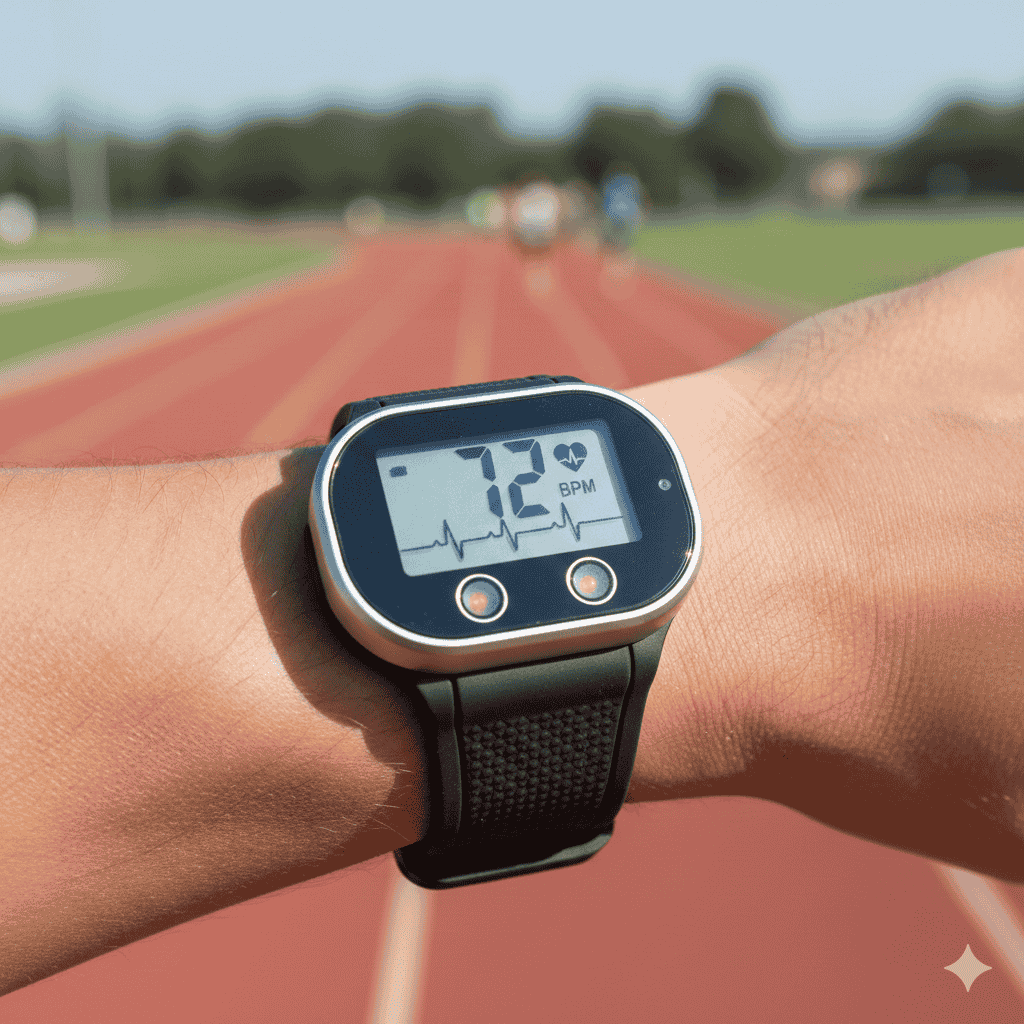
Wearable heart rate monitors held around 50 percent of the market share in 2025, and their dominance is not surprising. Convenience, comfort, and continuous monitoring define their appeal. Smartwatches and fitness bands seamlessly integrate heart rate tracking into daily life without requiring behavioral change. Users wear them for timekeeping or notifications, and health data is collected passively.
Advancements in optical sensor technology, miniaturization, and battery efficiency have made wrist-based monitoring increasingly reliable. While early models struggled with accuracy during high-intensity movement, modern devices have significantly narrowed the gap. Integration with smartphones and cloud platforms further enhances value by translating raw data into understandable insights.
The Quiet Comeback of Chest Straps
Despite the rise of wrist-based wearables, chest strap monitors are experiencing renewed interest and are projected to grow at the fastest rate within product segments. Their appeal lies in accuracy. For athletes, researchers, and clinical users who prioritize precision over convenience, chest straps remain the gold standard.
Modern chest straps are no longer isolated devices. They connect effortlessly with smartwatches, fitness equipment, and mobile applications. This hybrid usage model allows users to combine high-accuracy data capture with intuitive digital dashboards. As training becomes more data-driven and personalized, the demand for precise heart rate measurement continues to rise.
From Devices to Ecosystems
One of the most significant shifts in this market is the move from standalone devices to connected ecosystems. Cloud-based and app-integrated heart rate monitoring solutions are gaining momentum faster than any other deployment model. Users now expect real-time access, long-term trend analysis, and seamless data sharing.
This shift has profound implications. Heart rate data is no longer confined to personal dashboards. It feeds into telehealth platforms, research databases, and population health analytics. Physicians can monitor patients remotely, researchers can analyze longitudinal datasets, and individuals can gain personalized insights based on historical patterns.
Fitness Still Leads, but Healthcare Is Catching Up
Fitness and sports tracking accounted for the largest application share in 2025, capturing about 45 percent of the market. This dominance reflects the continued popularity of wearable devices among active consumers. Real-time feedback during workouts, recovery tracking, and performance optimization remain strong value propositions.
However, the fastest growth is emerging from research and health studies. Academic institutions, clinical researchers, and pharmaceutical companies increasingly rely on wearable heart rate monitors for continuous physiological data. These devices offer cost-effective, scalable alternatives to traditional monitoring equipment, enabling larger and more diverse study populations.
Optical Sensors Defined the Present
Optical sensors using photoplethysmography technology dominated the market in 2025. Their non-invasive nature, ease of integration into wearables, and suitability for continuous monitoring made them the preferred choice for mass adoption. These sensors perform particularly well in resting and moderate activity conditions, aligning with everyday wellness use cases.
Manufacturers continue to refine signal processing algorithms to minimize motion artifacts and improve accuracy across diverse skin tones and activity levels. As these improvements continue, optical sensors will remain central to consumer-focused devices.
ECG Monitoring Signals the Future
Electrocardiogram-based monitoring represents the fastest-growing technology segment. Unlike optical sensors, ECG provides detailed electrical activity data of the heart, enabling detection of arrhythmias and other abnormalities. Once limited to clinical environments, ECG monitoring has now entered consumer wearables.
This shift marks a convergence between medical-grade diagnostics and everyday health tracking. As regulatory approvals expand and users become more comfortable with clinical features in consumer devices, ECG-enabled heart rate monitors will play a larger role in preventive cardiology and early detection.
Consumers Drove Scale, Institutions Will Drive Depth
Consumers and fitness enthusiasts accounted for over half of market revenue in 2025. Their collective demand fueled device innovation, design improvements, and mass production efficiencies. However, research institutions and universities are expected to grow at the fastest rate.
These organizations value accuracy, data integrity, and long-term monitoring capabilities. As wearable technology gains scientific validation, its role in cardiovascular research, sports science, and public health studies continues to expand. This institutional adoption adds credibility and depth to the market.
AI Changed the Meaning of Monitoring
Artificial intelligence has fundamentally altered what heart rate monitors can do. AI-powered algorithms enhance signal accuracy, filter noise, and detect anomalies in real time. More importantly, they enable predictive insights rather than reactive reporting.
Modern heart rate monitors can learn individual baselines, recognize deviations, and generate personalized alerts. For fitness users, this translates into adaptive training guidance. For healthcare applications, it means earlier detection of potential issues and more proactive care models.
Distribution Channels Are Evolving with Trust
Direct sales channels dominated in 2025 due to brand trust, personalized engagement, and after-sales support. Consumers often prefer buying health devices directly from manufacturers or authorized partners. However, e-commerce platforms are growing rapidly, driven by convenience, broader selection, and transparent reviews.
As online health purchasing becomes normalized, digital channels will play an increasingly important role, especially in emerging markets where physical retail access may be limited.
The Market’s Strengths and Its Reality Checks
The heart rate monitor market benefits from strong demand drivers, technological momentum, and broad application scope. However, challenges persist. Accuracy limitations during intense movement, battery life constraints, data privacy concerns, and regulatory complexities continue to shape product development and market strategy.
Competition is intense, and rapid innovation cycles mean that devices can become outdated quickly. Manufacturers must balance innovation with reliability, affordability with performance, and data richness with user simplicity.
Looking Ahead: More Than a Market, a Movement
The heart rate monitor market is no longer just a segment within wearable technology. It represents a broader movement toward continuous, personalized, and proactive health management. As devices become smarter and ecosystems more integrated, heart rate data will increasingly inform daily decisions, clinical interventions, and population health strategies.
The future will not be defined by who measures heart rate the fastest, but by who understands it the best. In that sense, the real value of this market lies not in hardware alone, but in insight, interpretation, and impact.
Access our exclusive, data-rich dashboard dedicated to the medical devices industry – built specifically for decision-makers, strategists, and industry leaders. The dashboard features comprehensive statistical data, segment-wise market breakdowns, regional performance shares, detailed company profiles, annual updates, and much more. From market sizing to competitive intelligence, this powerful tool is one-stop solution to your gateway.
Quick Links
Access the Dashboard: https://www.towardshealthcare.com/access-dashboard
Checkout Heart Rate Monitor Market Report Now at: https://www.towardshealthcare.com/checkout/6555
Become a valued research partner with us - https://www.towardshealthcare.com/schedule-meeting
You can place an order or ask any questions, please feel free to contact us at sales@towardshealthcare.com
Powering Healthcare Leaders with Real-Time Insights: https://www.towardshealthcare.com/healthcare-intelligence-platform
Europe Region – +44 778 256 0738
North America Region – +1 8044 4193 44
APAC Region: +91 9356 9282 04
Visit Our Website: https://www.towardshealthcare.com
Find us on social platforms: LinkedIn | Twitter | Instagram | Medium | Pinterest
About the Author