By 2026, home healthcare is no longer a complementary service. It is becoming a central pillar of global healthcare delivery.
Healthcare is undergoing one of its most significant shifts in modern history, and it is happening silently, room by room, inside people’s homes. What was once limited to hospitals, clinics, and nursing facilities is now steadily moving into living rooms and bedrooms.
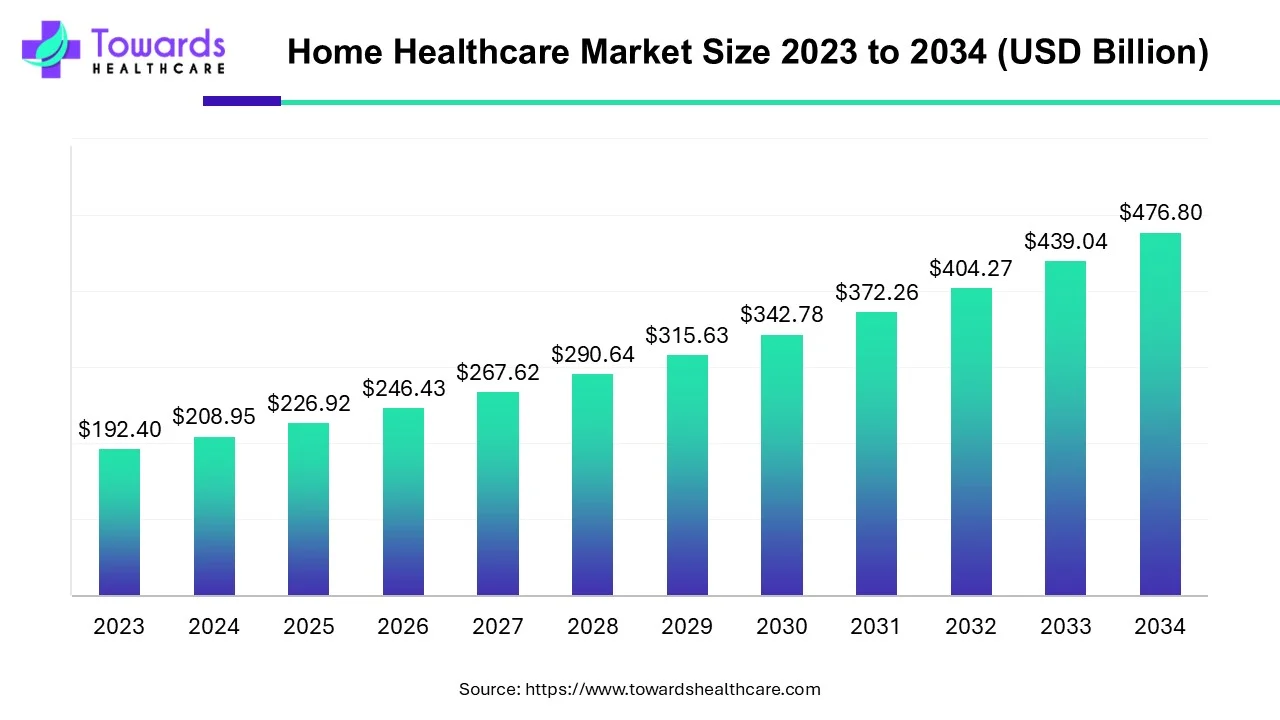
The global home healthcare market is entering a defining decade. Valued at over USD 226 billion in 2025 and projected to grow beyond USD 246 billion in 2026, the market is expected to more than double by 2035. This growth is not driven by hype or short-term disruption. It reflects deep structural changes in population demographics, disease patterns, healthcare economics, and technology adoption. At its core, home healthcare is answering a simple but powerful question: why should care always require a hospital visit?
Download Free Sample: https://www.towardshealthcare.com/download-sample/5110
From Institutions to Individuals: Care Comes Home
Home healthcare shifts the focus of medicine from buildings to people. Instead of asking patients to adapt to healthcare systems, it adapts care to fit patients’ lives. Nurses, therapists, and caregivers deliver medical services directly in the home, ranging from chronic disease management and rehabilitation to diagnostic monitoring and daily living support. This approach prioritizes comfort, continuity, and personalization.
Patients recovering from surgery, managing long-term illnesses, or living with mobility challenges increasingly choose home-based care. Familiar surroundings reduce stress, improve adherence to treatment plans, and support emotional well-being. For families, home healthcare offers reassurance and involvement without the logistical and financial burdens of prolonged hospital stays.
This model is no longer limited to basic assistance. Advances in medical devices and digital health allow complex care, once restricted to hospitals, to be delivered safely at home. The boundary between clinical care and everyday life is steadily dissolving.
Why the Market Is Accelerating Now
Several forces are converging to accelerate the growth of home healthcare. The most powerful driver is the aging global population. As life expectancy rises, the number of people living with chronic conditions increases. Older adults prefer to age in place, maintaining independence rather than relocating to institutional settings. Home healthcare enables this preference while addressing medical needs.
Chronic diseases such as diabetes, cardiovascular conditions, respiratory disorders, and movement-related disabilities continue to rise worldwide. These conditions require ongoing monitoring rather than episodic treatment. Home healthcare aligns perfectly with this reality, offering continuous oversight without repeated hospital visits.
The COVID-19 pandemic acted as a catalyst rather than a cause. It exposed vulnerabilities in traditional healthcare delivery and normalized remote care. Patients and providers became comfortable with virtual consultations, remote monitoring, and home-based diagnostics. What began as a necessity evolved into a preference, and that preference has persisted.
Healthcare systems also face mounting cost pressures. Hospital care is expensive, resource-intensive, and often inefficient for long-term management. Home healthcare reduces admissions, shortens recovery times, and lowers overall costs while maintaining outcomes. Payers and policymakers increasingly recognize its economic value.
Diagnostics and Monitoring Take the Lead
Among all segments, diagnostic and monitoring devices dominate the home healthcare market. These tools account for the largest share because they form the foundation of home-based care. Blood glucose monitors, blood pressure devices, pulse oximeters, heart rate monitors, and sleep apnea trackers enable continuous health assessment without clinical visits.
The widespread adoption of these devices reflects both necessity and accessibility. Chronic diseases require frequent monitoring, and modern devices are affordable, user-friendly, and increasingly accurate. Post-surgical patients also rely on home monitoring to ensure safe recovery while avoiding prolonged hospital stays.
Remote diagnostics empower patients to understand their health in real time. At the same time, they provide clinicians with actionable data, allowing timely intervention before conditions escalate. This shift from reactive to proactive care is redefining treatment outcomes.
Diabetes Shapes the Home Healthcare Narrative
Diabetes stands at the center of the home healthcare story. It represents the largest indication segment and continues to drive demand across devices, services, and care models. The rising global prevalence of diabetes places immense strain on healthcare systems, making home-based management essential rather than optional.
Blood glucose monitoring, insulin delivery devices, and digital tracking tools allow patients to manage their condition daily without clinical dependency. Increased awareness of diabetes-related complications has also encouraged early monitoring and consistent care at home.
Home healthcare does more than manage numbers. It supports lifestyle changes, medication adherence, and education, all of which are critical for long-term disease control. For many individuals, effective diabetes management at home reduces hospital admissions and improves quality of life.
AI Enters the Living Room
Artificial intelligence is no longer confined to research labs or hospital systems. It is increasingly embedded in home healthcare technologies. AI-driven platforms analyze patient data, identify patterns, and predict risks before symptoms become emergencies.
Remote monitoring systems powered by machine learning detect subtle changes in vital signs that humans might miss. These insights allow healthcare professionals to intervene early, preventing complications and hospitalizations. Studies indicate that predictive AI tools can significantly reduce emergency admissions in home care settings.
Beyond clinical benefits, AI streamlines administrative workflows. Automated scheduling, documentation, and alerts reduce manual errors and operational costs. This efficiency allows caregivers to focus more on patient interaction rather than paperwork.
AI also supports personalized care plans. Algorithms adapt treatment recommendations based on individual health data, making care more responsive and patient-centric. In home healthcare, where personalization matters most, AI acts as an invisible but powerful partner.
Technology Redefines Access and Efficiency
Telehealth remains one of the most transformative forces in home healthcare. Virtual consultations connect patients with healthcare professionals regardless of geography. This access is particularly vital in remote or underserved regions where healthcare infrastructure is limited.
Wearable devices and connected sensors continuously track health metrics such as heart rate, oxygen levels, and blood pressure. Real-time data transmission enables clinicians to monitor patients without physical visits. This model improves outcomes while reducing travel, wait times, and system congestion.
Mobile health applications complement these technologies by educating patients, reminding them about medications, and facilitating communication with care teams. Together, these tools create an integrated ecosystem where care flows seamlessly between patient and provider.
As technology advances, home healthcare will continue to absorb innovations once exclusive to hospitals. The home is becoming a decentralized care hub, supported by digital intelligence and clinical expertise.
North America Leads, but Growth Is Global
North America currently holds the largest share of the home healthcare market. Factors such as advanced healthcare infrastructure, high chronic disease prevalence, favorable reimbursement policies, and strong technology adoption contribute to this leadership.
Medicaid plays a critical role in long-term home and nursing care financing, supporting a majority of residents who require continuous assistance. Medicare, while limited to short-term care, also influences home healthcare utilization through post-acute services.
Cultural attitudes toward aging and independence further support home-based care in the region. Many individuals prefer receiving care at home rather than institutional facilities, reinforcing demand for home healthcare services.
However, the most dynamic growth is emerging in Asia-Pacific. Rapid aging, increasing chronic disease burden, and expanding access to digital health technologies are driving adoption. Countries across the region are investing in telehealth, remote monitoring, and affordable care models to meet rising demand.
China and India Embrace Home-Based Solutions
China’s home healthcare market is expanding as disease prevalence rises and the government supports technological innovation. Early diagnosis, chronic disease management, and affordable services are central to this growth. Government backing accelerates adoption and improves accessibility.
India is witnessing similar momentum. Rising health awareness, increasing chronic conditions, and digital transformation in healthcare are driving demand for home-based services. Government initiatives and private investments focus on early diagnosis, monitoring, and cost-effective care delivery.
In both markets, home healthcare bridges gaps between urban hospitals and rural populations. Technology enables scalable solutions where traditional infrastructure struggles to keep pace.
Europe Builds on Awareness and Innovation
Europe’s home healthcare market grows steadily as awareness increases and chronic diseases become more prevalent. Aging populations across the region favor care models that preserve independence and dignity.
Public and private investments support the development of smart healthcare devices and integrated care platforms. Collaborations between technology firms and healthcare providers accelerate innovation and adoption.
As accessibility and affordability improve, home healthcare becomes an increasingly attractive option across European healthcare systems.
Investment Signals Long-Term Confidence
The investment landscape reflects strong confidence in home healthcare’s future. Governments and private investors alike commit substantial funding to expand services, scale technology, and support workforce development.
Public investments focus on extending home care programs, reducing hospital pressure, and improving patient outcomes. Private funding supports innovation in diagnostics, AI-driven platforms, and service expansion.
These investments signal recognition that home healthcare is not a temporary trend. It is a foundational shift in how healthcare systems operate.
Education Remains the Missing Link
Despite rapid growth, limited awareness remains a challenge. Many patients and caregivers still lack a clear understanding of home healthcare’s scope and benefits. Education plays a decisive role in adoption and effectiveness.
Patients must understand how to use devices, manage medications, and navigate telehealth platforms. Caregivers require training to support daily care and recognize warning signs. Without education, even advanced technologies fail to deliver full value.
Effective communication between providers, patients, and families ensures engagement and adherence. As home healthcare expands, education becomes as critical as technology and staffing.
Competition Redefines the Ecosystem
The competitive landscape is evolving rapidly. Traditional healthcare providers, device manufacturers, technology companies, and startups all participate in shaping the market. Collaboration becomes as important as competition.
Medical device companies work closely with care providers to ensure usability and effectiveness in home settings. Pharmaceutical firms support home-based therapies and patient adherence programs. Technology companies bring digital expertise to clinical environments.
This convergence creates an ecosystem where innovation thrives at the intersection of care, data, and technology.
A Future That Feels Personal
Home healthcare represents more than market growth. It reflects a fundamental change in how society approaches health and care. It prioritizes people over places, prevention over reaction, and personalization over standardization.
As populations age and chronic diseases rise, healthcare must adapt. Home healthcare answers this challenge with flexibility, dignity, and efficiency. It empowers individuals to manage health on their terms while maintaining clinical quality.
By 2026 and beyond, the question is no longer whether home healthcare will grow. The real question is how fully healthcare systems will embrace a future where the most important care happens not in hospitals, but at home.
Access our exclusive, data-rich dashboard dedicated to the healthcare services market – built specifically for decision-makers, strategists, and industry leaders. The dashboard features comprehensive statistical data, segment-wise market breakdowns, regional performance shares, detailed company profiles, annual updates, and much more. From market sizing to competitive intelligence, this powerful tool is one-stop solution to your gateway.
Checkout Home Healthcare Market Report Now at: https://www.towardshealthcare.com/checkout/5110
You can place an order or ask any questions, please feel free to contact us at sales@towardshealthcare.com
Europe Region – +44 778 256 0738
North America Region – +1 8044 4193 44
APAC Region: +91 9356 9282 04
Visit Our Website: https://www.towardshealthcare.com
Find us on social platforms: LinkedIn | Twitter | Instagram | Medium | Pinterest