
The healthcare world is witnessing a quiet revolution. Hospitals are moving away from dusty cabinets and paper charts and embracing the digital age, and at the heart of this transformation lies Electronic Health Records (EHRs). But this shift isn’t just about storing information on a computer—it’s about improving patient care, streamlining hospital workflows, and redefining how healthcare is delivered worldwide.
In 2025, the global Hospital Electronic Health Records Market was valued at USD 18.55 billion, and projections show it could reach USD 28.94 billion by 2035, expanding at a steady 4.55% CAGR. This growth is a signal of the increasing reliance on digital tools in hospitals of all sizes, from bustling urban medical centers to rural community hospitals.
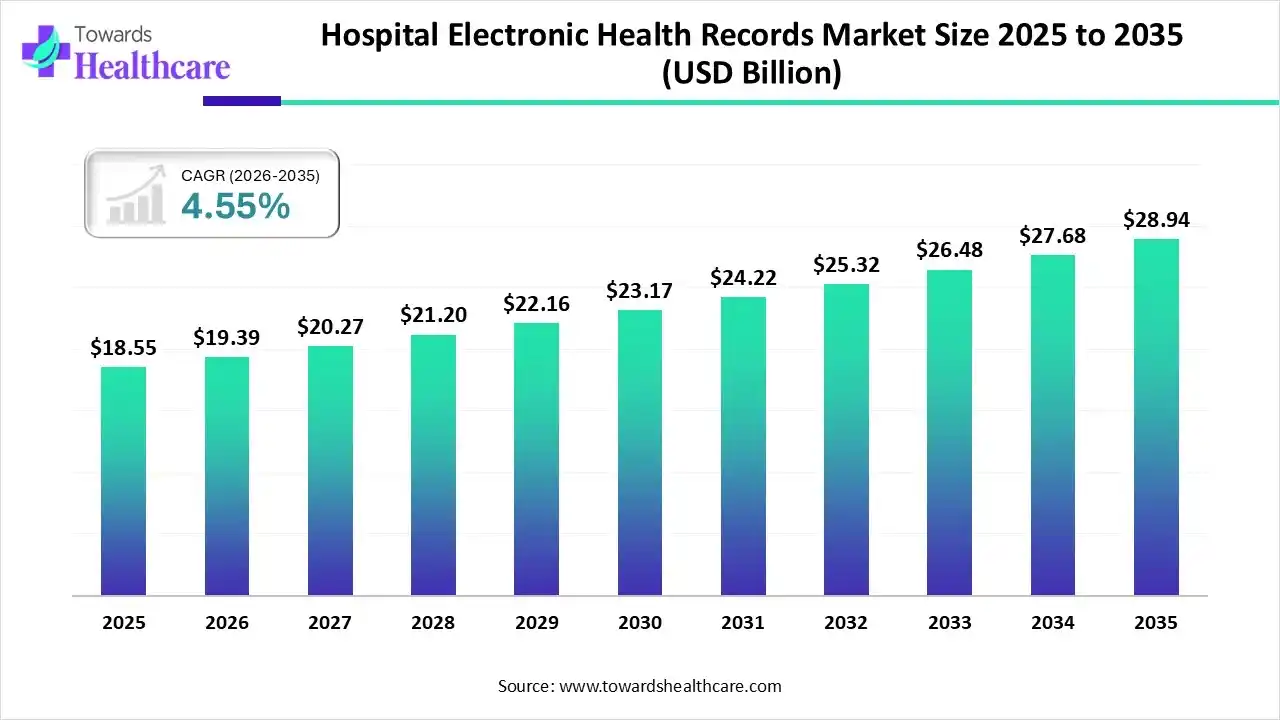
Download Customized Free Sample as per Your Business Needs: https://www.towardshealthcare.com/download-sample/6492
The Pulse of Digital Healthcare
Digital health records are more than just convenience—they are life-saving tools. Hospitals need to access patient histories, lab results, medication lists, and imaging data quickly, and traditional paper-based systems fall short in delivering this speed and accuracy.
By shifting to digital systems, hospitals are gaining real-time access to patient information, reducing errors, and enhancing decision-making. Cloud-based and web-based EHR systems allow staff to access medical records anytime, anywhere—whether they are on the ward, in the lab, or even working remotely.
Why This Shift Matters
-
Patient Safety First – EHRs reduce the risk of medication errors and misdiagnoses.
-
Efficiency at Work – Digital records speed up administrative tasks, allowing doctors and nurses to focus on care.
-
Data-Driven Decisions – Hospitals can analyze trends, predict risks, and identify high-priority cases using AI-integrated EHR systems.
-
Global Interoperability – With patients moving across cities and countries, EHRs ensure that their health information moves with them safely.
Cloud, AI, and the Future of Hospital Records
The next generation of EHRs isn’t just digital—it’s smart. Artificial intelligence (AI) is transforming EHRs from passive record-keeping systems into decision-making tools.
Hospitals integrating AI with EHRs can:
-
Automate documentation, saving hours of administrative work.
-
Predict patient outcomes and identify patterns for proactive care.
-
Enhance diagnostics by analyzing large volumes of medical data.
-
Support interoperability, allowing seamless data sharing across departments and hospitals.
Meanwhile, cloud-based EHRs are taking over as the deployment method of choice. Unlike traditional on-premise systems, cloud solutions reduce upfront infrastructure costs, allow remote access, and scale easily as hospitals grow. Web-based platforms complement this trend by offering real-time updates across multiple devices, making data instantly accessible to the care team.
Acute vs. Post-Acute: Where Digital Care Leads
Not all hospitals use EHRs in the same way. Acute care hospitals, dealing with critical, fast-paced patient conditions, dominate EHR adoption. They rely on real-time data to make split-second decisions that can save lives.
On the other hand, post-acute care facilities, such as rehabilitation centers and home healthcare services, are catching up rapidly. The need for coordinated care, patient monitoring, and data sharing across various care stages is driving faster adoption in these settings.
In both cases, EHRs serve as a bridge between different types of care, ensuring continuity, reducing readmissions, and improving patient outcomes.
Subscription or Professional Services? Hospitals Choose Both
Hospital EHRs are offered through multiple business models, but two stand out: professional services and subscription-based systems.
-
Professional services dominate because hospitals need support in implementation, training, and system optimization. A well-trained staff ensures smooth transitions from paper to digital records and maximizes the benefits of EHR technology.
-
Subscription models are growing fast. Hospitals appreciate predictable pricing, lower upfront costs, and regular software updates. These models also pair well with cloud-based systems, offering flexibility and scalability.
The takeaway is clear: hospitals aren’t just buying software—they are investing in support, training, and adaptability.
Integrated vs. Standalone: Finding the Right Fit
Some hospitals need fully integrated EHR systems, connecting clinical, administrative, and financial operations. Others, like smaller clinics or specialty centers, benefit from standalone EHRs that are easier to implement and maintain.
-
Integrated systems excel in large hospitals, where complex operations demand real-time data sharing and interoperability.
-
Standalone solutions provide a cost-effective entry point for smaller hospitals or those expanding digital capabilities gradually.
This segmentation ensures that hospitals of all sizes can adopt technology without compromising efficiency or patient care.
Hospitals of All Sizes Are Going Digital
While medium-sized hospitals lead EHR adoption today, large hospitals are catching up rapidly. Larger facilities have complex operations, high patient volumes, and multi-department workflows that benefit most from sophisticated EHR systems. By investing in digital records, they improve care coordination, streamline administrative tasks, and support AI-driven analytics.
Even smaller hospitals and clinics are entering the digital space, often with cloud-based or standalone EHR solutions that minimize cost and complexity. This democratization of healthcare technology is crucial for improving access and quality worldwide.
Specializations Driving EHR Growth
Certain medical specialties are pushing the boundaries of EHR adoption:
-
Cardiology leads today, as accurate and timely data is critical for heart patients. EHRs allow doctors to track patient histories, monitor ongoing treatments, and coordinate care across multiple specialists.
-
Ophthalmology is rising fast, driven by advanced imaging needs, patient monitoring, and digital record management.
Other specialties like oncology, neurology, and pediatrics are also embracing EHRs to ensure better patient management and long-term treatment tracking.
Global Snapshot: Who’s Leading the Charge?
North America: The Pioneer
North America, particularly the U.S., is leading the global EHR market. High digital literacy, government incentives like the HITECH Act, and a strong presence of major EHR vendors such as Epic Systems and Allscripts fuel this dominance. Hospitals in the region are adopting AI tools, enhancing interoperability, and continuously upgrading systems to meet compliance standards.
Asia Pacific: The Fast Mover
Asia Pacific is catching up fast. Governments in China, India, Japan, and other countries are pushing hospital digitalization and health IT adoption. Programs like India’s Digital Health Incentive Scheme reward hospitals for implementing digital systems and linking patient IDs with ABHA (Ayushman Bharat Health Account). China’s Healthy China 2030 plan and similar initiatives accelerate digital health adoption, while rising hospital infrastructure and telehealth solutions support growth.
Europe: The Transforming Landscape
Europe’s hospitals are also moving toward integrated, interoperable EHRs. The NHS Long Term Plan in the UK and EU cross-border digital health initiatives encourage adoption of modern digital records. Investments in AI, cloud computing, and patient-centric digital tools further boost market growth.
AI, Analytics, and Patient-Centric Care
Artificial intelligence is more than a buzzword in healthcare—it’s becoming a necessity. EHR systems integrated with AI can:
-
Predict patient risks before they escalate.
-
Automate repetitive documentation and administrative tasks.
-
Enable personalized care plans using data insights.
-
Improve hospital operational efficiency through workflow automation.
Meanwhile, patient-centric digital tools, such as portals, mobile apps, and telehealth platforms, are making healthcare more accessible and engaging. Patients can now access their records, schedule appointments, and communicate securely with care teams—all from their smartphones.
Security and Interoperability: Challenges Ahead
Despite the benefits, hospitals face challenges. EHR systems are complex and costly to implement. Staff require extensive training, and data breaches remain a persistent threat. Interoperability across different systems is still difficult, especially when hospitals use multiple vendors or legacy systems.
Healthcare providers must strike a balance: adopting technology for better care while maintaining security, privacy, and ease of use.
Regulatory Support Driving Adoption
Governments are playing a key role in boosting EHR adoption. Strategic initiatives and regulatory frameworks ensure hospitals adopt digital systems safely and effectively:
-
India’s Digital Health Incentive Scheme rewards digital adoption and ABHA ID linkage.
-
The U.S. Department of Health and Human Services promotes policies improving patient access, interoperability, and data privacy.
-
Standards under the National Digital Health Mission and Digital Personal Data Protection Act ensure secure, compliant EHR systems.
Such initiatives not only accelerate adoption but also ensure patient data remains protected.
Market Leaders and Their Offerings
The hospital EHR market is dominated by a few key players who set industry standards:
-
Epic Systems Corporation – Integrated EHRs with advanced analytics and patient-engagement tools.
-
Allscripts Healthcare Solutions, Inc. – Flexible inpatient/outpatient solutions with population health and care coordination.
-
MEDITECH – Scalable platforms with interoperability and unified clinical documentation.
-
Athenahealth – Cloud-based systems with revenue-cycle management and patient engagement.
-
GE Healthcare and Siemens Healthineers – EHRs integrated with diagnostics and imaging for hospital workflows.
These companies are not just software providers—they are partners in the digital transformation of healthcare.
Real-World Impacts
Several initiatives highlight the real benefits of EHRs:
-
In March 2024, the U.S. Department of Veterans Affairs and the Department of Defense launched a unified, interoperable EHR system at the Lovell Federal Health Care Center, improving coordinated care.
-
In November 2024, India introduced the U-WIN Portal to digitize vaccination records, offering anytime, anywhere access for patients.
-
In August 2025, SOPHiA GENETICS and AstraZeneca expanded AI-based research using EHR insights to improve breast cancer care.
These examples show how EHRs are not just systems—they are tools that save lives, improve outcomes, and transform healthcare delivery.
Looking Ahead: The Next Decade of Digital Healthcare
The hospital EHR market is poised for a decade of growth and innovation:
-
Interoperable Systems – Hospitals will share data seamlessly across clinics, labs, and departments.
-
AI-Driven Decision Support – Predictive analytics and personalized treatment recommendations will become standard.
-
Cloud & Mobile Expansion – Remote access, telemedicine integration, and scalable solutions will dominate.
-
Patient Empowerment – Digital portals and apps will give patients control over their health information.
By 2035, EHR adoption will not be a luxury—it will be a core requirement for hospitals striving for efficiency, patient safety, and excellence in care.
Final Thoughts
The journey from paper charts to AI-powered EHRs is more than technological—it’s a shift in healthcare mindset. Hospitals are no longer just treatment centers—they are data-driven, patient-focused institutions that rely on accurate, timely, and accessible information.
For healthcare providers, the question is no longer whether to adopt EHRs—it’s how quickly and effectively they can harness this digital transformation to save lives, improve workflows, and deliver smarter, patient-centered care.
Digital healthcare isn’t the future—it’s here, transforming hospitals one record at a time.
Access our exclusive, data-rich dashboard dedicated to the healthcare IT market – built specifically for decision-makers, strategists, and industry leaders. The dashboard features comprehensive statistical data, segment-wise market breakdowns, regional performance shares, detailed company profiles, annual updates, and much more. From market sizing to competitive intelligence, this powerful tool is one-stop solution to your gateway.
Access the Dashboard: https://www.towardshealthcare.com/access-dashboard
Checkout this Market Report Now at: https://www.towardshealthcare.com/checkout/6492
You can place an order or ask any questions, please feel free to contact us at sales@towardshealthcare.com
Europe Region – +44 778 256 0738
North America Region – +1 8044 4193 44
APAC Region: +91 9356 9282 04
Visit Our Website: https://www.towardshealthcare.com
Find us on social platforms: LinkedIn | Twitter | Instagram | Medium | Pinterest
About the Author