

AI in Oncology at 29% Growth; Are We Entering a New Era of Cancer Care?

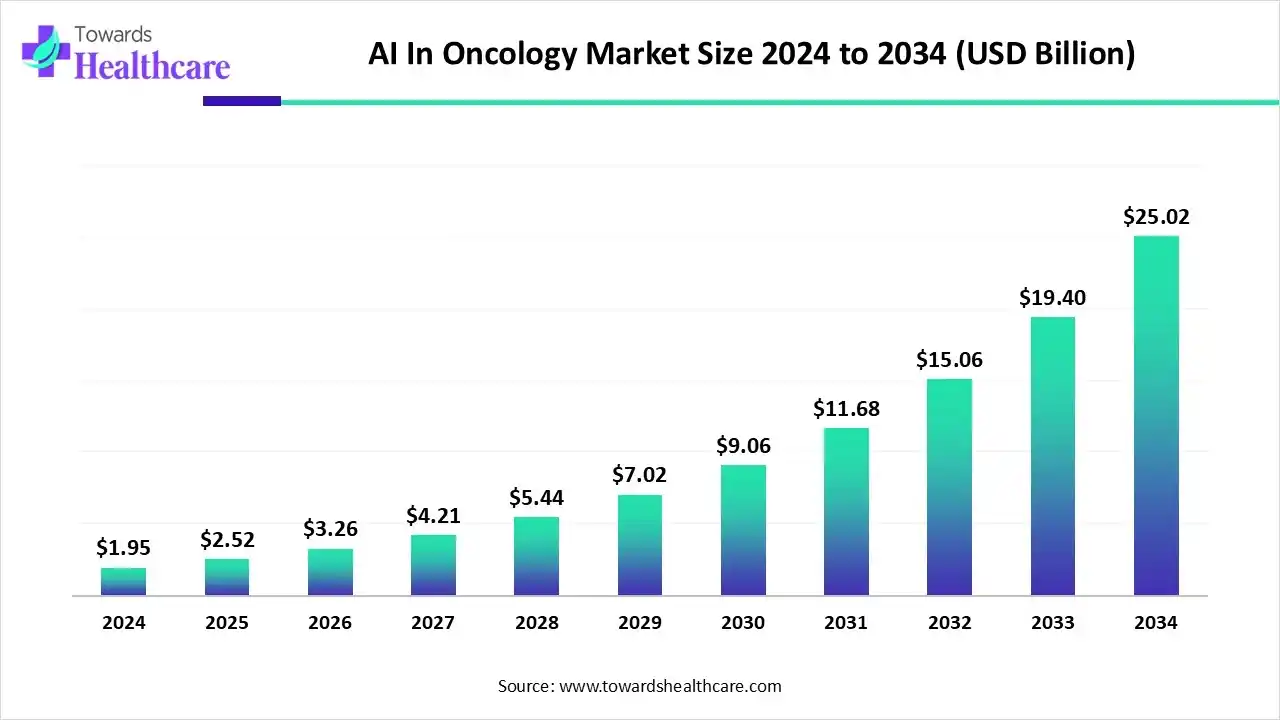
Download Free Sample: https://www.towardshealthcare.com/download-sample/6328
From Data Overload to Smart Decisions
Oncology generates massive data—imaging scans, genomic reports, clinical records, and treatment histories.
Doctors often face the challenge of interpreting all this information quickly and accurately. This is where AI steps in. It processes complex datasets in seconds and identifies patterns that humans might miss.
Instead of replacing expertise, AI enhances it. It acts like a second brain—fast, precise, and constantly learning.
Why AI Matters More Than Ever
The global cancer burden continues to rise. More patients need faster diagnosis and better treatment outcomes.
Traditional methods struggle to keep up with this demand. AI brings speed, consistency, and predictive power into the system.
It helps healthcare professionals move from reactive care to proactive strategies. Early detection, personalized treatment, and continuous monitoring are becoming the new standard.
The Core Areas Where AI Is Making Impact
AI in oncology is not limited to one function. It touches almost every stage of the cancer journey.
Here’s where it creates the most value:
- Early detection: AI scans imaging data like MRIs and CT scans to detect abnormalities at earlier stages
- Diagnosis support: It reduces human error by identifying subtle patterns in pathology reports
- Treatment planning: AI suggests personalized therapies based on patient-specific data
- Drug discovery: It accelerates research by predicting how cancer cells respond to treatments
- Patient monitoring: AI tracks disease progression and treatment response in real time
These applications are not futuristic—they are already being used in hospitals and research labs.
Precision Medicine Is No Longer a Buzzword
One of the biggest shifts in oncology is the move toward precision medicine.
Instead of a one-size-fits-all approach, treatments are now tailored to individual patients. AI plays a critical role here by analyzing genetic, clinical, and lifestyle data.
It helps doctors answer complex questions—Which treatment will work best? What are the risks? How will the disease progress?
This level of personalization improves outcomes and reduces unnecessary treatments.
The Rise of Intelligent Diagnostics
Accuracy in diagnosis can mean the difference between life and death.
AI-powered tools are improving diagnostic precision significantly. In breast cancer, for example, AI can detect tiny abnormalities in mammograms that even experienced radiologists might overlook.
In lung cancer, AI speeds up the analysis of CT scans and pathology slides. What used to take hours can now be done in minutes.
This speed not only saves time but also enables faster treatment decisions.

Get a Sample of this Report
AI in Oncology at 29% Growth; Are We Entering a New Era of Cancer Care?
