

Bone & Joint Health Supplements Market Key Players, Innovation and Product Evolution 2025

Key Players Behind Bone & Joint Health Supplements Market Rise
Market Growth
The global bone & joint health supplements market size is calculated at US$ 15.01 billion in 2025, grew to US$ 16.29 billion in 2026, and is projected to reach around US$ 34.04 billion by 2035. The market is expanding at a CAGR of 8.54% between 2026 and 2035. Source: https://www.towardshealthcare.com/companies/bone-and-joint-health-supplements-companies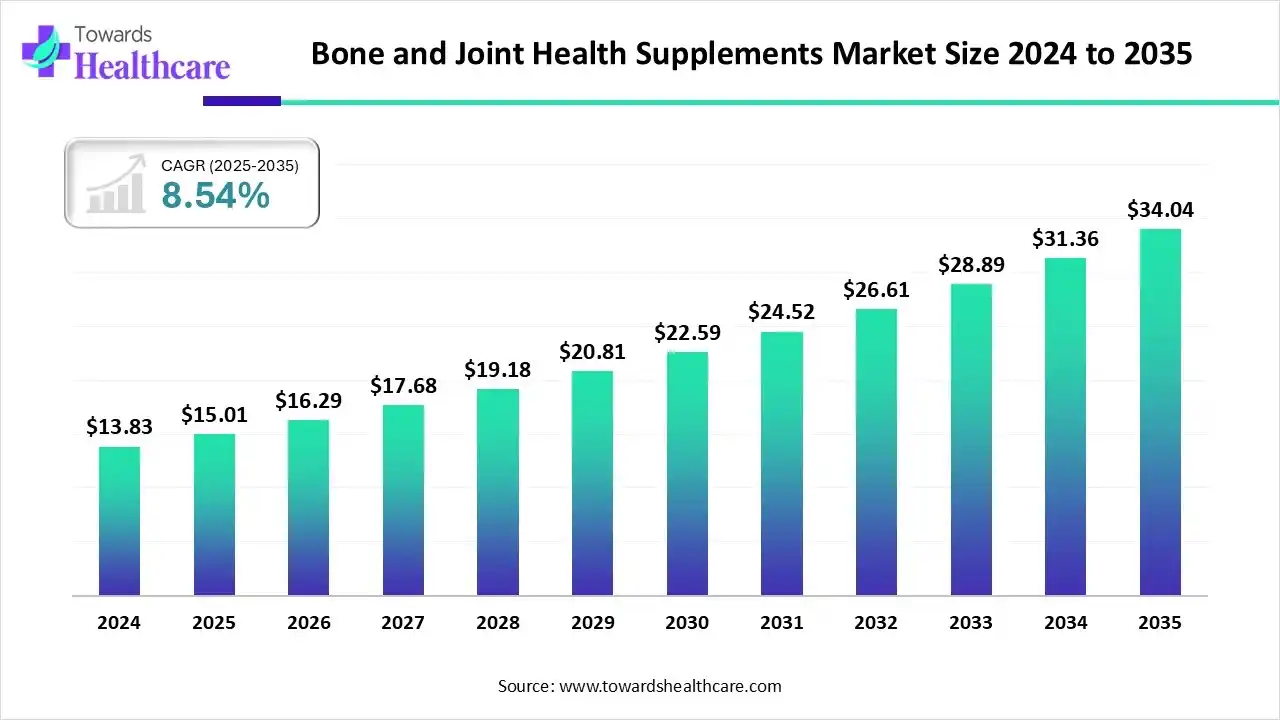 Download Free Sample of Bone & Joint Health Supplements Market Now and Get the Complete Report Easily at: https://www.towardshealthcare.com/download-sample/6413
What are Bone & Joint Health Supplements?
The bone & joint health supplements market is driven by rising demand, a growing geriatric population, and greater awareness of health supplements in developing countries. While age, physical activity, and genetics all have a big impact on bone and joint health, nutrition is an important and frequently overlooked factor that affects how strong and functional bones and joints are over the long term. These days, there are a lot of supplements that can help reduce joint stiffness and pain.Common Supplements and Their Benefits
1. Calcium
Calcium is the main mineral responsible for keeping your bones strong and dense. It helps prevent bone thinning and reduces the risk of fractures as you age. If your diet doesn’t include enough dairy or calcium-rich foods, your body starts taking calcium from your bones, making them weak over time. Women with low body weight or hormonal changes (like PCOS) should pay special attention to calcium intake since it directly affects bone strength.
2. Vitamin D
Vitamin D works hand-in-hand with calcium. It helps your body absorb calcium from food or supplements. Without enough vitamin D, even if you take calcium, your bones may still weaken because the calcium won’t reach them properly. Sunlight is the best natural source, but if you don’t get enough sun exposure, a vitamin D supplement can help keep your bones strong and healthy.
3. Vitamin K2
Vitamin K2 ensures that calcium goes to your bones instead of building up in soft tissues or arteries. It activates specific proteins that bind calcium inside your bones, improving bone density and strength. Taking K2 along with calcium and vitamin D helps your body use these nutrients more effectively and safely.
4. Magnesium
Magnesium plays a key role in forming and maintaining bone structure. It also supports muscle relaxation, nerve health, and energy production. A lack of magnesium can lead to muscle cramps, fatigue, or poor bone quality. Adding foods like nuts, seeds, and leafy greens or taking a supplement can help your body absorb and balance calcium better.
5. Omega-3 (Fish Oil)
Omega-3 fatty acids have powerful anti-inflammatory properties that can ease joint stiffness and swelling. If you experience mild joint pain, especially after exercise, omega-3 can help reduce discomfort and improve joint flexibility. It also supports the cushioning between your joints, keeping them lubricated and healthy.
6. Glucosamine and Chondroitin
These two are natural compounds found in healthy cartilage the tissue that cushions joints. As we age or put more pressure on our joints through exercise, cartilage can wear down. Glucosamine and chondroitin help protect and rebuild this cartilage, reducing pain or stiffness in areas like knees or hips. They’re not magic pills, but many people feel gradual improvement with consistent use.
7. Collagen or Turmeric (Curcumin)
Collagen is the protein that forms the structure of your bones, joints, and skin. Taking collagen supplements can support flexibility and improve recovery after workouts. Turmeric, on the other hand, contains curcumin — a natural anti-inflammatory that helps reduce joint pain, swelling, and post-workout discomfort. Both work well for maintaining joint comfort and mobility.
Benefits of Taking Bone & Joint Supplements
1. Builds Stronger Bones
These supplements strengthen your bones from within and help prevent bone-related conditions like osteoporosis. They’re especially helpful for women who have low body weight or hormonal imbalances that can affect bone health.
2. Keeps Joints Flexible
By maintaining healthy cartilage and reducing inflammation, supplements like omega-3, glucosamine, and collagen make your joints more flexible. This helps you move comfortably without stiffness.
3. Reduces Pain and Inflammation
Many ingredients especially omega-3, turmeric, and glucosamine naturally lower joint pain and swelling. They can be helpful for people who feel sore after workouts or long hours of sitting.
4. Aids Recovery After Exercise
Supplements that support joints and bones help your body recover faster after workouts. They reduce soreness, prevent overuse injuries, and keep your bones and muscles healthy as you build strength.
5. Supports Long-Term Bone Health
For women, especially those with PCOS or hormonal imbalances, these supplements support long-term bone strength. They help balance calcium levels and reduce the risk of bone loss later in life.
Leading Giants Shaping the Future of Bone & Joint Health Supplements Market:
- Herbalife International of America, Inc.
- GNC Holdings, LLC
- Nature's Bounty
- Amway
- Garden of Life
- Thorne
- Solgar Inc.
- Pure Encapsulations, LLC.
- Glanbia plc
- NOW Foods
Company Landscape
| Company | Headquarters | Established Year | Annual Revenue |
| Herbalife International of America, Inc. | Los Angeles, USA | 1980 | USD 4.99 Billion |
| GNC Holdings, LLC | Pittsburgh, USA | 1935 | USD 1.78 BillionUSD 2 Billion (est.) |
| Nature’s Bounty | United States | 1971 | USD 2 Billion (est.) |
| Amway | Ada, USA | 1959 | USD 7.4 Billion |
| Garden of Life | Florida, USA | 2000 | USD 500 Million+ |
| Thorne | New York City, USA | 1984 | USD 228 Million |
| Solgar Inc. | New Jersey, USA | 1947 | USD 200–500 Million |
| Pure Encapsulations, LLC | Massachusetts, USA | 1991 | USD 100–500 Million |
| NOW Foods | Illinois, USA | 1968 | USD 600 Million+ |
| Glanbia plc | Kilkenny, Ireland | 1997 | USD 5.6 Billion |

Get a Sample of this Report
Bone & Joint Health Supplements Market
