

North America Leads with 39% Share; Is Asia-Pacific Ready to Redefine the Dental Equipment Market?

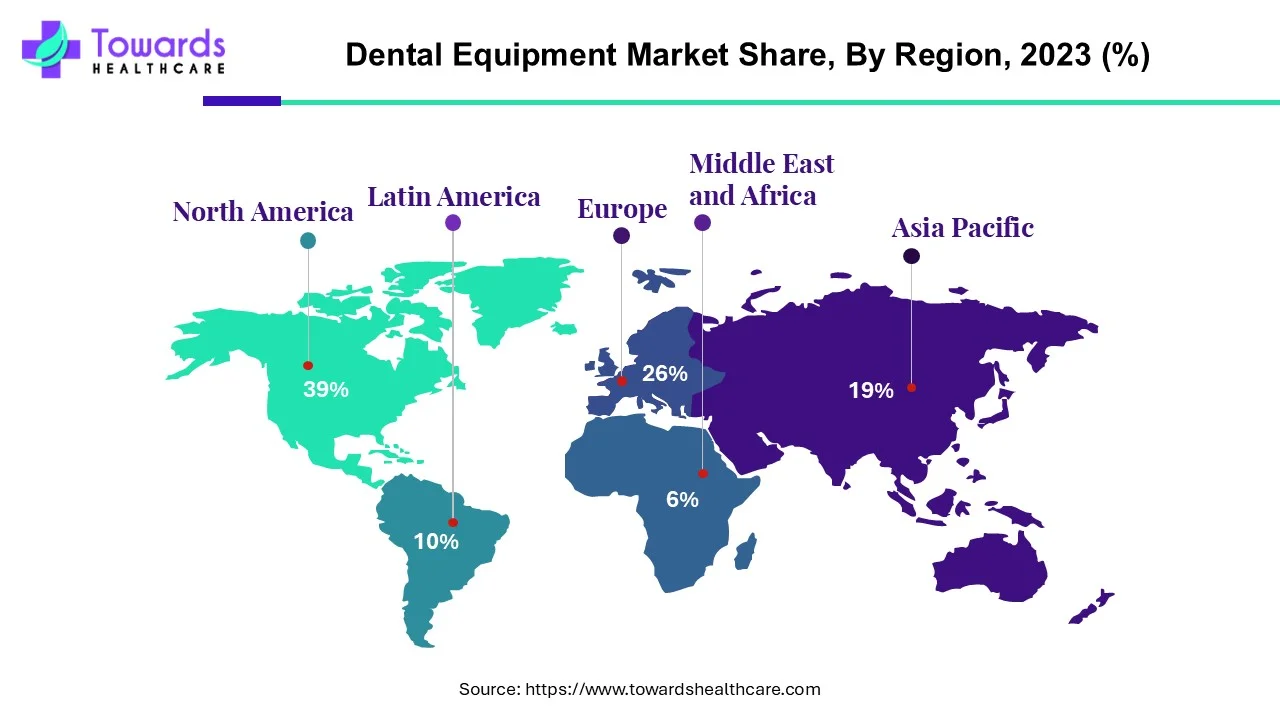
North America Sets the Benchmark in Dental Care
North America continues to lead not by chance, but through a combination of structure, investment, and innovation. The region has built a strong foundation where dental care is deeply integrated into the healthcare system.
Advanced clinics, skilled professionals, and continuous research ensure that new technologies quickly move from labs to real-world applications. This creates a cycle where innovation directly improves patient outcomes.
Regulatory bodies in the region play a critical role. They ensure safety, maintain quality standards, and create a stable environment for manufacturers and healthcare providers.
Several factors strengthen North America’s leadership:
-
Strong presence of global dental equipment manufacturers
-
Continuous investment in healthcare technology and infrastructure
-
Supportive reimbursement policies from both public and private sectors
Economic stability also contributes significantly. Higher disposable income allows patients to opt for advanced treatments, which in turn drives demand for sophisticated dental equipment.
Policy Power: When Governments Invest in Oral Health
One of the most impactful developments in North America is the growing focus on accessible dental care. Governments are actively working to bridge the gap between affordability and quality.
For example, Canada’s multi-billion-dollar dental care initiative aims to make oral healthcare more accessible over a five-year period. This kind of large-scale investment not only improves patient access but also stimulates demand for equipment across clinics and hospitals.
Such initiatives create a ripple effect. As more patients enter the system, clinics expand their capabilities, leading to increased procurement of advanced dental tools and technologies.
Infrastructure That Drives Innovation
North America benefits from a highly developed healthcare ecosystem. Research institutions, dental schools, and private companies work closely to push boundaries in dental science.
This ecosystem encourages:
-
Development of minimally invasive technologies
-
Integration of digital dentistry solutions
-
Faster adoption of AI-driven diagnostic tools
As a result, patients experience faster, safer, and more precise treatments. Clinics, on the other hand, continuously upgrade their equipment to stay competitive.
Asia-Pacific: The Fastest Rising Contender
While North America leads today, Asia-Pacific is shaping the future of the dental equipment market. The region is expected to grow at the fastest rate during the forecast period.
This growth stems from a mix of necessity and opportunity. A large population base, increasing dental issues, and improving awareness are driving demand at an unprecedented scale.
Countries like India, China, and the Philippines highlight the urgency of the situation. A significant portion of the population suffers from dental conditions, especially tooth decay.
This growing burden is pushing both governments and private players to act quickly.
Rising Awareness Turns into Real Demand
Awareness around oral health is no longer limited to urban populations. Governments and organizations are actively reaching rural and underserved areas.
Campaigns, educational programs, and public health initiatives are changing how people view dental care. What was once ignored is now becoming a priority.
As awareness increases, so does the demand for dental services—and with it, the need for modern equipment.

Get a Sample of this Report
North America Leads with 39% Share; Is Asia-Pacific Ready to Redefine the Dental Equipment Market
