
How Digital Health is Making Care Faster, Smarter, Better in 2026

A Market on the Rise
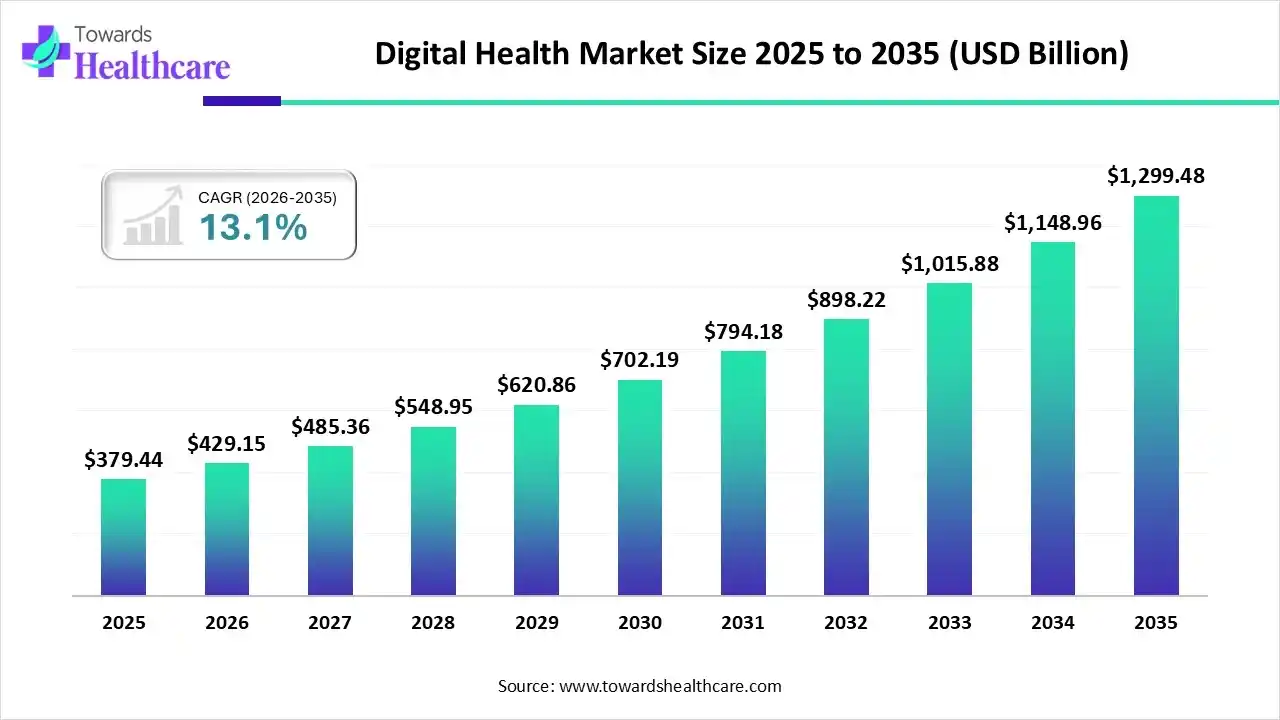
The global digital health market is booming. From an estimated USD 379.44 billion in 2025, it’s projected to reach an astonishing USD 1299.48 billion by 2035. That’s a remarkable growth rate of 13.1% per year, showing how rapidly technology is becoming an integral part of healthcare.
Download Free Sample: https://www.towardshealthcare.com/download-sample/5040
-
Europe currently leads in market revenue, while Asia-Pacific is expected to be the fastest-growing region in the next decade.
-
In the U.S., digital health solutions are gaining traction rapidly, with the market expected to hit nearly USD 238.65 billion by 2034.
This growth reflects more than just numbers—it shows a global shift in how healthcare is delivered and consumed.
How Technology is Driving Health Forward
Digital health is fueled by cutting-edge technologies like AI, big data, IoT, and telemedicine. These innovations aren’t just convenient—they’re transforming patient care.
-
Telehealth platforms are making healthcare accessible to millions who once struggled to see a doctor.
-
Mobile health (mHealth) apps allow patients to track chronic conditions, schedule appointments, and monitor vital health metrics in real-time.
These technologies make healthcare more proactive. Patients can now spot warning signs early, adhere to treatment plans, and make informed decisions about their health.
Why Patients Are Embracing Digital Health
Convenience is key. For many, visiting a clinic can be stressful, time-consuming, and expensive. Digital health eliminates these barriers, giving patients control and flexibility.
-
Personalized care is more achievable with AI and data analytics, which tailor treatment plans to individual needs.
-
Cost efficiency is another major factor. Virtual care, remote monitoring, and teleconsultations reduce unnecessary expenses for patients and providers alike.
As more people understand the benefits, the demand for digital health solutions continues to grow.
Governments Join the Movement
Governments around the world are pushing for digital health adoption. Policies, funding, and infrastructure development are helping accelerate change.
For example:
-
Centralized healthcare management systems are being implemented to improve efficiency.
-
Digital payment and management solutions are being introduced in hospitals to streamline operations.
-
Strategic guidelines encourage investments in AI, data analytics, and telemedicine platforms.
Public sector involvement shows that digital health is more than a trend—it’s the future of healthcare.
Mobile Apps: Small Devices, Big Impact
Mobile health apps are changing everyday healthcare routines. From chronic disease management to mental health support, these apps put healthcare directly in people’s hands.
-
Track blood sugar, heart rate, or medication schedules.
-
Get reminders for doctor visits or prescription refills.
-
Access teleconsultations anytime, anywhere.
Wearables like smartwatches and fitness trackers complement these apps, offering continuous health monitoring. For patients with conditions like diabetes or hypertension, this technology can be life-changing.
The Promise of AI and Big Data
Artificial intelligence is not just a buzzword in healthcare—it’s a game-changer. AI can analyze vast amounts of medical data, improving diagnosis speed and accuracy. Machine learning helps predict health risks, customize treatments, and even optimize hospital operations.
Big data analytics also helps healthcare providers:
-
Understand patient behavior and treatment outcomes.
-
Develop targeted interventions for at-risk populations.
-
Streamline resource allocation and reduce hospital overcrowding.
By combining AI and big data, the healthcare ecosystem becomes smarter, more efficient, and more patient-focused.

Get a Sample of this Report
How Digital Health is Making Care Faster, Smarter, Better in 2026